
Complete guideFarever
Farever Guide 2026: Classes, Co-op, and Dungeon Builds
Farever guide 2026: four current classes and co-op basics in Early Access, plus Rifts, patches, Heroic Dungeons, and qualified build advice.
About the game
Farever
Shiro Games · Shiro Games
Farever entered Early Access on May 6, 2026 from Shiro Games: the French indie studio that built Wartales and Northgard. This farever guide hub collects every farever guide on the site organized by what you actually need, whether you're figuring out which class to pick or trying to get further in co-op dungeon content. Check Steam for the current regional price rather than relying on the launch price.
The game supports 1 to 4 players in an open world called Siagarta. The dungeon system is the core loop: instanced runs that get harder the deeper into them a group pushes, where difficulty determines loot quality and what builds you need to survive it. The class system matters more in Farever than in most co-op action RPGs because of how much a Support class changes what a group can sustain. That mechanic is what this farever guide covers before anything else.
Updated 2026-10-01: Call to Glory Major Update #2 is now live with Heroic Difficulty, Heroic Epic Gear, Infusions, and a dual-attribute weapon rebalance; the official post says more bosses arrive weekly through October.
Key takeaways
- Four classes at EA launch: Warrior (tank), Priest (support), Mage (ranged damage), Rogue (melee burst)
- Call to Glory Major Update #2 adds live Heroic Difficulty, new Epic Gear, and Infusions; the official post does not publish a universal Heroic loot table
- Support class generally lets a group sustain harder dungeon content by covering survivability: a specific "extends depth by ~2 floors" figure that circulated in earlier guides wasn't independently verifiable and has been removed
- Four-player starting test: one Warrior, one Priest, one Mage, and one Rogue; this is editorial advice, not an official meta ranking
- Crafting jobs are separate from combat classes: assign them before your first dungeon run
- v0.1.3 addressed the party invite and data rollback bugs from launch
- Shiro Games describes the Early Access period as approximately one year, but no fixed 1.0 date is confirmed
Current status: September 2026
Farever is still in Early Access on Steam. The current store snapshot checked on September 17, 2026 showed roughly 74% positive English reviews across about 5,100 reviews, with a regional Steam price of NZ$28.95 in the checked storefront. Treat both numbers as snapshots, not permanent facts. Shiro Games' store description still frames the EA period as approximately one year rather than giving a fixed 1.0 date.
The Nightling Invasion update added hourly Rifts, Ramburg, a level-cap increase to 25, and Demon Hunter rewards. The official update language names Demonic Souls, Nightblood, and Soulstones, but it does not establish the class tier list or the exact party compositions recommended below. The stable live patch line remains documented at v0.2.3.28751, while the latest official public-test notes checked on September 25 list v0.2.4.30546. Call to Glory Major Update #2 is now live: the first region is available in Heroic Difficulty, and the announcement says six bosses are currently available with more arriving weekly through October.
The rest of this hub separates those confirmed update notes from editorial build advice. It does not treat unannounced Monk or Druid plans, exact floor breakpoints, or a fixed roadmap as current features.
What is Farever?
The short version before this farever guide goes into detail: Shiro Games built Farever as a co-op action RPG that leans into vertical exploration in the open world (climbing, gliding, diving into underwater areas) and into dungeon content that scales in difficulty. Siagarta has underwater caves, platforming temple sections, and surface zones that feed into instanced dungeon runs. The open world isn't the primary challenge; it's the setup for the dungeon content.
Dungeon difficulty scales as a run progresses: enemy density increases, health pools grow, and loot quality improves in harder content. How far you can push has less to do with gear level and more to do with whether your group includes a Support class. That one variable (Support present or absent) meaningfully changes how much a group can sustain, which changes what loot tiers you have access to. We could not independently verify a specific numeric "floors" figure for this effect (an earlier version of this guide cited one, sourced only to an unlinked community claim), so we've described the mechanic without inventing precision it doesn't have.
Shiro Games has a track record with games that use their EA period well. Wartales spent roughly 16 months in Early Access before 1.0, adding content in meaningful batches. Farever follows the same model: the current build is a functional foundation, not a stripped-down demo. The Farever early access launch article covers what shipped in the day-one build.
The review score situation is worth addressing directly in any farever guide. The September 17 snapshot was about 74% positive across roughly 5,100 English reviews. Early party and progression problems explain why launch-era sentiment is a poor substitute for the current rating, but the exact first-week review path is not needed for a current buying decision. The Farever review covers what works and what is still rough.
The four classes
No farever guide skips the class section: it's the first decision every player makes and the one with the most long-term consequences. Class determines your documented role and combat foundation, while the Call to Glory rebalance means many bi-class weapon skills now scale from two attributes. Confirm current weapon modifiers instead of assuming a class's primary stat tells the whole build.
Mage is the ranged-oriented option in this hub's current role shorthand. Test it if you prefer spacing and spell timing, but confirm its live abilities and modifiers in the current client rather than treating this paragraph as an official class sheet.
Rogue gives the hub a melee-oriented comparison to Mage. Its movement and close-range demands make it a useful second class to test, but the exact burst, passive, and gear claims belong to the current in-game tooltips, not a permanent guide table.
Priest is the support-oriented comparison used by this guide. A group may value its survivability tools, but no official source checked here publishes a universal depth increase or a complete support-versus-tank test. Treat the party advice as a starting experiment.
Warrior is the frontline-oriented comparison used for party planning. It is a sensible class to test when you want more room for error, but the current official material does not publish a complete block, mitigation, or solo-performance table.
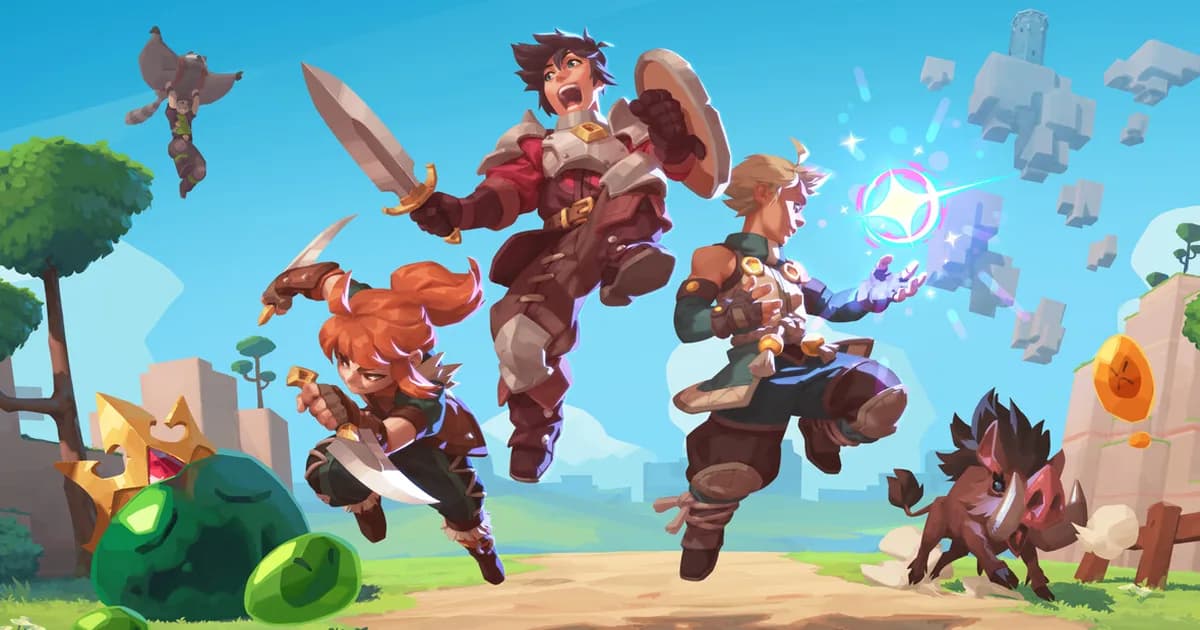
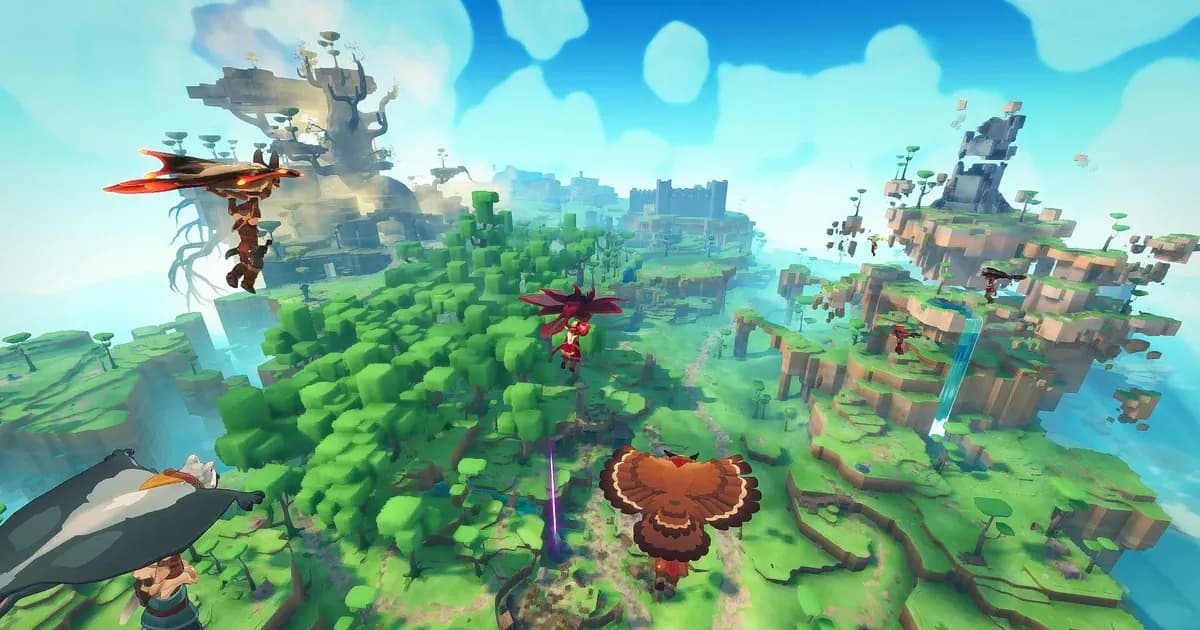
Promotional Farever artwork. It is not a party-UI or dungeon-positioning reference, so use the live game for class and formation decisions.
GODEEPER: Full class breakdown: gear paths, passive trees, and how each class fits into 2-player vs 4-player compositions. Farever Class Guide →
- Farever Builds Guide: Best Class and Team Comp 2026: Farever builds guide: best class for every co-op role, optimal 4-player team comp, and which passives to stack first.
The dungeon system and support advantage
Every farever guide eventually arrives at the same point: the Support class changes what the group can accomplish. Here's how.
Dungeon difficulty scales on two axes: enemy health and enemy density. As a run progresses, encounters become longer (more health to burn down) and wider (more enemies on screen simultaneously). Without a Support class, a group of four Damage/Tank players runs out of effective coverage once content gets genuinely hard. Threat management without support relies on the Tank alone, which limits how aggressively the Damage classes can engage. Conservative play means slower clears. Slower clears means more resource drain before a stretch is cleared.
With Support, Damage classes can push into fights earlier and commit harder without monitoring their own survival. The Support's cooldown management (keeping buffs active across a long run) means the group's effective resource budget stays higher for longer. A specific floor-by-floor breakdown attributed to "community testing" circulated in earlier drafts of this guide; we searched Shiro Games' official patch notes and r/FareverGame directly and found nothing corroborating it, so we've removed the exact numbers rather than repeat an unverified claim.
Harder content generally has better loot. A group that can sustain more of it compounds that advantage across an evening of play. That's why Support isn't a passive role: it's a real contributor to unlocking the game's best rewards, even without a precise multiplier attached to it.
Dungeon best practices that apply regardless of class: communicate how far you want to push before descending, not after. The Support player has the best read on group resource status and is the best judge of whether the group can handle more. If Support says it's time to retreat, trust it.
- Farever Dungeon Guide: Floor Depth and the Support Edge: Farever dungeon guide covering how dungeon difficulty scales and the Support advantage in more detail.
Co-op party composition
At 4 players, a useful starting composition is one Warrior, one Priest, one Mage, and one Rogue. That recommendation is editorial rather than an official meta claim: the current Steam materials confirm the co-op framework and named classes, but do not publish a tested ranking for party roles or damage builds.
At 3 players, try two damage-oriented characters plus either Priest or Warrior, then let the run tell you which missing tool matters more. Priest is a survivability choice; Warrior is a frontline and threat-management choice. There is no official three-player comparison to turn that into a universal ranking.
At 2 players, a damage class plus Priest is the safest first test if your group values sustain. Mage plus Rogue is another valid experiment if both players prefer faster clears. These are playstyle recommendations, not published balance data.
Solo play is the place to test the classes without assuming a co-op role label is correct. Warrior is the conservative starting choice, while Rogue asks for more movement and encounter knowledge. The official material does not support calling Priest nonfunctional solo.
The other co-op factor that most groups miss (and the thing that separates a prepared group from one that figures it out the hard way) is crafting jobs. This farever guide can save you the session of regret: crafting specializations are chosen independently from combat classes. A Damage player can be the group's primary crafter for Support or Tank gear. If you don't discuss crafting before your first run, you'll end up with three players producing Damage gear and one under-equipped Support or Tank. Assign who crafts what before you enter the first dungeon.
GODEEPER: Step-by-step party setup and crafting job assignments for 2- and 4-player groups. Farever Co-op Guide →
Farever guide: gear and progression
The companion class guide on this site organizes gear bonuses by combat role, but the current official sources do not publish a complete class-to-stat matrix. Use the in-game tooltips to confirm which bonuses are available to the character you are actually playing rather than treating the labels in this hub as a data table.
The site's gear guide describes an older three-stage progression model, but Call to Glory now adds stronger Epic Gear from Heroic Difficulty and Infusions. The official post does not publish a complete Heroic drop table, so check live item tooltips and patch notes for exact names, modifiers, and drop locations. The durable advice is to compare the modifier with the class and playstyle you are testing, not to assume a tier label alone makes an item best.
Crafting materials and exact drop tiers are build-sensitive details. Keep the zone and dungeon notes from the linked gear guide as a working route, then confirm each material in the current crafting screen. An earlier version of this hub mapped those tiers to specific dungeon floors; that mapping was not independently verifiable and remains removed.
The Siagarta open world feeds the dungeon loop through material gathering. Open zone encounters build mastery and materials without the reset risk of a dungeon disconnect. If the group isn't ready to push into harder dungeon content, farming open zone content is the safe alternative that doesn't waste a dungeon attempt.
Passive skill investments work alongside gear progression. Any farever guide focused on builds will steer you toward stacking passives in a specific order: which passives to prioritize first before adding secondary effects. The Farever Builds Guide is the reference for build order by class.
One session-management note: the old v0.1.3 guidance about reconnecting to the dungeon entrance is not a current guarantee. Check the live patch notes and test with a low-stakes run before planning around disconnect behavior.
Early access state: what Shiro Games has patched and what's coming
The launch situation for Farever is worth understanding before making a purchase decision. Early patch notes addressed party and progression problems, but the current question is whether the later EA build suits your group, not whether the launch review window was representative.
The Steam review movement is best read as a live snapshot. The September 17 check was about 74% positive across roughly 5,100 English reviews, so the rating is more useful as a current signal than as a precise history of the first week.
Shiro Games shipped its first major EA content update, the Nightling Invasion, on July 15, 2026. It adds Rifts: hourly world events where players close portal gates before a boss spawns, a new region called Ramburg with a Demon Hunter NPC and the Barracks dungeon, and three new currencies (Demonic Souls, Nightblood, Soulstones) for trading toward targeted gear instead of relying purely on drop luck. No class changes shipped with this patch.
Do not treat old hub copy about Monk, Druid, or a second-half-2026 class window as a confirmed roadmap. The current official material checked here confirms ongoing EA updates and live Heroic Difficulty, but not those class names or a fixed release schedule.
The current build is genuinely playable for co-op groups who can tolerate early EA roughness. The class system and dungeon mechanics work. The underlying game earned a better reputation than its launch Mixed score implied: the rating has since recovered to Mostly Positive as post-v0.1.3 reviews outpaced the launch-window negatives.
All Farever guides
Every farever guide on this site, organized by what you need:
Starting out:
- Farever Early Access Launch 2026: what shipped in the day-one build: classes, Siagarta overview, co-op infrastructure, and what Shiro Games is planning for updates.
- Farever Tips for Beginners: First Hours in Siagarta: first-session priorities, gear decisions in the early zones, class synergy basics, and the mistakes new players consistently make before understanding the dungeon system.
Class and team knowledge:
- Farever Class Guide: All 4 Classes and How to Pick: all four classes with gear paths, passive priorities, and co-op role fit for 2-player and 4-player groups.
- Farever Builds Guide: Best Class and Team Comp 2026: crit vs elemental Damage build paths, optimal passive stacking order, and the 4-player team comp built for the hardest content.
Co-op:
- Farever Co-op Guide: Roles, Group Builds, and Dungeon Runs: step-by-step party setup by player count, crafting job assignment, and how the Support class changes what the group can accomplish.
Review:
- Farever Review 2026: Good Bones, Rough Early Access: 7.0/10. What the class system and dungeon mechanics do well, what the launch bugs damaged, and whether Shiro Games' EA track record justifies buying now vs waiting for 1.0.
- Farever How Long to Beat: Early Access Hours and v0.2: Farever how long to beat: 10-15 hours in current EA.
- Farever Gear Guide: Items, Loot, Heroic Epic Gear, and Infusions: Farever gear guide covering Heroic Epic Gear, Infusions, the older rarity ladder, and crafting priorities
- Farever patch notes: Call to Glory Update #2 explained: Farever patch notes explain Call to Glory Update #2: Heroic mode, faction reputation, Infusions, social tools, and a dual-attribute weapon rebalance.
Frequently Asked Questions
What is Farever and who made it? Farever is a co-op action RPG from Shiro Games, the French indie studio behind Wartales and Northgard. It entered Early Access on May 6, 2026 on Steam. The game supports 1 to 4 players in a fantasy open world called Siagarta, built around class-based dungeon runs and a vertical zone structure.
How many classes are in Farever? Farever has four classes at Early Access launch: Warrior (tank), Priest (support), Mage (ranged damage), and Rogue (melee burst). Call to Glory reworks the Rogue talent tree and rebalances many bi-class weapon skills, but it does not add a class. Crafting jobs are chosen independently from your combat class.
What is the best Farever co-op composition? For 4-player groups, this hub's starting test is one Warrior, one Priest, one Mage, and one Rogue. For 2-player, try a damage class plus Priest if sustain matters. These are editorial recommendations, not an official meta or a tested universal depth advantage.
How does the Farever dungeon system work? Farever's dungeons get harder the further a group progresses into a run: enemy density increases, health pools grow, and harder content offers stronger rewards. Call to Glory adds Heroic Epic Gear and Infusions, but the official post does not publish a universal floor-by-floor loot table.
Is Farever worth buying in Early Access? Farever is worth considering if you have a consistent co-op group and can tolerate EA roughness. The current Steam snapshot is about 74% positive across roughly 5,100 English reviews, and later patches added content after the launch bug period. Check the live store page before buying.
How long will Farever stay in Early Access? Shiro Games has stated an expected EA duration of approximately one year. The current build represents the foundation: open world Siagarta, all four classes, the dungeon system, and co-op infrastructure: with more content, zones, and story planned before 1.0.
References
- Farever on Steam: official store page, patch notes, EA roadmap from Shiro Games
- Shiro Games: studio behind Farever, Wartales, and Northgard
- r/FareverGame: official community subreddit for group composition discussion (checked directly; no corroborating report found for a specific Support/floor-depth ratio)
- Steam's regional price and review count are volatile. Check the official Farever store page for the price in your region before buying.
- Farever official reveal trailer: Shiro Games' overview of the co-op open-world premise.
- Farever Steam News: official Nightling Invasion, patch, and public-test notes checked for this update.
Related Reading
- All Farever coverage: every Farever guide, review, and news post published on GameBrief, in one index.
- Farever Co-op Guide: party composition by group size and crafting job assignment strategy.
- Farever Class Guide: all four classes and how each fits 2-player vs 4-player groups.
- Farever Review 2026: the launch state, what Shiro Games has patched since, and whether it's worth buying now.
About the author

Senior Critic & Analyst
Former game data analyst turned critic with 11 years covering indie and mid-tier games. Based in Austin. Runs spreadsheets on games most people just play.
- 11 years games criticism
- Former game economy analyst
- Roguelike and strategy specialist
Keep reading
Farever Co-op Guide: 4 Classes, Group Builds, Dungeon Runs
Guides · 10 min
Farever Review 2026: Good Bones, Rough Early Access
General · 9 min
Farever Builds Guide: Best Class and Team Comp 2026
General · 9 min
Farever Dungeon Guide: Depth, Classes, and Support (2026)
Guides · 10 min

Farever Class Guide: All 4 Classes and How to Pick
General · 10 min

Farever Tips for Beginners: First Hours in Siagarta
General · 9 min
Game deals · affiliate links

Disclaimer
This article is published for informational and entertainment purposes. It does not constitute professional financial, legal, or technical advice. Game performance, online services, patch schedules, and store listings change. Verify critical details (pricing, system requirements, regional availability) with publishers and storefronts before you buy. Affiliate links, where present, help support our editorial work and are labelled in our affiliate disclosure.
Comments
Loading comments…