
GameBrief · General
Tabletop Tavern Tips: 9 Ways to Win More Runs 2026

Reviewing
Tabletop Tavern
TJ · Frostbloom, Gamirror Games
Tabletop Tavern tips are what most players search after their second or third run collapses mid-campaign. The game launched June 11, 2026 at $14.99 and landed at 94% positive on Steam with over 500 reviews in the first two days. The most consistent early feedback: the difficulty is real but fair, once you understand two systems. Morale and formation depth. Both show up visibly in battle, both are explained directly in the game's own stat tooltips (something r/totalwar players specifically called out as a welcome change from Total War itself), and both decide more fights than raw unit count does.
TL;DR: Tabletop Tavern tips that matter: fight manually against cavalry and artillery, keep frontline infantry wide to hold multiple enemies, send excess gold to the vault between runs, use prestige to merge three identical units before boss fights, and pick Iron Legion or Vikings until you understand the morale system. Runs collapse when you auto-resolve the wrong battle and lose half your army at once.
Tabletop Tavern tips: what actually wins runs (quick answer)
The core loop is army recruitment, real-time battle, campaign decision, repeat. The runs that fail tend to fail the same way: one bad auto-resolve hollows out your army two fights before a boss, and you never had a chance to recover. Nine habits stop that pattern. Most of them aren't dramatic. They're just about not trusting the game's convenience features when the situation is actually risky.
Pick a faction that explains the systems, not one that looks interesting
Eight factions are in the game at launch: Vikings, Orcs, Elves, Empire (Humans), Dwarves, Undead, the Sakura Dynasty, and Lizardmen. Each has distinct unit types and campaign bonuses, but not all of them teach you the fundamentals at the same pace.
Iron Legion (the Empire faction) is the right starting point. Their infantry holds a line without demanding much from you, their stat bonuses reward defensive formation play, and their unit pool covers all five roles without forcing weird recruitment decisions early. Vikings are a close second if you'd rather play aggressively: their charge bonuses hit hard in manual play, and their elite infantry takes more punishment before breaking.
Avoid Elves and the Sakura Dynasty until you've lost a few runs and understand why morale matters. Both factions rely on hit-and-run ranged tactics that punish formation mistakes hard and fast. Orcs and Lizardmen have high damage ceilings but their units cost more to heal, which makes every lost battle hurt more than it would with a sturdier roster.
The developer confirmed two more factions are coming via community vote, with a Greek-themed faction likely first. For now, eight is enough variety to run significantly different campaigns across 30 or 40 hours.
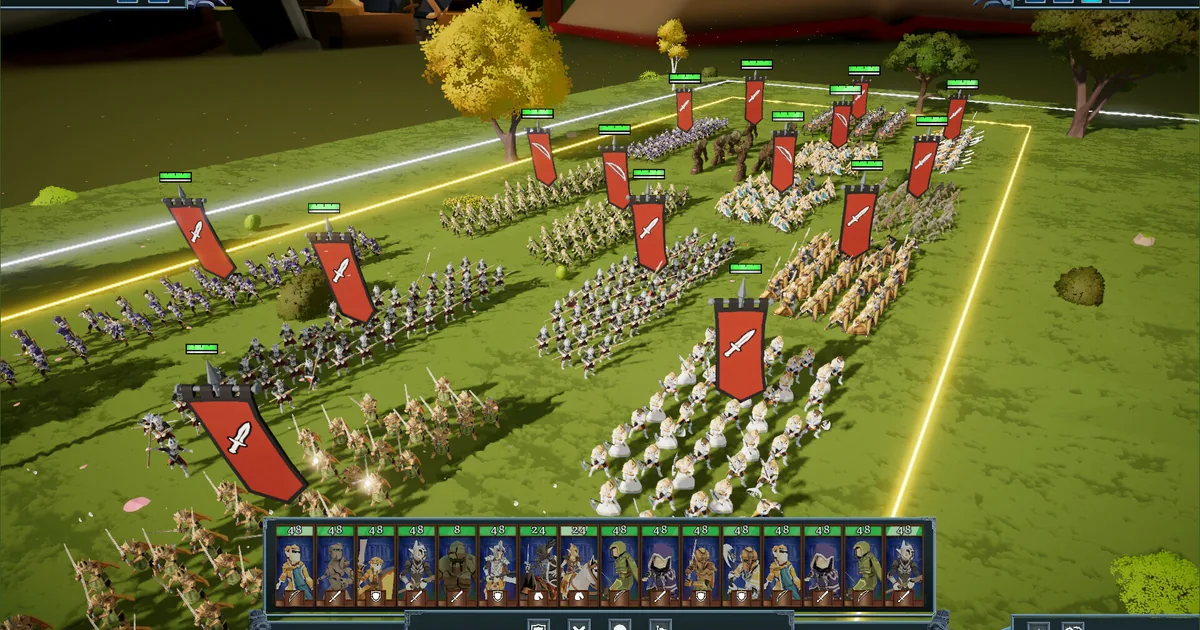
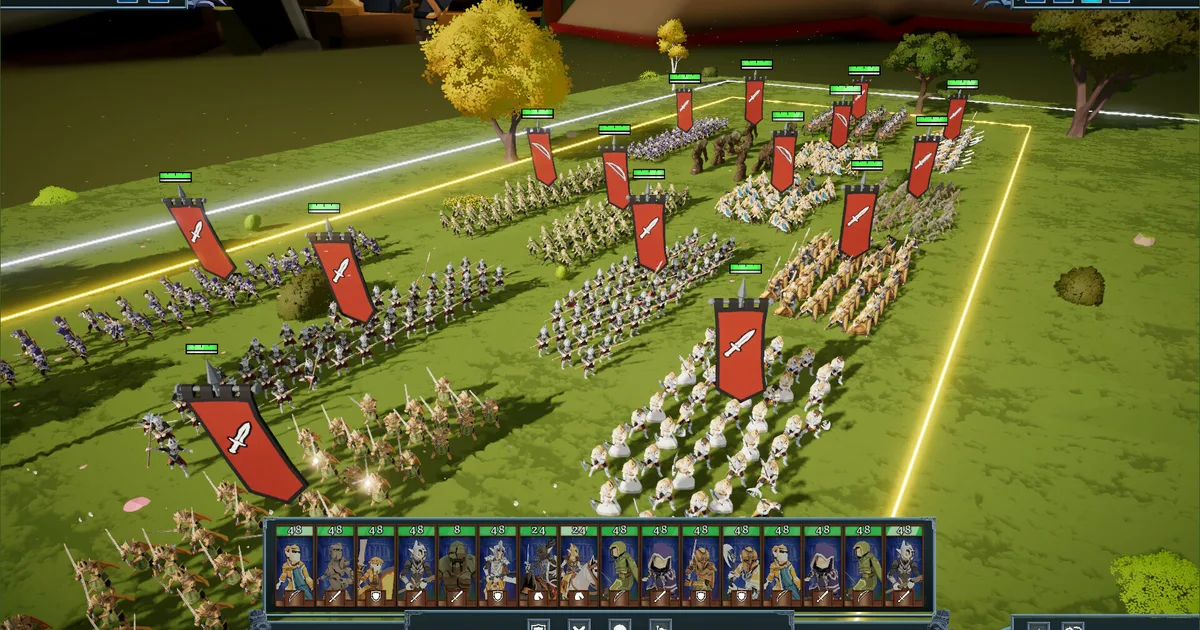
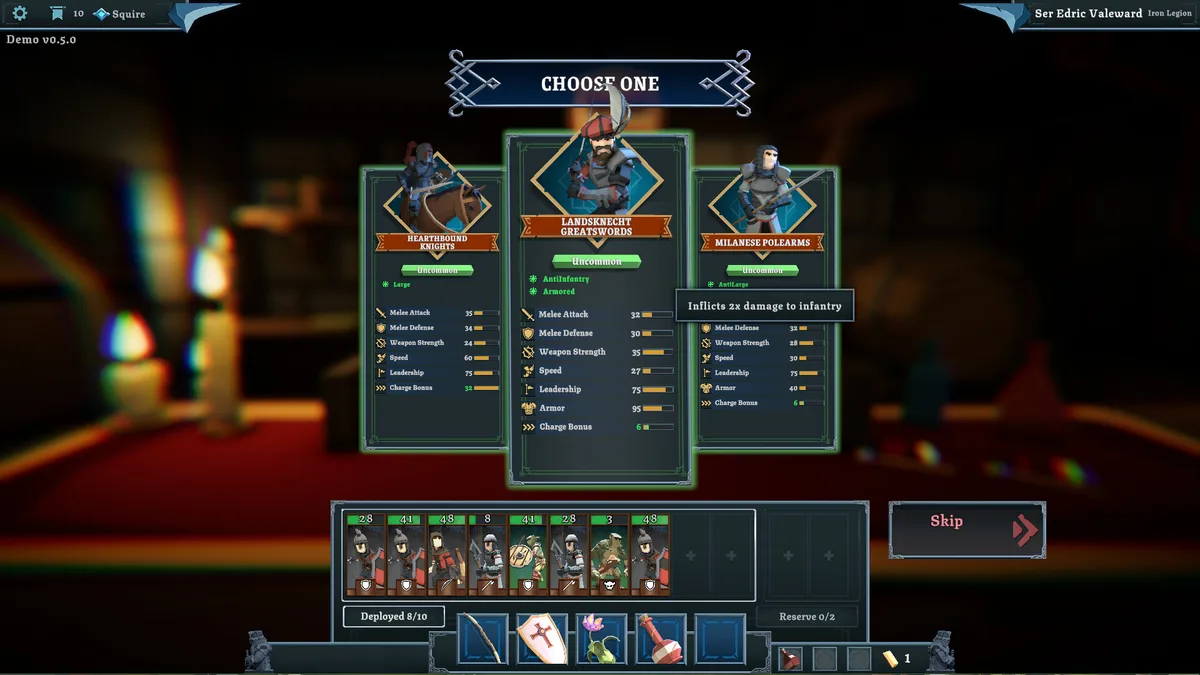 The army management screen shows stat explanations inline, a design choice that reduces the learning curve compared to genre peers.
Build your army around five roles, not raw numbers
Every army that makes the late game covers five roles: frontline infantry to hold the line, spear units to answer cavalry, ranged dealers for safer damage, outriders or flankers to hit exposed targets, and heavy support or artillery. Drop any one of those and you'll hit a matchup that exposes the gap hard.
The most common early mistake is stacking damage units without a real frontline. Two or three heavy infantry units holding a wide formation prevent far more deaths than five archers placed poorly. Ranged units need infantry in front of them; without cover they get picked off by outriders before they fire twice.
Formation depth is the second variable most new players ignore. Wide, shallow formations hold multiple enemy units along a broad front. Deep formations keep your units compact and harder to break with flanking attacks. A useful habit: go wide when you outnumber the enemy, go deep when you expect cavalry flanks or fast outriders on your backline.
GODEEPER: Far Far West's strategy guide covers similar army composition and positioning principles for a different roguelike format. Far Far West Strategy Guide: Spells, Loadouts and PvE →
Never auto-resolve cavalry and artillery matchups
Auto-resolve is a time-saver, not a strategist. It calculates fights based on unit count and general strength, ignoring formation bonuses, terrain, and flanking. That works reliably when you're significantly stronger than the enemy and their roster has no cavalry, outriders, or artillery.
When any of those three appear in the enemy lineup, switch to manual control. Cavalry charges deal heavy morale damage that auto-resolve does not account for accurately. Artillery tears through infantry formations before the battle reaches melee range. Outriders slip past your frontline and kill your ranged units, which auto-resolve does not defend against.
The math is asymmetric: playing a winnable fight manually takes two to four minutes. Losing a fight on auto-resolve that you could have won manually costs you 40 to 60 percent of your army, which damages every fight for the next three or four encounters. One bad auto-resolve can end a run that was otherwise on track.
A useful threshold from community play: if your force strength is at least 1.5x the enemy's and no cavalry or artillery appears in their roster, auto-resolve is safe. Below that margin, play manually.
Morale determines outcomes before the last unit dies
Tabletop Tavern does not end battles when armies are physically destroyed. Battles end when morale breaks and units rout. Understanding this changes how you fight.
Flanking attacks deliver heavy morale damage even when they deal low physical damage. A fast outrider unit hitting the side or rear of an enemy formation can break morale on a unit that still has most of its health. This is especially powerful against ranged units and artillery crews, who have inherently lower morale values.
Shielded units facing forward take reduced damage from ranged attacks, but their sides and rear don't have the same protection. Position your own ranged units to fire from an angle rather than directly into the enemy front. The difference in damage output is real.
The fastest way to collapse an enemy army is to break one unit's morale, which causes adjacent units to waver, which makes them easier to break next. Chain-breaking morale across the line is more efficient than grinding through health pools. Cavalry charges into an already-wavering formation close a battle in seconds.
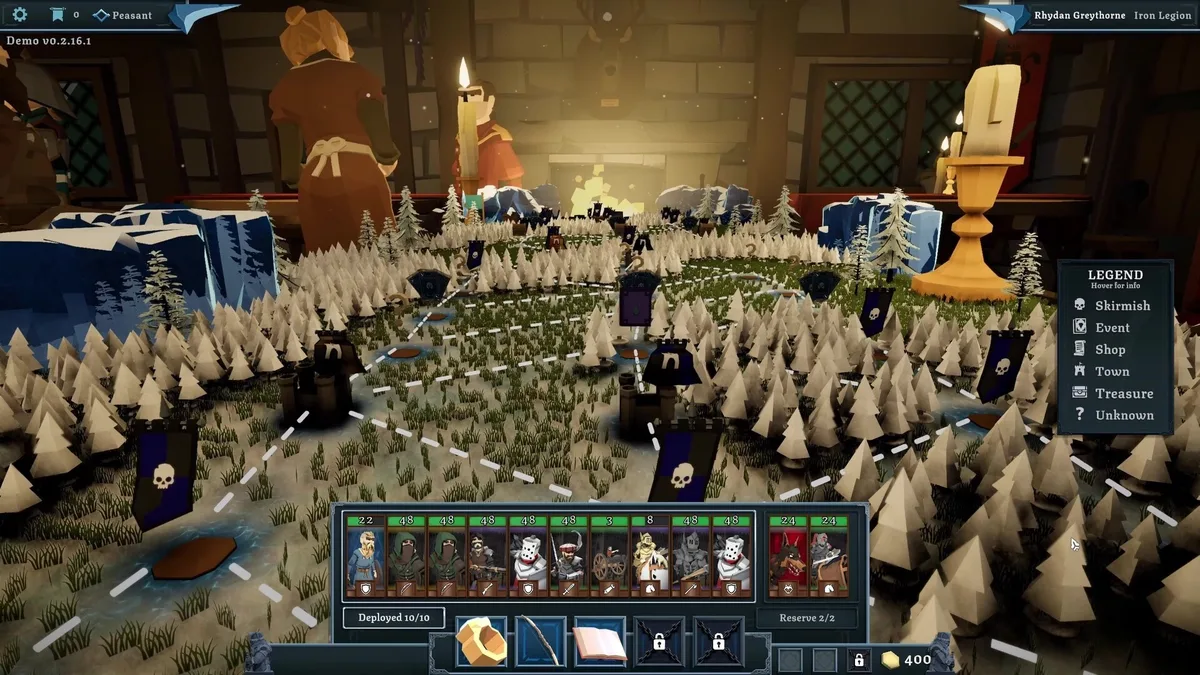 A cavalry flank hitting a rear formation delivers morale damage that outpaces the physical hit. Most battles end on morale, not health.
Heal between battles or accept a compounding tax
Damaged units carry their wounds into the next fight. A unit at 60% health doesn't fight at full effectiveness, and if the next encounter is harder, the deficit compounds. Reach a boss with a half-damaged army and you're in trouble regardless of how well you position. Formation skill doesn't fix a 40% health deficit across your whole frontline.
Healing options appear at specific campaign map nodes: taverns and villages let you rest and recover, campfires provide partial healing, and health potions save critical units in emergencies. When the campaign map gives you a choice between a fight you can skip and a healing node, take the healing node if any unit is below 70% health.
Prestige is the other recovery tool. Merge three identical units and you get a single stronger version that's healthier than any of the three originals. Save those merges for before boss encounters. Using prestige mid-run just to clear reserve space wastes the window where it matters most.
GODEEPER: Legionbound uses a similar run preservation principle, where failing to manage attrition early defines whether endgame content is reachable. Legionbound Battle Mode Guide: Endurance Runs 2026 →
Vault your gold, do not spend it all each run
Between runs, Tabletop Tavern has a meta-progression layer where gold sent to the vault unlocks permanent upgrades. Most new players spend everything within each run on recruitment and shop purchases and never build the vault surplus that unlocks better options.
Send excess gold to the vault after the first three encounters. Treat it as a permanent investment, not run-specific spending. When a run is going badly, this matters even more: stop pouring gold into a failing run and vault what you can. Those upgrades carry into the next attempt, and a better-equipped start compounds over time.
Upgrade priority order based on run sustainability: additional reserve slots first (keeps damaged units off the front line), then improved gold generation (compounds across all future runs), then extra potion capacity, then shop improvements that expand your recruitment options.
Do not buy every unit the shop offers. A targeted army with clear roles outperforms a large, unfocused one. Overspending on recruitment at the cost of vault deposits is the second most common mistake after auto-resolve errors.
Send outriders to shut down enemy artillery before it fires
Enemy artillery is probably the fastest way to lose a fight you had no reason to lose. It hits your frontline infantry directly, and multiple salvos before melee begins can shatter your front before you close the distance.
The fix is outriders: deploy them near the map edges and send them straight at the artillery. Get there before the second volley lands. If you don't have outriders, cavalry works. If you have neither, use long-range ranged pressure from angles to disrupt the crews and chip their morale before they complete a third or fourth shot.
A battle where enemy artillery fires five or six times unchallenged is almost always a loss. Doesn't matter how well the rest of your line performs.
Check enemy traits every time before committing
The campaign map shows you the enemy roster before you commit to a fight. Read it. Every engagement. Every time.
Specific trait combinations change what matters: whether auto-resolve is safe, whether you need spears up front, whether a morale chain-break is even possible. Enemies with high morale resistance need you to grind through health the slow way. Enemies with heavy armor shrug off frontal attacks, making flanking the only efficient path.
Players who skip the inspection step get surprised by cavalry, artillery, and armored frontlines that their default setup can't answer. One minute per fight. It's the habit that pays off more than any single upgrade.
Related Reading
- Tabletop Tavern Complete Guide: All 8 Factions and Tips: the complete guide hub for Tabletop Tavern, covering factions, strategy, and the review verdict.
- Tabletop Tavern Release Date: Roguelike RTS Lands June 11: Background on the game's launch, faction overview, and what the developer built as a solo project.
- Best Roguelike Games 2026: 6 Picks for Every Budget: Where Tabletop Tavern sits among the year's strongest roguelike releases.
- Best Indie Roguelites Steam Summer Sale 2026: 8 Picks: Curated list of roguelites worth picking up during the sale window.
- Tabletop Tavern Strategy Guide: Advanced RTS Tips 2026: past the basics, for players ready to optimize faction matchups and unit composition.
- Far Far West Strategy Guide: Spells, Loadouts and PvE: Advanced strategy from another indie title where army composition and resource management define run outcomes.
- Legionbound Battle Mode Guide: Endurance Runs 2026: How to extend runs and manage attrition in a different roguelike format.
- Tabletop Tavern Faction Guide: All 8 Factions Ranked: Tabletop Tavern faction guide: all 8 launch factions ranked.
- Tabletop Tavern Review: Roguelike RTS Gets It Right: Tabletop Tavern review: Very Positive on Steam, 94% of 500+ ratings.
Frequently Asked Questions
What is the best starting faction for beginners in Tabletop Tavern? The Iron Legion (Empire/Human faction) is the most forgiving starting point. Their defensive formation bonuses and durable infantry let you learn the morale and positioning systems without getting punished as hard for flanking mistakes. Vikings are a close second for players who want a more aggressive opening.
Should I auto-resolve or fight manually in Tabletop Tavern? Auto-resolve is reliable only for fights where you significantly outnumber the enemy and face no cavalry, artillery, or outriders. Any time those unit types appear on the enemy roster, fight manually. Auto-resolve ignores formation depth and flanking bonuses, so it consistently underperforms in tight matchups.
How does the prestige mechanic work in Tabletop Tavern? Prestige combines three identical units into a single stronger version with improved stats. It is a long-term progression tool, not a quick fix. Hold onto matching units rather than selling them early, and use prestige when you have three of the same type before a boss encounter where raw unit quality matters most.
What causes runs to collapse early in Tabletop Tavern? The most common failure pattern is fighting a risky battle on auto-resolve and losing 40 to 60 percent of your army. Damaged units carry that penalty into every following fight. A single bad auto-resolve on a cavalry-heavy enemy roster can end a run three battles later when your depleted force hits the next boss.
How many factions are in Tabletop Tavern at launch? Eight factions are available at launch: Vikings, Orcs, Elves, Empire (Humans), Dwarves, Undead, the Sakura Dynasty, and Lizardmen. The developer has confirmed at least two more factions are coming via community vote, with a Greek-themed faction among the first additions planned.
Does Tabletop Tavern have paid DLC? No. The developer has stated there will be no paid DLC. Any new content added to the game, including future factions, will be free updates.
What are meta upgrades in Tabletop Tavern and which should I prioritize first? Meta upgrades are permanent unlocks that carry over between runs. Prioritize additional reserve slots first so damaged units can recover, then gold generation upgrades to give you more recruitment options each run. Extra potion capacity and shop improvements follow as the next tier of useful unlocks.
References
- Tabletop Tavern on Steam for current pricing ($19.99, $14.99 at launch), review score (Very Positive, 90%, nearly 2,000 reviews), factions, and system requirements.
- Tabletop Tavern Official Trailer on TJGameDev's YouTube channel, showing battlefield mechanics and faction units.
- r/totalwar community thread on Tabletop Tavern with early player impressions including notes on control responsiveness, stat transparency, and faction variety.
Was this guide helpful?
About the author

Senior Critic & Analyst
Former game data analyst turned critic with 11 years covering indie and mid-tier games. Based in Austin. Runs spreadsheets on games most people just play.
- 11 years games criticism
- Former game economy analyst
- Roguelike and strategy specialist
Keep reading

Disclaimer
This article is published for informational and entertainment purposes. It does not constitute professional financial, legal, or technical advice. Game performance, online services, patch schedules, and store listings change. Verify critical details (pricing, system requirements, regional availability) with publishers and storefronts before you buy. Affiliate links, where present, help support our editorial work and are labelled in our affiliate disclosure.
Comments
Loading comments…