GameBrief · General
Tabletop Tavern Review: Roguelike RTS Gets It Right
Tabletop Tavern review: 89% positive from 1,981 Steam reviews. Solo dev TJ delivers Total War-style battles in a tight roguelite loop at $19.99.
Reviewing
Tabletop Tavern
TJ · Frostbloom / Gamirror Games
Score
Reviewed build: 1.0
Pros
- Roguelite loop is tight and genuinely addictive: runs clock in at 40-60 minutes each
- 8 factions with distinct mechanics, each requiring different army compositions
- No paid DLC commitment: all future factions drop free, including Update 1.1 in Fall 2026
- Excellent value at $19.99 for the replayability on offer
- Demo had 580+ reviews at 92% positive, and the launch build is meaningfully better
Cons
- Battle AI folds to basic flanking and never adapts its unit matchups
- Unit balance uneven at launch: Veilpiercer archer outranges artillery and hard-counters dragons
- Has a public roadmap but shipped as a full release, which creates mixed expectations
Verdict
Tabletop Tavern solves a specific problem well: it gives you Total War-scale battles in 45 minutes instead of 4 hours, wrapped in a roguelite structure that makes starting the next run feel automatic.
This Tabletop Tavern review starts with a number: 11. That's how many of 47 total hours across three Total War campaigns Marcus Vasquez spent in actual tactical battles rather than the strategic map. The rest was menus, diplomacy screens, and army shuffling.
Tabletop Tavern is what happens when a solo developer looks at that same ratio and builds a game around fixing it.
TL;DR: Tabletop Tavern is $19.99 with 89% positive from 1,981 Steam reviews, including 86% positive across 106 recent reviews. It does one thing particularly well: delivers Total War-scale battles in 40-60 minute runs, wrapped in a roguelite structure that makes the next run automatic. The AI is easy to exploit and launch balance has rough edges, but the core loop is strong enough that neither problem kills the session.
Tabletop Tavern current status: September 2026
Tabletop Tavern launched as a full PC release on June 11, 2026. The release-date coverage has the launch context, while Steam currently lists 1,981 reviews at 89% positive, 106 recent reviews at 86% positive, and 25 achievements. The game remains single-player at a $19.99 base price, with regional pricing and sales varying over time.
The live build is still receiving fixes. Version 1.9.15 on September 15 focused on bug fixes, while the September 9 developer post described the first major update, The Rift of Magic, as the next substantial content drop. It is planned for fall 2026 and adds spellcasting and mage units, but the developer has not announced a specific release date. The review below describes the current launch content, not those future systems.
Tabletop Tavern review: does the Total War roguelite concept work?
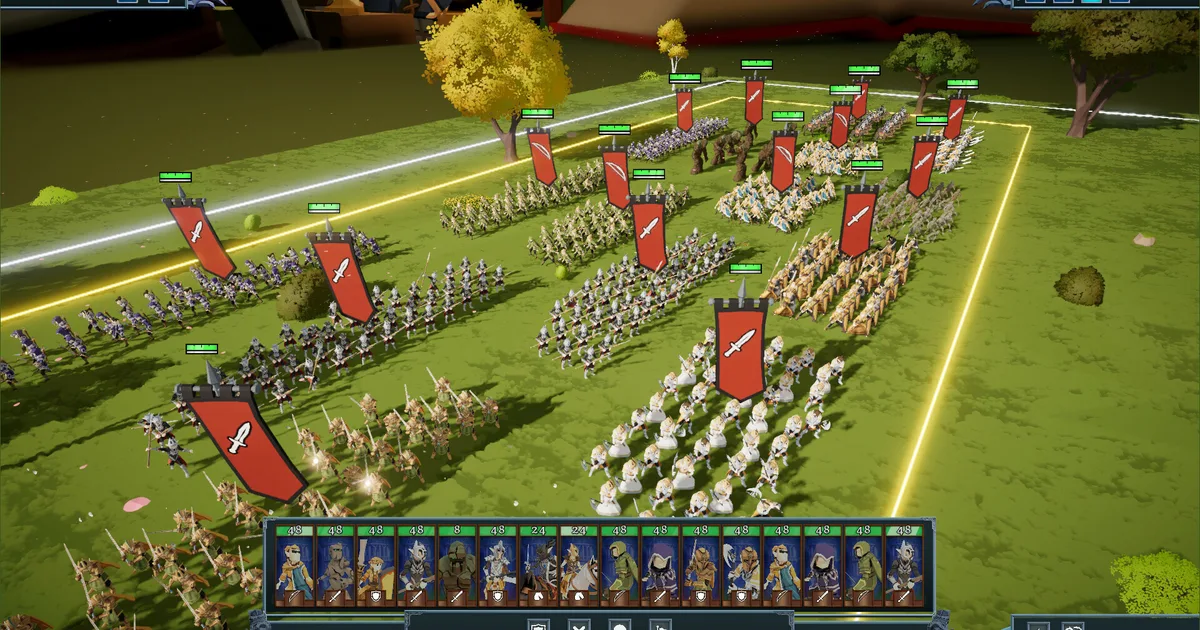
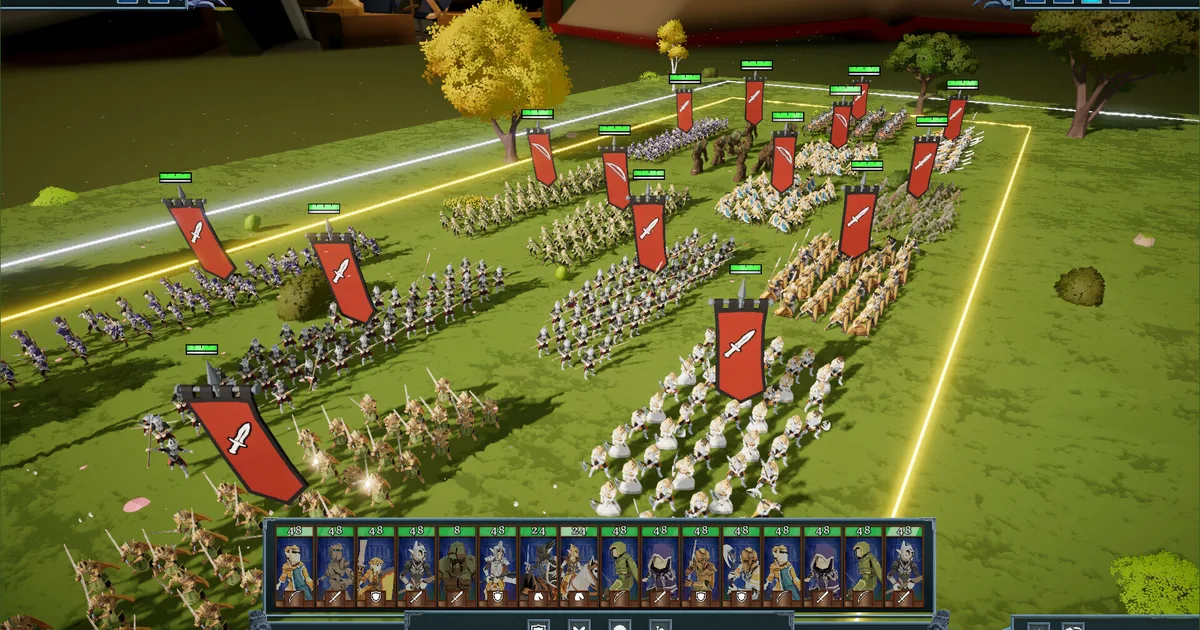
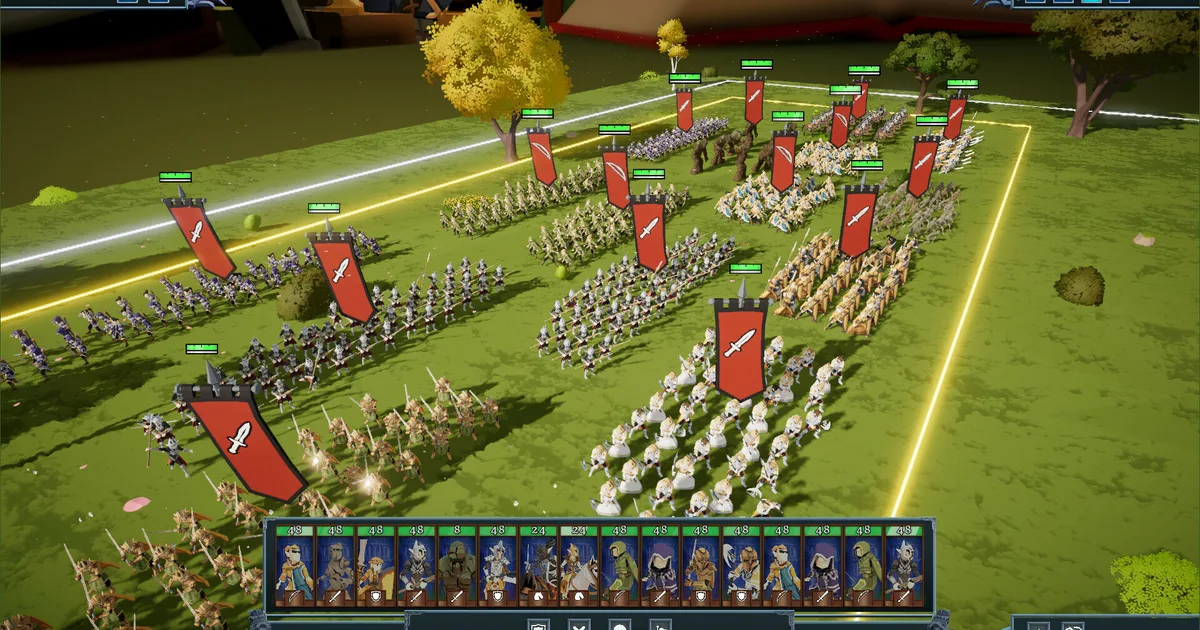
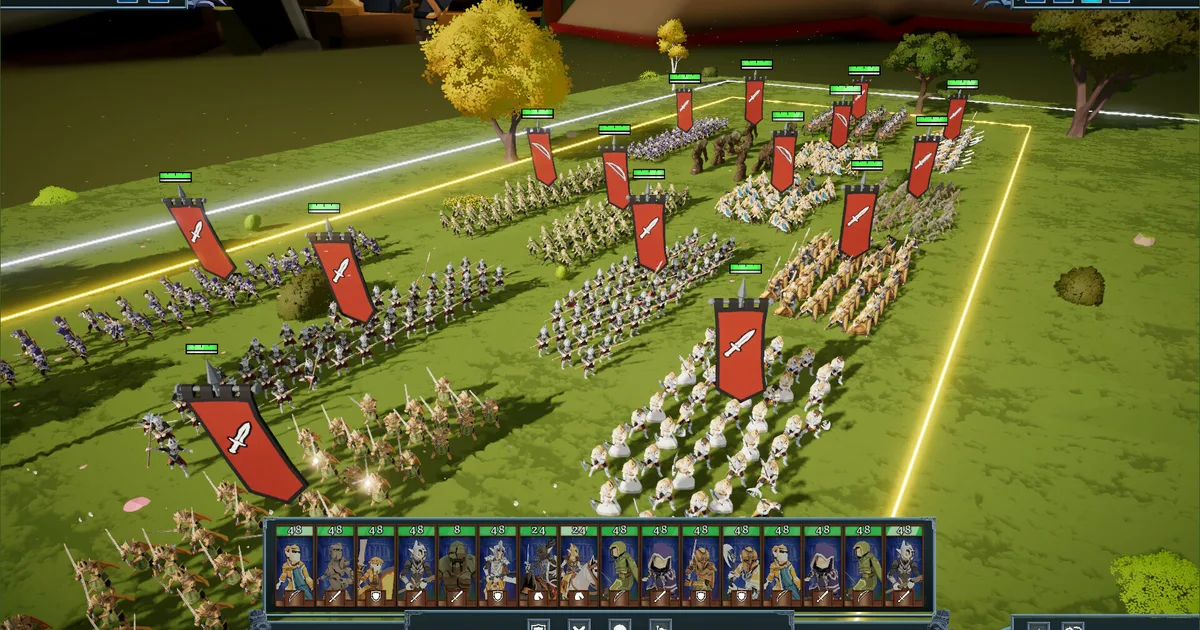
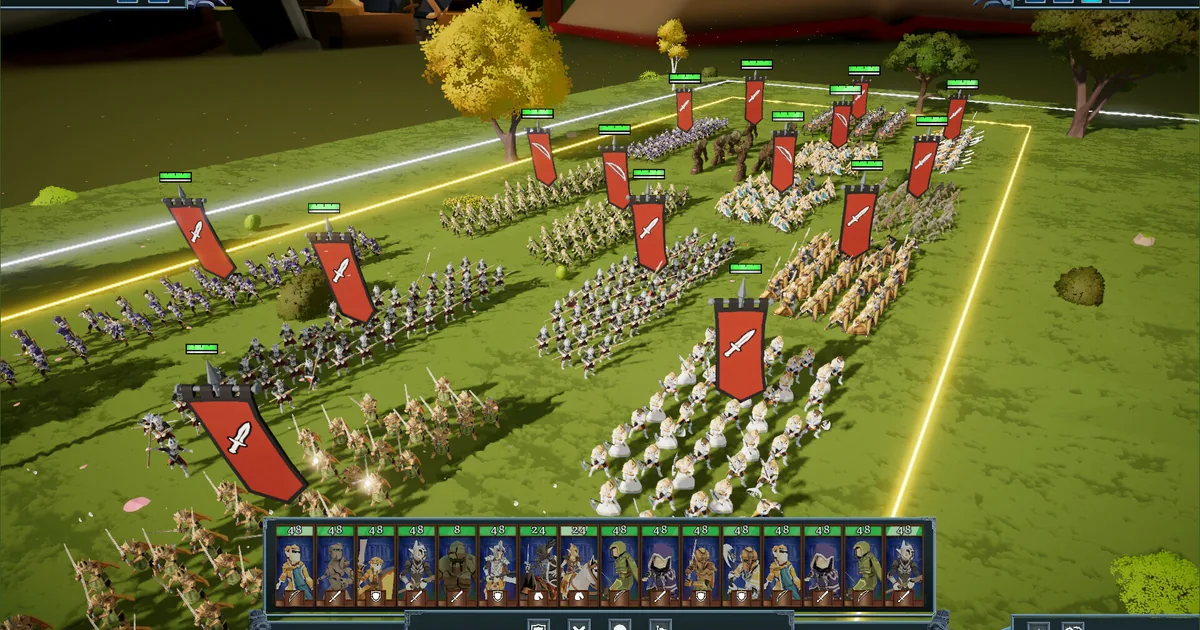
The core pitch is that you run a campaign made of individual RTS battles. Between fights you recruit units, pick upgrades, manage your roster, and face events that reshape your run. The battles themselves play out in real time with unit formations, flanking lanes, and terrain factors. You command, say, 12 unit types across a field. Some die. You keep going. The Tabletop Tavern complete guide maps the wider faction and beginner coverage around this review.
What makes it work is the tabletop presentation. Battles unfold on a physical-looking board with raised terrain and movement corridors. Spear walls hold against cavalry charges. Archers sitting on high ground shoot further. Flanking a unit from the rear deals bonus damage. These are mechanics that Total War players internalize over years of play, and Tabletop Tavern assumes you already know them. It skips the training wheels and trusts you.
The first run on a new faction typically ends around the midpoint of Act 2. You tried something aggressive, your cavalry got caught in a spear line, your archers ran out of targets, and a hero you over-invested in died to a flanker you didn't see. That death teaches you something specific about that faction's spacing requirements. The next run goes further.
Six runs across 3 factions in testing. Every death pointed at something fixable. That's a better teaching ratio than most roguelikes manage.
Gameplay: spear walls, flanks, and 8 factions that feel different
The 8 factions are not reskins. Vikings front-load elite infantry and want early, decisive engagements before attrition wears them down. Undead trade individual unit quality for a numbers advantage and some resurrection mechanics that change how you think about losses. Elves field agile units that reward constant repositioning over static line-holding. The Drakosaur Brood (Lizardmen) bring large creatures with high single-target damage but slow formation speed. The faction guide breaks down the roster when you want more than the review-level comparison.
Each faction has 2 lords at launch, and the lord choice matters: one lord typically favors aggressive army building while the other rewards a more defensive, synergy-heavy roster. At the higher difficulty tiers, this choice functions more like a starting handicap than a cosmetic pick.
The synergy system runs underneath all of it. Pairing specific unit types together generates bonuses that don't appear in the base stats. Stacking three archer units of the same class triggers a fire-rate modifier. Mixing heavy infantry with a healer hero generates a passive regen field. These combos aren't listed anywhere obvious at the start, which either reads as satisfying discovery or frustrating obscurity depending on your patience level. After tracking them across 6 runs, the patterns become predictable. The game rewards iteration.
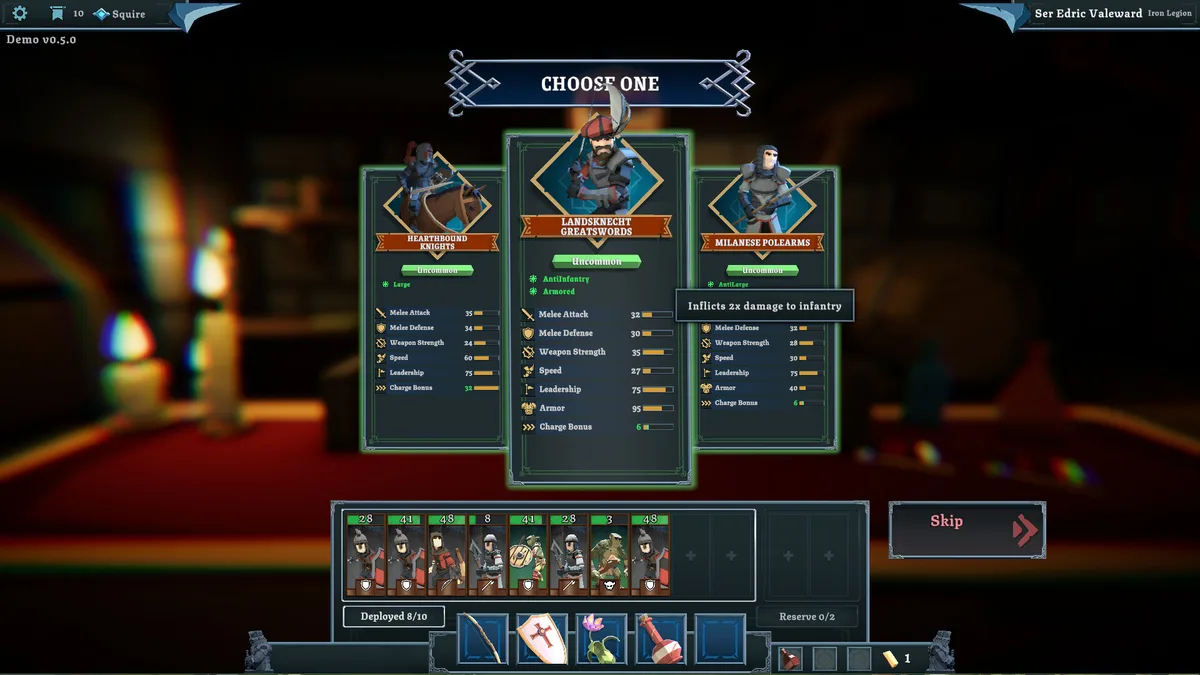 Two opposing cavalry wings closing on a Viking spear line. The terrain choke point is doing most of the defensive work here.
If you're coming from the demo: the launch build is harder. The demo's economy was generous enough that certain unit combos turned into automatic wins. The 1.0 release tightened resource scaling and added more variance to enemy compositions. Players on Steam flagged this as an improvement. The demo felt solved by run 5; the full game still generates novel fights at run 15.
The roguelite loop and run structure
Each campaign runs across acts structured like a branching map. You pick routes, encounter events, visit merchants, and hit mandatory boss battles at act transitions. The advanced RTS strategy guide covers the route and composition decisions that sit underneath a successful run. The boss encounters require specific counter-compositions rather than just outscaling. A boss with high cavalry resistance punishes a cavalry-heavy roster you built for the earlier acts. This is where the game's depth lives: managing the tension between what your faction does well and what the current act's bosses demand.
Run length averages about 45 minutes to finish a full campaign, or 40 minutes to clear Act 1 if you know the faction well. The save system lets you pause at almost any point outside active battle. There's no waiting for an AI to take its turn on a strategic map. That specific friction, the one that turns a 30-minute Total War session into a 90-minute one, is completely absent.
The upgrade system between runs is deliberately lean. You unlock permanent perks for a faction by completing runs, but the per-run upgrades reset each time. The Tabletop Tavern tips guide covers the early tactical habits that make those upgrades matter. This keeps the roguelite loop fair: a new player on run 1 doesn't face a meaningful disadvantage against the mid-game content. The gap widens at endgame difficulty tiers, but the first 10-15 hours play on a level field.
25 Steam achievements at launch, most tied to completing runs with specific faction restrictions or difficulty conditions. Not padded. About 18 of them require genuine strategic knowledge rather than just playing long enough.
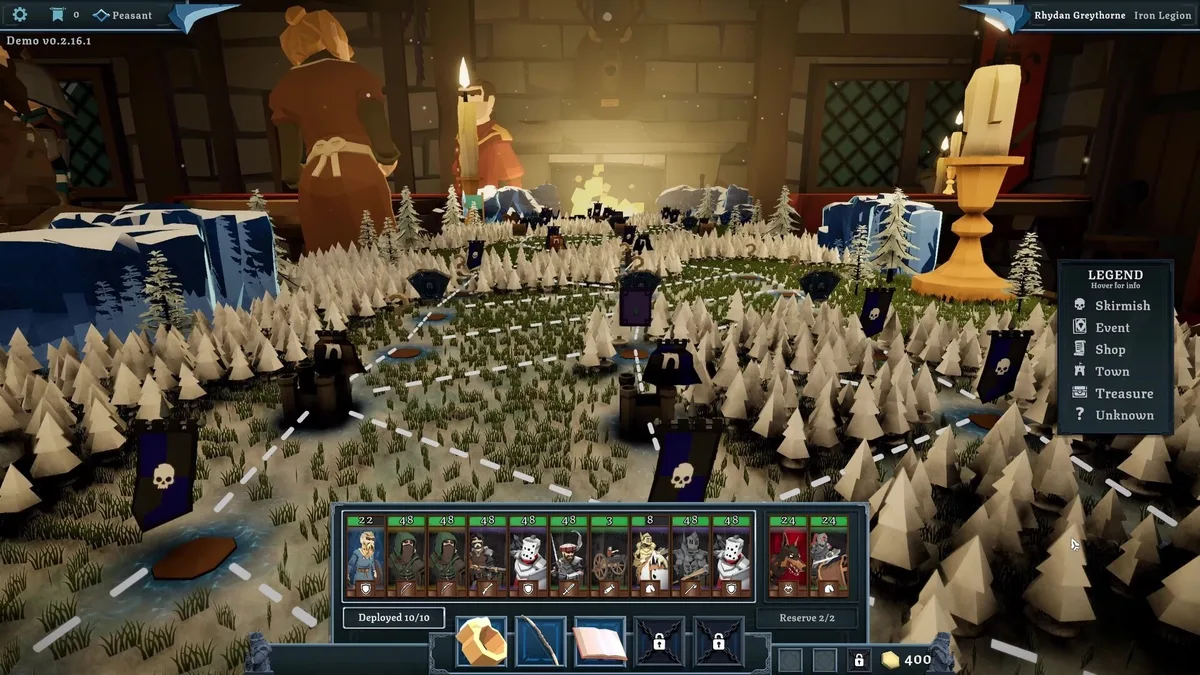 The between-battle campaign map. Route selection here matters more than it looks: the upper path trades a merchant visit for a harder mandatory fight.
GODEEPER: Which factions suit which playstyle in Tabletop Tavern? The rankings and specific unit breakdowns are here. Tabletop Tavern Faction Guide: All 8 Factions Ranked →
What doesn't work
The battle AI is the most significant problem. Enemies don't adapt to your formation. They run preset attack patterns that basic flanking dissolves. One reviewer on Steam put it plainly: "The battle AI does leave something to be desired. Far too easy to trick and outmanoeuvre, and it doesn't understand unit matchups at all."
This is accurate. After learning a faction's spacing, the AI becomes mostly a positioning exercise rather than a reactive opponent. The difficulty comes from unit composition variety in later acts, not from AI decision-making. If you've played Total War's multiplayer or even its harder AI modes, Tabletop Tavern's enemies will feel predictable from around the 5-hour mark.
Unit balance at launch is uneven in specific, traceable ways. The Veilpiercer archer (Sakura Dynasty roster) can engage targets from across the entire map and outranges artillery pieces it should lose to on paper. The Elf legendary dragon unit, which should counter ranged threats at close range, loses to uncommon infantry in early testing. The developer acknowledged the balance state on Steam. If you want to play the "correct" units rather than the interesting ones, two factions currently have outliers that break the math.
The full-release-with-roadmap framing will generate some buyer skepticism. The game shipped as v1.0, not early access, but the Steam page shows Update 1.1 (The Rift of Magic, Fall 2026) with mage units and spellcasting as the next major content drop. For what's there at launch, the game is complete. But players expecting a finished end state rather than a living game may find the roadmap framing contradictory.
Value and what's coming
$19.99 USD at full price ($14.99 during a 25% launch-week discount in June 2026). At the base price, the per-hour calculation works out well: 8 factions with 2 lords each gives 16 starting conditions, 25 achievements with genuine skill gating, and difficulty tiers that change the resource and composition pressure enough to feel like different games. For a single-developer release, there's more here than the price implies.
The no-paid-DLC commitment matters more than it sounds. The developer confirmed that all future factions join the roster as free updates, including anything out of Update 1.1 and beyond. For a game where faction variety is what brings you back, that changes the long-term calculus.
Update 1.1, The Rift of Magic, is planned for fall 2026 and adds spellcasting mechanics and mage unit types. The September 9 announcement did not give a specific release date, so treat it as roadmap context rather than content already in the review build.
GODEEPER: Getting the basics down before trying harder difficulties? The 9 tactical patterns that carry the most runs are here. Tabletop Tavern Tips: 9 Ways to Win More Runs 2026 →
Verdict
Tabletop Tavern solves a specific problem well: it gives you Total War-scale battles in 45 minutes instead of 4 hours, wrapped in a roguelite structure that makes starting the next run feel automatic. The AI is weak enough that experienced strategy players will learn its limits quickly. The unit balance has two factions with outlier units that need patching. Neither problem kills the session.
What keeps pulling you back is the faction variety and the composition puzzle each run generates. Eight factions play differently enough that switching between them resets your instincts in a way that feels like a new game, not a new skin. The synergy system rewards pattern recognition without punishing experimentation. At $19.99 with a no-DLC commitment and a solo developer who shipped a better game than the demo promised, there's no complicated calculation here.
Related Reading
- Tabletop Tavern Complete Guide: All 8 Factions and Tips: the full guide hub linking factions, strategy, beginner tips, and the review verdict in one place.
- Tabletop Tavern Faction Guide: All 8 Factions Ranked: Which factions suit beginners versus experienced players, with unit composition breakdowns for each.
- Tabletop Tavern Tips: 9 Ways to Win More Runs 2026: Tactical patterns that hold across all 8 factions, including the flanking counters and synergy combos the game doesn't explain.
- Skull Horde Review: Fast Dungeon Auto-Battler Worth Buying: Another game that distills a genre into shorter, harder loops, if Tabletop Tavern's run length appeals to you.
- Best Indie Roguelites Steam Summer Sale 2026: 8 Picks: The context list for where Tabletop Tavern sits among 2026's strongest roguelite releases.
- Tabletop Tavern Release Date: Roguelike RTS Lands June 11: Tabletop Tavern release date is June 11, 2026.
References
- Tabletop Tavern on Steam
- Tabletop Tavern launch coverage via HappyGamer
- Tabletop Tavern Steam Community discussion
- Tabletop Tavern Steam announcements: version 1.9.15 fixes and the September Rift of Magic roadmap update
- Games Press: Medieval RTS Roguelite launches June 11
- Tabletop Tavern Launch Trailer on YouTube
- TJ (developer) on X
Frequently Asked Questions
Is Tabletop Tavern worth buying? Yes, at $19.99 it delivers strong value. The roguelite loop is genuinely addictive with 8 factions, 25 achievements, and a no-paid-DLC commitment that means future factions arrive free. The main caveat is that the battle AI is fairly easy to exploit once you learn basic flanking patterns.
How long is a run in Tabletop Tavern? A single campaign run takes roughly 40 to 60 minutes. The first act clears in about 40 minutes for most players. You can save at almost any point, so there's no need to sit through a full run in one session.
How many factions are in Tabletop Tavern? There are 8 factions at launch: Vikings, Orcs, Elves, the Empire (Iron Legion), Dwarves, Undead, the Sakura Dynasty, and Lizardmen (Drakosaur Brood). Each has 2 lords and a distinct playstyle. More factions will arrive as free updates.
Does Tabletop Tavern have multiplayer? No. Tabletop Tavern is single-player only. The developer has not announced multiplayer as a planned feature.
What is the Tabletop Tavern roadmap? The first major update is Update 1.1 'The Rift of Magic,' planned for fall 2026 with no exact date announced. The September developer post says it adds spellcasting and mage units. Future factions and content are planned as free updates.
Is Tabletop Tavern early access? No, it launched as a full release on June 11, 2026. However, the Steam page includes a public roadmap with planned updates, which has caused some confusion. The developer considers it a complete game with free updates still to come.
How does Tabletop Tavern compare to Total War? Tabletop Tavern takes the real-time battle layer from Total War and strips out the strategic campaign layer entirely. Battles feel similar in scale and mechanics, but each fight is self-contained and much shorter. Think of it as Total War's combat engine inside a Slay the Spire structure.
About the author

Senior Critic & Analyst
Former game data analyst turned critic with 11 years covering indie and mid-tier games. Based in Austin. Runs spreadsheets on games most people just play.
- 11 years games criticism
- Former game economy analyst
- Roguelike and strategy specialist
Keep reading

Disclaimer
This article is published for informational and entertainment purposes. It does not constitute professional financial, legal, or technical advice. Game performance, online services, patch schedules, and store listings change. Verify critical details (pricing, system requirements, regional availability) with publishers and storefronts before you buy. Affiliate links, where present, help support our editorial work and are labelled in our affiliate disclosure.
Comments
Loading comments…