
GameBrief · General
Tabletop Tavern Complete Guide: All 8 Factions and Tips
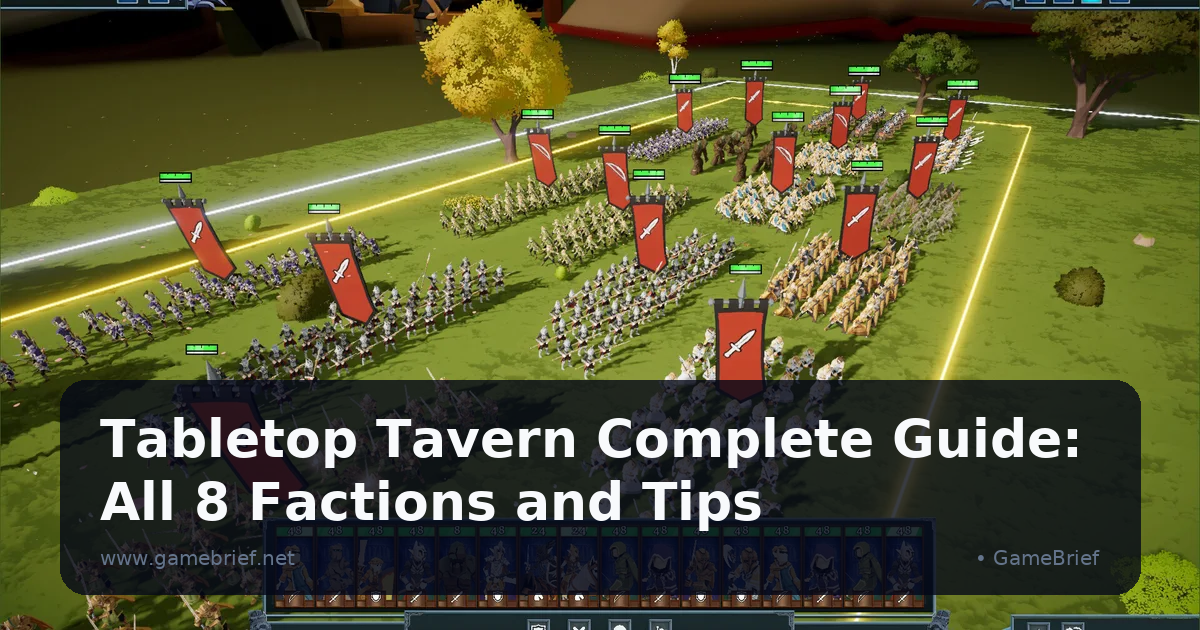
Tabletop Tavern complete guide: a solo-built roguelike RTS with 8 factions. Hub for faction picks, strategy, beginner tips, and the review verdict.
Reviewing
Tabletop Tavern
TJ · Frostbloom, Gamirror Games
This Tabletop Tavern complete guide pulls together everything GameBrief has published on the game in one place: the factions, the systems that decide battles, the beginner mistakes, and whether it's worth its $19.99 price tag. Tabletop Tavern is a roguelike real-time strategy game built almost entirely by one developer, TJ, and published by Frostbloom and Gamirror Games. It launched on Steam June 11, 2026, and landed at Very Positive with 8 launch factions and a combat model borrowed openly from Total War.
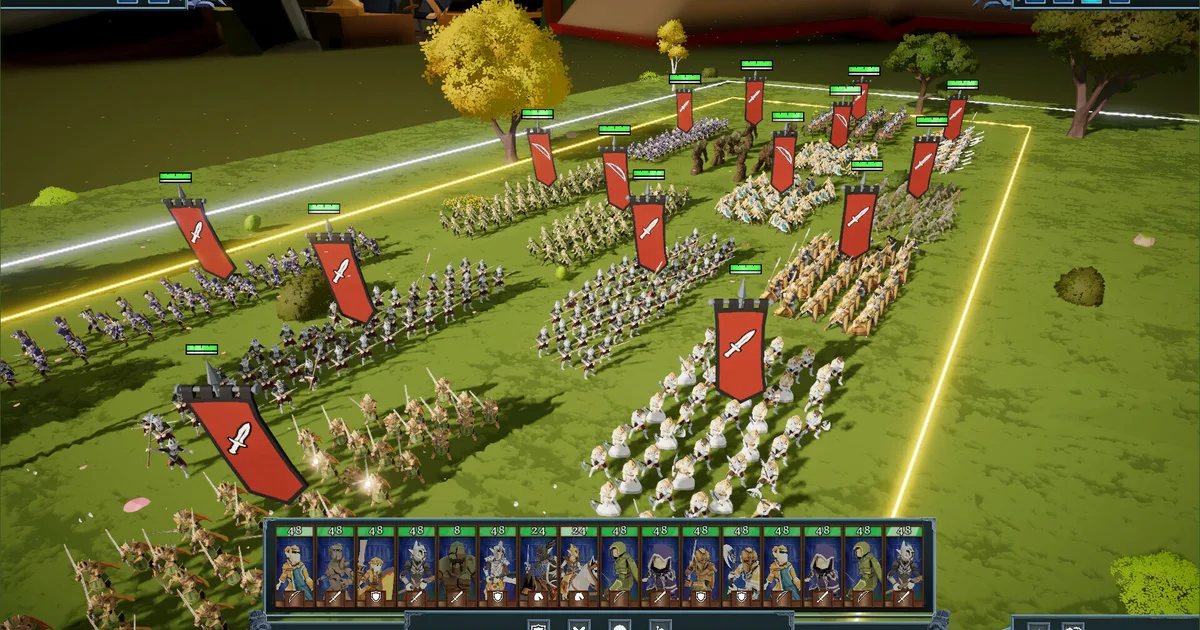
TL;DR: Tabletop Tavern is a solo-developed roguelike RTS with 8 factions, 40-60 minute runs, and a $19.99 price tag ($14.99 during its June 2026 launch-week discount). Morale cascades, not raw casualties, decide most fights. Empire (Iron Legion) is the easiest faction to learn on. GameBrief's review scored it 7.5/10: strong core loop, weak battle AI, uneven launch balance. A ninth faction and a spellcasting update are both confirmed and both free.
Key takeaways
- Solo developer TJ built Tabletop Tavern, published by Frostbloom and Gamirror Games, launched June 11, 2026 on Steam (PC, Windows only)
- $19.99 on Steam ($14.99 during the June 2026 launch-week discount), Very Positive reviews with nearly 2,000 rated as of this writing, with a free demo available if you want to try a run first
- 8 launch factions: Vikings, Orcs, Elves, Empire (Iron Legion), Dwarves, Undead, the Sakura Dynasty, and Lizardmen (Drakosaur Brood)
- A campaign run takes 40-60 minutes; morale chain-breaks decide most battles, not who has more health left
- Formation depth beats width against cavalry; five army roles (frontline, spear, ranged, flankers, heavy support) are needed to survive the late campaign
- No paid DLC, ever, confirmed by the developer. A 9th faction and a spellcasting update are both already announced as free content
- GameBrief's review scored the game 7.5/10: a tight roguelite loop let down by predictable battle AI and uneven launch balance
What is Tabletop Tavern? (quick answer)
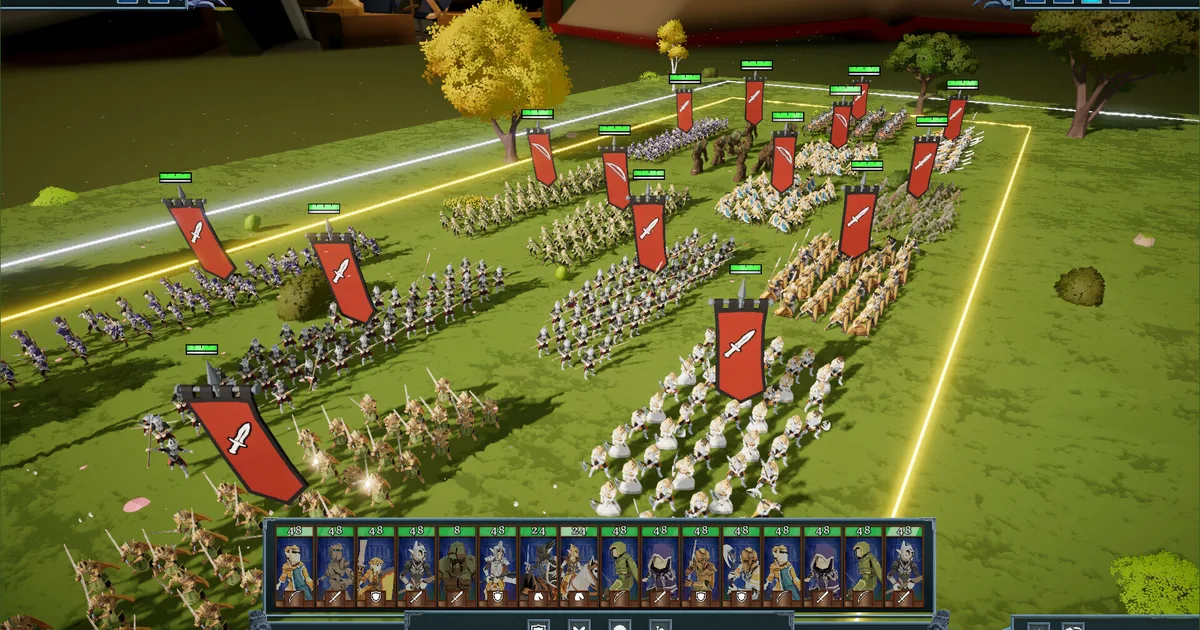
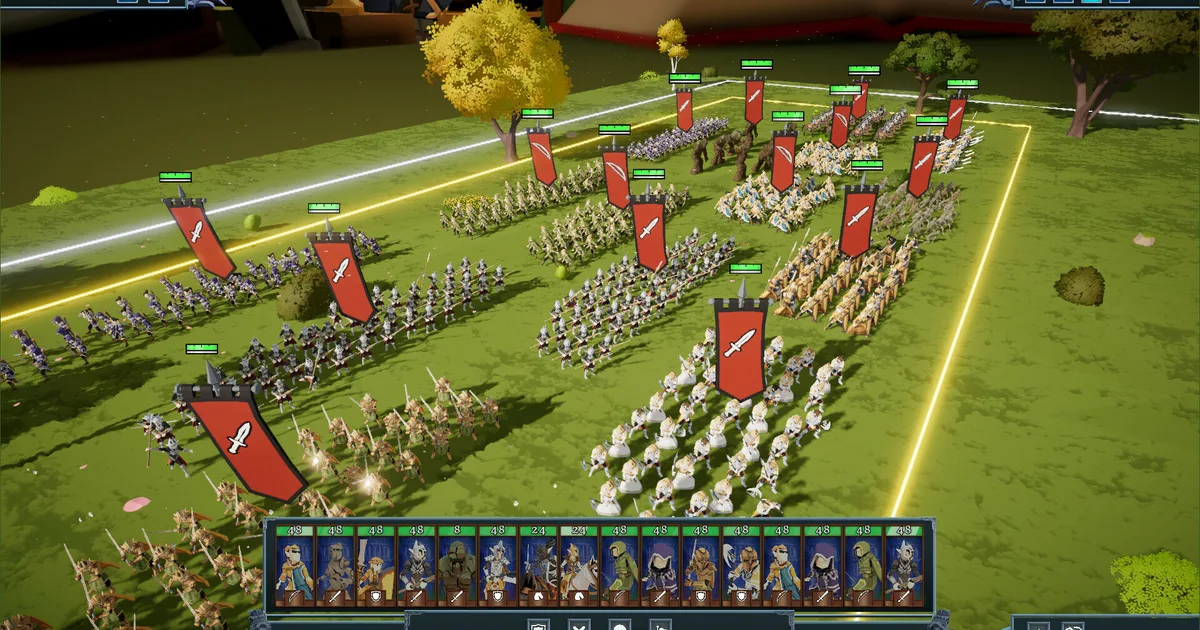
Tabletop Tavern is a roguelike real-time strategy game where you build an army from one of 8 factions, fight live tabletop-style battles with spear walls, flanking, and terrain, and restart with new gear and permanent upgrades each run. A solo developer built it with no marketing budget and says 120,000 wishlists were already waiting on launch day, June 11, 2026.
For the full story behind that launch, including the developer's background and what the Steam page promised on day one, see the Tabletop Tavern release date coverage. The short version: it's Windows-only on Steam, single-player, and there's a free demo if you want to run a campaign before spending anything.
The pitch that made it stand out is specific. Most RTS games make you sit through a strategic map between fights. Tabletop Tavern skips that layer entirely and gets you into the next battle in under a minute. If you've ever counted how much of a Total War campaign is actually spent fighting versus managing menus, that's the exact ratio this game rebuilds itself around.
All 8 factions guide
Eight factions ship with the current build: Vikings, Orcs, Elves, Empire (Iron Legion, sometimes listed as Humans), Dwarves (Deepstone Hold), Undead, the Sakura Dynasty, and Lizardmen (Drakosaur Brood). That count comes directly from the Tabletop Tavern faction guide, which ranks all 8 and covers what changed for each roster in the pre-launch Faction Overhaul.
That Overhaul reworked how unit counts scale with tier, under a "Quality over Quantity" model. Cheap infantry like Goblins or Skeletons now field 84 models per unit with lower individual stats. Elite infantry, including Dwarves and Ashguard, run 36 models with much higher health and armor per soldier. Cavalry sits at 16 models with stronger charge bonuses, and monster units land at 4 or 12 depending on type. The practical effect: losing one elite unit costs you more in a single event than losing one cheap unit, even though the cheap unit absorbed more total hits getting there.
Empire (Iron Legion) is the beginner pick. Ashguard infantry holds a line without demanding precise positioning, the roster covers all five army roles without hunting for rare recruits, and the faction's campaign bonus rewards the conservative, defensive play new players do by default anyway. Vikings are the natural second faction: Jomsviking elite infantry carries strong charge bonuses that close fights fast in manual play, though the faction has less recovery tolerance than Empire if a battle drags. Dwarves are the answer if your runs keep collapsing to attrition: their elite infantry has the highest health and armor values in the game post-Overhaul, and units simply don't route from flanking hits as readily as lighter rosters.
Elves and the Sakura Dynasty sit at the other end. Both reward players who already understand morale and positioning, and both punish the players who don't. Elf units like Duskspears and Elarion Sentinels put out excellent ranged damage but have lower morale tolerance than Human or Dwarf infantry, so one uncontrolled flank can cascade through an Elf formation faster than it looks like it should. The Sakura Dynasty's Ashigaru Spearmen and Ronin Wanderers play a mobile, hit-and-run style that a r/totalwar thread on the game's launch compared directly to Total War's cavalry-management style: if that felt intuitive to you there, it clicks fast here too. Orcs field Trolls, Giants, and Fleshshredders with the highest damage ceiling in the roster, but they cost more to heal, so sloppy positioning is punished harder than with any other faction. Undead run mass cheap Skeleton infantry with different replenishment mechanics than living factions, a slower and more patient style that most players write off before they've actually tried it. Lizardmen bring the Drakosaur Brood, dinosaur-adjacent monster units that hit unarmored infantry hard but need the rest of the roster built around them to handle armored spear formations.
Two more factions are already confirmed and unreleased. Update 1.2: Banners of War (Winter 2027) adds the Olympian Phalanx as the game's 9th faction, plus a second faction chosen by community vote. Every future faction ships free, with no paid DLC ever, a commitment TJ has repeated across the game's Steam announcements.
Advanced RTS strategy
Two systems decide whether a well-recruited army actually reaches the boss intact, and the Tabletop Tavern strategy guide covers both in depth: morale chain-breaks and attrition between fights.
Morale is the system that looks slow to matter until it suddenly decides a battle. Individual units carry a morale stat that decays from flanking hits, from watching adjacent units rout, and from sustained casualties without a position change. Once a unit crosses the break threshold it routs, and that rout triggers a morale check on whatever units are standing next to it in the same formation. A chain break is three or four units leaving the field in the space of fifteen seconds, all from one cavalry charge that reached your backline. Formation depth is the direct counter: deep formations give cavalry and fast flankers less room to maneuver behind your line, while wide formations expose your backline faster. The rule that holds up across matchups is simple: go wide when you outnumber the enemy and cavalry isn't a factor, go deep against Vikings, cavalry-heavy builds, or anything with fast outriders.
Every army that survives the late campaign covers five roles. Frontline infantry holds the line and absorbs sustained hits. Spear units are the specific counter to cavalry charges and negate charge bonuses outright. Ranged dealers put out sustained damage from behind the front line, provided they're actually covered from flanking. Outriders or flankers pressure the enemy's own ranged units and artillery. Heavy support or artillery lands high-value damage on priority targets. Drop any one of the five and a later matchup will find the gap and exploit it.
Attrition is the quieter failure mode. Damaged units carry their wounds between fights, and a unit sitting at 55% health after one encounter is often closer to 35% after the next, with reduced morale tolerance on top of the raw health loss. Reserve slot upgrades exist specifically to pull depleted units out of rotation so they can recover, and it's the single highest-priority meta unlock for exactly this reason. Runs that skip reserve management tend to arrive at the boss fight with the whole army degraded at once, which is a harder problem to fix mid-fight than any single positioning error.
Auto-resolve is reliable for early and mid-campaign fights against clearly outmatched opponents, and unreliable the moment cavalry, artillery, or outriders show up on the enemy roster. It doesn't position defensively against charges, and it doesn't exploit morale rout windows the way manual play can. The tips guide below has a specific threshold for when auto-resolve is actually safe to use.
Tips for new players
New players lose runs to a small, repeatable set of mistakes, and the Tabletop Tavern tips guide walks through 9 of them in detail. The short version covers the highest-impact habits.
Pick a faction that teaches the systems rather than one that just looks interesting. Iron Legion (Empire) is the correct starting point for exactly the reason covered in the factions section above: it doesn't punish you hard while you're still learning morale and positioning. Save Elves and the Sakura Dynasty for after you've lost a few runs and understand why those losses happened.
Never auto-resolve a fight against cavalry, artillery, or outriders. A useful community-tested threshold: if your force strength is at least 1.5x the enemy's and none of those three unit types appear in their roster, auto-resolve is safe. Below that margin, or the moment any of those three show up, switch to manual control. The asymmetry is real: fighting a winnable battle manually costs two to four minutes. Losing that same fight to auto-resolve can cost 40 to 60 percent of your army, which then damages every fight for the next three or four encounters.
Heal between battles instead of pushing forward on a damaged roster. Taverns and villages on the campaign map let you rest and recover, campfires provide partial healing, and potions cover emergencies. If any unit sits below 70% health and the map offers a healing node instead of another fight, take the healing node. Prestige, which merges three identical units into one stronger version, is the other recovery tool worth saving specifically for the run-up to a boss fight rather than spending casually mid-run.
Send excess gold to the vault rather than spending everything inside a single run. The meta-progression priority order is reserve slots first, gold generation second, then potion capacity, then shop improvements. Reserving roughly 20 to 30 percent of end-of-run gold for the vault feels inefficient in the moment, but it's the difference between a run three or four attempts from now that starts meaningfully stronger and one that's stuck repeating the same early mistakes.
Finally, check the enemy roster on the campaign map before every single fight. It takes about a minute and it's the habit that tells you whether auto-resolve is safe, whether you need spear units up front, and whether a cavalry flank is coming for your ranged line. Players who skip this step get surprised by exactly the matchups this guide already flags.
Is Tabletop Tavern worth playing?
GameBrief's full review scored Tabletop Tavern 7.5 out of 10, and the short version is that it solves a specific, narrow problem well: it delivers Total War-scale battles in 40 to 60 minutes instead of the 3 to 4 hours a real campaign in that genre usually takes, wrapped in a roguelite structure that makes starting the next run feel automatic rather than like a chore.
What earns the score: the roguelite loop held up across six tested runs and three factions without going stale, 8 factions play distinctly enough that switching between them resets your instincts rather than just reskinning the same army, and the no-paid-DLC commitment means the faction variety keeps growing for free. At its $19.99 base price, with 25 Steam achievements at launch (about 18 of which require actual strategic knowledge rather than just playtime), the review calls it strong value for a single-developer release.
What holds it back: the battle AI folds to basic flanking and doesn't adapt its unit matchups, so experienced strategy players will learn its limits within a handful of hours. Launch balance has specific, traceable problems too. The Sakura Dynasty's Veilpiercer archer outranges artillery it should lose to on paper, and the Elf faction's legendary dragon unit lost to uncommon infantry in the review's own testing. The game also shipped as a full 1.0 release while carrying a public roadmap, which the review flags as a framing choice that can read as contradictory to players expecting a fully finished end state.
Neither issue breaks the session, and the review's closing take is that the faction variety and the composition puzzle each run generates are what keep pulling players back in, even with the AI and balance rough edges still visible at launch.
All Tabletop Tavern guides
Every Tabletop Tavern article on GameBrief, gathered in one place:
- Tabletop Tavern Release Date: Roguelike RTS Lands June 11: the launch story, the solo developer behind it, pricing, and what the Steam page promised on day one.
- Tabletop Tavern Faction Guide: All 8 Factions Ranked: all 8 launch factions ranked for beginners through experienced players, plus the Faction Overhaul's model-count changes.
- Tabletop Tavern Strategy Guide: Advanced RTS Tips 2026: morale chain-breaks, formation depth versus width, the five army roles, and when to override auto-resolve.
- Tabletop Tavern Tips: 9 Ways to Win More Runs 2026: the beginner-facing version of the strategy guide, covering the specific habits that stop early runs from collapsing.
- Tabletop Tavern Review: Roguelike RTS Gets It Right: GameBrief's full 7.5/10 review, covering what works, what doesn't, and whether it's worth $19.99.
If you're deciding between roguelike strategy games this year rather than just this one, the best roguelike games of 2026 roundup places Tabletop Tavern against the rest of the field.
Related Reading
- Tabletop Tavern Faction Guide: All 8 Factions Ranked: which of the 8 factions to start with, and which to save for later.
- Tabletop Tavern Strategy Guide: Advanced RTS Tips 2026: the morale and attrition systems that decide most late-campaign runs.
- Tabletop Tavern Tips: 9 Ways to Win More Runs 2026: the habits that stop a first or second run from collapsing early.
- Tabletop Tavern Review: Roguelike RTS Gets It Right: the full 7.5/10 verdict on whether it's worth $19.99.
- Best Roguelike Games 2026: Top Picks Across Every Budget: where Tabletop Tavern sits against this year's other roguelike releases.
Frequently Asked Questions
What is Tabletop Tavern? Tabletop Tavern is a roguelike real-time strategy game from solo developer TJ, published by Frostbloom and Gamirror Games. You recruit an army from one of 8 factions, fight live tabletop-style battles, and restart with new gear each run. It launched on Steam June 11, 2026.
How many factions are in Tabletop Tavern? Eight factions ship at launch: Vikings, Orcs, Elves, Empire (Iron Legion), Dwarves, Undead, the Sakura Dynasty, and Lizardmen (Drakosaur Brood). A ninth, the Olympian Phalanx, is confirmed for Update 1.2: Banners of War in Winter 2027, alongside a second faction chosen by community vote.
Is Tabletop Tavern worth buying? GameBrief's review scored it 7.5/10. At its $19.99 base price it delivers Total War-scale battles in 40-60 minute runs with a genuinely addictive roguelite loop. The battle AI folds to basic flanking and launch balance is uneven, but neither problem breaks the core session.
How long does a Tabletop Tavern run take? A full campaign run takes roughly 40 to 60 minutes, with Act 1 clearing in about 40 minutes for most players. You can save at nearly any point outside active battle, so a run doesn't need to fit into one sitting.
Does Tabletop Tavern have multiplayer or co-op? No. Tabletop Tavern is single-player only at launch, with no co-op or multiplayer mode announced as a planned feature. Every campaign is a solo run against the game's encounters and bosses.
What's the best beginner faction in Tabletop Tavern? Empire (Iron Legion) is the most forgiving start. Ashguard infantry holds a line without precise positioning, and the roster covers all five army roles without hunting for rare recruits. Vikings are a strong second choice for a more aggressive opener.
Does Tabletop Tavern have paid DLC? No. The developer has committed to no paid DLC ever. Every future update, including new factions like the Olympian Phalanx and the Fall 2026 Rift of Magic spellcasting update, ships as a free content drop.
References
- Tabletop Tavern on Steam for pricing, faction list, reviews, and system requirements.
- Tabletop Tavern Official Launch Trailer on developer channel TJGameDev, showing all 8 factions in battle.
- TJ (developer) on X for development updates and roadmap announcements.
About the author

Senior Critic & Analyst
Former game data analyst turned critic with 11 years covering indie and mid-tier games. Based in Austin. Runs spreadsheets on games most people just play.
- 11 years games criticism
- Former game economy analyst
- Roguelike and strategy specialist
Keep reading

Disclaimer
This article is published for informational and entertainment purposes. It does not constitute professional financial, legal, or technical advice. Game performance, online services, patch schedules, and store listings change. Verify critical details (pricing, system requirements, regional availability) with publishers and storefronts before you buy. Affiliate links, where present, help support our editorial work and are labelled in our affiliate disclosure.
Comments
Loading comments…