
GameBrief · General
Tabletop Tavern Faction Guide: All 8 Factions Ranked
Reviewing
Tabletop Tavern
TJ · Frostbloom, Gamirror Games
This Tabletop Tavern faction guide covers all 8 launch factions, which ones suit new players, and what the pre-launch Faction Overhaul changed about how each roster feels in practice. Picking the right faction at the start of a run shapes every decision that follows: different units, different campaign bonuses, different ways the morale system eventually catches you out.
TL;DR: Iron Legion is the beginner faction, full stop. Durable Ashguard infantry and a balanced unit pool make it forgiving. Raven Host is the second-easiest choice if you want to hit hard. Deepstone Hold is the most reliable for sustained defense. Taelindor Forest and Sakura Dynasty demand stronger positioning, while Gruntkin punishes inefficient losses. All 8 are viable; the difference is how quickly each one makes you pay for errors.
Tabletop Tavern faction guide: which faction to pick first (quick answer)
Start with Iron Legion. Ashguard infantry holds a line without constant attention, and the roster is broad enough to teach the core army roles without forcing a specialist plan. That is exactly what new players need: room to learn the battle flow before optimizing a narrower faction.
If you've already won a run or two and want more aggression, Raven Host is the next step. Its Jomsvikings and other melee options reward an early charge and active formation control. After that, Deepstone Hold is the safest transition for players who prefer slower, durable engagements.
Current status: September 18, 2026
Steam currently lists Tabletop Tavern at $14.99, down 25% from $19.99, with a Very Positive rating across 2,092 total reviews. The developer's official launch roadmap says future factions, features, and updates are free. The eight-faction roster below uses the current names cross-checked against the hero and starting-army roster: Iron Legion, Raven Host, Gruntkin, Taelindor Forest, Deepstone Hold, Sanguine Court, Sakura Dynasty, and Drakosaur Brood.
For the wider cluster, see the complete guide hub, advanced RTS strategy guide, release guide, review, tips guide, and the hub's beginner overview.
How the Faction Overhaul changed the game
Before launch, TJ shipped a Faction Overhaul that changed how unit rosters work across all eight factions. The official patch coverage describes the change as a "Quality over Quantity" redesign: unit size, role, and per-model strength now matter when you compare a cheap line unit with an elite option.
Cheap infantry such as Goblin Rabble, Undead Levies, and Ashigaru Spearmen fill a different role from elite units such as Ashguard, Jomsvikings, and Deepstone Hold's signature troops. The exact formation size and statistics belong to each current unit card, so check the in-game card after balance patches rather than treating an old model-count table as permanent.
This matters for faction choice because it changes how losses compound. A Gruntkin run can use Goblin Rabble as a broad line while reserving more specialized units for the matchup; a Deepstone Hold run asks you to protect fewer, more valuable frontline options. Same roster principle, different weight.
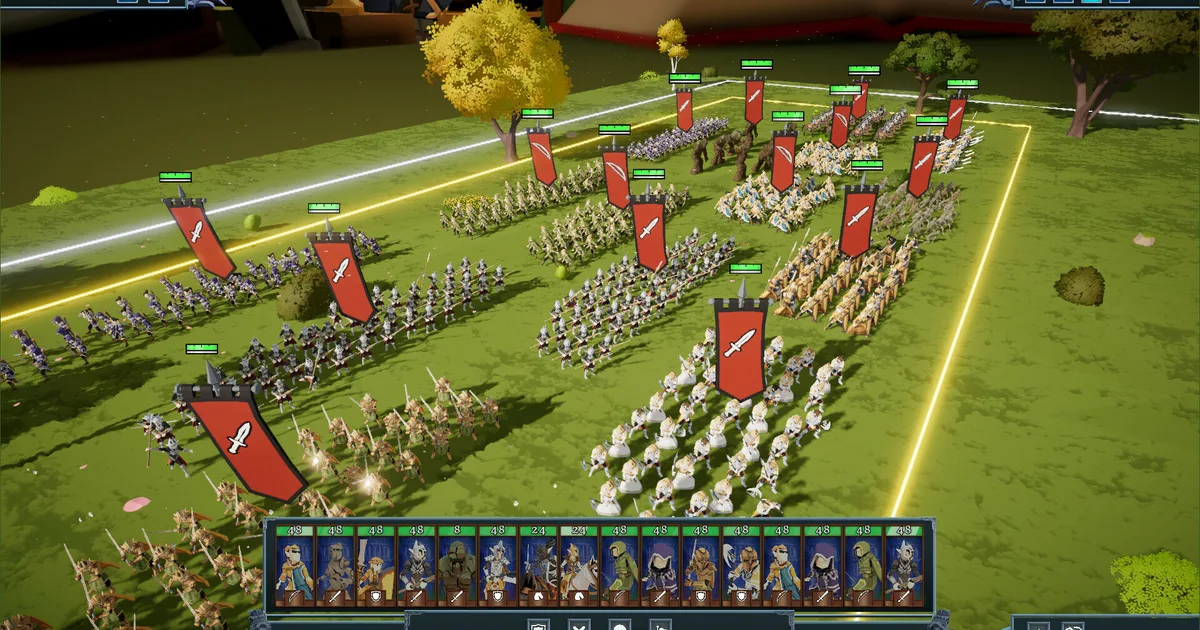
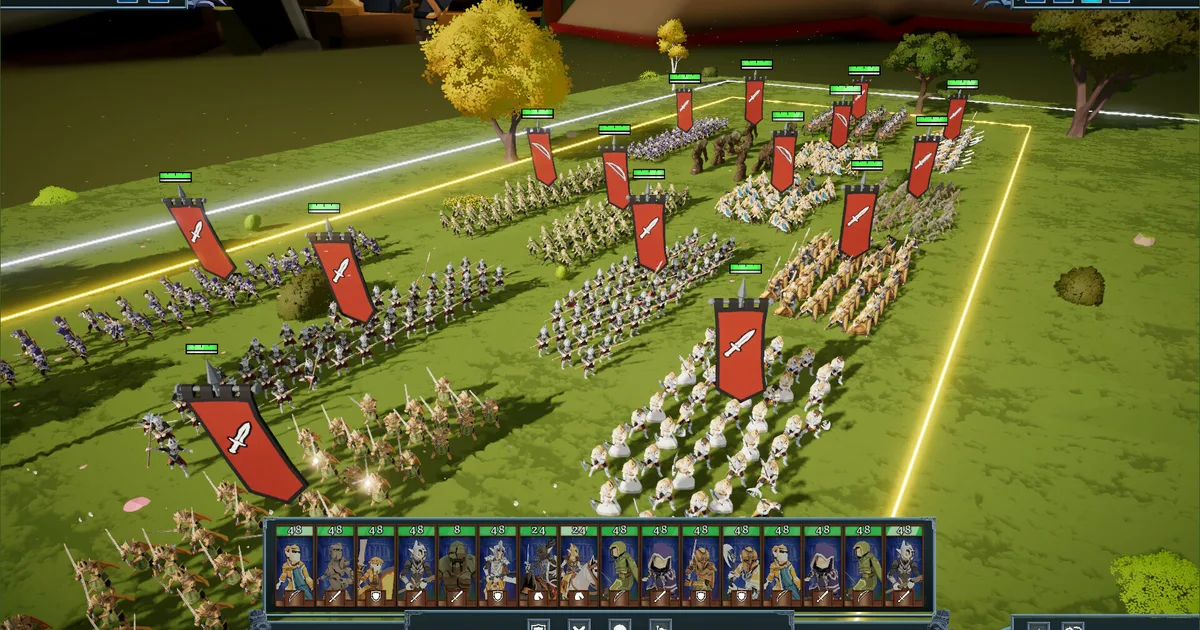
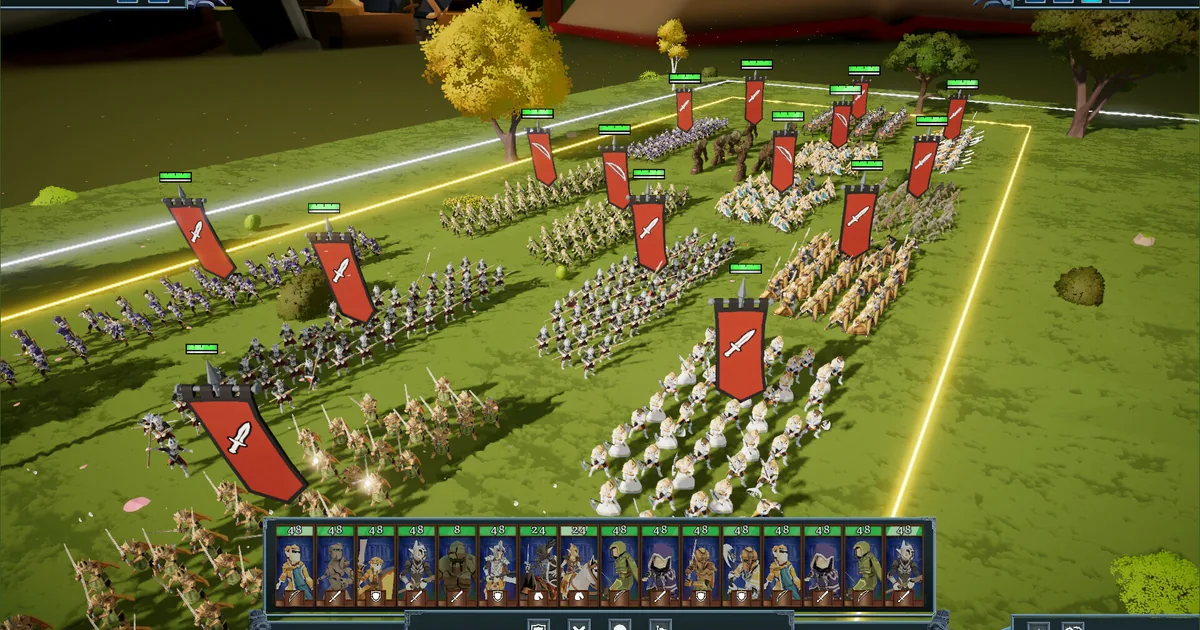
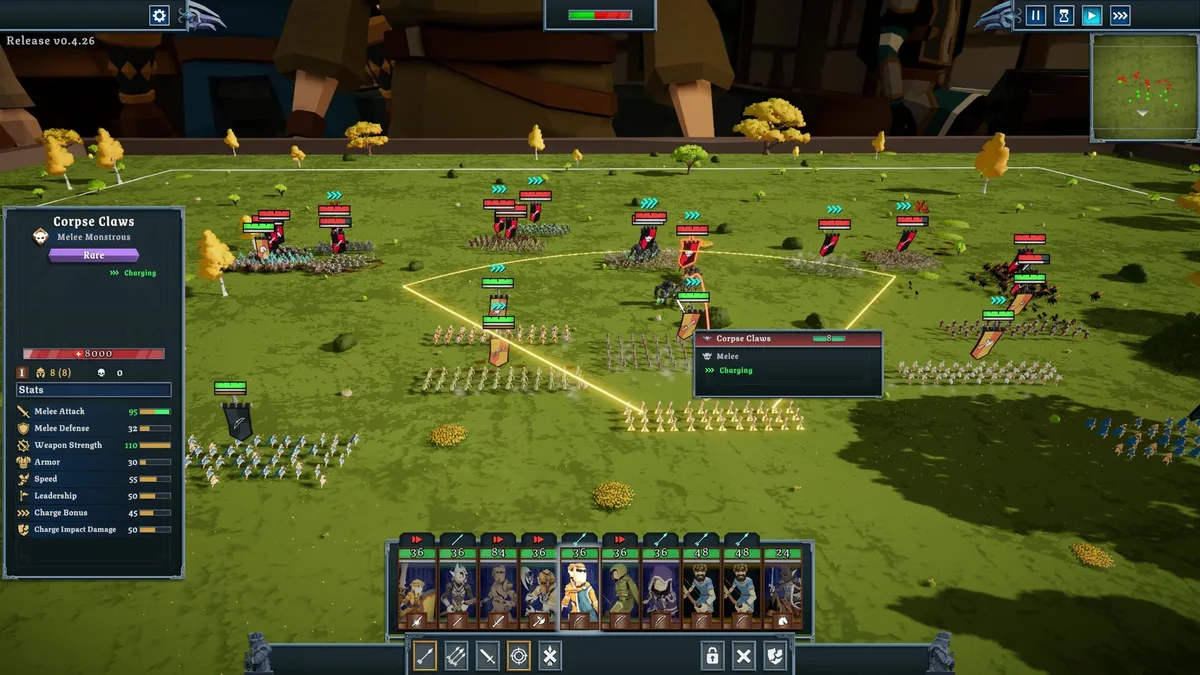 The faction selection screen shows the roster choices; use each current unit card for the live model count, role, and stats after a balance patch.
The 8 factions, broken down
Iron Legion (Human/Empire)
Good for beginners, defensive players, anyone on their first run.
The roster source lists Ashguard as Iron Legion's starting signature unit and shows Levy Swordsmen, Peasant Bowmen, and Field Pikemen in the starting army. That gives a new player a readable first roster without requiring a specialist plan. Confirm any current unit bonuses in the live card after balance patches.
Treat the defensive recommendation as a playstyle choice, not a promise of a hidden faction bonus: hold a stable line, learn the battle flow, and check the current hero bonus before building around it.
Raven Host (Vikings)
Good for aggressive players, second or third playthrough.
The roster source lists Jomsvikings as Bjorn Ironskull's signature unit, with Seawind Spears and Huskarls in his starting army. That makes Raven Host a natural close-range pressure pick, but exact charge and defense values belong to the current hero and unit cards rather than a permanent faction-wide table.
The risk: if a battle drags and your Jomsvikings eat too many flanking hits, you're exposed fast. Raven Host has less recovery tolerance than Iron Legion or Deepstone Hold. Its whole game is ending fights before that becomes a problem, so if you're still learning when to switch from auto-resolve to manual control, the faction punishes hesitation.
Deepstone Hold (Dwarves)
Good for sustained defense, players who keep losing runs on attrition.
Deepstone Hold is the defensive option to test first. The roster source lists Abyssal Delveknights and Forgewrath Hammers as signature units, with Riftpick Laborers and Grimfire Guns in the starting choices. Its slower, durable feel makes it a good fit for players who prefer sustained engagements, but use the current cards for exact stats.
If your runs fall apart because you arrive at a boss half-depleted, Deepstone Hold is the answer. Its defensive profile is built for players who want a steadier line and more tolerance for attrition.
GODEEPER: Healing between fights and how attrition compounds is the system that decides whether a Deepstone Hold or Iron Legion run actually survives long enough to matter. Tabletop Tavern Tips: 9 Ways to Win More Runs 2026 →
Taelindor Forest (Elves)
Good for experienced players, ranged-focused builds.
Taelindor Forest is the ranged-focused option to test first. The roster source lists Veilkin Drakes as a signature unit, with Ashwood Militia and Aerindel Guard in the starting army. That gives the faction ranged and mobile options without needing to invent unverified unit names.
The tradeoff is positioning. Ranged output is only useful while the formation has room to work; a flank that reaches the back line can erase that advantage. Treat Taelindor Forest as a faction that rewards checking the battlefield and protecting its ranged pieces rather than as a passive damage bonus.
One thing to watch with Taelindor Forest: its ranged advantage depends on keeping the right distance and angle. Once the army is stuck in a prolonged melee, that positioning edge is gone.
Gruntkin (Orcs)
Good for high-ceiling aggressive play, players who read matchups well.
Gruntkin's verified roster includes Goblin Rabble, Bogmaw Troll, Siegeclaws, Meatgrinders, Orc Ravagers, and Orc Stalkers. That gives the faction a mix of cheap line bodies, a monster option, and harder-hitting Orc units without inventing a generic "Fleshshredder" sub-roster. Use the current unit cards to compare each option's model count and role after balance patches.
The tradeoff is loss management. Gruntkin's aggressive options reward clean engagements, but a bad approach can cost more than a careful Iron Legion line. If you're still learning positioning, start with the cheaper line options and preserve the signature units for favorable matchups.
Sanguine Court (Undead)
Good for attrition-focused play, players who want a different kind of front line.
Sanguine Court's verified roster includes Undead Levies, Mist Wraiths, Boneshard Archers, Shadelords, Boneclatter Spears, and Deathhaven Fiends. It suits players who want a distinct attrition-focused line with ranged and elite options behind it; compare the current unit cards before assuming a unit is interchangeable with a Skeleton-style mass infantry block.
Sanguine Court does not need to win every head-on exchange immediately. Undead Levies can screen the roster while Mist Wraiths, Boneshard Archers, and the more specialized units create the payoff behind the line. It is a slower, more patient style than Iron Legion or Raven Host.
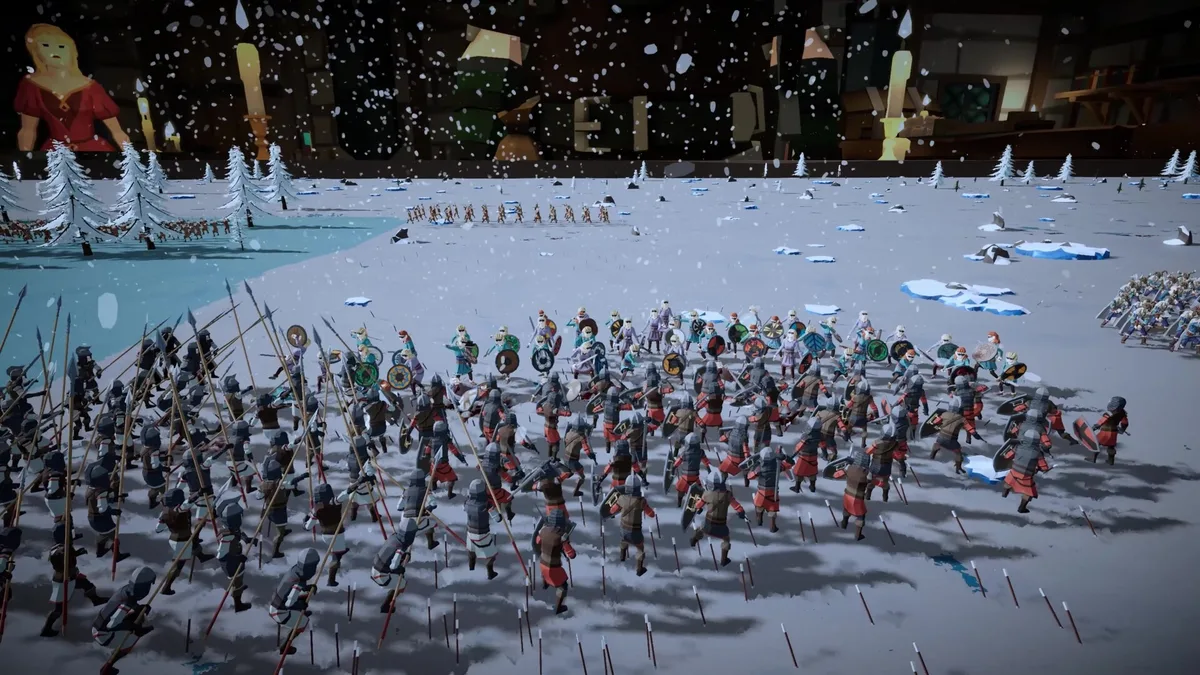 Large-scale clashes show the Quality over Quantity system in practice. Elite and mass-roster units occupy different formation and stat roles, so compare the current unit cards before committing to a build.
Sakura Dynasty
Good for experienced players, mobile tactical builds.
The Sakura Dynasty's Ashigaru Spearmen and Ronin Wanderers are the mobile starting points to test first. They fill a different role from the anchoring style of Deepstone Hold or Iron Legion heavy infantry, so the faction rewards deliberate flanking rather than a static line.
The faction plays hit-and-run and punishes formation mistakes hard. If you can create flanking opportunities while keeping your line intact, Sakura Dynasty delivers consistent results. If you're still learning when to commit a push versus hold the line, the mobile style will lose fights a sturdier roster might survive.
The r/totalwar thread covering the game's launch made the case that the Sakura Dynasty suits players who found Total War's cavalry management intuitive. I think that framing is right: if chasing flanking opportunities while keeping your line intact felt natural in Total War, the Sakura Dynasty clicks faster here than it does for everyone else.
GODEEPER: For a broader look at where Tabletop Tavern sits among this year's indie strategy roguelikes, the roundup has the full picture. Best Roguelike Games 2026: Top Picks Across Every Budget →
Drakosaur Brood (Lizardmen)
Good for monster-focused builds, players who want something genuinely unusual.
Drakosaur Brood's verified roster includes Brutes, Kobold Brawlers, Scalebow Kobolds, Redhorns, and the signature units Kaiju and Obsidian Scales. It is the monster-focused option: build around the large units while using Kobold and other supporting choices to cover the gaps.
Before committing a large unit, read the enemy unit card and traits. The source-verified roster tells you what Drakosaur Brood can field; it does not justify a universal claim that every matchup has the same anti-large interaction. Treat armor, traits, and the live battle preview as the decision point.
What's coming: new factions on the roadmap
Two roadmap additions were confirmed before launch. Update 1.2: Banners of War (Winter 2027) adds the Olympian Phalanx as the game's ninth faction, plus one more chosen by community vote. Every future faction is permanently free. No paid DLC, no expansion passes.
Update 1.1: The Rift of Magic (Fall 2026) doesn't add a new faction but brings spellcasting and Mage units, which will interact with existing rosters in ways TJ hasn't fully detailed yet. Mage units weaving into Raven Host or Taelindor Forest armies could shift how factions rank when that update arrives.
Step-by-Step: Choosing a Tabletop Tavern faction
1. Start with Iron Legion: Use Ashguard and the broad roster to learn positioning, morale, and the run economy without committing to a specialist plan.
2. Pick a pressure level: Choose Raven Host for early melee pressure, Deepstone Hold for a slower defensive line, or Gruntkin for a higher-risk mix of Goblin and Orc units.
3. Match the roster to your plan: Taelindor Forest rewards ranged positioning, Sakura Dynasty rewards mobile flanks, and Sanguine Court gives you an attrition-focused set of undead options.
4. Read the current unit cards: Confirm the role, model count, and stats in-game after balance patches. The Quality over Quantity redesign means an old universal model-count table is not a safe substitute for the live card.
5. Save Drakosaur Brood for later: Its large-unit and Kobold options are easier to evaluate once you understand how the game's traits, morale, and formation control interact.
Related Reading
- Tabletop Tavern Tips: 9 Ways to Win More Runs 2026: morale, auto-resolve decisions, vault gold, and healing between runs.
- Tabletop Tavern Release Date: Roguelike RTS Lands June 11: launch background and the developer's pre-release roadmap.
- Best Roguelike Games 2026: Top Picks Across Every Budget: where Tabletop Tavern fits against the year's best roguelikes.
- Far Far West Strategy Guide: Spells, Loadouts and PvE: another roguelike where army composition changes run outcomes.
- Best Indie Roguelites Steam Summer Sale 2026: other roguelites worth picking up.
- Tabletop Tavern Review: Roguelike RTS Gets It Right: a companion look at the game's reception and systems.
Frequently Asked Questions
How many factions are in Tabletop Tavern at launch? Eight factions ship with the game: Iron Legion, Gruntkin, Raven Host, Taelindor Forest, Sanguine Court, Sakura Dynasty, Deepstone Hold, and Drakosaur Brood. The developer has confirmed at least one more faction coming via community vote in Update 1.2: Banners of War, expected Winter 2027, starting with the Olympian Phalanx.
Which is the best faction for beginners in Tabletop Tavern? Iron Legion is the most forgiving starting choice. Its Ashguard infantry holds a front line without requiring precise positioning, and its balanced unit pool is easier to learn than the more specialized rosters. Raven Host is a strong second for players who prefer an aggressive opening.
Are Elves good in Tabletop Tavern? Taelindor Forest is strong but punishing. Veilkin Drakes and Aerindel Guard give it ranged and mobile options, while Ashwood Militia fills the line role. Any flanking attack that reaches the back line can collapse a run faster than expected, so the faction rewards players who already understand morale and positioning.
What is the Quality over Quantity system in Tabletop Tavern? The pre-launch Faction Overhaul changed how unit rosters and stats are presented, so cheap troops and elite units occupy different battlefield roles. Compare the current unit card's model count, health, armor, and role before recruiting; do not assume every faction uses the same formation size.
Can you change factions mid-run in Tabletop Tavern? Plan on choosing one faction at the start of a run and building from that roster. The verified hero reference presents each hero with a faction and starting army; the sources checked for this audit do not document reliable cross-faction gear access or a universal Prestige exception, so do not plan around those claims without confirming them in the current build.
Which factions are hardest to play in Tabletop Tavern? Taelindor Forest and Sakura Dynasty have the steepest learning curves. Both rely on positioning and mobile unit choices that punish mistakes quickly. Sakura's Ashigaru Spearmen and Ronin Wanderers are strong starting points, while Gruntkin asks you to manage Goblin Rabble, Bogmaw Trolls, and more specialized Orc units without wasting campaign resources.
What new faction is coming in Tabletop Tavern Update 1.2? Update 1.2: Banners of War, planned for Winter 2027, adds the Olympian Phalanx as a playable faction. A second faction will be added based on a community vote. The developer has also confirmed all future factions and updates are permanently free: no paid DLC, no expansion passes.
Do Dwarves have good units in Tabletop Tavern? Deepstone Hold is among the most reliable factions in the game. Its signature Abyssal Delveknights and Forgewrath Hammers support a durable, defensive plan, while Riftpick Laborers and Grimfire Guns give the roster utility. It is slower than Taelindor Forest or Sakura Dynasty, but rewards players who prefer sustained defense.
References
- Tabletop Tavern on Steam for the live listing, price ($14.99 from $19.99 at the audit snapshot), and current review count (2,092, Very Positive).
- Garrison Battles, Faction Overhaul, and Lots of Bug Fixes for the Quality over Quantity redesign, unit model counts, and stat rebalances.
- 100,000 Wishlists, Free Updates Forever & Multiplayer Confirmed for the official roadmap: Update 1.1 Rift of Magic (Fall 2026), Update 1.2 Banners of War (Winter 2027), Olympian Phalanx, and multiplayer confirmation.
- Heroes and Starting Armies for the current roster list: Iron Legion, Gruntkin, Raven Host, Taelindor Forest, Sanguine Court, Sakura Dynasty, Deepstone Hold, and Drakosaur Brood, plus named signature and starting units.
- Tabletop Tavern Official Launch Trailer on developer channel TJGameDev showing all eight factions in battle.
Was this guide helpful?
About the author

Indie & JRPG Critic
Indie game evangelist and lifelong JRPG fan covering small studios since 2017. Mumbai-born, London-based. Writes the way she talks.
- 7 years indie games coverage
- JRPG and visual novel specialist
- Narrative design focus
Keep reading

Disclaimer
This article is published for informational and entertainment purposes. It does not constitute professional financial, legal, or technical advice. Game performance, online services, patch schedules, and store listings change. Verify critical details (pricing, system requirements, regional availability) with publishers and storefronts before you buy. Affiliate links, where present, help support our editorial work and are labelled in our affiliate disclosure.
Comments
Loading comments…