
GameBrief · General
Tales of Seikyu Complete Guide: Crafting, Romance & Tips
Tales of Seikyu complete guide: every crafting, romance, and beginner guide in one hub, plus the review verdict on the 1.0 release and its $24.99 price.
Reviewing
Tales of Seikyu
ACE Entertainment · Fireshine Games
This Tales of Seikyu complete guide brings every crafting, romance, and beginner guide on the site into one hub, along with the review verdict on whether the 1.0 release earns its Very Positive Steam rating and $24.99 price. If you only landed on one Seikyu article so far, this is the page that tells you where the other five are and what each one actually covers.
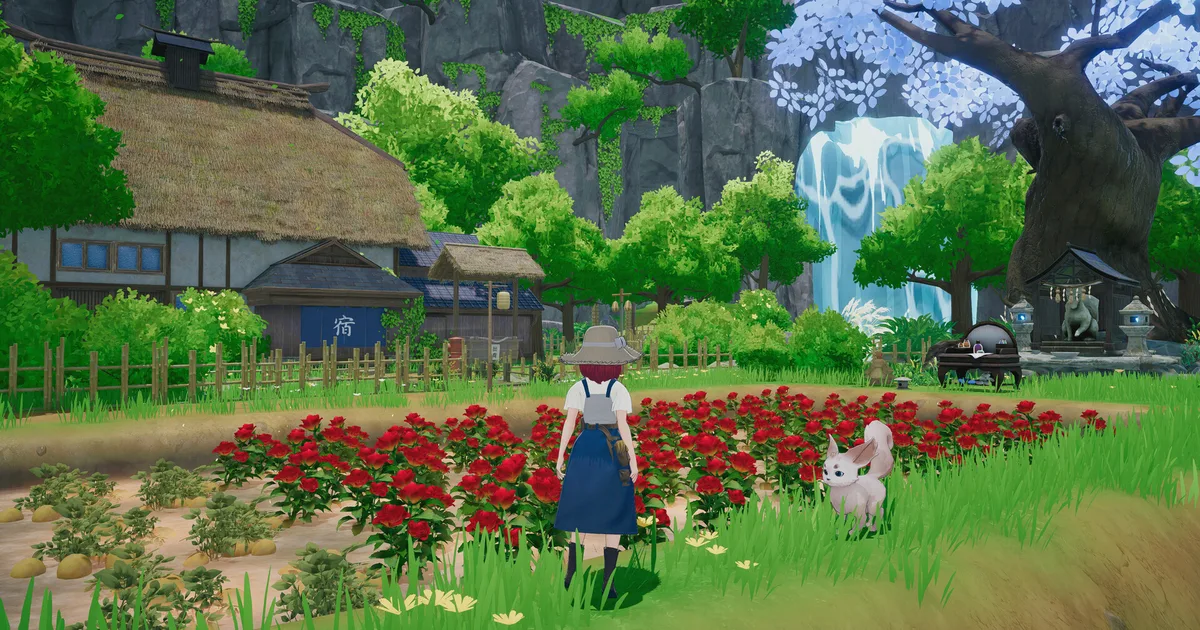
Tales of Seikyu is a cozy farming RPG from ACE Entertainment, published by Fireshine Games and Logoi Games. It exited Early Access into a 1.0 launch on June 11, 2026, and the hook that separates it from the Stardew Valley template it otherwise follows closely is shapeshifting: instead of a hoe and watering can, you transform into yokai forms to till soil, gather resources, and reach parts of the island that walking alone can't.
TL;DR: Tales of Seikyu is $24.99, single-player only, and currently sits at 84.5% positive across 2,589 Steam reviews. Build order is Crafting Table, Charcoal Kiln, Smelting Furnace, then Mayonnaise Maker. There are 18 confirmed romance candidates and marriage unlocks at heart level 10. GameBrief's review rates it 7.0/10: strong on yokai exploration and crafting texture, weaker on midgame relationship pacing and the fourth story act.
Key takeaways
- Released 1.0 on Steam June 11, 2026, after roughly a year in Early Access. Price: $24.99, no co-op or multiplayer of any kind.
- Developed by ACE Entertainment (a small Chinese indie studio); published by Fireshine Games and Logoi Games.
- Steam reception: 84.5% positive across 2,589 reviews as of the site's most recent check, up from an initial 827-review Very Positive score at launch.
- GameBrief's review score: 7.0/10. Full controller support and yokai shapeshifting exploration are the standout strengths; midgame relationship pacing and a weaker fourth act are the main drags.
- Crafting runs on a three-tier machine chain: Crafting Table, Charcoal Kiln, and Smelting Furnace first, then the Mayonnaise Maker and Stove, then forge access after Hephaestus's heart events unlock it.
- 18 confirmed romance candidates (9 male, 9 female) per the site's romance guide, up from 6 during Early Access. Marriage unlocks at heart level 10.
- The beginner tips guide documents 5 confirmed yokai forms (Human, Boar, Slime, Tengu, Yuki-onna), correcting earlier guides written against the Early Access build that only counted 3.
What is Tales of Seikyu?
Tales of Seikyu is a farm sim built around a shapeshifting mechanic tied to the player character's yokai lineage. You return to a family farmhouse on the island of Seikyu and grow crops through the seasonal calendar while building relationships with the village. The twist is that you don't walk everywhere on two feet: you transform into yokai forms (Boar, Slime, Tengu, and others) to till fields, gather resources, and reach areas the base Human form simply can't get to. The 1.0 launch coverage has the full breakdown of what shipped on release day, including the animal roster (chickens, cows, sheep, and capybaras) and the three named villagers who anchor the early story: Torleone, Sasaki, and Nyotengu.
It launched Very Positive on Steam and has held that rating through the following weeks, which puts it in the same conversation as Stardew Valley, Palia, and Fields of Mistria for players browsing the genre. What separates it from that comparison set isn't the farming loop itself, which is fairly standard, but the shapeshifting traversal and a crafting system where recipes interact with the season and your relationship progress rather than functioning as flat resource conversion.
The review frames the more useful comparison as Story of Seasons or Rune Factory rather than Stardew Valley specifically: those XSEED-localized series already built exploration into their farming loops, and Tales of Seikyu's bet is that traversal through yokai forms can deliver the same variety that Rune Factory gets from combat. For most players, according to the review, it does. Map design leans on this directly: areas you walk past early on before unlocking later forms open up substantially once you have them, so backtracking through familiar ground is worth doing rather than skipping.
Crafting guide
Two of the site's six Seikyu guides cover crafting, and they answer different questions, so it's worth being clear on which one you want.
The Tales of Seikyu Crafting Guide: What to Build First is the core build-order guide. It covers the machine chain from your first piece of wood (Crafting Table, 8 wood) through the Charcoal Kiln (10 stone, 3 clay, the piece most players skip and then wonder why their Smelting Furnace sits idle), the Spice Rock income loop (4 raw rocks into 1 Spice Rock worth 104g, a roughly 26x value jump), the Mayonnaise Maker (an egg worth 20g becomes 200g mayonnaise), and all 13 processing machines in the game, including which ones are worth building early and which (like the Stone Mill) can actually lose you money if used on the wrong crop. It also covers the Hephaestus forge unlock, which runs through his heart events rather than a delivery quest.
The Tales of Seikyu Gift Guide: Best Crafted Gifts Ranked covers the overlap between crafting and relationships specifically: which villagers' loved gifts have to be crafted rather than foraged or bought. Hephaestus wants Gold Ingots and Gold Ore, both smelting outputs, and explicitly dislikes the White Crystal that works as a universal gift for several other characters. Yohji's loved Coffee Cake needs a working Stove. This guide is the one to read if your question is specifically "what do I need to build to make Hephaestus or Yohji happy," rather than "what do I build first."
Read the crafting guide first if you're setting up your farm's economy. Read the gift guide once you've picked which villagers you're actually trying to romance, since that's when crafted gifts start mattering.
Two details from the crafting guide are worth calling out here because they trip up a lot of new players. First, the Yokai Storage entity already on your farm isn't crafted from the table at all, you level it by feeding it Stone and Clay, and the capacity gap between level 1 and level 5 is large enough that it's worth prioritizing alongside the Kiln and Furnace rather than treating it as a side task. Second, cooking through the Stove looks like a side system but overlaps heavily with income: the crafting guide flags Grilled Vegetables and Omurice as reliable high-margin dishes, while wheat-to-flour processing is a trap that actually loses value compared to selling raw wheat.
Romance and relationships
The Tales of Seikyu Romance Guide: All 18 Candidates (2026) is the full reference: 9 male candidates (Alin, Hephaestus, Kincho, Leon, Musashi, Sasaki, Torleone, Uwabami, Yohji) and 9 female candidates (Anna, Liliana, Mika, Miss Ama, Nyotengu, Shuten, Yoni, Yui, Yuki-onna), each with their documented loved gifts, birthday, and personality hook. The roster grew substantially from the 6 candidates available during Early Access, and the guide notes that a few community trackers list additional named NPCs who aren't actually confirmed marriage-eligible, so it's worth checking that guide directly rather than assuming every named villager is romanceable.
The core loop is consistent across characters: talk daily, give up to two gifts per week, and attend heart events when the affinity menu shows a rainbow glow on a portrait. At some point in each arc you get a permanent, unreversible choice between "friend" and "romantic," so the romance guide's advice to save before known event locations if you're unsure is worth following. Marriage unlocks at heart level 10; craft the special ring, propose, and your spouse moves into the farmhouse.
A few gifts cross multiple candidates' loved lists and are worth stockpiling regardless of who you're courting: any strong tea covers Musashi, Anna, Shuten, and Sasaki at once, and flowers (the cheapest crop in the game) cover Liliana and Yoni for free. For the villagers whose loved gifts require a crafting station, see the crafting gift guide above.
If you're trying to run more than one romance route at once, the romance guide's own framework is to sort candidates by cost rather than by preference: Liliana, Yoni, Kincho, and Anna are cheap and available from day one since their loved gifts come from crops you're already growing, Musashi, Yohji, and Miss Ama sit in the middle once cooking and fishing are running, and Hephaestus, Torleone, and Uwabami are the expensive tier that depends on mining, rod upgrades, or the smithing chain being built out first. Running two or three of the cheap routes in your first year is realistic; save the expensive candidates for year two once your farm's infrastructure exists to support them.
GODEEPER: New to the farm and not sure how much time you have for relationship-building on top of crops? The beginner tips guide covers the early resource routing that determines how many gift runs you can actually sustain. Tales of Seikyu Tips: 9 Things to Know Before Year 1 →
Tips for new players
The single biggest adjustment for players coming from Stardew Valley or similar sims is that Tales of Seikyu has no hoe and no watering can in the traditional sense. Everything routes through yokai forms instead. The Tales of Seikyu Tips: 9 Things to Know Before Year 1 guide walks through why that matters day to day: Boar form's ground slam handles tilling, tree clearing, and rock mining in a single move, and Slime form (once unlocked through a Fox Ruins boss fight) replaces the watering can entirely and is worth leveling early since it waters faster than the traditional tool would.
That guide's first-season framework is short and specific: clear aggressively with Boar for the first few days to bank Wood, Stone, and Clay, keep your first field small enough for Slime form to water in one pass rather than overplanting, and start gifting villagers you care about from week one rather than waiting for the "right" crafted item, since the relationship system rewards early momentum more than the perfect gift. It also flags that fishing is a weak early income source (roughly 500g per session) compared to converting eggs into mayonnaise or running Spice Rocks through the smelter, both of which the crafting guide covers in more depth.
Fox Ruins gets its own section in that guide too. It's not optional content: three of the game's yokai forms come from defeating bosses inside it, and the tips guide flags specific traps (unprepared players triggering tough fights by touching glowing wall gems) and time-gated threats (Wanyudo encounters between midnight and 2am) that aren't obvious from the tutorial.
Is Tales of Seikyu worth playing?
The Tales of Seikyu Review: A Farm Sim With Actual Depth scores it 7.0/10 and lands on a fairly specific verdict: the game earns its Very Positive Steam rating, but 1.0 launch rough edges keep it below where it clearly wants to be. The review's strongest praise goes to the yokai shapeshifting, which it calls the mechanic that most surprised the reviewer, and to a crafting system where the same recipe produces different results depending on the season and your relationship level with the character who taught it to you, which gives the crafting table "logic rather than just a recipe list."
The review's cited weaknesses are specific rather than generic: relationship pacing turns padded in the midgame, the open world is unevenly filled with some zones that exist mainly to walk through, and the fourth story chapter has pacing problems the earlier three acts don't share. The 1.0 marriage system is described as functional rather than elaborate, with brief post-marriage content that reads like a checklist item rather than a fully developed system.
For context on the studio behind it: ACE Entertainment is a small Chinese indie team that spent roughly five years on Tales of Seikyu and nearly didn't survive a 2023 cash crunch, according to a public post from studio head Klaus. That's not a reason to grade the game on a curve, but it does explain why the marriage system and fourth act read as less polished than the rest: this was a small team's first release, not a AAA studio's fifth farm sim.
The bottom line from the review: buy at $24.99 if mechanical depth alongside cozy aesthetics is what you're after, and wait for a sale if pure relaxation farming is the goal, or if you'd rather wait for post-launch performance patches first.
GODEEPER: The review covers the full pros and cons list along with how the 1.0 marriage system compares to the pre-marriage relationship arc. Tales of Seikyu Review: A Farm Sim With Actual Depth →
All Tales of Seikyu guides
Every Seikyu article on the site, in one place:
- Tales of Seikyu 1.0 Launch: Yokai Sim Goes Very Positive: what shipped at 1.0, the animal roster, shapeshifting basics, and early Steam reception.
- Tales of Seikyu Crafting Guide: What to Build First: the machine build order, all 13 processing machines, and the Hephaestus forge unlock.
- Tales of Seikyu Gift Guide: Best Crafted Gifts Ranked: which villagers need crafted (not foraged) gifts, gift tiers, and birthday timing.
- Tales of Seikyu Romance Guide: All 18 Candidates (2026): every romance candidate, their loved gifts, heart events, and how marriage works.
- Tales of Seikyu Tips: 9 Things to Know Before Year 1: yokai form priorities, first-season planning, and Fox Ruins warnings.
- Tales of Seikyu Review: A Farm Sim With Actual Depth: the full 7.0/10 verdict on whether the 1.0 release is worth $24.99.
- Tales of Seikyu Achievements Guide: All 36, Ranked by Rarity: every achievement grouped by category, with live Steam unlock rates and the two hidden entries explained.
Frequently Asked Questions
What is Tales of Seikyu? Tales of Seikyu is a cozy farming RPG where you restore an ancestral farmhouse on the yokai island of Seikyu. Instead of tools, you shapeshift into yokai forms to till soil, gather resources, and explore. It launched 1.0 on June 11, 2026 for $24.99.
How many romance candidates does Tales of Seikyu have? The site's romance guide documents 18 confirmed candidates, 9 male and 9 female, up from 6 during Early Access. Marriage unlocks at the tenth heart event with any candidate, and you can pursue more than one relationship at once.
What should I build first in Tales of Seikyu? Crafting Table (8 wood), then Charcoal Kiln (10 stone, 3 clay), then Smelting Furnace, then the Mayonnaise Maker. That order avoids the most common early mistake: building the furnace before the kiln that actually fuels it.
Is Tales of Seikyu worth playing? Yes, for players who want mechanical depth in a cozy sim. GameBrief's review scored it 7.0/10, citing genuinely varied yokai exploration and a crafting system with seasonal texture, offset by slow midgame relationship pacing and a weaker fourth act.
How many yokai forms are in Tales of Seikyu? The beginner tips guide documents 5 confirmed forms: Human, Boar, Slime, Tengu, and Yuki-onna, correcting earlier Early Access guides that only listed 3. Boar handles tilling and gathering; Slime replaces the watering can.
Is Tales of Seikyu multiplayer? No. It's single-player only with full controller support and Steam Cloud saves. There's no co-op or multiplayer mode of any kind, confirmed on both the Steam listing and in the site's launch coverage and review.
How long does it take to finish Tales of Seikyu? The main story runs roughly 25 to 30 hours. Full relationship routes through marriage add another 10 to 15 hours. Players chasing all 36 Steam achievements should budget 45 to 55 hours total.
Related Reading
- Tales of Seikyu 1.0 Launch: Yokai Sim Goes Very Positive: what changed at full release and the initial Steam reception.
- Tales of Seikyu Crafting Guide: What to Build First: the machine chain and income loops that carry your first month.
- Tales of Seikyu Romance Guide: All 18 Candidates (2026): gift data and heart event timing for every candidate.
- Tales of Seikyu Tips: 9 Things to Know Before Year 1: yokai form priorities and Fox Ruins warnings for new players.
- Tales of Seikyu Review: A Farm Sim With Actual Depth: the full verdict on whether the 1.0 release is worth buying.
References
About the author

Indie & JRPG Critic
Indie game evangelist and lifelong JRPG fan covering small studios since 2017. Mumbai-born, London-based. Writes the way she talks.
- 7 years indie games coverage
- JRPG and visual novel specialist
- Narrative design focus
Keep reading



Disclaimer
This article is published for informational and entertainment purposes. It does not constitute professional financial, legal, or technical advice. Game performance, online services, patch schedules, and store listings change. Verify critical details (pricing, system requirements, regional availability) with publishers and storefronts before you buy. Affiliate links, where present, help support our editorial work and are labelled in our affiliate disclosure.
Comments
Loading comments…