
GameBrief · General
Voidling Bound Builds: Top Gene Combos and Splices 2026

Reviewing
Voidling Bound
Hatchery Games
These Voidling Bound builds work around one constraint the game barely mentions. Attribute points in Voidling Bound are permanent. There's no respec at launch, which means the five stats lock you into a role the moment you start spending. Most players don't notice this until the Abyss, when they realize four hours of points went into Strength on a Nimiod that really wanted Essence. The splicing layer that opens after the Subterranean Expedition mission adds a second layer of irreversible choices on top. Getting those decisions right early is what this guide covers.
TL;DR: Nimiod is the current S-tier pick with its pylon network build. Plasma element works for all-faction Abyss runs. Splicing costs 5 Polychrome Mutagen and is irreversible without the Spliced Breeding upgrade. Essence scales status effects from 1.0x to 3.8x multiplier, Recuperation cuts cooldowns by 49% at max. Build your Abyss carry around either Essence-heavy Nimiod (Electromagnetic path) or Strength-heavy Morfang, then maintain two elemental backups for open-world missions.
What are the best Voidling Bound builds? (quick answer)
Three builds have emerged as the community's top-tier options in the weeks since the June 9 launch. Nimiod pylon-network is S-tier and the strongest Abyss carry by a clear margin. Plasma Packuran control sits at A-tier as the safest roster anchor when faction composition is mixed. Morfang close-range aggression is also A-tier and the least technically demanding of the three. Each runs different attribute priorities, so the rest of this guide breaks each one down separately.
How the attribute system locks in your build
Pick a species first if you want, but you'll regret it once you see the actual scaling numbers. The difference between 4 Essence points and 12 on a Cyber build isn't marginal. It's whether your Static stacks discharge fast enough to matter. Here's what each stat does at the numbers that count.
Strength scales melee attack power linearly (1 point per level) and pushes critical hit damage from 1.5x to a max of 4.3x at level 29. It's the primary investment for Morfang melee and for Nimiod builds that lean on spark output over node automation.
Essence is the build-defining stat for any elemental or status-effect kit. At max investment it increases elemental damage bonus from 0% to 99% and scales the status effect damage multiplier from 1.0x to 3.8x. A Cyber Nimiod build running Static procs hits very different numbers at 12 Essence points versus 4. Organic builds running Poison stacks also scale hard here.
Vitality controls health (200 to 1,600 HP at max), armor (0 to 203 points with some diminishing returns), and stamina pool (300 to 1,700). The stamina component matters specifically for Nimiod, since its infinite-jump system costs stamina and determines how long it can stay airborne before needing a node to recover.
Recuperation is the one most players short-change until Abyss tier 4 or 5, when they notice their ultimate never seems ready. At max it reduces cooldowns by 49%, pushes ultimate fill rate to 2.28x, drops reload duration from 2.00 to 1.06 seconds, and multiplies healing by 2.4x. On ability-heavy kits, that cooldown reduction alone changes the rotation entirely.
Agility scales fire rate from 1.0x to 2.04x, movement speed from 6.75 to 9.18 meters per second, and critical hit chance from 5% to 81%. High Agility paired with Strength's critical damage multiplier creates a high-variance offensive build that spikes hard against single targets.
The rule that holds across every viable build: pick one offensive attribute (Strength or Essence depending on your elemental path) and one survival attribute (Vitality if you keep dying, Recuperation if your abilities feel unavailable). Don't spread evenly. A Voidling with 5 points in everything survives nothing, kills slowly, and runs dry on stamina two-thirds through a boss fight.
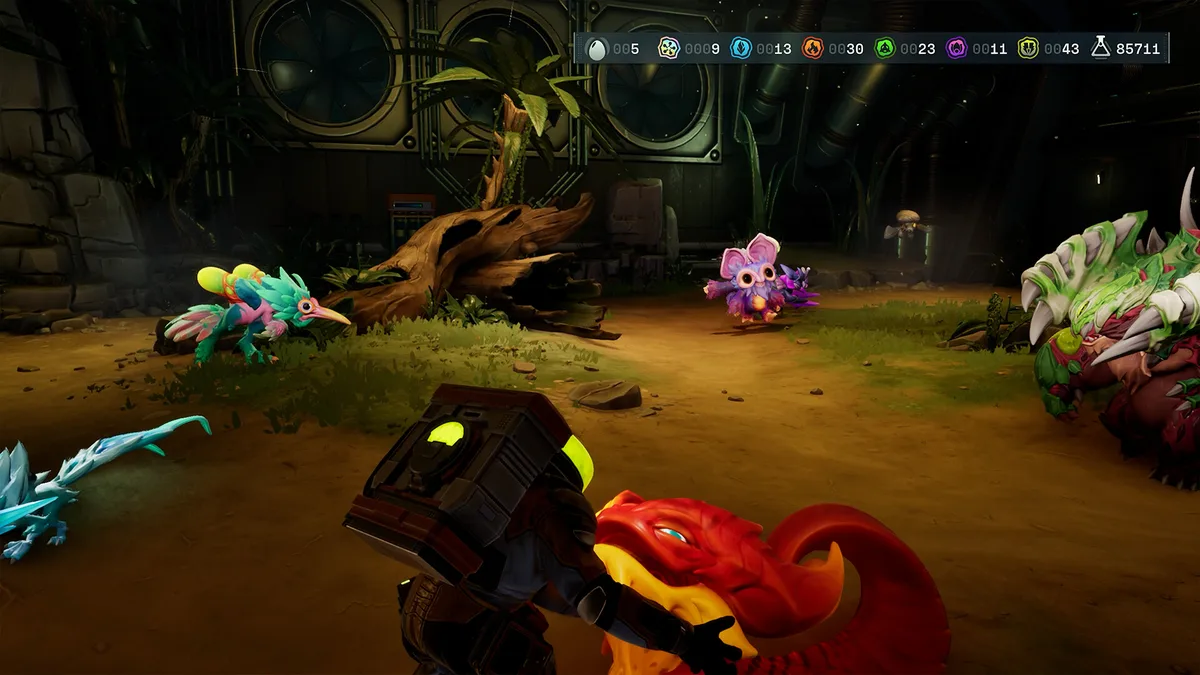 Every creature in your base carries its own permanent attribute investment. Getting Essence and Recuperation right on your main carry is what separates a strong Abyss run from a wasted one.
GODEEPER: For context on the nine species and their evolution paths, the Voidling Bound monster guide covers how each creature's gene pool shapes what builds are even possible per species. Voidling Bound Monster Guide: Evolution and Tips 2026 →
The three strongest builds in detail
Build 1: Nimiod pylon-network (S tier)
Nimiod is the only species in the base roster that attacks automatically through its deployed nodes. Each pylon fires on nearby enemies without requiring manual aim, which frees your inputs for positioning and ability sequencing. Standing near a deployed node also restores stamina, so the build feeds its own infinite-jump system rather than draining it.
For attributes, start Essence and don't stop until you hit 8-10 points. That's the threshold where your status effect multiplier clears 2.5x and Cyber Static stacks start discharging fast enough to chain through enemy groups. After that, split between Recuperation and Vitality. Recuperation earns its points because Nimiod's entire kit is ability-driven: node deployment, the teleport blink, the ultimate: all of them run shorter on the 49% cooldown reduction at max Recuperation.
On the evolution path, go Electromagnetic or Overcharged. Both expand node damage output more than anything else available. Conductor or Static evolution works fine as a midgame step toward either. Rotten and Blooming branches push toward Organic output and don't fit the Cyber build at all. Skip them if Abyss climbing is the goal.
Run Cyber element. The Static status effect procs a discharge burst at 5 stacks, and Nimiod's node auto-attack rate keeps those stacks rolling. Cyber hits GenBots and Crystallines at Highly Effective (1.5x), and the Lure status it applies pulls enemy groups toward your deployed nodes rather than scattering them across the arena.
If you have 5 Polychrome Mutagen saved (each crafted from 5 elemental Mutagens in the Polychrome Converter), the Electromagnetic mutation path opens perk slots for Ground Shock and Static Charge. Both are passive electrical field generators that layer additional ambient Cyber damage the unspliced version can't produce.
Build 2: Plasma Packuran control (A tier)
Packuran's kit has radiation attacks, laser beams, hatchling summons, and wormhole teleportation. The reason it works as a Plasma build is simple: Plasma has no bad matchups. Every faction takes Effective damage (1.25x), the Disintegrate status effect stacks non-expiringly, and nothing in the game resists it. You trade spike damage for consistency: never exceptional against any one faction, never bad against any of them either.
Invest in Essence first, then Vitality. Packuran fires across multiple ability types per rotation, so the elemental damage scaling (0-99% at max Essence) compounds across all of them. Vitality covers the movement gap, since Packuran is slower than Nimiod and relies on wormhole repositioning instead of agile evasion, so it takes more hits.
Where it earns its A-tier slot is open-world corruption missions, where enemy faction composition shifts between zones and Plasma's flat coverage is more valuable than a specialized carry. Past Abyss tier 6, Nimiod's faction-specific damage usually pulls ahead.
Build 3: Morfang close-range aggression (A tier)
Morfang's case for A-tier is that it's the build that doesn't require you to think about nodes, stamina loops, or faction matchups during combat. Get in range, hit hard, use the area-denial ultimate when the swarm gets too dense. Its melee output scales across Pyro and Organic paths, and the zone effect it generates at close quarters handles dense swarm encounters that otherwise require careful positioning.
Put points into Strength first, then Agility. Strength's critical damage ceiling is 4.3x multiplier at level 29; Agility pushes critical chance up to 81%. Together they create a build that spikes hard in short windows, which is what Morfang's melee rhythm is built around. Add Vitality third to survive the boss burst phases before the offensive stats fully online.
Take the Pyro evolution branch. Burn adds damage-over-time that runs while you're repositioning, and the Fear status effect slows enemy aggression rate, giving you a window to re-engage before the next hit lands.
Building your roster around the Abyss
The Abyss, Voidling Bound's repeatable endgame mode, escalates enemy health and damage with each cleared tier. A single Voidling can carry the early tiers, but the faction composition shifts after tier 3, and no single element covers all of them effectively.
The practical roster structure most players have arrived at: one Abyss carry (Nimiod Electromagnetic is the default), plus two elemental backups that cover your carry's weak factions. If your Nimiod is Cyber-aligned and you hit a Lesion-spawn heavy floor, you feel the Weak multiplier (0.75x) immediately. That's not a minor inconvenience at tier 7 or 8. It's whether the run continues. A Pyro or Organic backup to rotate into changes that outcome.
Corrupted Catalyzers push attributes above their normal caps. Prioritize these on your main Abyss carry first, and match the Catalyzer type to your build focus. A Nimiod built into Essence and Recuperation benefits from Essence Catalyzers over Strength ones.
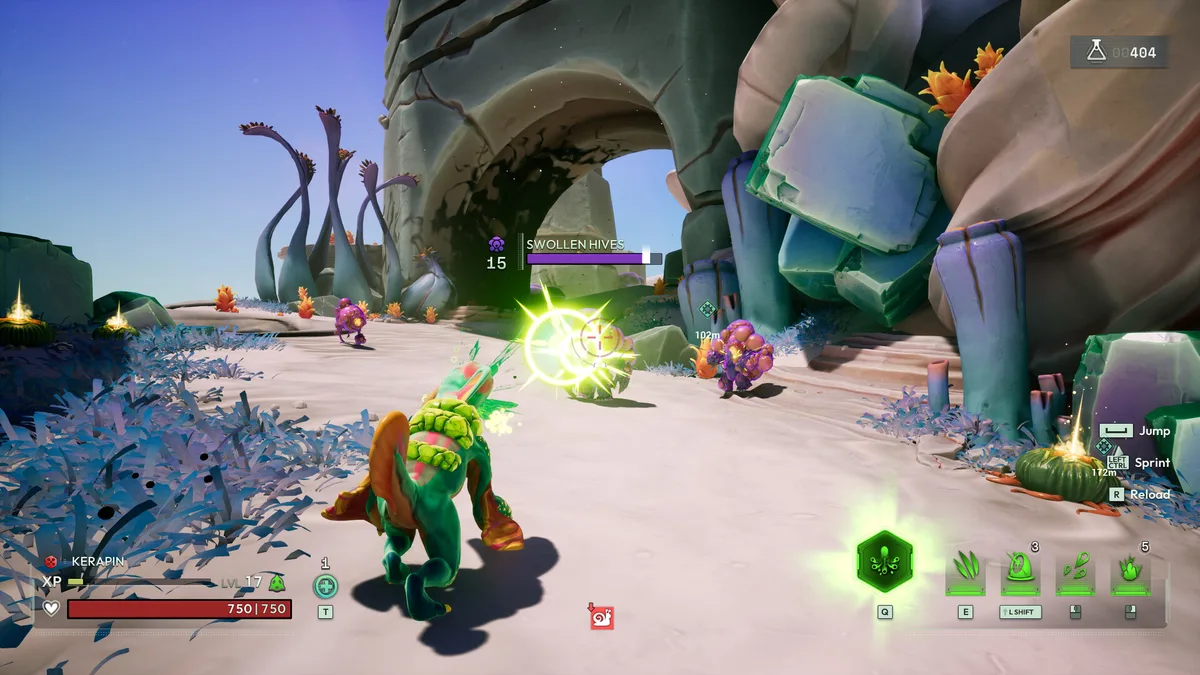 Enemy factions like Swollen Hives scale differently as you push deeper, which is why Corrupted Catalyzer investment on your main carry matters more the further you go.
GODEEPER: The builds in Cursemark, another June 2026 indie action game, use a different approach to the same design problem of permanent attribute choices shaping combat identity. Cursemark Roguelite Runes and Builds Guide →
Splicing: when to commit and when to wait
Splicing unlocks after the Subterranean Expedition mission and costs 5 Polychrome Mutagen per procedure. Each splice edits up to 14 genes across morphology, modules, abilities, and up to 3 perks. The catch: spliced Voidlings cannot breed by default. You need the Spliced Breeding upgrade purchased at the Breeding Station before your spliced carry can produce offspring.
Don't splice your first good Voidling. Build one creature to your target species and evolution path, run it through several Abyss tiers until you're sure the build direction is correct, then splice the next iteration with better natures. Five Polychrome Mutagen is a real resource cost, and spending it on a common-rarity creature locks you into weaker baseline stats permanently. That's a mistake you'll feel for 10 hours.
For element overriding: splicing lets you change a Voidling's main element, which matters if you evolved down an Organic path but need Cyber coverage for the faction composition you're hitting in Abyss. The ability slot is species-locked, so you can't put a Nimiod ability on a Gilick body, but you can adjust elemental affinity and perk selection to fill gaps your current roster has.
Related Reading
- Voidling Bound Monster Guide: Evolution and Tips 2026: Full coverage of all 9 species, the branching evolution system, and the Gene splicing layer at the base level.
- Voidling Bound: Monster Taming Meets Third-Person Shooter: The launch overview explaining what makes Voidling Bound different from traditional monster tamers.
- Voidling Bound Gene Splice Guide: When and What to Splice: The splicing decision tree in full detail, if the summary here left you wanting the specific timing calls.
- Best Indie Roguelites for the Steam Summer Sale 2026: If you're building out a June action-game lineup alongside Voidling Bound, this list covers the strongest picks available at sale prices.
- Cursemark Roguelite Runes and Builds Guide: Another June 2026 indie with permanent attribute decisions; different approach to the same design problem.
- Voidling Bound Review: Monster Taming Meets the Abyss: Voidling Bound review: Hatchery Games' shooter earns Very Positive on Steam with 93% approval.
- Voidling Bound Beginner Guide: Tips for First Runs: Voidling Bound beginner guide: how genes and splicing work, which species to start with, early.
Frequently Asked Questions
What is the best species for Voidling Bound builds? Nimiod is the strongest overall choice. Its pylon network attacks enemies automatically, restores stamina when you stand near a deployed node, and its teleport blink provides escape tools no other species matches. For players who want a simpler kit, Morfang's melee aggression or Packuran's laser-and-hatchling pressure are the next most reliable options.
What attribute should I focus on for Voidling Bound builds? It depends on your role. Essence is the priority if your build relies on elemental damage or status effects (it scales status effect multiplier from 1.0x to 3.8x). Strength is correct for Morfang melee or Nimiod spark spam. If you keep dying to boss burst phases, Vitality first gets you to 1,600 HP at max investment. Recuperation is underrated for Abyss: it cuts cooldowns by up to 49% and doubles ultimate fill rate.
How much does splicing cost in Voidling Bound? Each splice costs 5 Polychrome Mutagen, crafted by fusing 5 elemental Mutagens in the Polychrome Converter. Splicing unlocks after the Subterranean Expedition mission, and spliced Voidlings cannot breed by default until you buy the Spliced Breeding upgrade at the Breeding Station.
What element is best for the Voidling Bound Abyss? Plasma is the safest choice for general Abyss runs because it hits all four enemy factions at Effective (1.25x) with no weaknesses. If you know the Abyss rotation leans toward GenBots and Crystallines, a Cyber build hits those at Highly Effective (1.5x). Cryo handles Ancients and GenBots well but underperforms against Lesion-spawns.
Can spliced Voidlings breed in Voidling Bound? Not by default. Spliced Voidlings have the breed restriction locked unless you purchase the Spliced Breeding upgrade from the Breeding Station. Most players reserve splicing for their Abyss main carry and keep separate unmodified breeding stock.
What does Recuperation do in Voidling Bound? Recuperation controls reload duration (cutting it from 2.00 seconds down to 1.06 seconds at max), reduces ability cooldowns by up to 49%, increases ultimate fill rate by up to 2.28x, and boosts all healing sources by up to 2.4x. It matters more on ability-heavy kits and deep Abyss runs where ultimate uptime determines how many tiers you clear.
What is the Nimiod pylon build in Voidling Bound? The Nimiod pylon build deploys network nodes that automatically attack nearby enemies while restoring stamina. Nimiod uses infinite jumps (stamina cost) to maintain airborne pressure but cannot reload while in the air, so node placement sustains the build at range. The Electromagnetic or Overcharged mutation path is the endgame target, as both significantly expand node damage output.
References
Was this guide helpful?
About the author

Senior Critic & Analyst
Former game data analyst turned critic with 11 years covering indie and mid-tier games. Based in Austin. Runs spreadsheets on games most people just play.
- 11 years games criticism
- Former game economy analyst
- Roguelike and strategy specialist
Keep reading



Disclaimer
This article is published for informational and entertainment purposes. It does not constitute professional financial, legal, or technical advice. Game performance, online services, patch schedules, and store listings change. Verify critical details (pricing, system requirements, regional availability) with publishers and storefronts before you buy. Affiliate links, where present, help support our editorial work and are labelled in our affiliate disclosure.
Comments
Loading comments…