
GameBrief · General
Voidling Bound Monster Guide: Evolution & Tips 2026

Reviewing
Voidling Bound
Hatchery Games
This Voidling Bound monster guide covers the nine creature species, branching evolution system, and the splicing layer that most players hit around the six-hour mark and immediately want explained.
TL;DR: There are 9 Voidling species (Kwipeck, Gilick, Kerapin, Gwigoon, Anami, Ur-Sek, Nimiod, Morfang, Packuran). Evolve them along branching elemental paths, assign five attribute types (Strength, Vitality, Essence, Recuperation, Agility), collect ability genes through play, then splice those genes across species to build hybrids. Breeding combines natures and attributes from two parents. Corrupted DNA Catalyzers push stats further in the Abyss endgame.
How does the Voidling Bound monster system work? (quick answer)
Every creature in Voidling Bound starts as a base species with its own stat profile and ability gene pool. You evolve it along branching paths to set its elemental alignment (fire, cryo, electro, and others), then assign attribute points across Strength, Vitality, Essence, Recuperation, and Agility to shape its combat role. Later, splicing lets you pull ability genes from other species onto your chosen creature, and breeding produces offspring that inherit traits from both parents. The whole stack builds toward synergies that become necessary in the Abyss, the game's repeatable high-difficulty challenge mode.
Voidling Bound current status: September 2026
The live Steam snapshot checked on September 18 lists $24.99, Very Positive at 94% from 2,128 English reviews, and Very Positive at 91% from 164 recent reviews. The store page also lists 35 Steam achievements and a June 9, 2026 release. The species, evolution, gene, and Abyss systems below describe the released build rather than the pre-launch preview.
All 9 Voidling species
These are the nine species available at launch, confirmed by the official Hatchery Games species spotlight series ahead of release. You acquire new ones by rescuing eggs from infested biome locations and hatching them back at your base.
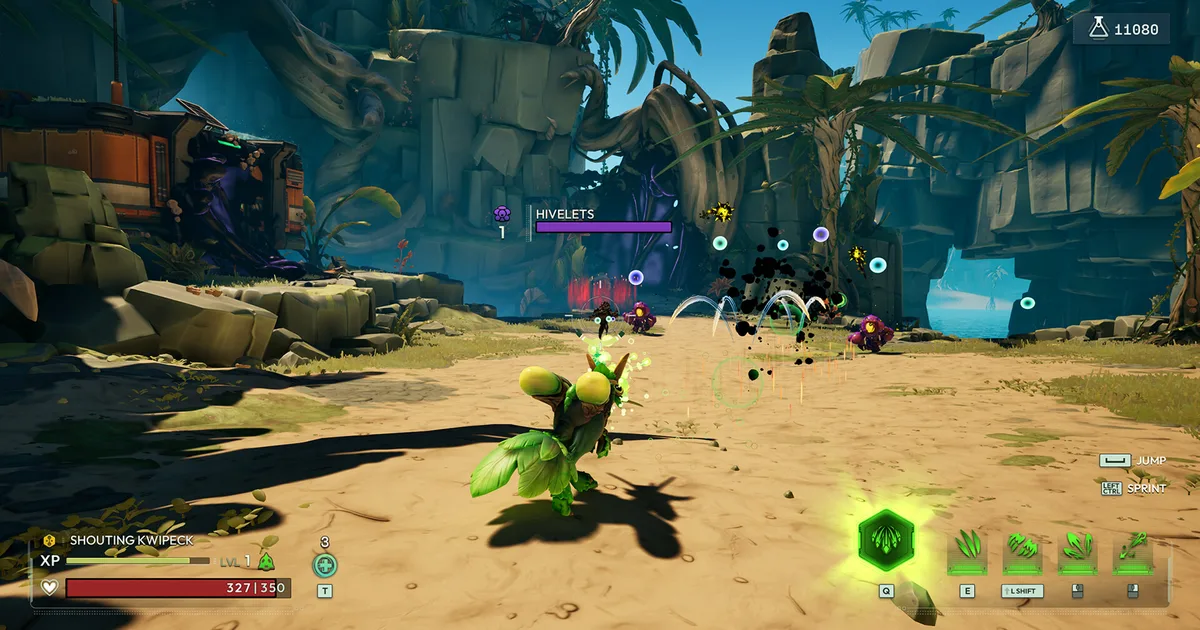
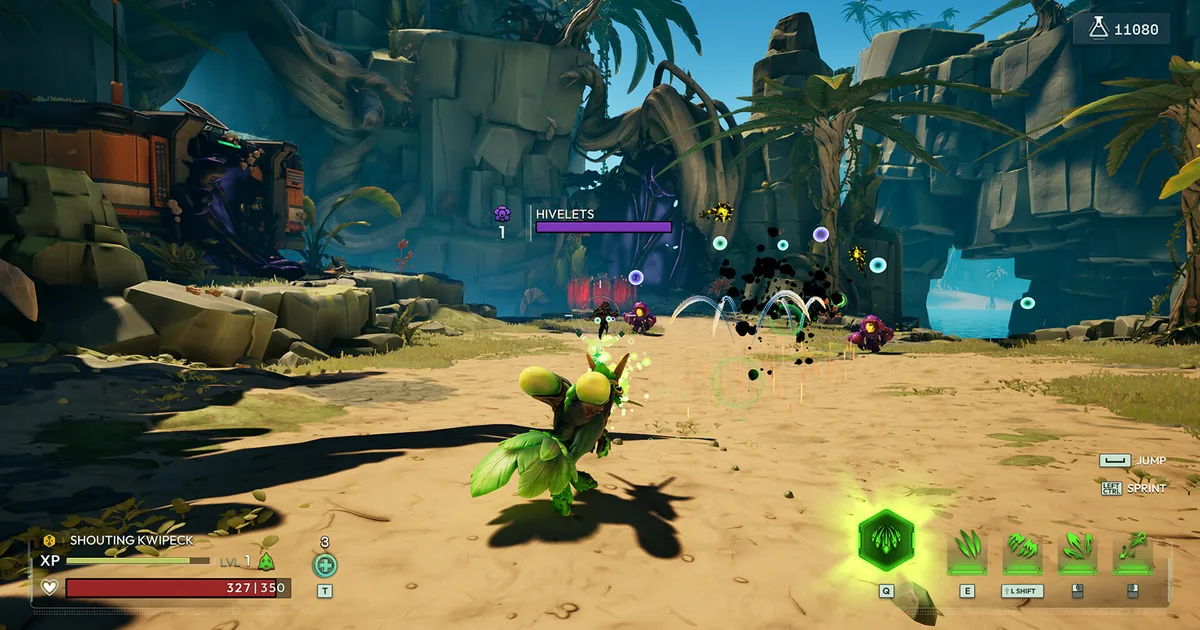
Kwipeck is a fast, mobile creature with strong ranged output. It shows up early and rewards players who prioritize Agility early. Its ability gene pool leans toward lightning and status effects.
Gilick has one of the stronger cryo gene pools in the base roster. Its Snowfall perk (unlocked through the Snowfall Gilick evolution) drops damaging projectiles from the sky onto nearby enemies. It's a bombardment ability, not a passive drip, and the community has already flagged it as a top-tier splicing source.
Kerapin is the Exotic-rarity creature visible in the game's promotional screenshots. Its high Essence ceiling makes it a natural candidate for ability-heavy builds. The Monsoon Kerapin variant carries the Mark of the Storm perk, which triggers off the Hit Mark status: landing a hit on a marked enemy summons a damage-over-time typhoon that periodically reapplies Hit Mark to enemies caught in range.
Gwigoon has the highest base Strength ceiling of the early-game creatures, making it the go-to pick for players who want direct melee output. Its evolution path toward fire alignment produces some of the strongest close-range ultimates in the first two biomes.
Anami is the most flexible species in the base roster. Its ability gene pool is unusually broad, spanning multiple elemental types, and community splicing reports consistently put Anami variants as a source creature in the most complex hybrids. The Electrified Anami variant carries Static Buildup, which periodically fires a spark at a nearby enemy that chains to up to 5 targets and applies stacking Static, pairing cleanly with cryo effects.
Ur-Sek is a tanky species with strong Vitality and Recuperation growth. It's slower than Kwipeck but survives boss arenas far longer without active play. Players who want to recover mid-fight rather than dodge everything tend to gravitate here.
Nimiod fills a mid-range burst role, splitting between Organic and Cyber elemental paths rather than fire. Its Cyber branch runs on chain-lightning abilities like Current Chain and Lightning Rod, while the Organic branch trades that burst for sustained spore-based node damage. Either evolution direction hits harder than most early-game options once you commit.
Morfang is a heavier, more movement-restricted species with area-denial abilities. Its ultimate ability generates a zone effect that keeps enemy swarms at distance, which is especially useful in missions that involve holding locations against bubonic wave attacks.
Packuran is the most recently spotlighted species in the pre-launch series and appears designed around a support-adjacent role, with Recuperation-boosting gene options that benefit adjacent ability interactions in Abyss runs.
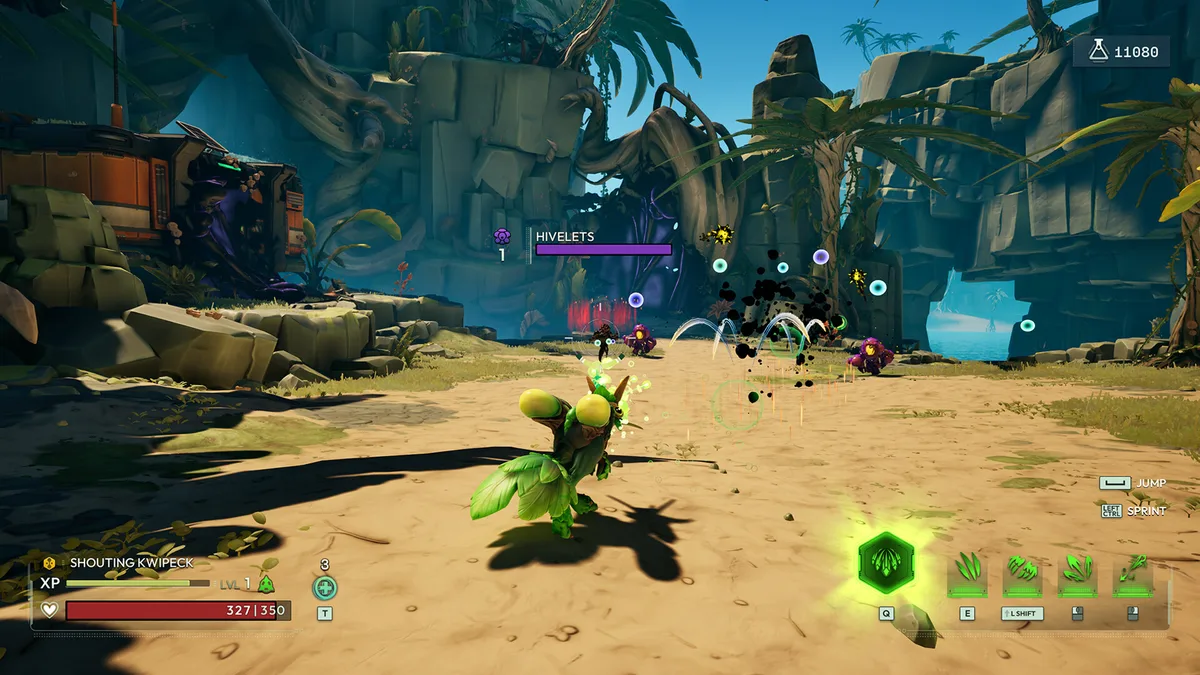 Voidling Bound's 9 base species each carry distinct ability gene pools; the visual differences hint at their elemental alignment before you check the stats.
GODEEPER: The news article that first covered the game explains Hatchery Games' design intent behind putting you in direct control of the creature rather than commanding it from the sidelines. Voidling Bound: Monster Taming Meets Third-Person Shooter →
How evolution works: elemental paths and attribute points
Evolution in Voidling Bound runs on two parallel tracks.
The first is the evolution path, which sets elemental alignment and ability set. When you evolve a creature, you pick a direction at each branch. Those choices change the Voidling's visual appearance, its elemental type (fire, cryo, electro, and others), and the specific abilities it can use. A Gilick that takes the fire branch looks different and plays differently from one that goes cryo. You can't easily reverse these choices, so read the branch preview before committing.
The second track is attribute assignment. Each time a Voidling levels up, you get attribute points to spend across five stats:
- Strength: melee and ranged attack output
- Vitality: maximum health
- Essence: ability power and effect magnitude
- Recuperation: health regeneration during and after combat
- Agility: movement speed, dash distance, and dodge window
There's no respec mechanic confirmed at launch, so attribute decisions are permanent. A Gwigoon built heavy into Strength early plays very differently from one that split points between Essence and Agility. Know your intended role before your first point spend.
The Genes system: how splicing works
Once you've evolved several creatures and built up a gene collection, splicing opens the build space considerably. Each Voidling species carries unique ability genes you can extract and transfer onto other creatures. Community players have documented these cross-species gene combinations:
- Snowfall (from Snowfall Gilick): a bombardment perk that drops damaging projectiles from the sky onto enemies below
- Static Buildup (from Electrified Anami): periodically fires a spark that chains to up to 5 enemies and applies stacking Static
- Mark of the Storm (from Monsoon Kerapin): triggers off the Hit Mark status to summon a damage-over-time typhoon that keeps reapplying Hit Mark to enemies in range
- Watch Them Burn (from Blackened Gilick): heals you for 100% of Burn damage dealt to enemies
- Hellfire (from Hellfire Packuran): triples Burn damage dealt, one of the highest raw damage multipliers available from a Golden Egg variant
- Fire Stride (from Seared Kwipeck): leaves a fire trail on sprint and stacks Speed, useful for clearing missions fast on high-Agility builds
The interesting combinations happen when perks stack together. Perks aren't species-locked, so an Anami splice can carry both the Gilick-sourced Snowfall perk (Cryo-themed sky-drop projectiles) and its own Static Buildup perk (a chaining spark that stacks Static up to five times before triggering a high-damage Static Discharge), layering two separate proc sources onto its base kit.
Genes are part of your broader gene collection, which also includes body part genes (appearance) and color genes. The collection system exists separately from the combat build, but ability genes sit at the center of both.
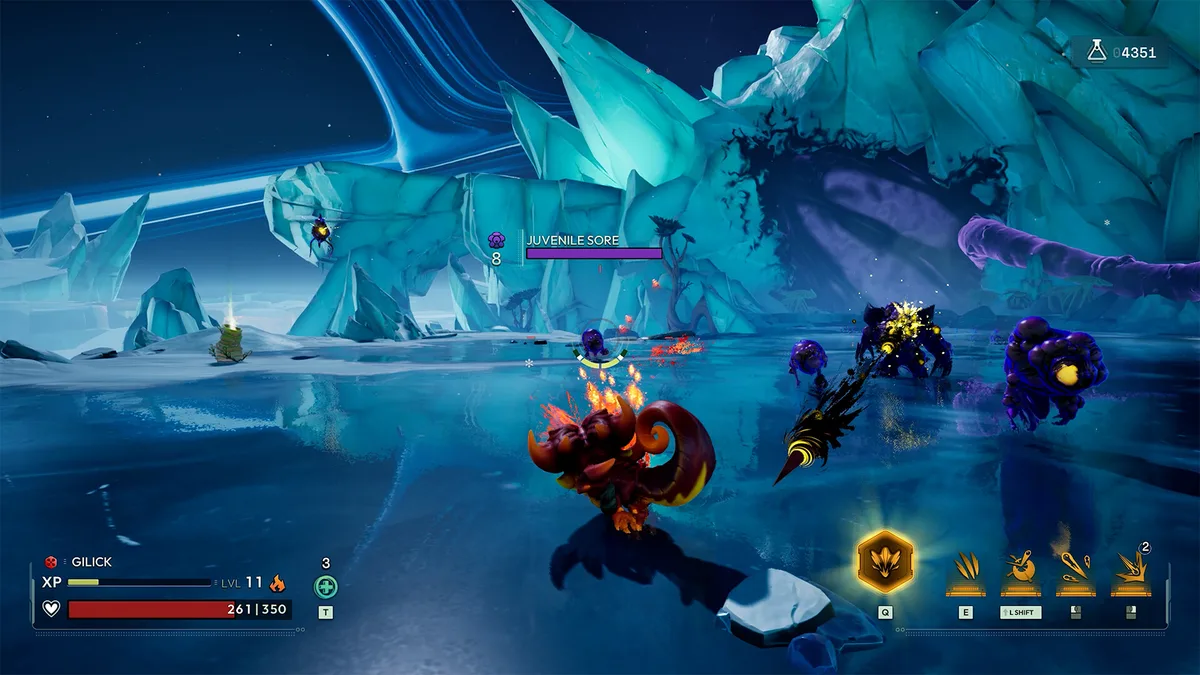 The splicing system lets you transfer ability genes like Snowfall or Static Buildup across species; stacking those triggered effects together is where most of the build depth comes from.
Breeding: combining natures and attributes
Breeding produces a new Voidling from two parent creatures, inheriting a mix of their natures and attribute values. The key variable is nature rarity. Eggs found in infested locations can hatch with rare natures that pass statistical bonuses to offspring. Higher-rarity natures compound when both parents carry them, so farming good eggs before your first serious breed session is worth the extra time.
Don't breed your first-available pair. Spend a session clearing infested egg sites in two or three biomes before committing. The attribute and nature quality gap between a rushed first breed and a prepared one is real.
The Abyss and Corrupted DNA Catalyzers
The Abyss is Voidling Bound's repeatable endgame mode: each cleared tier escalates the threat level, and you can retreat to safety or push deeper for better rewards. After each victory, you choose between extracting or going further, which creates the same risk-reward escalation structure that works in games like Deep Rock Galactic: Rogue Core's Hazard system.
Corrupted DNA Catalyzers are the Abyss-specific upgrade tool. They equip onto your Voidlings and push statistics above normal caps. You won't need them for the open-world corruption missions, but deep Abyss tiers have enemy health and damage values that assume you've applied at least one per creature slot. Prioritize Catalyzers that align with your build focus: a Strength-heavy Gwigoon benefits more from a Strength Catalyzer than a Vitality one.
GODEEPER: For context on how other June 2026 indie games are handling creature builds and ability customization, the Cursemark Roguelite runes and builds guide covers a different approach to the same design problem.
Tips for building a strong roster
A few specific observations from early player reports:
Build three creatures with different elemental alignments before attempting the second planet. The corruption enemy types shift between planets, and a roster without cryo coverage in fire-heavy zones takes significantly more damage.
Attribute spread matters more than it looks like it will. Plenty of early players dump points into Strength for the obvious combat feedback, then stall on bosses with high burst phases where Recuperation is what actually keeps them alive. A rough 60/40 split between offensive and sustain stats holds up better than a pure offensive build through the midgame.
The gene collection screen looks cosmetic at first. It isn't. Ability genes in your collection become available for splicing once you've met the unlock condition, so engaging with the collection side early opens up splice options faster than ignoring it until the endgame.
When hatching eggs, check the nature rarity before assigning the creature to active duty. A common-nature hatch of a strong species is still useful as a gene source, but building attribute points on a creature you plan to retire for breeding is wasted time.
Related Reading
- Voidling Bound launch news: how Hatchery Games designed the shooter-taming hybrid: The original launch piece covering the game's core design and what sets it apart from traditional monster tamers.
- Prime Monster guide and review: is the card roguelike from the Sexy Brutale devs worth it?: Another June 2026 indie built around evolving creature-adjacent systems, different angle.
- Best indie roguelites for the Steam Summer Sale 2026: If you're looking for what to play alongside Voidling Bound this month, this list covers the strongest picks at sale prices.
- Voidling Bound Builds: Top Gene Combos and Splices 2026: Voidling Bound builds guide: top-tier Nimiod, Plasma roster, and Cyber splice setups.
- Voidling Bound Review: Monster Taming Meets the Abyss: Voidling Bound review: Hatchery Games' shooter earns Very Positive on Steam with 94% English approval.
- Voidling Bound Beginner Guide: Tips for First Runs: Voidling Bound beginner guide: how genes and splicing work, which species to start with, early.
- Voidling Bound Complete Guide Hub: the full route through species, evolution, genes, breeding, and Abyss progression.
- Voidling Bound Gene Splice Guide: practical gene combinations and when to spend Catalyzers.
- Voidling Bound Multiplayer Guide: what to plan before taking a roster into co-op runs.
- Voidling Bound Launch Guide: the original release overview and core taming loop.
Step-by-Step: build a first Voidling roster
Step 1: Start with three species. Keep a mobile damage option, a flexible gene source, and a durable creature rather than investing every resource in one body.
Step 2: Choose the evolution branch before spending attributes. Decide whether the role needs fire, cryo, electro, or another alignment, then put points into the stats that support it.
Step 3: Farm natures before serious breeding. Rescue eggs from multiple infested locations and compare nature rarity before committing two parents.
Step 4: Splice only after the base kit works. Add genes such as Snowfall or Static Buildup to solve a real weakness, then reserve Catalyzers for Abyss tiers.
Frequently Asked Questions
How many Voidling species are in Voidling Bound? There are 9 base species at launch: Kwipeck, Gilick, Kerapin, Gwigoon, Anami, Ur-Sek, Nimiod, Morfang, and Packuran. You discover new ones by hatching eggs rescued from infested biome locations.
What is the difference between evolving and splicing? Evolving advances a creature along a branching elemental path. Splicing transfers ability genes from one species onto another, creating hybrids that carry abilities their base species cannot normally access.
What are the five attributes? Strength, Vitality, Essence, Recuperation, and Agility. There is no confirmed respec at launch, so plan your point allocation before spending.
How does breeding work? Two parent Voidlings produce an offspring that inherits a mix of their natures and attributes. Rarer-natured eggs produce stronger offspring, so farming good eggs before breeding is worth the extra session.
What are Corrupted DNA Catalyzers? Equippable items found in the Abyss that push stats above their normal caps. Essential for deep Abyss tiers.
Should I focus on one Voidling or build a full roster? Build at least three with different elemental types. The corruption biomes and their enemy types shift enough between planets that a single-creature focus stalls progress mid-campaign.
What are the best starting Voidlings for new players? Kwipeck rewards mobile play and is forgiving for learning dodge timing. Anami has the deepest gene pool for future splicing. Starting with one of each gives you flexibility early.
References
Was this guide helpful?
About the author

Critical game theorist with a background in film criticism. Writing for print and digital outlets since 2015. Specialises in genre analysis and design heritage.
- Background in film criticism
- 10 years games coverage
- Genre theory and design history specialist
Keep reading

Disclaimer
This article is published for informational and entertainment purposes. It does not constitute professional financial, legal, or technical advice. Game performance, online services, patch schedules, and store listings change. Verify critical details (pricing, system requirements, regional availability) with publishers and storefronts before you buy. Affiliate links, where present, help support our editorial work and are labelled in our affiliate disclosure.
Comments
Loading comments…