
GuideWindrose
Windrose Copper Respawn: Do Mines Come Back? Ore Timer 2026
Mines refill in roughly six hours by most players' clocks; chests and trees don't come back at all.
VerdictMine every copper cave you pass, come back after about six hours, and stop waiting on chests: they don't refill.

Windrose copper respawn is real: mined-out veins in copper caves fill back up. What isn't real is the "24 in-game hours" timer this guide used to print. Kraken Express has never published a number, and the figure players report most on the Steam forums is about six hours. Chests are the opposite story: they don't refill.
Sponsored

Updated 2026-10-16: Rebuilt from patch notes, wiki pages and Steam forum reports. The 24-hour timer, "bonfires block ore respawns", daily chest runs and several recipe numbers (Fire Pit, Tar, Ancient Scraps) were wrong or unsupported and are gone.
Sponsored

What respawns in Windrose, and what doesn't
| Resource | Respawns? | What we have to go on |
|---|---|---|
| Copper and iron veins | Yes | Players most often report about six hours; patch 0.10.0.4 fixed ore respawn bugs |
| Sulfur rocks and rock-spire veins | Yes | Player reports |
| Ordinary chests | No | Multiple player replies; loot is randomized per player |
| Gunpowder crates in human camps | Yes | One player report |
| Trees and shrubs | Mostly no | Most players say cut trees are gone; one says they wait three hours for stuff to regrow |
| Trees, grass, clay inside a bonfire radius | No | Player report |
| Enemies at POIs | Yes | Player reports |
The official record is one line. Patch 0.10.0.4 (April 30) says: "Fixed several ore respawn bugs, ores should now always respawn correctly." If you read older complaints that a cave never refilled, they may predate that fix.
BESTPRICE: Want Windrose? These stores list it: Buy on Eneba → Buy on Loaded →
How long the ore timer is
Ask on the Steam forums about the Windrose copper respawn timer and the number that keeps coming back is six. "6 hours," one player answered when someone asked about copper caves in April; "~6 hours," said another a week later. In May a player put it bluntly: ores respawn "every 6 REAL WORLD hours. so you can play for a few hours, hit all the mines, go to work or something and come back to do it again."
Where players disagree is what counts as an hour. That same player says "the game checks the clock of the computer," so time with the game closed counts. Another replied in a different thread that it's game time: "six hours playtime if you're playing offline, and six hours real time" on a "constantly running server." Both can be true for different setups, and nobody from Kraken Express has settled it. If you play solo, the quickest test is to mine a cave, quit, and check it the next day.
Not every report says six. A demo player in February saw copper come back once "anywhere from 2-4 hours" later, and another player in April thought it took "around 7-8 ingame days," seeing ore return "after 10-13 hr irl." A Steam reviewer in launch week said the copper deposits "don't respawn for close to a week" while a group waits on them. All three are older than the April 30 respawn fix.
*"Starter Resources and where to find them! | Do they respawn?", a community guide by MoleRP on YouTube.*Bonfires, bases and mines
This guide used to warn that a bonfire near a mine stops the ore coming back. Player reports say the opposite. One player whose fort is built over a copper mine says it "respawns once in a few real hours," while confirming that "Trees, grass and clay deposits don't respawn within a bonfire radius." Another says you can put a bonfire in a cave "to stop npc's respawning in it without affecting the ore's respawn at all."
Two more things players report staying put: floor torches and the walkways or scaffolding you build to reach high veins, except on the starter island. That makes a cave you farm regularly quicker to clear each time. Bonfire setup and the Rested buff are covered in the Windrose comfort guide.
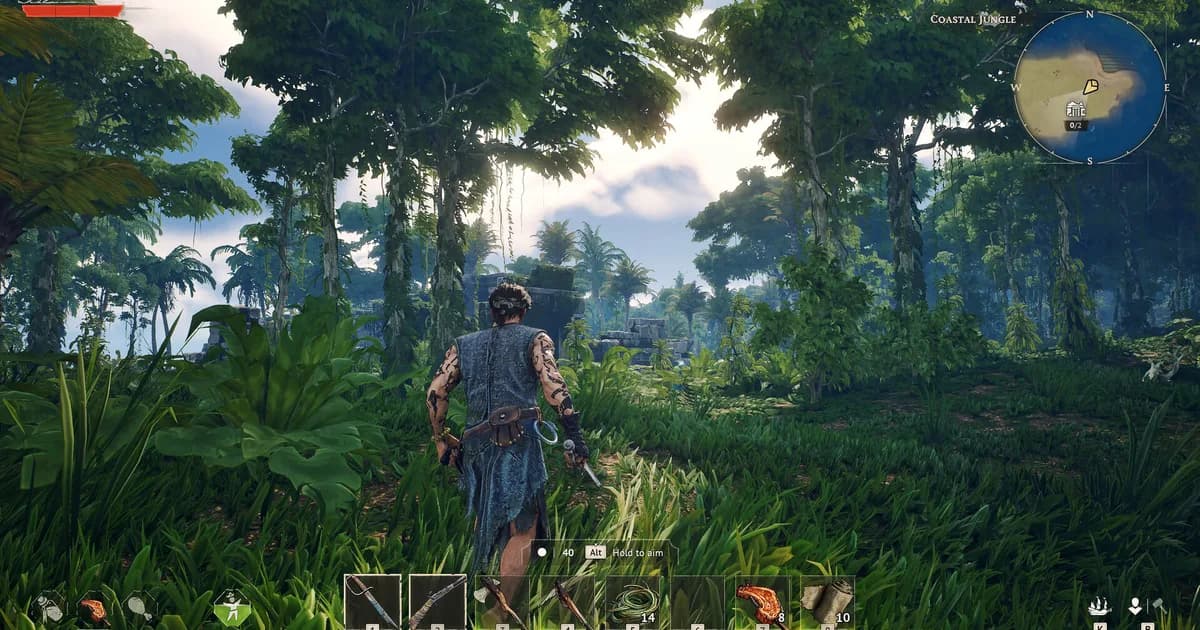
A Coastal Jungle cave: copper caves like this are the main early copper source.
Screenshot: Windrose
Where to find copper ore
Copper lives in the Coastal Jungle, the starting biome (encounter levels 1-5). The wiki calls copper ore deposits in the Copper Caves "the main tier-2 material gate," and its island list shows a copper deposit on the Starting Island, Crew Rescue Island, Robinson Castaway Island, Sacrificial Lamb Island, Blackbeard Island and Copper Cave Island, plus a jungle cave deposit on Buccaneer Fort Island.
Copper ore smelts into copper ingots at the Smelting Furnace or Large Smelting Furnace. Because the starting island deposit refills like any other, there's no need to sail away just for copper; we'd still mine every deposit you pass so you aren't waiting on one cave.
The Coastal Jungle is also where you fight Boatswain, the first boss. Beating him opens the Foothills. The Windrose beginner guide covers the first hours in order.
Iron, sulfur and the Foothills
The Foothills (encounter levels 6-10) bring iron. The wiki names the iron caverns "the principal iron-ore source," with iron deposits on surface rocks too. You don't need iron tools to start: a Copper Pickaxe can mine Foothills Iron Ore, and the Iron Pickaxe (5 Foothills Iron Ingot, 5 Wood) mines every current node.
Other Foothills materials worth grabbing on the same trips:
- Sulfur, a major discovery here. Mine it with an Iron Pickaxe. Homemade Gunpowder is ground at the Millstones from 10 Sulfur and 20 Ash, and Ash comes from the Charcoal Kiln.
- Hardwood, Tree Bark and Flax Fiber. Flax grows in cleared farmland and feeds cloth and bandage recipes. Fertile Soil is a key discovery in this biome too.
- Wolf Fang and Bezoar, both listed among the biome's major discoveries.
Israel Hands is the Foothills boss and the gate to the Cursed Swamps; see the Israel Hands guide. The Foothills biome guide has the island-by-island layout.
By the Foothills, tools, food and ore are competing for the same backpack slots.
Screenshot: Windrose
Cursed Swamps materials
The Cursed Swamps (encounter levels 11-15) are the last biome in Early Access, home to the High Priestess. Their key materials work differently from what this guide used to say:
- Ancient Scraps are found in chests deep inside Senkamati ruins and go into the Large Smelting Furnace.
- Tar is gathered from tar seeps across the swamps, not chopped from trees. It feeds the Workbench, Tanning Rack and Enchanting Table, and the related recipes are Tarred Planks and Tarred Fabric.
- Plague Wood and Essence Arborum are both listed among the swamps' discoveries.
- Tainted Bile got an improved drop rate in patch 0.10.0.4, the same patch that raised the Hardwood drop rate by about 20%.
Since ordinary chests don't refill, plan your Ancient Scraps around ruins you haven't cleared yet rather than repeat runs. The High Priestess guide covers the fight at the end of the biome.
Food you can pick up early
The Coastal Jungle's discoveries include Banana, Cayenne Pepper, Sweet Potato, Coconut and Crab Meat, and lime trees along the shore yield lime for maximum health consumables. Lime trees stay the main max-health fruit in the Foothills.
Cooking starts at the Cooking Fire, which costs 3 Wood and 3 Stone. It also adds one point of comfort, but it doesn't stack with a Bonfire or Charcoal Kiln in the same spot. Recipes and buffs are in the cooking section of our crafting guide.
The Rested notice: worth topping up before a long mining trip.
Screenshot: Windrose
A farming loop that fits the timer
- Rest before you go. Rested speeds stamina regeneration by about two and a half times. It lasts about seven minutes at base plus a minute per extra comfort level, and there are 12 decoration categories that each add one comfort.
- Clear every vein in a cave, placing floor torches and scaffolding as you go so the next visit is faster.
- Leave a bonfire in caves with enemies if you want them to stop respawning there; players report the ore still comes back.
- Come back after about six hours, or the next day if you play offline and aren't sure how your save counts time.
- Skip chests on repeat runs. Loot them once, then spend the time on new POIs. Armor and weapon drops are randomized per player, so a friend's chest won't hold what yours did.
GODEEPER: Mining runs double as XP runs early on, and the leveling guide covers which documented routes pay the most. Windrose Leveling Tips: Fast Level-Up Guide →
Frequently Asked Questions
Does copper respawn in Windrose? Yes. Copper and iron veins refill. There's no official timer; players most often report about six hours.
Is the timer real time or game time? Players disagree: some say it uses your computer clock, others say it's game time offline and real time on an always-on server.
Do chests respawn? Ordinary chests don't, per multiple Steam forum replies. Some POI containers, like gunpowder crates in human camps, are reported to refill.
Does a bonfire stop ore from respawning? Player reports say no. It does stop trees, grass and clay respawning inside its radius.
Where do I find copper and iron? Copper in Coastal Jungle copper deposits and caves; iron in the Foothills iron caverns and surface rocks.
References
- Windrose on Steam: Early Access page and patch notes
- Patch Notes 0.10.0.4: ore respawn fix, Tainted Bile drop rate
- Steam discussion: question about mining and Copper Ores: respawn mechanics
- Steam discussion: resource respawn and bonfires
- Windrose wiki: Coastal Jungle, Foothills and Cursed Swamps
Related Reading
- Windrose Beginner Guide: the first hours, from copper tools to your first bonfire.
- Windrose XP Guide: documented quest and Point of Interest routes.
- Windrose Multiplayer Guide: sharing a world, and its resources, with friends.
- Windrose Crafting Guide: what the materials above turn into.
- Windrose Armor Guide: which sets each ingot tier feeds.
- Windrose Guide 2026: All Biomes, XP, Factions & Ships: the hub for every Windrose guide.
- Windrose Endgame Guide: what to do after the High Priestess.
- Windrose Ashlands: what's known about the next biome.
Was this guide helpful?
About the author

Systems & Economy Desk
GameBrief's byline for roguelikes, strategy and simulation. Reads patch notes, wiki tables and Steam stats and puts the numbers on the page.
- Roguelikes, strategy and simulation
- Builds, progression and economy
- Sources listed per article
Keep reading
How Long to Beat Windrose: Current Level 15 Guide 2026
Guides · 8 min
Windrose Combat Guide: Gear, Builds & Fighting Tips 2026
Guides · 9 min

Windrose PC Gamer Review Controversy: What Happened (2026)
News · 5 min

Windrose Roadmap 2026: Ashlands Biome, Ships & 1.0 Date
News · 14 min
Windrose Max Comfort Level: Decorations, Rested Buff Guide
Guides · 7 min

Windrose Co-op Guide 2026: XP Sharing, Crew Setup & Leveling
Guides · 8 min
Sponsored
Disclaimer
This article is published for informational and entertainment purposes. It does not constitute professional financial, legal, or technical advice. Game performance, online services, patch schedules, and store listings change. Verify critical details (pricing, system requirements, regional availability) with publishers and storefronts before you buy. Affiliate links, where present, help support our editorial work and are labelled in our affiliate disclosure.
Comments
Loading comments…