
GuideWindrose
Windrose Combat Guide: Gear, Builds & Fighting Tips 2026
Kills don't level you in Windrose, so fight for the chest, the quest or the boss, and learn the Perfect Block first.
VerdictTreat fights as gates, not XP: match your gear to the biome, master Perfect Block and Perfect Dash, and pack bandages.

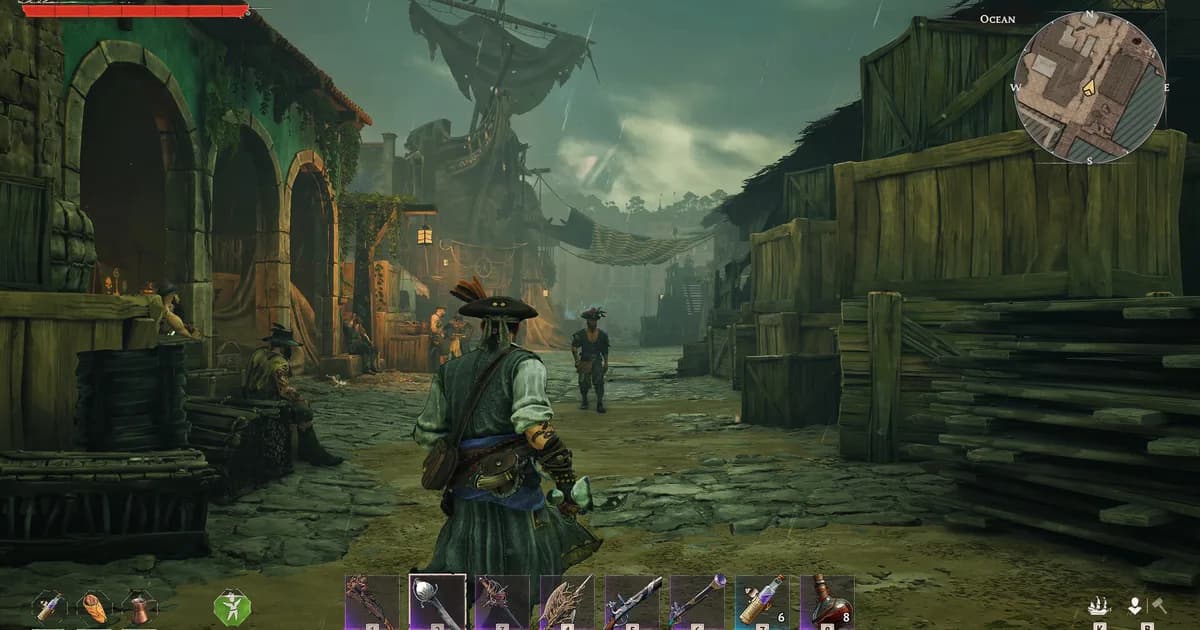
Windrose combat guide, short version: fight for something. A chest, a quest step, a boss. Kills don't give XP (quests and Points of Interest do), so every pirate between you and a camp chest is a gate to clear, not a reward. What wins those fights is gear that matches the biome and a clean Perfect Block, not a bigger kill count. For a second angle on weapons and talents, see our gear and fighting tips breakdown.
Sponsored

Updated 2026-10-19: Rebuilt the gear and tips sections from the current wiki: the biomes are the Coastal Jungle, Foothills and Cursed Swamps, the late metal is Ancient Metal (there's no Steel tier), and Windrose has no G-key ping for marking enemies (G opens Discovery). Removed level gates, recipes and percentages we couldn't source.
Sponsored

Key Takeaways
- Enemy kills aren't an XP source: fight for quests, Points of Interest, loot or survival.
- Gear by biome: copper in the Coastal Jungle, iron in the Foothills, Ancient Metal in the Cursed Swamps.
- Craft your tools at the Workbench before you chase a better sword.
- Learn Perfect Block and Perfect Dash early: both cost you no Posture.
- Carry bandages; they heal over time, so use them before you're in trouble.
- In co-op, split the crew: one player holds aggro, the rest loot. Call it over voice, because the game has no chat or ping of its own.
BESTPRICE: Want Windrose? These stores list it: Buy on Eneba → Buy on Loaded →
Combat's role in Windrose
The current XP table lists completing quests and exploring Points of Interest as the XP sources. Enemy kills aren't on it. That reframes the whole system: you're not building a character who wins fights, you're building one who reaches the chest, finishes the Journal step and gets back to the ship.
So clear what blocks the objective, take the loot, and leave the rest of the camp if it isn't in your way. The exception is a boss: those gate the next biome.
Screenshot: Steam store page
Gear progression by biome
| Biome | Encounter levels | Metal to chase | Where it comes from |
|---|---|---|---|
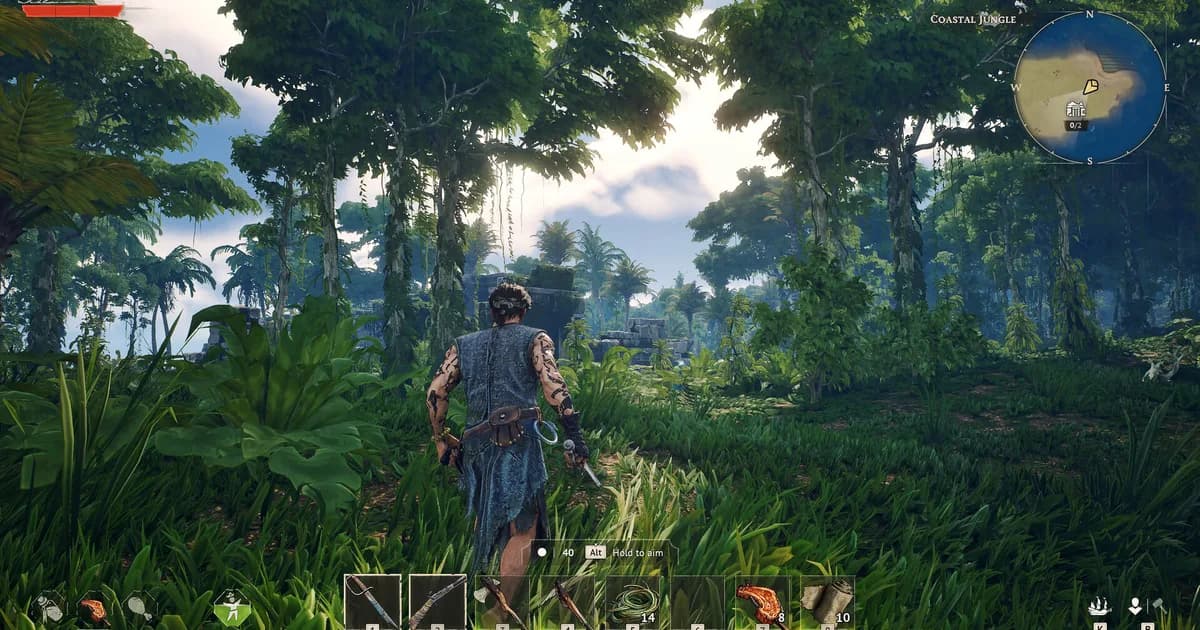
| Coastal Jungle | 1-5 | Copper | Copper Caves, the main copper source |
| Foothills | 6-10 | Iron | Iron Caverns, the main iron source |
| Cursed Swamps | 11-15 | Ancient Metal | The Swamps; feeds tier-3 firearms and ammo |
Coastal Jungle: copper. Your first crafting stop is the Workbench, which makes the tools. Get those done before a copper weapon: everything after (bonfire decorations, the ship, your next gear tier) runs on what you gather. The Windrose resources guide covers where the copper is and how ore respawns.
Foothills: iron. The Foothills open after you beat Boatswain, and the Iron Caverns there are the main iron source. Iron is what moves your weapons and armor up a tier, so mine before you push deep into the biome's camps.
Cursed Swamps: Ancient Metal. The Swamps open after Israel Hands and are the last biome in Early Access, with the High Priestess as the final boss. Ancient Metal is the rare metal here and the base of the tier-3 firearm and ammo recipes. Bring Repellent Protection potions from the Buccaneers too: the Swamps' Dendrofication debuff is the real threat.
The four bars you're managing
- Health: run out and you die. Food, Vitality points (each adds 15 maximum Health), equipment and talents raise it.
- Stamina: every action costs it. If it flashes red you take a recovery penalty, so back off before it empties.
- Posture: your guard. Blocking and taking hits drain it, and when it breaks you're open to full damage. Enemies carry two or three Posture shields of their own; break them for a heavy-damage window.
- Temporal Health: a ghost bar you earn by taking damage and win back by attacking, which rewards hitting back fast.
Tips: fighting pirates efficiently
Learn the Perfect Block first. Hold block (right mouse) and you lose Posture on every hit. Release it on the exact frame the attack lands and you get a Perfect Block: "You won't lose Posture, but your enemy will." It also refills part of your gun's passive reload.
Dash through attacks, not away from them. Dash (Ctrl) has invincibility frames during the windup. Dodge through a swing at the right moment and it registers as a Perfect Dash, with the same no-Posture-cost payoff and an opening to hit back.
Heavy attacks for guards, light attacks for chains. Heavies deal more Posture damage and chew through a blocking enemy; lights chain quickly and cost little Stamina. Running and dash attacks turn the approach into a hit, which suits the hit-and-retreat rhythm the game rewards.
Pack bandages before a camp. Bandages restore Health over time, so use one early in a fight rather than at a sliver of Health. Healing herbs cover the recipe, and flax from cleared farmland feeds the cloth.
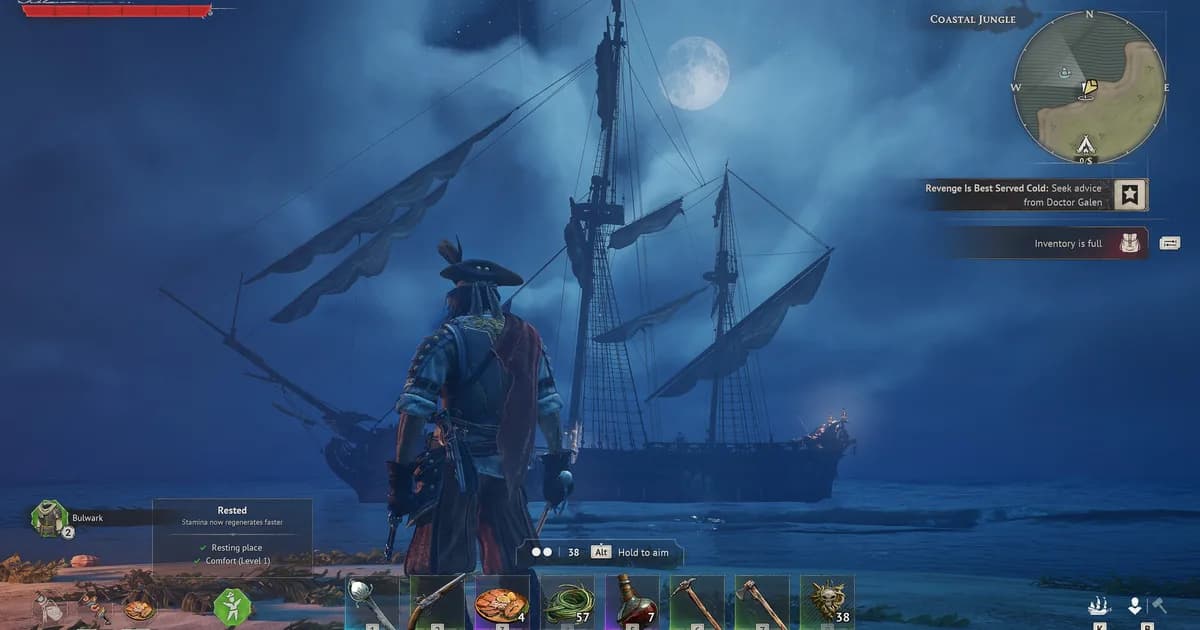
Rest before a long run. The Rested buff speeds Stamina regeneration by roughly two and a half times, and lasts longer with every Comfort level at your base. Our comfort guide covers how to raise it.
GODEEPER: Combat matters most on a leveling route that stacks quests and Points of Interest. Windrose XP Guide: Fastest Ways to Farm XP →
Co-op combat: split the crew
- Aggro holder (one player): engages the main group and keeps them in one spot. Give this to whoever has the best Perfect Block timing.
- Looters (everyone else): clear chests and crates while the enemies are busy.
In a two-player crew, one fights and one loots. In four, two hold aggro in a bigger camp and two loot.
Two things change with more players. The Co-op Enemy Scaling slider in World Properties "adjusts enemy Health and how fast enemies lose Posture based on the number of players on the server", so a full crew fights tougher pirates. And Windrose has no voice chat, no text chat and no ping key, so the looters have to call chest locations over Discord. Our Windrose chat guide covers the options, including a text chat mod.
Screenshot: Steam store page
Common combat mistakes
Grinding pirate kills for XP. Kills aren't an XP source. Go back to the Journal and the Points of Interest.
Pushing a biome undergeared. Copper weapons in the Foothills or iron in the Swamps turn every camp into a slog. Mine the next metal first.
Holding block forever. Plain blocking drains your Posture until you stagger. Time the release for a Perfect Block or dash through instead.
Everyone fighting the same pack. Four players on one group while the chests sit unopened is the most common co-op waste. Split aggro and loot.
GODEEPER: Copper and iron gate your gear tier: where to find them and how respawns work. Windrose Resources Guide: Ore Respawn and Crate Farming →
Our take
We'd spend the first hours on the Perfect Block rather than on a better sword: it's free, it works on every enemy, and it turns their Posture against them. Match your metal to the biome before you push, keep bandages stocked, and skip any fight that isn't guarding something you need. If you're after XP, the answer is never "one more camp of pirates".
References
- Windrose on Steam: official Early Access page and patch notes
- Windrose combat (game.wiki): Health, Stamina, Posture, Perfect Block and Perfect Dash
- Windrose XP tables: documented quest and Point of Interest XP categories
- Windrose co-op (game.wiki): co-op enemy scaling
Related Reading
- Windrose Guide 2026: All Biomes, XP, Factions & Ships: the hub for every Windrose guide.
- Windrose Co-op Guide: hosting, Shared Quest Progress and crew setup.
- Windrose Thomas Richards Boss Guide: the Coastal Jungle fight in the screenshot above.
- Windrose Faction Guide: every faction and what it unlocks.
- Windrose Endgame Guide: what to do after the story.
- Windrose Best Weapons Tier List: which weapons to craft first.
Was this guide helpful?
About the author

Systems & Economy Desk
GameBrief's byline for roguelikes, strategy and simulation. Reads patch notes, wiki tables and Steam stats and puts the numbers on the page.
- Roguelikes, strategy and simulation
- Builds, progression and economy
- Sources listed per article
Keep reading
How Long to Beat Windrose: Current Level 15 Guide 2026
Guides · 8 min
Windrose Copper Respawn: Do Mines Come Back? Ore Timer 2026
Guides · 9 min

Windrose PC Gamer Review Controversy: What Happened (2026)
News · 5 min

Windrose Roadmap 2026: Ashlands Biome, Ships & 1.0 Date
News · 14 min
Windrose Max Comfort Level: Decorations, Rested Buff Guide
Guides · 7 min

Windrose Co-op Guide 2026: XP Sharing, Crew Setup & Leveling
Guides · 8 min
Sponsored
Disclaimer
This article is published for informational and entertainment purposes. It does not constitute professional financial, legal, or technical advice. Game performance, online services, patch schedules, and store listings change. Verify critical details (pricing, system requirements, regional availability) with publishers and storefronts before you buy. Affiliate links, where present, help support our editorial work and are labelled in our affiliate disclosure.
Comments
Loading comments…