
GameBrief · Guides
Orc Incremental Beginner Guide: Formation, Cards, Rebirth
Reviewing
Orc Incremental
Nice Ride · Playsaurus
This Orc Incremental beginner guide covers what actually matters in the first few hours: how drafting works, why your formation matters more than raw power, and when to pull the trigger on your first Dark Rebirth. The game launched September 8, 2026, and within three days it was sitting at Very Positive on Steam with real momentum behind it, the developer credits Reddit traffic during the demo phase for getting it picked up by Steam's own algorithm.
TL;DR: Orc Incremental is an incremental auto battler: draft units and totems from cards, set a formation, and let your orc army fight on its own. When you hit a wall, Dark Rebirth resets your run for permanent bonuses and new unlocks. The developer confirms at least 20 hours of fresh gameplay, with hand-drawn art and zero generative AI used.
How does Orc Incremental actually work? (quick answer)
You draft units and totems from cards to build a warband, arrange them into a formation, and your army fights automatically wave after wave. Units fill different battlefield roles (melee, ranged, siege), and totems apply passive buffs, often tied to specific unit categories. When your composition can't push further, you trigger a Dark Rebirth: your run resets, but you keep permanent stat bonuses and unlock new units and challenges for the next attempt. It's the same core shape as other incremental auto battlers, but the drafting layer gives you real tactical decisions instead of pure number-watching, closer to a roguelite deckbuilder like Legionbound than a pure idle clicker.
Key takeaways
- Orc Incremental launched September 8, 2026, developer Nice Ride, published by Playsaurus (Clicker Heroes, Idle Skilling)
- Very Positive reception in the first few days, a strong, fast-building launch for a new incremental release
- Core loop: draft cards (units + totems), set formation, fight automatically, Dark Rebirth to reset for permanent power
- The developer confirmed on Reddit that gameplay stays fresh for at least 20 hours, with updates planned to extend that
- All art is handmade. The Steam page and developer replies both state no generative AI was used
- Confirmed named units include Catapult, Dragon, Archer, Juggernaut, and Warg Rider, drafted alongside totems and spells
Step-by-Step: your first few hours
1. Draft for role coverage, not raw power: Early cards offer a mix of unit roles and totems. Resist the urge to grab whatever has the biggest number. A formation with no ranged coverage or no frontline tank stalls out fast once waves get denser, regardless of how strong any single unit looks on paper.
2. Set your formation before you fight, not after: Formation determines who takes hits first and who gets protected. Frontline melee units should absorb damage so ranged and siege units (Archer, Catapult, Dragon) can keep dealing damage from behind.
3. Match totems to your actual composition: Totems provide passive bonuses, and several are tied to specific unit categories rather than applying universally. A community member flagged on Reddit that totems referencing "machines of war" only affect the Catapult and Dragon, not the Juggernaut, even though the Juggernaut is a bomb wagon that plays a similar siege-adjacent role. Check what a totem actually buffs before assuming it covers your whole army.
4. Use spells to survive spikes, not to farm damage: Blizzard and Fireball exist to swing a fight you're about to lose, slowing a boss tearing through your frontline or closing out a kill you'd otherwise miss. Treat them as an emergency lever, not a steady-state damage source.
5. Don't rush your first Dark Rebirth: Ascending resets your run in exchange for permanent bonuses and new unlocks, including a chieftain choice that changes how your next run plays. Push as far as you reasonably can on your first run before resetting: the permanent bonuses scale with how far you got, so a premature rebirth undersells the payoff.
6. Let the game run offline: Orc Incremental keeps progressing while you're away, so there's little reason to sit and actively watch early waves you've already cleared comfortably. Check back to a pile of gold and a stronger army rather than babysitting the screen.
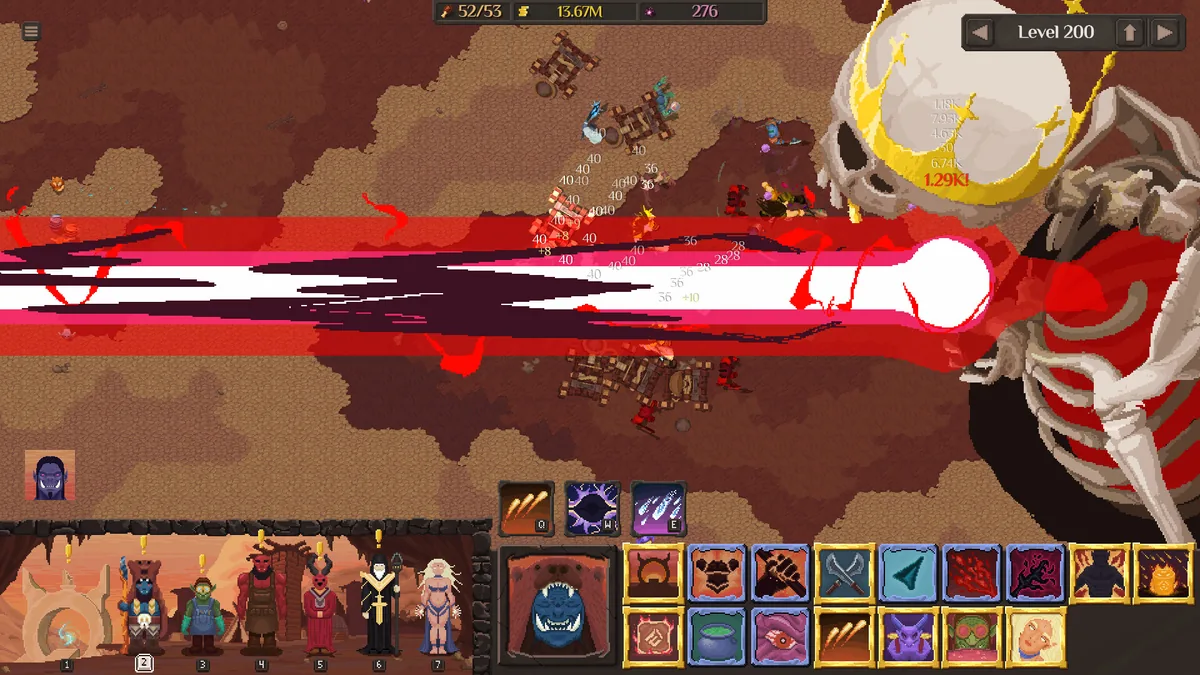 Caption: A Level 200 boss encounter. The skull's multiple stacked health numbers and the beam clash show how far the scaling curve stretches past the early game.
GODEEPER: Curious how other incremental auto battlers structure their rebirth loops? Our Core Crusher beginner guide covers a similar roguelite progression system worth comparing against.
Units, totems, and the classification quirk worth knowing
The official Steam description confirms units "come in multiple rarities and fill different battlefield roles," drafted alongside totems that "can change how your whole army performs." Named units confirmed across the store page, screenshots, and community discussion include the Catapult, Dragon, Archer, Juggernaut, and Warg Rider, spanning melee, ranged, and siege-style roles.
One detail worth flagging before you build around it: a Reddit commenter pointed out that "machines of war" totems and buffs apply only to the Catapult and Dragon, not the Juggernaut, despite the Juggernaut functioning as a bomb wagon built to run into enemy lines, a similar siege role. The same commenter noted the Warg Rider carries little meta-progression tied to it compared to other units. Neither point has a confirmed developer response yet as of this guide's research, so treat unit-category boundaries as something to verify in-game rather than assume from a unit's flavor text alone.
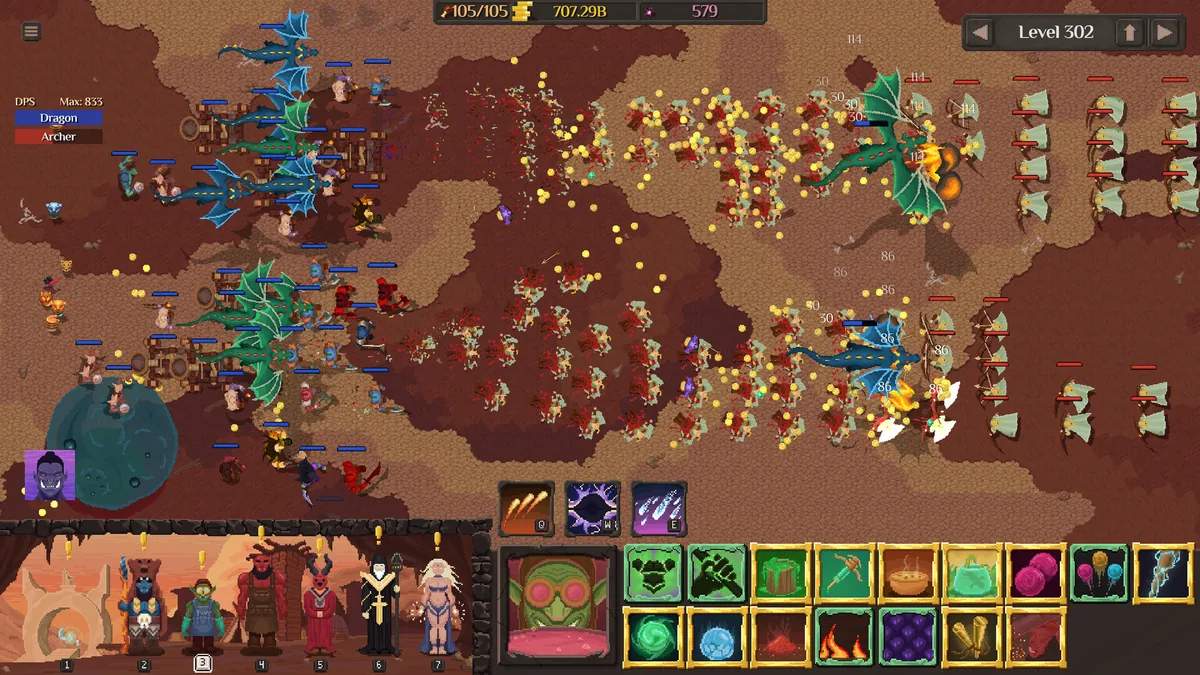 Caption: Mid-game scale at Level 302. The DPS breakdown in the top-left corner is a genuinely useful diagnostic for spotting which unit type is actually carrying a fight.
Dark Rebirth: what resets and what stays
Dark Rebirth is Orc Incremental's ascension system. According to the official description, resetting a run keeps permanent bonuses for damage, health, and gold, and unlocks new units and challenges that weren't available on the previous run. Each ascension also comes with a chieftain choice, described as making "every run unique," meaning the loop isn't just a flat power reset, it changes what tools you have access to on the way back up.
The practical implication for a first playthrough: the early game genuinely opens up as your permanent power grows, so don't judge the pacing of your second or third run by how your first one felt. Later milestones are built to keep pushing further, which matches the "at least 20 hours" floor the developer gave for how long the core gameplay stays fresh, with updates planned to extend it. It's a similar shape to the New Game Plus loop in Rune Dice or the ascension structure in Rift Wizard 3, where the first clear unlocks the tools that make the second one meaningfully different.
Is Orc Incremental worth playing right now?
At $6.79 during its launch discount (regular $7.99), Orc Incremental is priced like most of Playsaurus's other incremental titles, and the Very Positive reception in its first few days is a genuinely strong signal this early. It's also worth noting what it isn't: there's no in-app purchase layer and no advertising, a single upfront price for the full game, which is worth calling out given how much of the incremental genre on Steam currently runs on monetization layers instead.
The one honest caveat: three days post-launch is too early for a full review's worth of long-term pacing data. The 20-hour floor comes directly from the developer, not from independent playtesting at time of writing, and the exact shape of the late-game content is still filling in through post-launch updates.
Related Reading
- Core Crusher Beginner Guide: another recent roguelite/incremental hybrid with a comparable identity and progression-forge system worth cross-referencing.
- Risk of Rain 2 Items and Artifacts Guide: a different genre, but the same core idea of stacking passive effects into a build that scales.
- Best Indie Co-op Games Steam Summer Sale 2026: if you're looking for what else is worth picking up in the same price range.
- Legionbound Complete Guide: classes and synergy-building in a similarly deck-and-draft-driven roguelite.
- Rune Dice Complete Guide: another ascension-style New Game Plus loop worth comparing against Dark Rebirth.
Frequently Asked Questions
What is Orc Incremental? An incremental auto battler from Nice Ride, published by Playsaurus (Clicker Heroes, Idle Skilling). You draft units and totems, set a formation, and watch your orc army fight automatically, resetting periodically through a Dark Rebirth system for permanent power.
How long does Orc Incremental take to beat? The developer told players on Reddit the core gameplay stays fresh for at least 20 hours, with plans to extend that through updates. That's a floor, not a cap: the ascension loop is built to keep scaling past it.
What is Dark Rebirth in Orc Incremental? The game's ascension mechanic. When your army stops being enough, you reset your run but keep permanent bonuses to damage, health, and gold, plus unlock new units, challenges, and a chieftain choice that changes how the next run plays.
Does Orc Incremental use AI-generated art? No. The developer states directly on the Steam store page and in community replies that all assets are handmade, with no generative AI used in the art or development.
Is Orc Incremental good at launch? Early reception is Very Positive on Steam within the first few days, a genuinely fast, strong start for a new incremental release. Reviews should still be treated as early since the sample size is small this soon after launch.
What units are in Orc Incremental? Confirmed named units include the Catapult, Dragon, Archer, Juggernaut (a bomb wagon), and Warg Rider, drafted from cards alongside totems that buff specific unit categories. The full roster wasn't independently verified beyond these names at time of writing.
References
- Orc Incremental on Steam: official store page, price, and review data.
- Playsaurus: publisher's official site.
- r/incremental_games launch thread: developer's own launch post and community discussion cited in this guide.
Was this guide helpful?
About the author

Senior Critic & Analyst
Former game data analyst turned critic with 11 years covering indie and mid-tier games. Based in Austin. Runs spreadsheets on games most people just play.
- 11 years games criticism
- Former game economy analyst
- Roguelike and strategy specialist
Keep reading

Disclaimer
This article is published for informational and entertainment purposes. It does not constitute professional financial, legal, or technical advice. Game performance, online services, patch schedules, and store listings change. Verify critical details (pricing, system requirements, regional availability) with publishers and storefronts before you buy. Affiliate links, where present, help support our editorial work and are labelled in our affiliate disclosure.
Comments
Loading comments…