
GameBrief · General
Valheim Food Buff Guide: Best Foods for Every Biome

The Valheim food buff system looks simple: eat three foods, get stats, fight things. That gap between eating passively and eating strategically is where most players leave a third of their effective health on the table, often for dozens of hours.
Here's the full picture: what the three-slot system actually does, which foods are worth your time in each biome, and the one timing mistake that quietly reduces your buffs even when you think they're active.
TL;DR: Fill all three food slots with different foods and re-eat before the icon blinks. Valheim 1.0's Deep North tier now leads the ceiling: Meat In Bread and Seal Meat Soup reach 110 health, Oatmeal and Pancakes reach 115 stamina, and Fish Soup, Oven Pancake, and Meatballs and Poteitr reach 105 Eitr each. Ashlands foods remain useful until those recipes are unlocked.
Valheim food buff? (quick answer)
Eat three different foods. For current Deep North combat, use Meat In Bread or Seal Meat Soup for health, Oatmeal or Pancakes for stamina, and Fish Soup, Oven Pancake, or Meatballs and Poteitr for Eitr. Re-eat before the icon blinks. The Valheim complete guide, boss-order guide, and weapons tier list cover progression; the base-building guide and best-seeds guide cover the farms and world routes that decide when these foods become available.
Valheim food buff system: how it actually works
Three slots. That's the whole system. Each slot accepts one type of food, you can't stack the same food twice, and the combined totals from all three active slots form your actual health and stamina pools for that session.
What makes this interesting is the choice architecture behind it. Valheim foods fall into rough stat categories: health-heavy foods that make you harder to kill, stamina-heavy foods that extend how long you can sprint, mine, or swing before the depleted animation hits, and balanced foods that do both reasonably without excelling at either. You stack one of each type for most efficient use of all three slots.
In the early game, filling all three slots with whatever you can find is fine, because your baseline stats are low enough that even Meadows food doubles your survivability compared to eating nothing. By Swamp and beyond, every slot carries real weight. The ceiling scales dramatically. Raspberries give 7 health and 20 stamina for 600 seconds. Serpent Stew gives 80 health and 26 stamina for 1800 seconds. That gap is not cosmetic.
The buff mechanics are where players lose value without knowing it. Food buffs in Valheim aren't binary, active-or-expired. The game runs an actual formula on them: current bonus equals base bonus multiplied by (remaining duration divided by base duration) raised to the power of 0.3. That exponent is why the curve feels flat for most of the timer, then drops off fast. Using a 45 health, 15 stamina food as the reference point, you're still sitting at 92 percent of full value with 75 percent of the duration left, and 81 percent of full value at the halfway point. The real cliff hits in the last quarter: 25 percent duration remaining leaves you at 66 percent of the buff, and by 10 percent remaining you're down to half strength. The food icon starts blinking well inside that final stretch, not at the moment the buff turns bad.
If you wait until the icon blinks to re-eat, you've been fighting at reduced stats and you'll continue to do so until you eat again. The correct approach is to eat proactively, before the blink starts. This keeps your effective health and stamina pools at maximum throughout longer fights or extended exploration sessions.
A related mistake is treating food like medicine, eating only after taking significant damage. Food isn't reactive healing in Valheim. It sets your maximum health pool. Eating a Serpent Stew does not immediately restore 80 health. It raises your maximum health by 80, and your actual health then regenerates toward that ceiling over time. The sooner you eat, the higher that ceiling sits for longer.
Best Valheim food buff by biome
The biome structure of Valheim is also a food progression system. Each biome introduces ingredients that produce the next tier of foods, and the stat jump between tiers is steep enough that cooking with current-biome ingredients is consistently the right move.
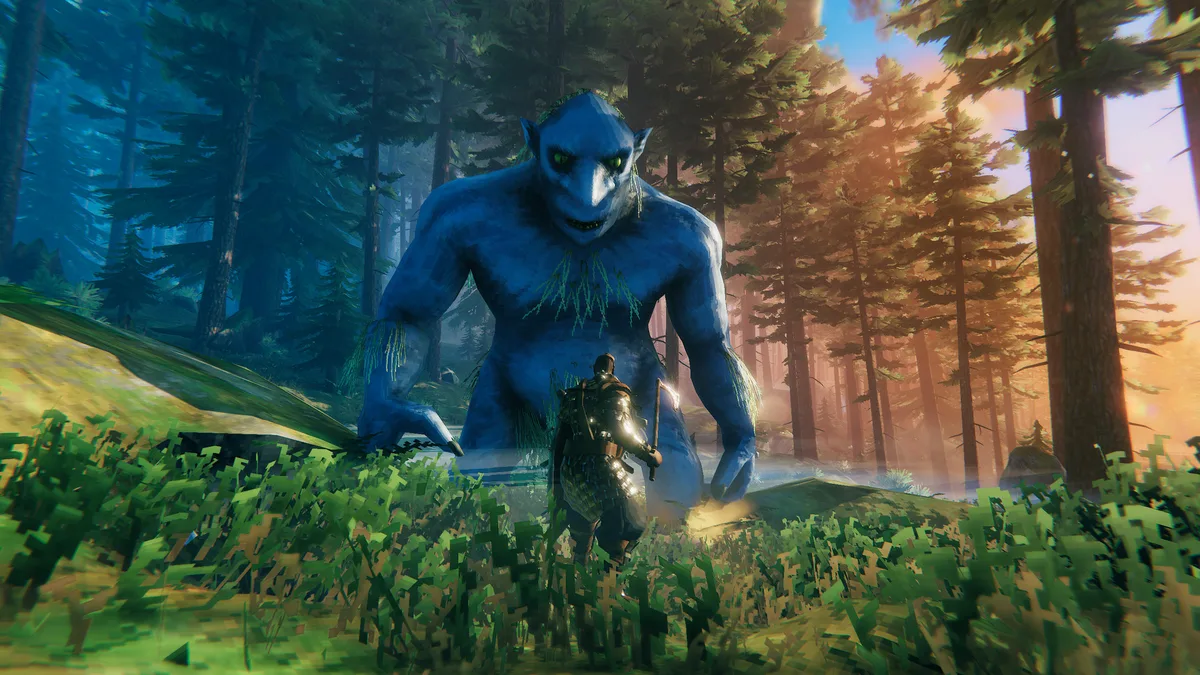 A Black Forest troll encounter is exactly the kind of fight where a weak Meadows-tier food buff gets you killed. Upgrade to the Iron Cooking Station once you've cleared the Swamp and unlocked iron (see the iron farming guide for the fastest route).
Meadows: Cooked Deer Meat, Honey, Cooked Boar Meat. Simple, available from day one, and collectively enough to survive Meadows boss fights without dying to a single unlucky swing. Your Valheim food buff is weak here, but that's fine. Move on to better options as soon as the Black Forest opens up.
Black Forest: Carrot Soup (carrots from your first farm), Deer Stew (deer meat plus mushroom plus carrot in the cauldron), and Cooked Fish as a third slot. This tier roughly doubles your effective health pool compared to Meadows food and costs almost nothing to maintain once you've established a small carrot farm.
Swamp: Serpent Stew enters the rotation if you've explored the Ocean biome and killed sea serpents. At 80 health and 1800 seconds, it holds the top health slot for a remarkably long stretch of the game, all the way through Plains unless you have full access to Ashlands ingredients. Pair it with Sausages (pork meat plus greydwarf eyes, cheap to mass-produce) for stamina and Turnip Stew as a third option. Cooked Serpent Meat works as a Stew substitute if you're short on broth.
Mountains: Wolf Skewers (65 health, 21 stamina) become available and slot in as a second health food alongside Serpent Stew, not a stamina pick: its 65 HP dominates the stat line the same way Serpent Stew's does. The real stamina food here is Eyescream, crafted from Greydwarf Eyes and a Freeze Gland, or Onion Soup if you want something cheaper. Many players reach Mountains still running a mixed Swamp setup, and that's fine until they've established a mountain base.
Plains: Blood Pudding and Lox Meat Pie represent the Plains tier, joined by Frosted Sweetbread, a balanced option added in the "Five Years of Valheim" anniversary patch. Lox Meat Pie (75 health, 24 stamina, 1800s) is the most accessible high-health option in this biome. Blood Pudding is the dedicated stamina pick at 75 stamina to just 25 health, the highest stamina value available below Mistlands. Frosted Sweetbread (43 health, 43 stamina, 1800s) splits the difference evenly rather than leaning into one stat, which makes it a reasonable fit if you're already running Lox Meat Pie for health and want a balanced third slot instead of a second stamina-heavy food. It's baked from unbaked sweetbread (cloudberries, egg, barley flour, honey) in a Stone Oven. Most players maintain Serpent Stew as a third slot through Plains unless they've fully committed to a Barley farm.
Mistlands: the food roster jumps sharply here, 14 distinct items by the wiki's own count, and most guides only name three of them. The Mistlands guide covers the biome route; for food, Misthare Supreme (85 health) and Mushroom Omelette (85 stamina) are the headline health and stamina foods, with Fish 'n' Bread (30 health, 90 stamina) and Salad (26 health, 80 stamina) as cheaper stamina-leaning alternatives. Meat Platter and Honey Glazed Chicken both bake in the Stone Oven at 80 health and 26 stamina, the exact same totals as Swamp-tier Serpent Stew. Neither is a stat upgrade, they're recipe alternatives for players who've moved past Swamp ingredients.
This is also where Eitr enters as a third food stat, relevant only to magic builds that rely on staves and seiðr abilities. Magecap is the one worth knowing about early: it's foraged raw in Mistlands (25 health, 25 stamina, 25 Eitr, no cooking station needed at all), so it's usable the moment you step into the biome, well before you've built a cauldron upgrade. Yggdrasil Porridge (80 Eitr) and Seeker Aspic (85 Eitr) are the two cooked Mistlands options once you've got a level 5 Cauldron, alongside Stuffed Mushroom (75 Eitr). Mushroom Omelette and Misthare Supreme carry zero Eitr despite sharing the tier. Melee builds can skip all four and stack health or stamina alternatives instead.
GODEEPER: Valheim 1.0 launched September 9, 2026 with the Deep North biome and a full new tier of enemies and items. Valheim 1.0 Release Date: Everything Iron Gate Confirmed →
Ashlands (previous top tier): Piquant Pie, Roasted Crust Pie, and Mashed Meat remain the strongest Ashlands foods, but the live Deep North tier now exceeds them. The Ashlands guide covers the biome route; Ashlands itself holds the largest food roster of any pre-Deep-North biome, 17 distinct items against Mistlands' 14. Each top-tier Ashlands food replaces a prior-tier staple by a significant margin. If you enter Ashlands on Swamp-level food, the stat gap becomes a survival problem almost immediately. Piquant Pie and Roasted Crust Pie both need a Food Preparation Table and Stone Oven, but Mashed Meat only needs a level 6 Cauldron, so it's the one to prioritize if you haven't built the full station yet. Fiery Svinstew (95 health, 32 stamina) is an earlier entry point, needing just a level 5 Cauldron. On the stamina side, Scorching Medley (32 health, 95 stamina, Cauldron level 6) sits just behind Roasted Crust Pie. For Eitr, Marinated Greens (95, level 6 Cauldron) remains the best Ashlands option, while Sparkling Shroomshake (90 Eitr) and Sizzling Berry Broth (85 Eitr) are useful alternatives. Vineberry Cluster, foraged raw around Ashlands, gives a flat 30/30/30 across all three stats with zero cooking, the Ashlands equivalent of Mistlands' Magecap.
Deep North (live 1.0 tier): Valheim 1.0 launched on September 9, 2026 with the Deep North and a new food tier. The Deep North biome guide covers enemies and gear, while the Deep North achievements guide covers completion goals. This is a priority shortlist for combat and build planning, not an exhaustive recipe catalog. Meat In Bread and Seal Meat Soup are the health leaders at 110 HP and 37 stamina for 30 minutes. Oatmeal and Pancakes are the stamina leaders at 115 stamina for 30 minutes. Fish Soup, Oven Pancake, and Meatballs and Poteitr are the key Eitr foods at 105 Eitr each. Smoked Moose Meat is a strong balanced health option at 105 HP and 35 stamina, while Poteitr is a balanced 35/35/35 food for players who want a little of every stat.
| Deep North priority food | HP | Stamina | Eitr | Duration |
|---|---|---|---|---|
| Meat In Bread | 110 | 37 | 0 | 1,800s |
| Seal Meat Soup | 110 | 37 | 0 | 1,800s |
| Smoked Moose Meat | 105 | 35 | 0 | 1,500s |
| Cooked Moose Meat | 80 | 27 | 0 | 1,200s |
| Oatmeal | 39 | 115 | 85 | 1,800s |
| Pancakes | 39 | 115 | 0 | 1,800s |
| Oat Milk | 37 | 110 | 0 | 1,500s |
| Fish Soup | 37 | 18 | 105 | 1,800s |
| Oven Pancake | 37 | 18 | 105 | 1,800s |
| Meatballs and Poteitr | 35 | 18 | 105 | 1,500s |
| Poteitr | 35 | 35 | 35 | 900s |
The Deep North choices make role specialization clearer. For a health build, pair Meat In Bread or Seal Meat Soup with Smoked Moose Meat. For stamina, Oatmeal + Pancakes + Oat Milk reaches 340 stamina. For magic, Fish Soup + Oven Pancake + Meatballs and Poteitr reaches 315 Eitr. Confirm the tooltip on your own build after patches: the values below are a current 1.0.12-era reference snapshot, and recipe availability still depends on the stations and ingredients you have unlocked.
Valheim food buff stats: exact values by biome tier
The per-biome descriptions above help you understand which foods to cook. The table below is the reference when you need to compare specific items or decide whether a new recipe is worth switching to. Every cell here is a valheim food buff you can verify against the in-game tooltip.
Meadows and Black Forest:
| Food | HP | Stamina | Duration |
|---|---|---|---|
| Raspberry | 7 | 20 | 600s |
| Honey | 8 | 35 | 900s |
| Cooked Boar Meat | 30 | 10 | 1,200s |
| Cooked Deer Meat | 35 | 12 | 1,200s |
| Queens Jam | 14 | 40 | 1,200s |
| Carrot Soup | 15 | 45 | 1,500s |
| Deer Stew | 45 | 15 | 1,500s |
| Cooked Fish | 45 | 15 | 1,200s |
The jump from Meadows to Black Forest is significant. Carrot Soup's 1,500-second duration compared to Honey's 600 seconds means you refuel less than half as often. Cooked Fish at 45 HP is the standout health food until you can make Sausages. The tier also introduces HP regen: Carrot Soup regens 2 HP per tick, which keeps your health climbing between pulls.
Swamp, Mountains, and Plains:
| Food | HP | Stamina | Duration |
|---|---|---|---|
| Sausages | 55 | 18 | 1,500s |
| Turnip Stew | 18 | 55 | 1,500s |
| Cooked Serpent Meat | 70 | 23 | 1,500s |
| Serpent Stew | 80 | 26 | 1,800s |
| Wolf Jerky | 33 | 33 | 1,800s |
| Wolf Skewers | 65 | 21 | 1,500s |
| Eyescream | 21 | 65 | 1,500s |
| Onion Soup | 20 | 60 | 1,200s |
| Lox Meat Pie | 75 | 24 | 1,800s |
| Blood Pudding | 25 | 75 | 1,800s |
| Frosted Sweetbread | 43 | 43 | 1,800s |
The valheim food buff system shows its design clearly here: Sausages push HP (55), Turnip Stew pushes stamina (55). They pair cleanly in the same two slots. Blood Pudding's 75 stamina is the highest in this whole tier, but its 25 HP means you need two strong HP foods in the remaining slots to compensate. Sausages regen 3 HP per tick; Turnip Stew regens 2 HP per tick.
Serpent Stew stays competitive across multiple biome tiers. At 80 HP with 1,800-second duration, it holds your health slot through Swamp, Mountains, and most of Plains unless you commit fully to Ashlands ingredients. The Cooked Serpent Meat variant is 10 HP lower (70) but shares the same duration for players who need volume over quality.
Mistlands and Ashlands (pre-Deep-North reference):
| Food | HP | Stamina | Eitr | Regen/tick | Duration |
|---|---|---|---|---|---|
| Magecap (raw, no cooking) | 25 | 25 | 25 | 1 | 900s |
| Fish 'n' Bread | 30 | 90 | 0 | 3 | 1,800s |
| Salad | 26 | 80 | 0 | 3 | 1,500s |
| Misthare Supreme | 85 | 28 | 0 | 5 | 1,500s |
| Mushroom Omelette | 28 | 85 | 0 | 3 | 1,500s |
| Seeker Aspic | 28 | 14 | 85 | 3 | 1,800s |
| Stuffed Mushroom | 25 | 12 | 75 | 3 | 1,500s |
| Yggdrasil Porridge | 27 | 13 | 80 | 3 | 1,500s |
| Honey Glazed Chicken | 80 | 26 | 0 | 5 | 1,800s |
| Meat Platter | 80 | 26 | 0 | 5 | 1,800s |
| Vineberry Cluster (raw, no cooking) | 30 | 30 | 30 | 1 | 900s |
| Fiery Svinstew | 95 | 32 | 0 | 6 | 1,500s |
| Scorching Medley | 32 | 95 | 0 | 4 | 1,500s |
| Sizzling Berry Broth | 28 | 14 | 85 | 4 | 1,500s |
| Sparkling Shroomshake | 30 | 15 | 90 | 4 | 1,500s |
| Marinated Greens | 32 | 16 | 95 | 4 | 1,800s |
| Piquant Pie | 105 | 35 | 0 | 6 | 1,800s |
| Roasted Crust Pie | 34 | 100 | 0 | 4 | 1,800s |
| Mashed Meat | 100 | 34 | 0 | 6 | 1,500s |
| Ashlands Gourmet Bowl | 75 | 75 | 38 | 6 | 3,000s |
Verify against your in-game tooltip when you unlock each recipe, since numbers can shift a point or two between patches. The regen/tick column matters more than it looks: it's how fast your health climbs back to that food's ceiling after taking damage, separate from the ceiling itself. Piquant Pie and Mashed Meat both regen 6 HP per tick, the fastest cooked options in the game alongside the Ashlands Gourmet Bowl, while Seeker Aspic and Stuffed Mushroom sit at 3 among the cooked Eitr foods. The two raw, no-cooking options (Magecap and Vineberry Cluster) regen just 1 per tick, the actual slowest in the table, which is the real cost of skipping the crafting station rather than the Eitr value itself. That's the tradeoff mage builds accept for the Eitr slot. The Ashlands Gourmet Bowl is the only food in this table with a 50-minute (3,000-second) duration and the only option providing meaningful stats across all three categories simultaneously.
Ashlands foods represent a genuine pre-Deep-North ceiling leap, but not evenly across the board. Piquant Pie alone reaches 105 HP, a 25-point jump over Serpent Stew's 80 HP. Roasted Crust Pie isn't a second HP food, though: at 34 HP and 100 stamina, it's actually the Ashlands stamina food, closer in role to Eyescream than to Piquant Pie. Mashed Meat splits the difference at 100 HP and 34 stamina. Entering Ashlands at Plains food levels leaves you working with a meaningfully lower ceiling than the biome expects.
Best 3-food combos: combined HP and stamina totals
Individual food stats only matter in context of what the other two slots provide. These are the most efficient three-food setups at each progression stage, with pre-calculated totals so you know exactly what you're walking into a fight with.
Swamp setup (first strong combo): Serpent Stew + Sausages + Turnip Stew Total: 153 HP, 99 stamina. Roughly 4x the effective health of Meadows food. This combo survives Bonemass on most builds and carries through early Mountains.
Mountains (upgrade from Swamp): Serpent Stew + Wolf Skewers + Eyescream Total: 166 HP, 112 stamina. Wolf Skewers (65 HP) replaces Sausages (55 HP) for a direct upgrade. Eyescream (65 stamina) replaces Turnip Stew (55 stamina) for another direct upgrade. Same slot logic, better numbers.
Plains endgame (pre-Mistlands ceiling): Serpent Stew + Lox Meat Pie + Blood Pudding Total: 180 HP, 125 stamina. Serpent Stew anchors the health slot through all of Plains. Lox Meat Pie fills the second HP slot. Blood Pudding covers stamina at 75, compensating for both HP foods' low stamina output.
Mistlands melee (bridge into Ashlands): Misthare Supreme + Fish 'n' Bread + Meat Platter Total: 195 HP, 144 stamina. A clean jump over the Plains combo without touching Eitr. Meat Platter is doing the same job Serpent Stew did in Plains, just cooked from Mistlands ingredients instead.
Mistlands mage build: Misthare Supreme + Fish 'n' Bread + Seeker Aspic Total: 143 HP, 132 stamina, 85 Eitr. Swapping the third HP food for Seeker Aspic costs 52 HP compared to the melee combo above, but it's the standard loadout for running a staff through Mistlands and into early Ashlands before Marinated Greens is available.
Ashlands (pre-Deep-North ceiling): Piquant Pie + Roasted Crust Pie + Mashed Meat (balanced HP and stamina, the standard melee setup) Total: 239 HP, 169 stamina. Roasted Crust Pie is doing the stamina-food job here, not a second HP food, so this combo actually splits closer to even than it looks at first glance. Still a clear step up from the Mistlands melee combo's 195 HP.
For magic builds in Ashlands: swap Roasted Crust Pie for Marinated Greens to pick up 95 Eitr for casting. Total drops to 237 HP but stamina falls hard, from 169 to 85, since Marinated Greens isn't a stamina food the way Roasted Crust Pie is. Once Deep North recipes are available, use the current Eitr combination below instead.
One consistent pattern across all tiers: the strongest combos pair a high-HP food, a high-stamina food, and a secondary HP food rather than stacking three similar foods. Three HP foods leave your stamina pool too low to sprint or mine consistently. Three stamina foods leave you dying in two hits. One of each with a balanced third food is the general formula.
The absolute maximum: Deep North single-stat totals
Stacking for pure balance isn't the only option. If you want the current 1.0 ceiling in a single category, these Deep North combinations are the useful reference. They are not practical loadouts for most fights, but they help with boss attempts, build testing, and understanding what the new tier changed:
- Max health: Meat In Bread + Seal Meat Soup + Smoked Moose Meat. 325 health, 109 stamina, with the three food durations varying by recipe.
- Max stamina: Oatmeal + Pancakes + Oat Milk. 115 health, 340 stamina, 85 Eitr.
- Max Eitr: Fish Soup + Oven Pancake + Meatballs and Poteitr. 109 health, 54 stamina, 315 Eitr.
For reference, the balanced Ashlands combo covered above (Piquant Pie + Roasted Crust Pie + Mashed Meat, 239 HP and 169 stamina) sits below the Deep North single-stat maximums, which is exactly the tradeoff: pushing one stat to its ceiling means giving up a meaningful amount of the other two.
Eitr: when it matters and when to ignore it
Eitr functions like a mana pool for Valheim's magic system, depleting when you cast seiðr abilities or fire staves, regenerating based on your total Eitr stat. The live Deep North tier changes the magic ceiling: Fish Soup, Oven Pancake, and Meatballs and Poteitr each provide 105 Eitr, while Oatmeal provides 85. The older options still matter while you are progressing: Magecap (25 Eitr, Mistlands) and Vineberry Cluster (30 Eitr, Ashlands) are raw and need no cooking station, while Stuffed Mushroom, Yggdrasil Porridge, Seeker Aspic, Sizzling Berry Broth, Sparkling Shroomshake, and Marinated Greens cover the earlier cooked tiers. Mushroom Omelette and Misthare Supreme still grant no Eitr, because they are stamina and health foods respectively.
If you're not using a staff or another magic tool, skip the Eitr foods entirely and replace them with higher-health or higher-stamina options. A melee Viking running into a Fuling Village gains nothing from Eitr capacity. One Eitr food combined with two high-health or high-stamina foods gives most hybrid builds everything they need without sacrificing survivability. In the Deep North, the 315-Eitr combination is the specialist ceiling; use Fish Soup or Meatballs and Poteitr alone if you need magic capacity without giving up as much health.
The practical question is: are you using a staff as your primary weapon in Mistlands, Ashlands, or Deep North? If yes, start with one Eitr food and add a second only if you run empty before enemies die. If you're pure melee, the slot is better spent elsewhere.
Step-by-Step: building your food supply
A food buff means nothing if your supply runs dry mid-dungeon. Here's how to maintain stock consistently as you move through biomes.
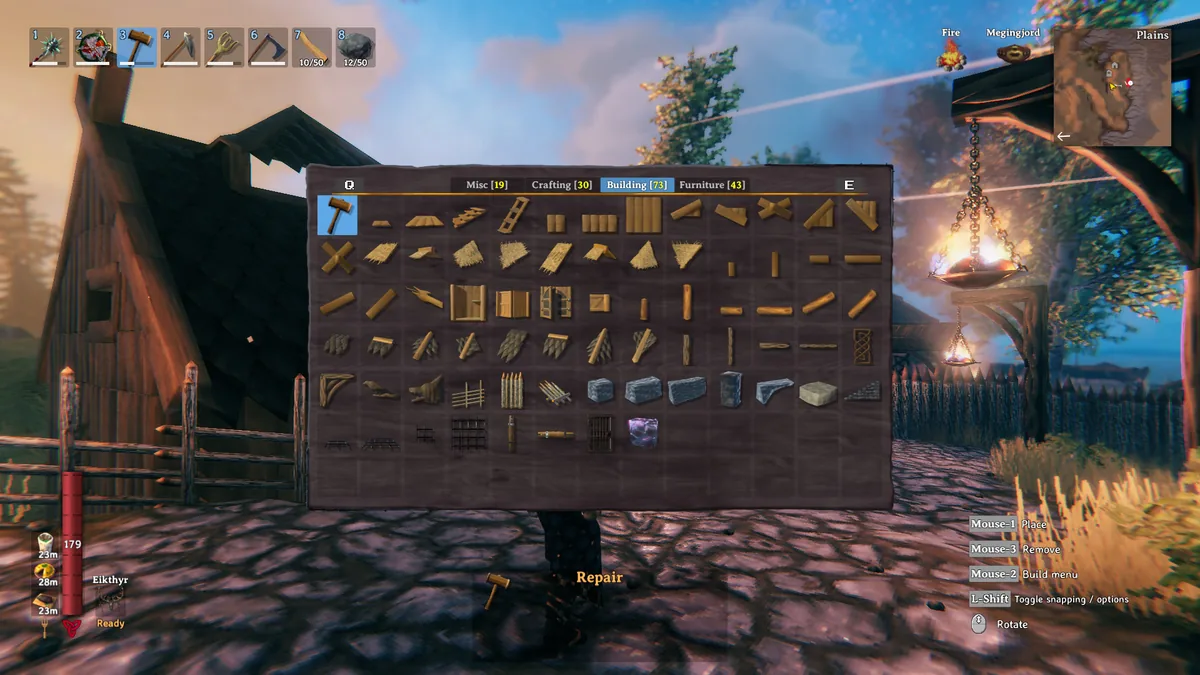 A forward base near your farmland cuts the round-trip time on every cooking run. Build it before you need it, not after your food runs out mid-biome.
1. Set up food farming before you need it. Plant carrots and turnips during Black Forest exploration, not when you're already in the Swamp. The farm doesn't need to be large. A 6x6 plot per crop covers most runs.
2. Batch-cook every session start. Cooking is time-intensive per unit but cheap on stamina. Spend five minutes at the cauldron before every major expedition. Traveling light on food and crafting on the go wastes both time and ingredient trips.
3. Keep two food tiers on hand. Cheap food (Sausages, Carrot Soup) for base work and mining. Good food (Serpent Stew, Wolf Skewers) for boss fights and biome exploration. Mixing tiers based on activity extends your supply and you're not burning Serpent Stew on a routine copper run.
4. Eat right before logging off. Food durations run in real time, not play time. Eat a fresh set of food before ending a session and you'll arrive at your next session with partial buffs already active.
Tips for maximizing your valheim food buff
Never skip the third slot. Even if your two main foods are strong, an empty third slot is leaving free stats on the table. A mediocre food in slot three beats nothing. The cost of adding one more food per expedition is trivial compared to the stat loss.
Food matters more in multiplayer. In co-op, the group tends to rush biomes faster, which means your food tier can lag behind what enemies deal. A player who invested in their food setup survives fights where teammates at the same gear level die.
Pre-boss food ritual. Before every boss fight, eat a fresh set of your best available foods even if your current valheim food buff hasn't expired. Full duration at fight start means full stats throughout the fight. A buff that expires mid-encounter costs you at the worst possible time.
Save high-value food for hard content. Serpent Stew is not a casual food. Make enough to field a supply for boss attempts and high-difficulty dungeon runs, then use cheaper alternatives for everything else. Your materials stretch further and you're not scrambling to stock up before a raid.
Reset your food fast with Bukeperries instead of waiting. You can't eat two of the same food, and swapping to a better combo mid-run usually means waiting out your current buffs. Bukeperries, dropped by Greydwarf Shaman and Fuling Shaman, skip the wait: for 15 seconds they disable health and stamina regen, halve your movement speed, and remove one active food buff every 2 seconds, clearing all three slots inside that window so you can eat your new combo right away. You take minor damage and you're vulnerable the whole time, so do this at base or somewhere safe, not mid-fight. Rotten Meat, found in the Ashlands' Putrid Hole and dropped by Vile enemies, causes the identical effect for players who no longer backtrack to earlier biomes.
Consider a Feast for long, low-danger sessions. Feast-tier foods (Whole Roasted Meadow Boar, Black Forest Buffet Platter, Swamp Dweller's Delight, Sailor's Bounty, Hearty Mountain Logger's Stew, Plains Pie Picnic, Mushrooms Galore á la Mistlands, Ashlands Gourmet Bowl) need a Food Preparation Table and cook into 10 servings from one batch, each lasting 3,000 seconds, 50 minutes, far longer than any single-tier food. Their per-serving stats are usually weaker than a dedicated tier food, but for exploration runs where you don't want to carry a stack of separate meals, one Feast batch covers ten re-eats without a return trip to the cauldron.
GODEEPER: Abiotic Factor takes a completely different approach to survival: no food buffs, just science-horror resource management with up to 6-player co-op. Abiotic Factor Beginner Guide: Tips and First Steps →
Related Reading
- Valheim 1.0 Release Date: Deep North Biome Announced: Full breakdown of what Iron Gate confirmed for September 9, including new enemies, biome details, and platform expansion to PS5 and Switch 2.
- Abiotic Factor Beginner Guide: Tips and First Steps 2026: Resource management, base building, and survival in a science facility survival game with a very different philosophy from Valheim.
- Outbound Complete Guide: Van Builds, Co-op, and Biomes: The van-based survival game where your cooking and supply decisions determine how far you can push into new terrain.
- Valheim Complete Guide Hub: the broader progression and survival reference.
- Valheim Deep North Biome Guide: enemies, gear, and preparation for the new biome.
- Valheim Deep North Achievements Guide: the new 1.0 completion targets.
- Valheim Boss Order Guide: boss progression and the food tiers each fight expects.
- Valheim Mistlands Guide: the route into Eitr and the pre-Deep-North food tier.
- Valheim Ashlands Fader Guide: Ashlands boss preparation and pre-1.0 food planning.
- Valheim Ocean Biome Guide: sea-serpent routes for Serpent Stew ingredients.
- Valheim Base Building Guide: farms, cooking stations, and forward-base setup.
- Valheim Best Seeds 2026: world seeds for efficient ingredient and biome access.
- Valheim Weapons Tier List: weapon progression to pair with each food build.
Frequently Asked Questions
How many food slots does Valheim have? Valheim has 3 food slots. You can eat three different foods simultaneously to stack their buffs, but you cannot eat two of the same food at once. Each slot contributes its own health, stamina, and Eitr values independently to your total.
What is the best single food in Valheim? For the live Deep North tier, Meat In Bread and Seal Meat Soup tie for the highest listed health at 110, with 37 stamina and a 30-minute duration. For stamina, Oatmeal and Pancakes each give 115 stamina; for Eitr, Fish Soup, Oven Pancake, and Meatballs and Poteitr each give 105. Serpent Stew remains a strong earlier-tier food at 80 health and 26 stamina.
When should I re-eat food in Valheim? Re-eat before the food icon starts blinking. Once the icon blinks, the buff has entered its final phase and is already providing less than full value. Eating proactively, before the blink, keeps your stats at maximum throughout fights and exploration.
What is Eitr and which foods give it? Eitr is Valheim's magic resource, introduced in Mistlands. In the current Deep North snapshot, Fish Soup, Oven Pancake, and Meatballs and Poteitr each provide 105 Eitr, while Oatmeal provides 85. Earlier foods such as Magecap, Vineberry Cluster, and Marinated Greens remain useful before the new tier. Melee builds can skip them.
What are the best foods for the Ashlands biome? Piquant Pie, Roasted Crust Pie, and Mashed Meat remain the best Ashlands-tier foods, but Deep North food now exceeds that tier. Use them until you unlock the Deep North recipes or as lower-cost alternatives for Ashlands expeditions.
What food does the Deep North add in Valheim 1.0? The live Deep North tier adds foods including Meat In Bread, Seal Meat Soup, Smoked Moose Meat, Oatmeal, Pancakes, Oat Milk, Fish Soup, Oven Pancake, Poteitr, and Meatballs and Poteitr. The current food snapshot puts the highest health at 110, stamina at 115, and Eitr at 105 per item.
What does Frosted Sweetbread do in Valheim? It's a Plains-tier balanced food added in the Five Years of Valheim anniversary patch: 43 health, 43 stamina, 1800-second duration. Baked from unbaked sweetbread (cloudberries, egg, barley flour, honey) in a Stone Oven.
What is the highest possible food buff total in Valheim? In the current Deep North snapshot, Meat In Bread + Seal Meat Soup + Smoked Moose Meat reaches 325 health, Oatmeal + Pancakes + Oat Milk reaches 340 stamina, and Fish Soup + Oven Pancake + Meatballs and Poteitr reaches 315 Eitr. These are single-stat extremes, not practical balanced loadouts.
References
- Valheim on Steam: official 1.0 store page and current release information
- Valheim Steam announcements: Iron Gate's official Deep North 1.0 release announcement and new-food overview
- Valheim 1.0 and Deep North Official Release Date Trailer: September 9, 2026 confirmed
- Valheim Has a Release Date (Iron Gate Blog): official developer announcement
- Valheim Food and Mead Guide: Best Foods, Buffs, Durations, Locations: food stats reference
- Valheim Best Food Guide: current 1.0-era stat and combination reference
- Valheim Wiki: Food: full stat table, the exact buff decay formula, and the wiki's own tested maximum-total food combinations, cross-checked against in-game tooltips
Was this guide helpful?
About the author

Senior Critic & Analyst
Former game data analyst turned critic with 11 years covering indie and mid-tier games. Based in Austin. Runs spreadsheets on games most people just play.
- 11 years games criticism
- Former game economy analyst
- Roguelike and strategy specialist
Keep reading




Disclaimer
This article is published for informational and entertainment purposes. It does not constitute professional financial, legal, or technical advice. Game performance, online services, patch schedules, and store listings change. Verify critical details (pricing, system requirements, regional availability) with publishers and storefronts before you buy. Affiliate links, where present, help support our editorial work and are labelled in our affiliate disclosure.
Comments
Loading comments…