
GameBrief · General
Valheim Complete Guide: Bosses, Biomes and Base Building
Valheim complete guide, all 8 bosses, every biome from Meadows to the Deep North, base building, weapons, food, and what the 1.0 update added.
Reviewing
Valheim
Iron Gate AB · Coffee Stain Publishing
This Valheim complete guide exists because eleven separate articles are harder to navigate than one page that tells you where to start. Iron Gate's Viking survival game left Early Access on September 9, 2026, and the 1.0 release brought eight bosses, eight full biomes, a magic system, a gem-upgrade weapon tier, and 53 Steam achievements with it. This hub links every guide on the site by topic so you can jump straight to the one you need.
TL;DR: Valheim left Early Access for a full 1.0 release on September 9, 2026. The current build has 8 Forsaken bosses (Eikthyr through Kall Fimbulbringer), 8 biomes (Meadows through the Deep North), a stability-and-comfort base building system, a gem-upgraded Ashlands weapon tier, a 3-slot food system, and 53 achievements. PS5 and Switch 2 joined at launch with full crossplay. The price sits at $29.99.
Key takeaways
- Developer: Iron Gate AB. Publisher: Coffee Stain Publishing. 1.0 release: September 9, 2026, after more than five years in Early Access.
- 8 Forsaken bosses now exist, ending with the Deep North's Kall Fimbulbringer.
- 8 biomes are live: Meadows, Black Forest, Swamp, Mountain, Plains, Mistlands, Ashlands, and the Deep North.
- Valheim 1.0 shipped September 9, 2026 with the Deep North biome, PlayStation 5 and Nintendo Switch 2 support, full crossplay, and 53 Steam achievements.
- The price sits at $29.99 (up from $19.99 before launch). Existing owners from before the increase kept the game at no extra cost.
- The game crossed two million copies sold in May 2026 and holds a Very Positive rating across more than 545,000 Steam reviews.
- Two systems run under every build: color-coded structural stability and a furniture-based comfort score that unlocks the Rested buff.
What is Valheim in 2026? (quick answer)
Valheim is a full 1.0 Viking survival game as of September 9, 2026: gather resources, build a base, and fight through 8 Forsaken bosses across 8 biomes toward the current endgame in the Deep North. The 1.0 update ended more than five years in Early Access, added the Deep North as the eighth and final biome, and brought the game to PlayStation 5 and Nintendo Switch 2 with full crossplay.
The combat itself has also shifted since launch. Patch 0.221.4, the "Call to Arms" overhaul, added an Adrenaline resource, perfect dodge rolls that refund stamina, and stamina-free perfect blocks, and those changes apply to every fight in the game, Ashlands boss included. If you played Valheim years ago and are coming back for 1.0, the moment-to-moment combat feel is not the one you remember.
Boss progression: all bosses in order
The boss ladder is the spine of Valheim's progression, and the 1.0 release added an eighth rung: Eikthyr → The Elder → Bonemass → Moder → Yagluth → The Queen → Fader → Kall Fimbulbringer. Each boss lives one biome deeper than the last, and each fight drops the exact tool, key, or material that makes the next biome survivable rather than lethal. The Elder's Swamp Key is the clearest example: it opens Sunken Crypts, and Sunken Crypts hold the Withered Bones you need to summon Bonemass.
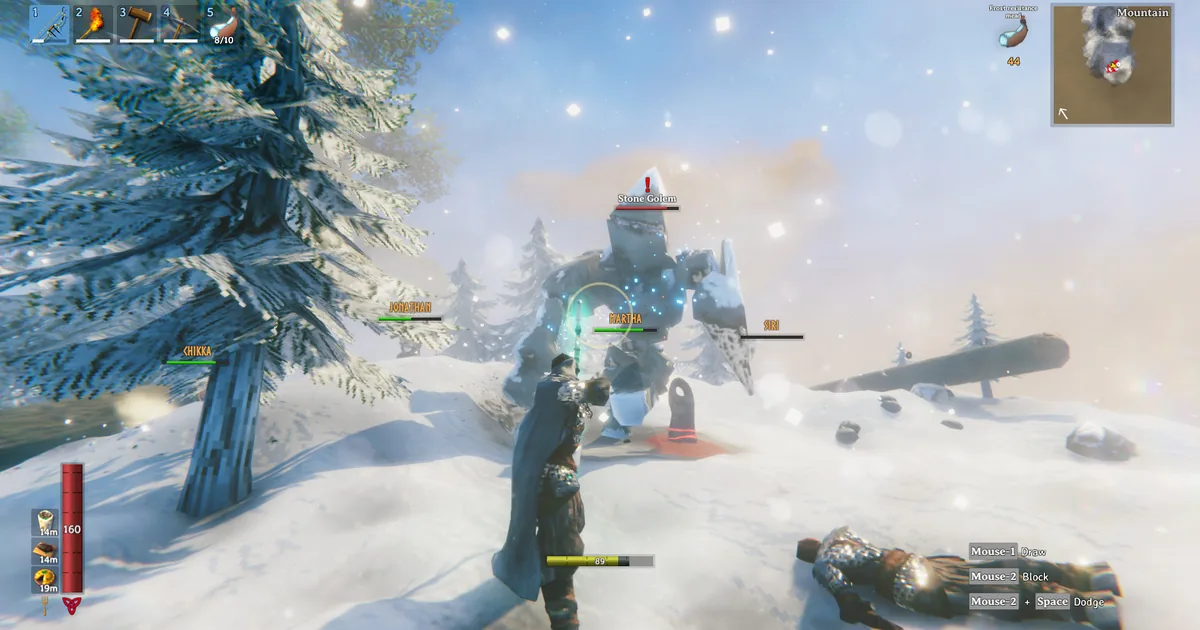
Bonemass is the first real filter. It's immune to slash and pierce damage and only takes real damage from blunt weapons like the Iron Mace, so a party that shows up with swords and spears alone is in for a long, frustrating fight. Fader, the Ashlands boss, is the opposite kind of gate: its summon isn't a simple altar-and-item ritual, you have to find a coliseum arena hidden inside a Charred Fortress (revealed by a Vegvisir, present in roughly half of them) and place 3 Bells built from 9 Bell Fragments before the fight even starts. Kall Fimbulbringer, the Deep North's new final boss, goes further still: reaching it means a full gauntlet rematch against all seven previous Forsaken after gathering 3 Malicious Blood, and the fight itself is a Jotun frost giant built around dodging an Ice Fall and a spinning Corkscrew Launch rather than trading hits.
- Valheim Boss Order: All 8 Bosses & How to Summon Them: every boss in progression order, exact summon items, where to farm them, and the one weakness that decides each fight.
- Valheim Ashlands Guide: Fader Boss and Charred Enemies: the full Fader summon ritual, its eight attacks, Charred enemy types, and the Flametal gear you need to survive contact with the terrain itself.
- Valheim Achievements Guide: All 53 Unlocks in 1.0: every achievement the 1.0 release added, including all 8 boss kills, confirmed from Steam's own stats page.
Biomes: Mistlands, Ashlands and Deep North
Biome progression in Valheim is linear and tied directly to the boss ladder above: clear a biome's boss, unlock the next tier of gear, move deeper. The Mistlands and Ashlands are the two most recent full biomes, and both hide their core systems behind an item you'd never find without being told.
Mistlands is a permanently foggy, vertical biome where visibility, not raw enemy difficulty, is the actual obstacle. A Wisplight (1 Wisp, 1 Silver) clears the fog in a radius around you and is close to mandatory gear here. It also introduces Valheim's first real magic system: Sap from Sap Extractors placed on Yggdrasil roots, combined with Soft Tissue at an Eitr Refinery, produces the Refined Eitr that powers four magic staffs. The Queen, the biome's boss, doesn't use a standard altar summon either. You need a Sealbreaker crafted from 9 Sealbreaker Fragments found in Infested Mines, plus a Vegvisir to reveal where the Infested Citadel actually is.
Ashlands flips the survival math entirely: nearly every surface and enemy deals fire damage, so Flametal armor's fire resistance stops being optional gear and becomes the baseline for walking around at all. Grausten is the fireproof building stone here, and the Black Forge crafts and upgrades gear for both Mistlands and Ashlands, so a station you already built keeps working. Morgen, the biome's troll equivalent, ambushes from underground rubble piles rather than patrolling in the open, which catches a lot of players off guard the first time.
Deep North shipped with the 1.0 release on September 9, 2026, as the game's eighth and final biome. Gammeltrolls (ancient trolls that throw entire tree trunks and turn to stone on death, requiring Ember Charges to harvest) and Elakingar (underground rodent creatures with tunnel networks) are the standout regular enemies, and the biome adds two dungeon types, Winding Tunnels and the Gates of Mörkhalla, plus 40-plus new weapons, four armor sets, and the grappling hook utility item. Full Ashlands-tier gear is the realistic floor for reaching Kall Fimbulbringer, the biome's final boss, since the fight is gated behind a gauntlet rematch against every earlier Forsaken.
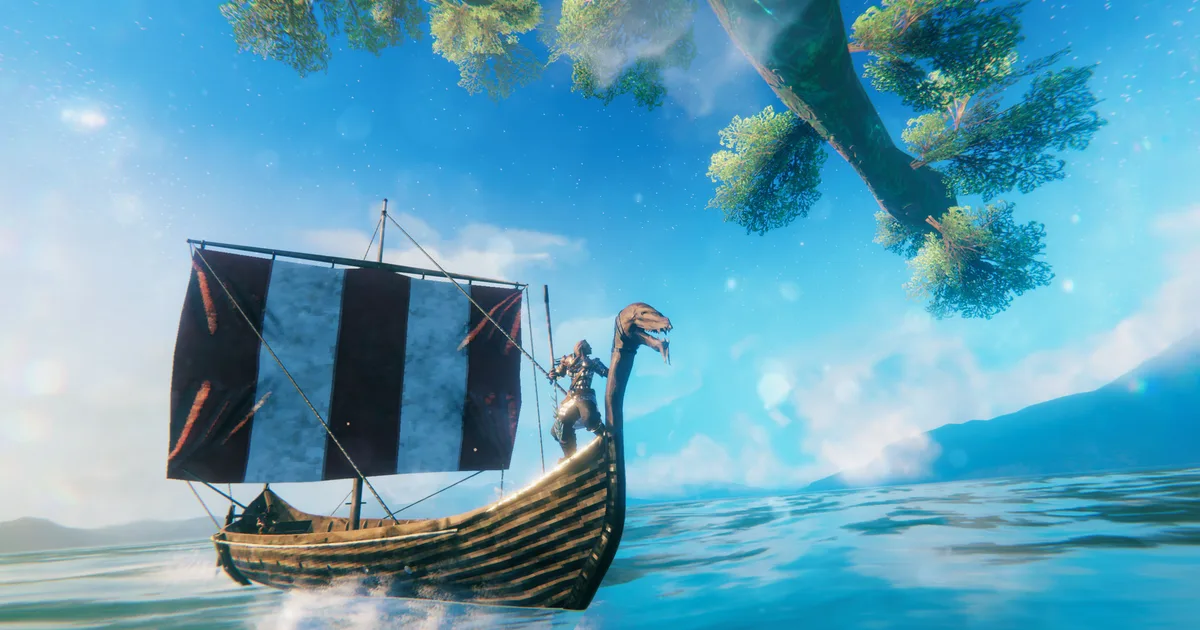
One more zone worth knowing about, even though it doesn't count toward the "8 biomes" figure above since it has no boss and no armor tier gate of its own: the Ocean covers most of the map between the land biomes and is only realistically survivable by boat (a Raft, Karve, or Longship). Its two enemies, the Serpent and the far rarer Leviathan, are the only source of Serpent scales and Chitin respectively, materials some crafting recipes need but no land biome drops. You'll cross it constantly just getting between the named biomes, so it's less a destination than a hazard to plan around.
- Valheim Mistlands Guide: Magic, Eitr, and The Queen: the Wisplight fog-clearing loop, the full Sap-to-Eitr crafting chain, all four magic staffs, and how to summon and beat The Queen.
- Valheim Deep North Biome Guide: Enemies and Gear 2026: everything Iron Gate has confirmed about the final biome so far, organized as a day-one preparation checklist.
GODEEPER: If you're deciding which biome to research first, the Ashlands is still where most returning players get stuck, even with the Deep North now live: Fader's summon ritual alone trips up more players than anything in the new biome's regular content. Valheim Ashlands Guide: Fader Boss and Charred Enemies →
Base building basics
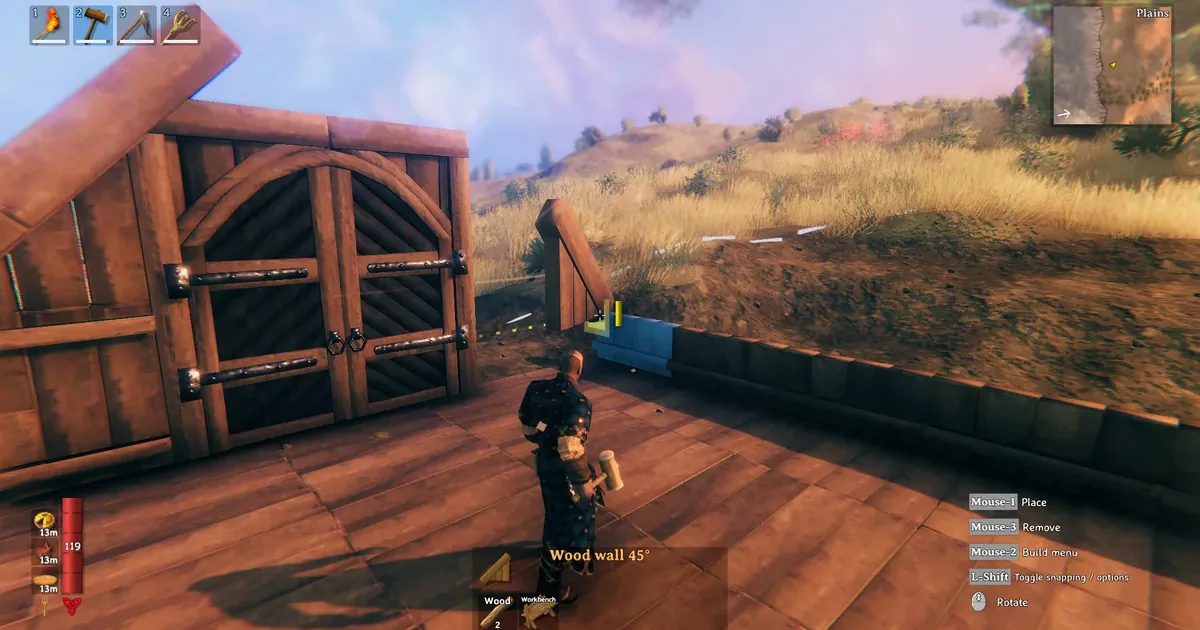
Every Valheim base runs on two systems the tutorial barely explains. Structural stability is color-coded the moment your hammer hovers over a piece: blue and green mean solidly supported, yellow means the support chain is thinning out, and orange or red mean the piece is close to collapsing. Heavier materials like stone show worse color-coding sooner than wood at the same span, and any wood piece built directly over open water loses roughly half its stability, which is why docks need a raised foundation rather than a wall started right at the waterline.
Comfort is the separate score that decides whether resting near your build actually does anything. Furniture and decorations build a comfort total, and resting near enough of it for 20 seconds triggers the Rested buff: faster stamina and health regeneration plus bonus XP for roughly a minute per comfort point. Furniture mostly works in categories rather than stacking, so a Dragon Bed supersedes a Straw Bed's value instead of adding to it, and there's no benefit to placing five of the same low-tier item in one category.
Portals are the other recurring base-building question. Standard portals have always blocked ore and metal, and that's still true, but the Ashlands update added a Portal Stone, a separate structure that explicitly allows teleporting ore, metal, dragon eggs, and a handful of other normally-restricted items. There's also a world-modifier toggle at world creation that turns the restriction off entirely for groups who'd rather skip it.
- Valheim Base Building Guide: Comfort, Wards, Portals 2026: the full stability color system, comfort furniture categories, workbench crafting radius, and exactly what the Portal Stone changes about hauling ore.
Weapons and combat
A useful Valheim weapons list can't rank purely by damage number, because two weapons with identical stats perform completely differently depending on what you're fighting. Damage type matching matters more than tier for most of the game: skeletons and Draugr resist pierce but fold to blunt and fire, Greydwarves hate fire specifically, and several armored Mistlands and Ashlands enemies flatly resist whole damage categories.
Frostner, a Mountain-tier frost-and-spirit mace, is the closest thing to a universal best-in-slot pick, since its spirit damage shreds the Draugr and skeleton enemies that remain a threat all the way through Plains and into Mistlands crypts. Draugr Fang, the Mountain-tier bow crafted from Silver and Ancient Bark, holds the equivalent title for ranged builds until Ashlands weapons replace it. Ashlands itself didn't just add a new damage tier, it added an entirely new upgrade axis: base Flametal weapons (the Slayer greatsword, the Nidhögg sword, the Splitnir spear, and more) combine with Bloodstone, Iolite, or Jade gems for blood, storm, or nature elemental effects, so the "best" weapon at that tier depends on which gem supply you've actually built up.
- Valheim Weapons Tier List: Best Weapon Per Biome (2026): a biome-by-biome breakdown of the weapons players most consistently recommend, plus the damage-type logic that decides most fights.
Food, buffs and resource farming
Valheim runs on 3 food slots, and the math behind them is simple once you've done it a few times: one high-health food, one high-stamina food, and one balanced option covers most of the ceiling at any given biome tier. Serpent Stew (80 health, 26 stamina, 1,800-second duration) holds the top health slot from the Swamp all the way through most of Plains, which is a remarkably long shelf life for a single recipe in a game that usually replaces your gear every biome. Ashlands raises the ceiling again with Piquant Pie, Roasted Crust Pie, and Mashed Meat, the current highest food tier in the game. The single most common mistake isn't picking the wrong food, it's re-eating too late: buffs decay through their duration and the food icon blinks once you've already dropped into reduced value, so eating proactively before the blink keeps your stats at their ceiling through a full fight.
Iron is the resource wall that stops the most players cold. Iron Scrap comes exclusively from Sunken Crypts in the Swamp biome, gated behind a Swamp Key that only drops from The Elder and never gets consumed once you have it. Two myths worth killing here: any pickaxe mines Muddy Scrap Piles (they only have 5 HP per segment, so an Antler Pickaxe works fine), and crypts aren't melee-only, blunt is just a strong tactical pick against Blobs specifically. Ashlands doesn't add an alternate iron source either. Charred Fortresses yield Flametal, Molten Cores, Bloodstone, and Iolite, not Iron Scrap, so the Swamp trip stays mandatory no matter how far you've progressed.
Where you start also matters more than most new players assume. A world seed that clusters multiple biomes and a trader like Haldor near spawn cuts hours of blind sailing before you find your first Black Forest or Swamp. Community-shared codes exist, but they're player-reported rather than something this site has verified in-game, so run any seed through a map-viewer tool before committing a real playthrough to it.
- Valheim Food Buff Guide: Best Foods for Every Biome: exact health, stamina, and Eitr values per food, the best 3-food combos at each biome tier, and the re-eating timing mistake that quietly costs stats.
- Valheim Iron Farming Guide: Crypts, Keys & Portals (2026): the Swamp Key requirement, an efficient farming route, and two myths most iron guides still get wrong.
- Valheim Best Seeds 2026: Codes for Fast, Rich Starts: community-reported seed codes for a clustered start, plus what the 1.0 update did to worlds generated before the Deep North existed.
GODEEPER: Food, iron, and a good starting seed all feed into the same early bottleneck: surviving the Swamp long enough to reach Bonemass with the right weapon type. Valheim Boss Order: All 8 Bosses & How to Summon Them →
Valheim 1.0 and the Deep North: what actually shipped
Valheim left Early Access on September 9, 2026, exactly when Iron Gate said it would at the PC Gaming Show announcement, closing out a run that started February 2, 2021. The platform list grew at launch: PC, Mac, Linux, and Xbox carried over from Early Access, and PlayStation 5 and Nintendo Switch 2 joined with full crossplay confirmed across every platform.
The Deep North itself shipped with three armor tiers (light, heavy, and mage), a new Nord weapon category (axes, two-handed swords, and bows), a separate Frostfire Crossbow, and two dungeon types: Winding Tunnels (underground corridor mazes) and the Gates of Mörkhalla (larger structures inside basement towers). Past the biome's own content, 1.0 added over 40 weapons total, more than 30 crafting materials, 80-plus building pieces, upgradeable inventory pockets, and a new Forge of Potential progression system built around 16 Protection and Battle Idols scattered across the world. The grappling hook, a long-requested utility item, unlocks through Mistlands research rather than the Deep North specifically, so anyone who finished that chain before launch started the new biome with it already in hand.
Iron Gate's price increase from $19.99 to $29.99 took effect ahead of the September 9 launch. Existing owners kept the game at no extra cost; anyone buying new pays the higher price.
- Valheim 1.0 Release Date: Deep North, September 2026: the full PC Gaming Show announcement and everything confirmed about the Deep North's enemies, gear, and the console expansion.
- Valheim Achievements Guide: All 53 Unlocks in 1.0: every achievement 1.0 added, grouped by what they actually ask of you.
All Valheim guides
Every Valheim article published on this site, organized by what it covers.
- Valheim Boss Order: All 8 Bosses & How to Summon Them: the full boss ladder, summon items, and the one weakness that decides each fight, including the new Kall Fimbulbringer fight.
- Valheim Achievements Guide: All 53 Unlocks in 1.0: every achievement confirmed from Steam, grouped by what they actually ask of you.
- Valheim Ashlands Guide: Fader Boss and Charred Enemies: Charred enemies, Flametal gear, and the full Fader summon ritual and attack pattern.
- Valheim Mistlands Guide: Magic, Eitr, and The Queen: Wisplight fog-clearing, the Eitr Refinery crafting chain, and how to summon The Queen.
- Valheim Deep North Biome Guide: Enemies and Gear 2026: every confirmed enemy, gear tier, and dungeon type in the biome that shipped September 9.
- Valheim Base Building Guide: Comfort, Wards, Portals 2026: structural stability's color warnings, the comfort system's point values, and portal rules.
- Valheim Weapons Tier List: Best Weapon Per Biome (2026): Frostner and Draugr Fang for Mountain tier, and the Ashlands gem-upgrade system explained.
- Valheim Food Buff Guide: Best Foods for Every Biome: exact stats per food and the best 3-food combos at every biome tier.
- Valheim Iron Farming Guide: Crypts, Keys & Portals (2026): the Swamp Key requirement and two persistent myths about mining iron.
- Valheim Best Seeds 2026: Codes for Fast, Rich Starts: community-reported seed codes and what 1.0 may do to worlds you've already explored.
- Valheim 1.0 Release Date: September 9 with Deep North Biome: the official PC Gaming Show announcement and console expansion details.
Frequently Asked Questions
What is Valheim? Valheim is a Viking survival game from Iron Gate AB where you explore procedurally generated biomes, build bases, and fight eight Forsaken bosses in a fixed progression order. It left Early Access for a full 1.0 release on September 9, 2026, five and a half years after its original 2021 launch.
Is Valheim still in Early Access? No. Valheim exited Early Access on September 9, 2026, when the 1.0 update shipped alongside the Deep North biome, PS5 and Switch 2 support, full crossplay, and 53 Steam achievements.
What is the boss order in Valheim? Eikthyr, The Elder, Bonemass, Moder, Yagluth, The Queen, Fader, then Kall Fimbulbringer. Each boss lives one biome deeper than the last, and defeating one unlocks the key, material, or Forsaken power that makes the next biome survivable.
How many biomes are in Valheim? Eight biomes as of the 1.0 release: Meadows, Black Forest, Swamp, Mountain, Plains, Mistlands, Ashlands, and the Deep North, which shipped as the eighth and final biome on September 9, 2026.
When did Valheim 1.0 release? September 9, 2026. The update added the Deep North biome, an eighth boss, PlayStation 5 and Nintendo Switch 2 support, full crossplay, and 53 achievements, closing out more than five years in Early Access.
What is the best weapon in Valheim? Frostner, a Mountain-tier frost and spirit mace, is the most consistently recommended all-round weapon since its spirit damage shreds Draugr and skeletons. Draugr Fang is the equivalent pick for a bow, and 1.0 added 40-plus more weapons on top of the pre-existing roster.
Is Valheim worth playing in 2026? Yes. It holds a Very Positive rating across more than 545,000 Steam reviews as of the 1.0 release, and crossed two million copies sold back in May 2026, a sign the co-op loop held up through the entire Early Access run.
References
- Valheim on Steam: official store page, current pricing, and Steam news feed for patch notes.
- Iron Gate AB: developer site and update announcements.
- Valheim 1.0 Official Steam Announcement: the September 9, 2026 release date and Deep North reveal.
About the author

Senior Critic & Analyst
Former game data analyst turned critic with 11 years covering indie and mid-tier games. Based in Austin. Runs spreadsheets on games most people just play.
- 11 years games criticism
- Former game economy analyst
- Roguelike and strategy specialist
Keep reading

Disclaimer
This article is published for informational and entertainment purposes. It does not constitute professional financial, legal, or technical advice. Game performance, online services, patch schedules, and store listings change. Verify critical details (pricing, system requirements, regional availability) with publishers and storefronts before you buy. Affiliate links, where present, help support our editorial work and are labelled in our affiliate disclosure.
Comments
Loading comments…