
GuideRune Dice
Rune Dice New Game Plus Guide: NG+ Tips and Builds 2026
The Rune Dice New Game Plus mode doesn't introduce itself quietly. Enemy health is higher from the first room. Attack patterns you haven't seen before appear on bosses you thought you understood. And encounter modifiers show up before each fight that can flip how your build performs, for better or worse depending on what you've stacked.
Sponsored

About the game
Rune Dice
Smart Raven Studio · Kwalee
NG+ is the game's answer to players who've cleared the standard run and want the system pushed further. Here's how it works, which classes handle it best, and what to actually expect when you start your first NG+ run.
TL;DR: Rune Dice NG+ unlocks after defeating all bosses in a standard run. Select it from the class choose screen. HP and damage scale up from room one. Encounter modifiers appear before each fight and change how dice interact and what counts as a crit. You start fresh each run, no carryover from previous builds. Necromancer and Archer scale into NG+ best. Warrior and Paladin are the safest first NG+ picks. Read encounter modifiers before throwing; that's the skill NG+ actually tests.
Sponsored

Rune Dice New Game Plus: quick answer
NG+ unlocks automatically after you clear the standard run and defeat all bosses. It appears as an option on the class selection screen; there's no separate mode menu. Select it the same way you start a regular run, except the enemies are harder from the first encounter.
What makes NG+ different from a harder normal run isn't just the stat inflation. The encounter modifiers are the real change. These are conditions that appear before each room and alter the rules of that fight specifically. Some of them benefit your build. Some of them don't. Learning to read them before you throw is the main new skill NG+ requires.
Key takeaways
- NG+ unlocks by defeating all bosses in a standard run; appears on the class select screen
- Enemy HP and damage scale up starting from room one, not just at bosses
- Encounter modifiers change rules per fight: crit thresholds, dice-floor interaction, face behavior
- Each NG+ run starts fresh with the class's base dice pool, no carryover from prior builds
- Necromancer and Archer are the strongest NG+ classes by community consensus
- Warrior and Paladin are the safest first picks for learning the new encounter patterns
- Fragile burst classes (Rogue, Mage) are harder in NG+ because their setup-dependent outputs are more vulnerable to modifier disruption
How to unlock and access NG+
Defeat all bosses in a standard Rune Dice run. After the credits, NG+ becomes available the next time you open the class selection screen. The option appears there alongside the regular run start. There's no announcement or separate menu: you'll see it the next session.
The most common new player question: "I unlocked NG+ but can't find it." Check the class select screen specifically, not any other menu. It's there.
Each NG+ run uses the same class you select at the start. The difficulty increase applies regardless of class choice. There's no way to access NG+ content without selecting it at the start of a run; the difficulty doesn't persist across regular runs.
What changes in NG+
Enemy HP scaling. Enemies in every room, including early ones you cleared easily before, have significantly more HP. The rooms that felt like warmup fights in a standard run now require the same level of play as mid-dungeon encounters used to. You won't clear rooms as fast on your first NG+ attempt.
Damage scaling. Enemies also deal more damage per hit. The margin for error on fragile classes shrinks immediately. Classes with heal-on-trigger dice or block mechanics (Paladin, Warrior) handle this better than classes without defensive tools.
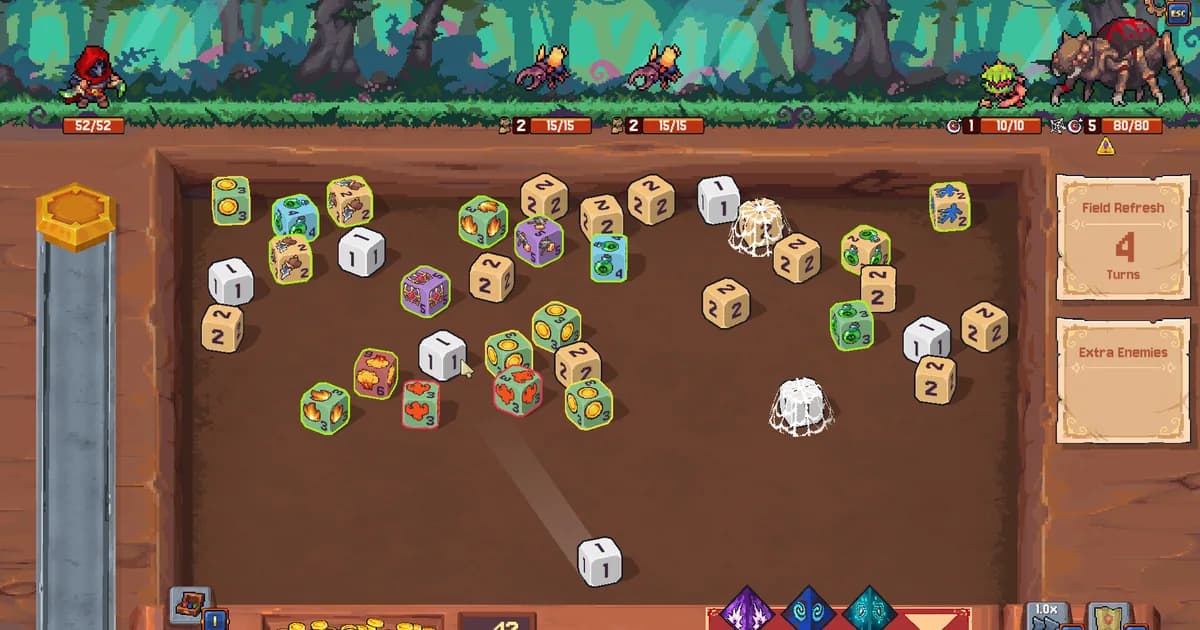
New attack patterns on bosses. Boss encounters in NG+ include behaviors that weren't present in standard fights. The bosses you cleared in your base run don't play the same way. Expect patterns that require reading the fight more carefully before committing to throw angles.
Encounter modifiers. This is the biggest change in terms of how NG+ actually feels. Before each room, a modifier appears that changes how that encounter plays out. Examples of modifier categories:
- Dice-floor interaction changes: how dice bounce and where they tend to land behaves differently
- Face value changes: which faces count as critical hits, which faces apply their effect
- Trigger condition changes: what it takes to trigger chain effects
Some modifiers amplify a build you've already constructed. A modifier that increases chain reaction value benefits any class leaning on merge chains, Mage included. The same modifier on a Warrior run is nearly neutral. Others are hazards that punish specific strategies.
The correct approach: read the encounter modifier before throwing. That's the habit NG+ teaches. In base runs, reading the room meant looking at enemy positions and boss layouts. In NG+, it means reading the modifier first, then the room, then planning your throw.
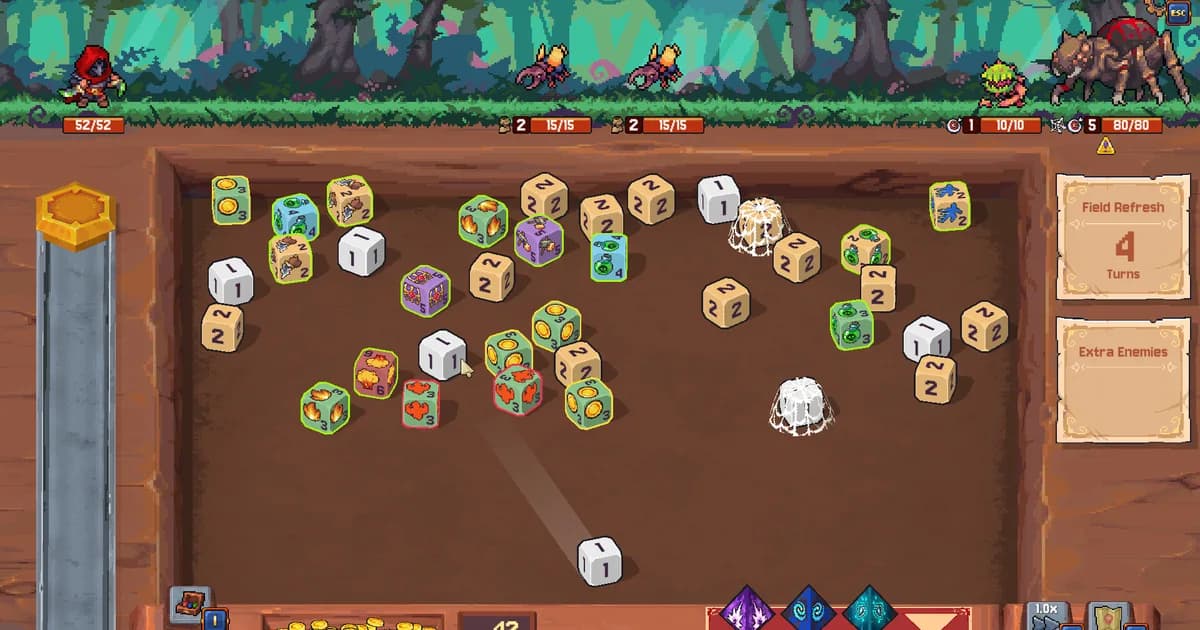
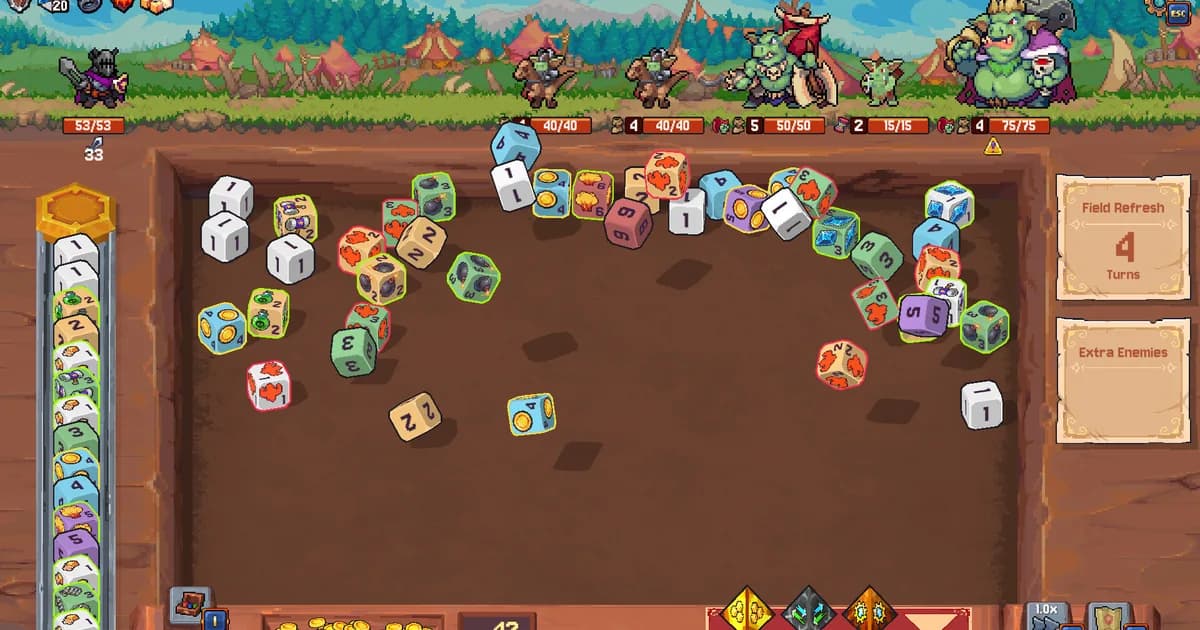
NG+ encounter modifiers appear at the top of each room before you throw. They change the rules for that specific fight. Read them before every throw, not just boss encounters.
What doesn't change in NG+
Your starting dice pool. Each NG+ run begins with your selected class's base dice. The upgraded, carefully curated pool you finished your last run with doesn't carry over. This is consistent with how regular runs work, just at harder settings.
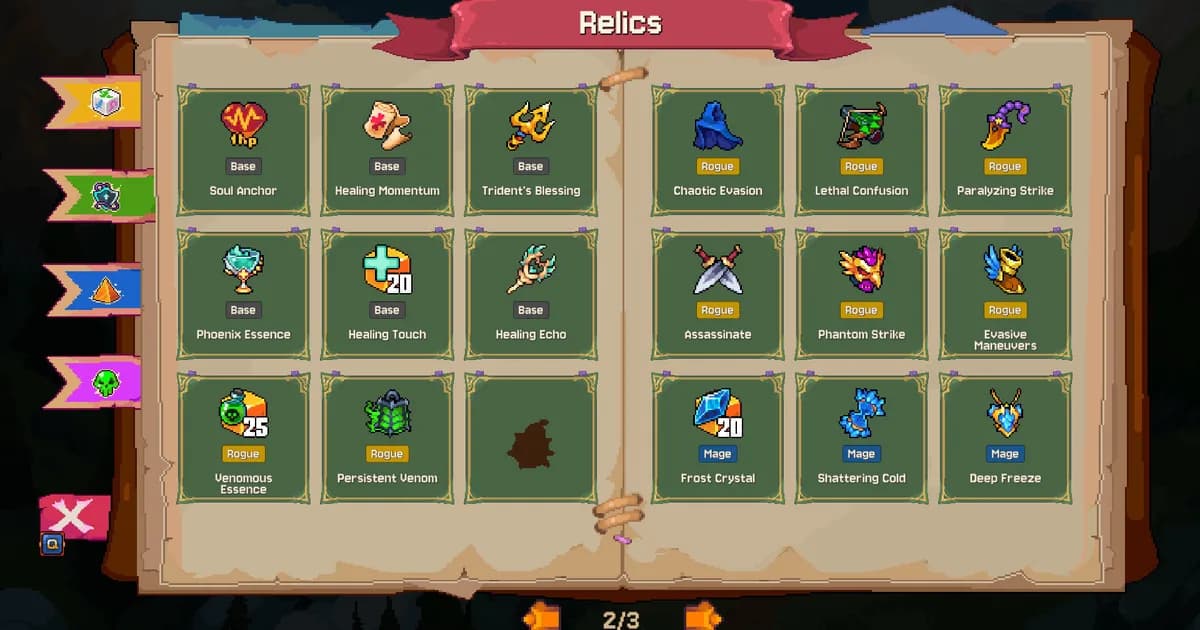
Relic availability. The same relic pool is in rotation. You'll see relics you recognize. What changes is how much you need them: NG+'s HP scaling means relic builds matter more because you need real output to clear rooms, not just viable output.
Run structure. Same dungeon, same overall progression. NG+ is the same game harder, not a separate campaign.
Class unlock state. Whatever classes you've unlocked remain unlocked. NG+ doesn't reset your unlock progress.
Best classes for NG+
Necromancer (recommended). The Soul Shackles combo has more enemies to hit per fight in NG+, since Death Mark stacks detonate across the whole board. The Necromancer also has reasonable defensive options that help it survive the HP-scaled early rooms.
Archer (recommended). Consistent output that doesn't depend on specific setup sequences the way Mage or Rogue does. When encounter modifiers disrupt combo chains, Archer still outputs reliably, and the confirmed Bounty Fletching relic remains useful in NG+ for the same reasons it's useful in base runs.
Warrior (safest first NG+ pick). You won't set damage records with the Warrior in NG+, but you won't die in the first three rooms either. Block dice reduce the damage scaling's impact. If your goal is learning the encounter modifiers and NG+ patterns without getting eliminated before mid-dungeon, Warrior is the right first pick.
Paladin (second safest). Heal-on-trigger and holy shield make it similarly durable. Doesn't output as much as Necromancer or Archer, but extremely reliable for mapping out NG+ encounter patterns on your first attempts.
Mage (experienced players only). Still a high-ceiling pick in NG+, but the modifier system creates more situations where merge setups don't land as expected. If a modifier changes how dice interact with the floor, the careful throw geometry the Mage depends on becomes harder to execute. Worth playing in NG+ once you know the modifier types, not before.
Rogue and Mage (hardest). Both classes depend on specific setup conditions for their burst output. NG+ encounter modifiers can disrupt those setups, and the higher HP scaling means a disrupted burst turn costs more when enemies are dealing increased damage simultaneously. Viable for players who know these classes well; not the right NG+ starting pick.
Boss encounters in Rune Dice test how well your relic build performs under sustained pressure rather than single-throw setups.
Tips that apply specifically to NG+
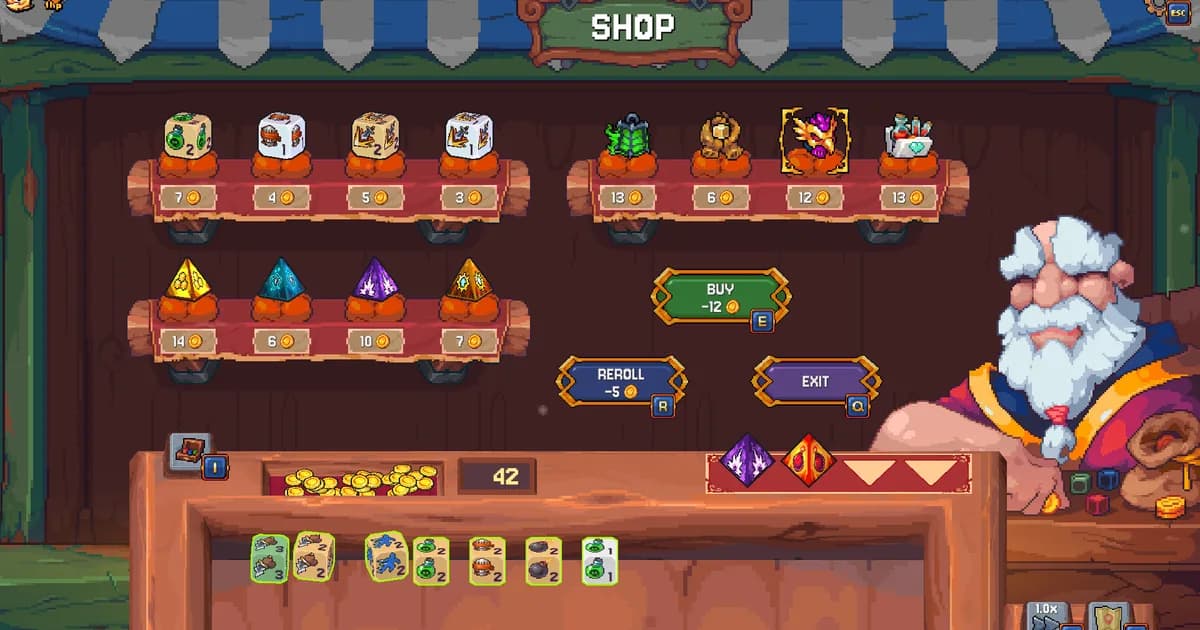
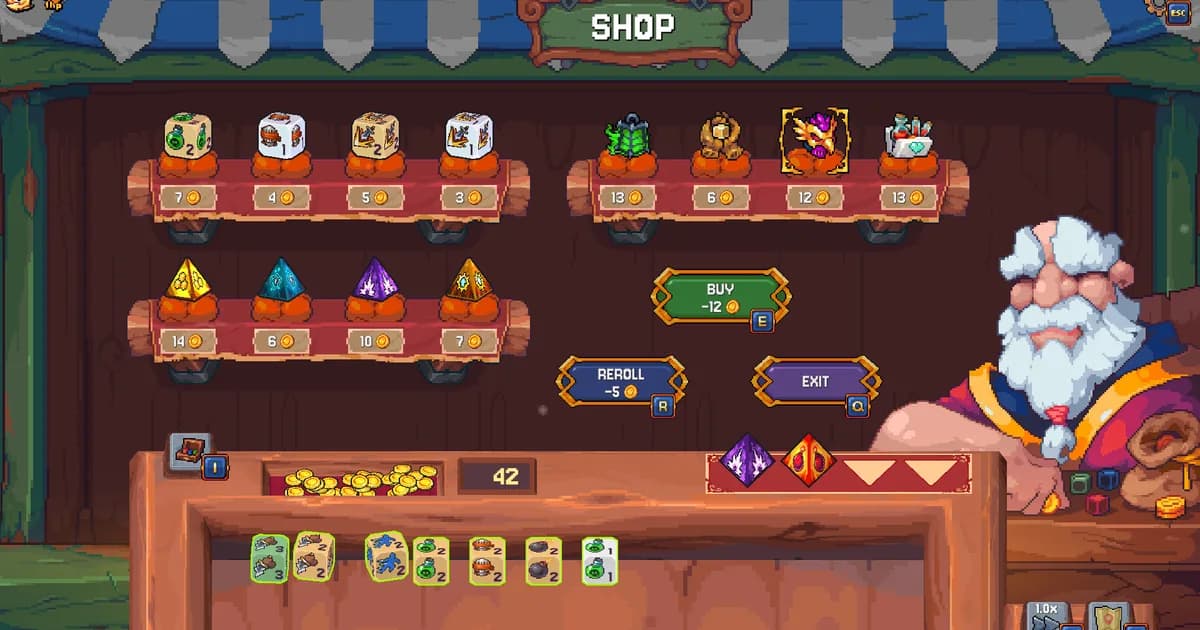
Build for output earlier. In base runs, you can afford a slow relic curve. NG+'s HP scaling punishes slow starts: if you're not dealing meaningful damage by the third or fourth floor, clearing rooms takes long enough that you're taking more hits from harder-hitting enemies. Prioritize damage relics in the first shop.
Don't ignore defensive relics entirely. The damage scaling is real. Classes without built-in mitigation need one or two defensive relics to survive mid-dungeon, especially against bosses with new attack patterns. Pure damage builds that worked in base runs can get outpaced in NG+ boss fights.
Read every modifier. This applies to all rooms, not just bosses. An early-floor modifier that amplifies bomb dice on a run where you've already taken bomb relics can set your damage curve ahead of where it would normally be. A hazard modifier on an early room is a signal to play conservatively on that floor, not to ignore.
Adjust throw angle based on modifiers. If a modifier changes floor interaction, your throws will land differently. Take a few lower-stakes throws to calibrate before committing to high-value chain attempts in modifier rooms.
GODEEPER: Full class tier rankings for both standard runs and NG+ scaling, including the Necromancer and Archer's specific advantages in longer fights. Rune Dice Tier List: All 8 Classes Ranked 2026 →
How long does a NG+ run take?
Expect 30-60 minutes on your first NG+ attempt, longer than a base run because rooms take more throws to clear. Players who know the encounter modifiers and build efficiently report similar 25-35 minute run times to optimized base runs. The first few NG+ attempts will be slower as you learn the new modifier landscape.
Speed runs in NG+ are an emerging community category. The current fastest known NG+ clears are Archer builds that chain bomb reactions efficiently enough that the HP scaling doesn't significantly increase room times.
GODEEPER: All 8 classes and which ones to unlock before attempting NG+ for the first time. Rune Dice Class Unlock Guide: How to Get All 8 Classes →
Related Reading
- Rune Dice Complete Guide Hub 2026: full system overview, all guides on the site, and the NG+ context within the full game.
- Rune Dice Tier List: All 8 Classes Ranked 2026: where each class sits in standard runs, and which ones carry their performance into NG+.
- Rune Dice Class Unlock Guide: How to Get All 8 Classes: full unlock conditions for all 6 non-default classes, fastest to hardest.
- Rune Dice Guide: All 8 Classes, Relics and Dice Synergies: the physics system, relic priority, and class-specific throw mechanics that apply in NG+ as much as base runs.
- Rune Dice Archer Build: Heartseeker and the 40-Combo: Rune Dice Archer build guide covering the confirmed Bounty Fletching relic and 40-combo unlock.
- Rune Dice Physics Dice System: Throws, Merges & Chains: Rune Dice physics dice system explained: how throw angle and force decide merges, how chain.
- Rune Dice Boss Guide: Beat Every Floor Boss & Webbed Dice: Rune Dice boss guide: how to beat floor bosses, counter webbed dice with Shuffle and.
- Rune Dice Mage Build: Burn, Freeze, and Merge Chains: Rune Dice Mage build guide covering the real merge-chain mechanic and the burn vs freeze decision.
- Rune Dice Classic Mode: All 3 Locations in One Run: Rune Dice Classic Mode announced May 21 by developer Oleksii.
References
- Rune Dice on Steam: official store page, patch notes, and NG+ information from Smart Raven Studio
- r/RuneDice on Reddit: community NG+ run discussions, modifier documentation, and class performance threads
Frequently Asked Questions
How do you unlock New Game Plus in Rune Dice? Defeat all bosses in a standard run. NG+ appears on the class selection screen the next time you open the game. Select it from there.
What changes in Rune Dice New Game Plus? Enemy HP and damage scale up from room one. New encounter modifiers appear before each fight and change how dice behave in that encounter. Bosses have new attack patterns. You start each run fresh with your class's base dice pool.
What is the best class for Rune Dice NG+? Necromancer and Archer by community consensus. Both scale with run length in ways that work with NG+'s increased enemy density. Warrior and Paladin are the safest first picks for learning NG+ patterns without dying in the early rooms.
Do your dice carry over in Rune Dice NG+? No. Each NG+ run starts with the class's base dice pool. No carryover from previous runs.
What are encounter modifiers in Rune Dice NG+? Per-room rule changes that appear before each encounter. They alter dice behavior, crit thresholds, chain reaction rules, or other fight parameters. Some help your build; some hurt. Read them before throwing.
Is Rune Dice NG+ worth playing? Yes for players who've cleared the standard run. NG+ is the main replayability layer past the first clear, and the encounter modifier system creates fights that feel distinct from base runs rather than just statistically harder.
Which classes are hardest in Rune Dice NG+? Rogue and Mage. Both depend on specific setup conditions for burst damage, and NG+ encounter modifiers can disrupt those setups while the higher HP scaling punishes slow damage output.
Was this guide helpful?
About the author

Action & Design Desk
GameBrief's byline for platformers, horror and action games. Dry, short paragraphs, strong opinions about tutorials and boss design.
- Action, platformers and horror
- Tutorials, onboarding, boss design
- Sources listed per article
Keep reading
Rune Dice Relics Guide: Best Builds and Relic Priority 2026
General · 8 min
Rune Dice Class Unlock Guide: How to Get All 8 Classes
General · 8 min
Rune Dice Boss Guide: Beat Bosses and Counter Webbed Dice
Guides · 9 min
Rune Dice Mage Build: 3 Element Paths and Merge Chains
General · 12 min
Rune Dice Physics Dice System: Throws, Merges & Chains
Guides · 13 min
Rune Dice Classic Mode: All 3 Locations in One Run
News · 5 min
Sponsored
Disclaimer
This article is published for informational and entertainment purposes. It does not constitute professional financial, legal, or technical advice. Game performance, online services, patch schedules, and store listings change. Verify critical details (pricing, system requirements, regional availability) with publishers and storefronts before you buy. Affiliate links, where present, help support our editorial work and are labelled in our affiliate disclosure.
Comments
Loading comments…