
GuideRune Dice
Rune Dice Boss Guide: Beat Bosses and Counter Webbed Dice
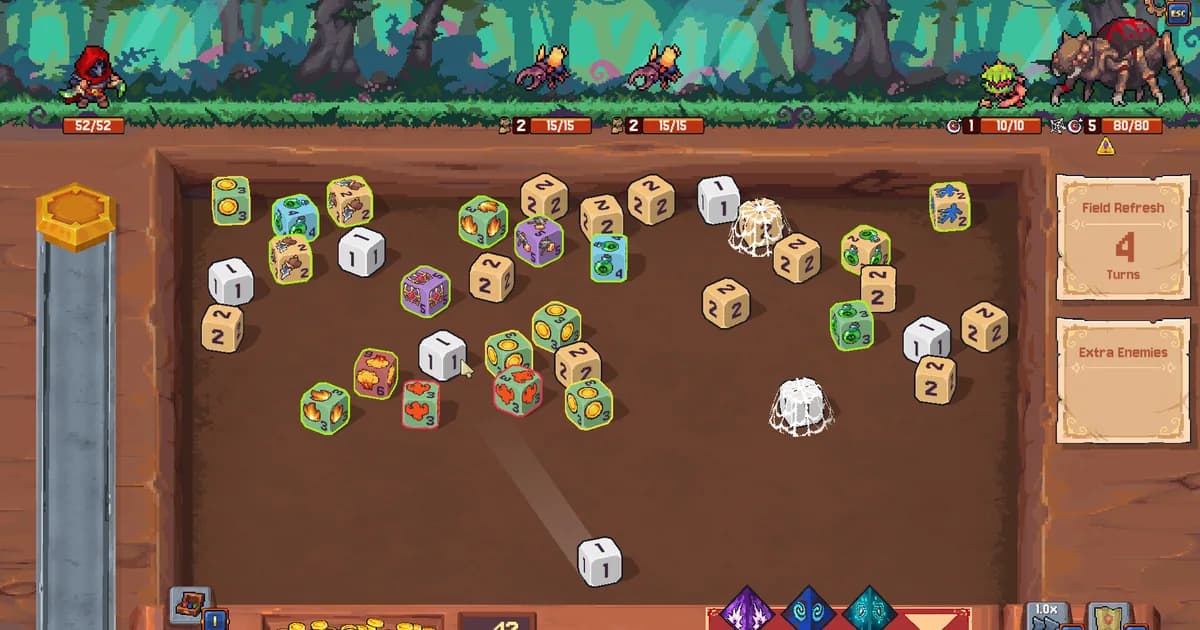
This Rune Dice boss guide covers how to clear every floor boss, counter the webbed-dice mechanic that ends most runs, and time your runes so they prevent a loss instead of getting wasted. Rune Dice bosses are not about raw damage. They are about board control, and the players who stall are usually the ones who save their best runes for a turn that never comes because the board collapsed first.
Sponsored

About the game
Rune Dice
Smart Raven Studio · Kwalee
Updated 2026-10-02: Classic boss or mini-boss skips, plus Boss Rush boss skips, now give capped +15 HP instead of gold; Boss Rush is a 20-floor descent ending with three bosses at once.
TL;DR: Enter every boss with full HP, your full rune inventory, and one reliable damage plan. Bosses preview the arena and weak spot before combat, so plan your first throw before turn one. Webbed dice disable the die you planned around: when your main damage die is webbed and the boss is about to attack, use Shuffle or Gravity immediately. Use the Redirect rune to dodge environmental hazards mid-throw. The right moment to spend most runes is the current floor boss, not a hypothetical better turn later.
Sponsored

Rune Dice boss guide: how boss fights actually work
In a normal Rune Dice room you can play loose, throw your dice, take whatever merges land, and clean up next turn. Bosses remove that slack. A floor boss combines aggressive attack timing with mechanics that attack your board directly, so a sloppy turn against a boss is not a small loss. It is often the loss.
The mental shift is to stop thinking about bosses as damage races and start thinking about them as board-control fights. The boss is trying to take your board away from you. Your job is to keep a working board long enough to land the damage you need on the weak spot. Every rune, every throw, and every merge should be measured against that question: does this keep my board alive and pointed at the weak spot?
Before any boss, run a four-point check: HP, runes, damage, board control. The safest boss plan is to enter with HP, save one defensive rune, bring one board-fixing tool, and keep one reliable damage plan. If you are missing one of those four going into a boss room, the shop or merges before the boss are where you fix it, not the boss turn itself.
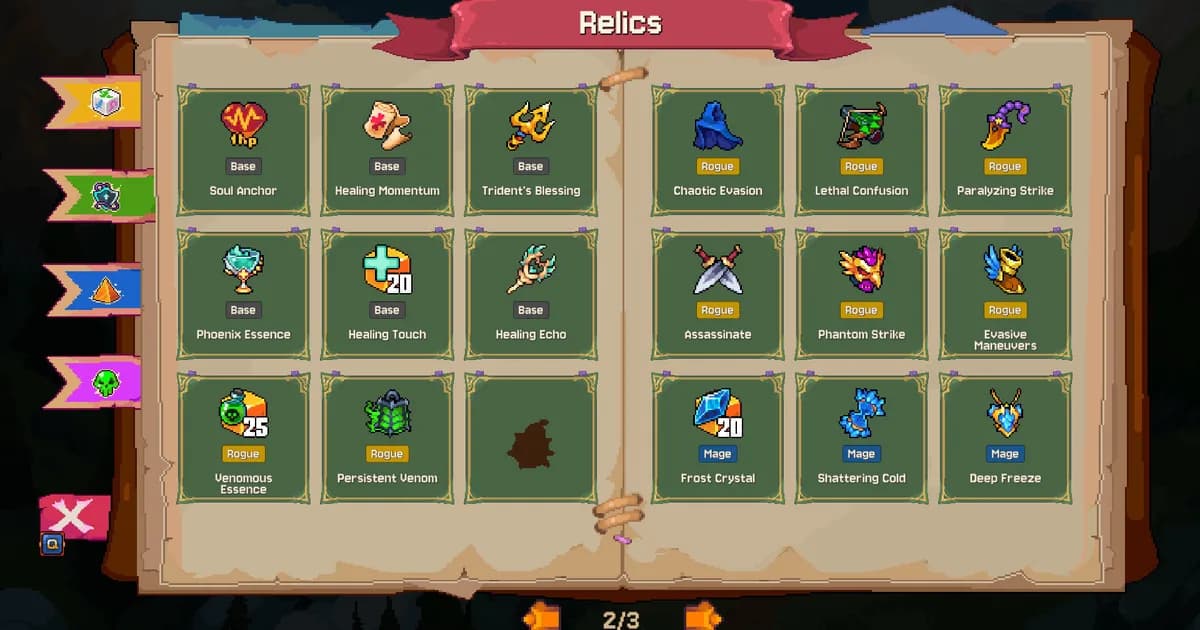
GODEEPER: Which relics give you the board-fixing tools and defensive options that boss fights demand? Draft them before you ever reach the boss room. Rune Dice Relics Guide: Best Builds 2026 →
Read the arena preview before turn one
Boss rooms preview the arena before combat starts. This is the single most underused advantage in the game. That preview window shows you the weak spot position and the hazard layout, and it exists so you can plan your first throw before the encounter begins.
The first throw of a boss fight is your highest-information decision. If you spend turn one discovering where the weak spot is and where the hazards sit, you have wasted the throw that should have been your most deliberate. Read the preview, decide where you want your dice to land, and commit the opening throw with intent.
Plan two things from the preview: where the weak spot is so your damage dice are aimed correctly, and where the hazards are so your opening throw does not scatter dice into a dead zone. A boss fight that starts with a planned first throw is a fundamentally different fight from one that starts with a guess.
Countering webbed dice, the run-ender
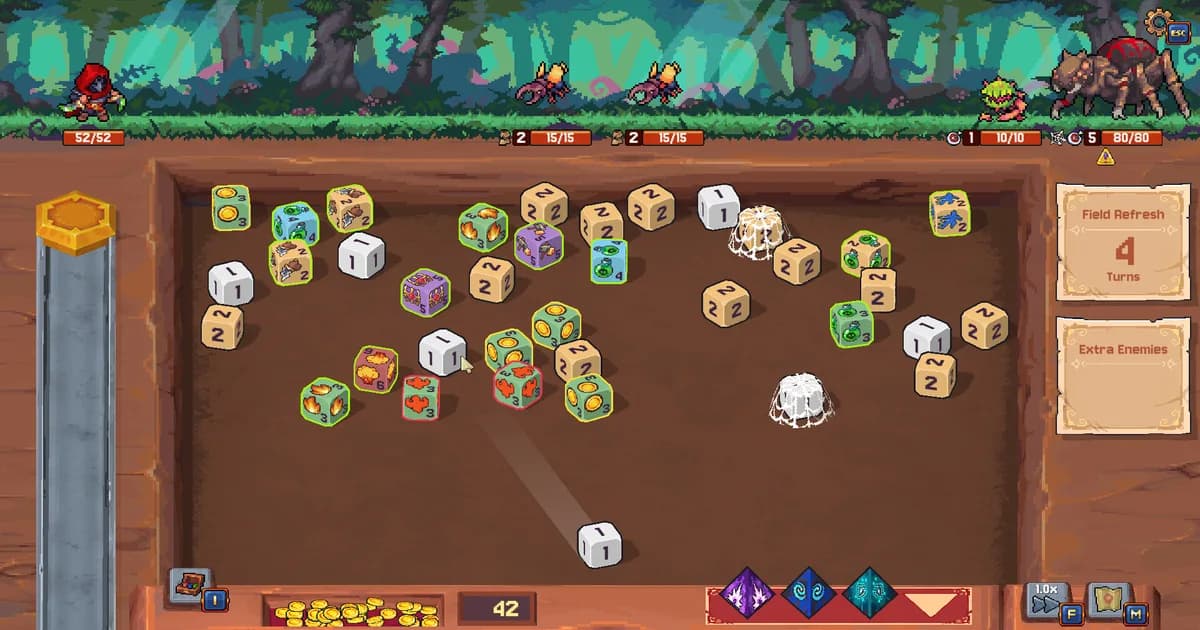
Webbed dice are the most punishing boss mechanic in Rune Dice, and they are the mechanic that quietly ends more runs than raw boss damage does. A webbed die is disabled: the boss has reached into your setup and removed the die you were building around.
The danger is that a webbed board can look playable while actually being dead. You still have dice on the board, you can still make a small merge, so the instinct is to play the turn. But if your main damage die is webbed, the remaining dice are low-value, and the boss is about to attack, that small merge does nothing except spend your turn and hand the boss another free hit.
The correct play in that spot is to use Shuffle or Gravity immediately. Board-fixing runes reset the situation: they give you a board you can actually work with instead of a board that only looks workable. Forcing the tiny merge feels like progress and is actually the losing line. Recognizing a dead-looking-alive board is the core boss skill.
The run map shows the path of encounters ahead. Reading which boss node is coming lets you spend the floors before it building the board-fixing tools the fight will demand.
Rune timing: spend on the boss, not the hypothetical
The most common rune mistake is hoarding. Players hold their best runes through the floor waiting for the perfect moment, then reach the boss with a full inventory they are still too cautious to use, and lose while sitting on the exact tools that would have saved them.
The rule is direct: the right moment to use most runes is the current floor boss. Enter every boss with your full rune inventory and commit at least one. Runes are strongest when they prevent a losing turn, not when they add marginal value to a turn you were already winning.
The practical trigger: if the boss is attacking next turn and your board has no clean merge, use a defensive or board-fixing rune now. Do not save it for a "better" turn. Against a boss, the better turn frequently never arrives, because the boss takes control of the board before you get there. A defensive rune used one turn too late is a wasted rune.
The Redirect rune deserves a specific mention. It changes the landing zone for all dice in a throw, which makes it the answer to environmental-hazard bosses. When the arena itself is the threat, Redirect lets you steer your dice away from the hazard mid-combat in a way no damage or defensive rune can. If a boss room previews heavy hazards, a held Redirect is often worth more than an extra damage option.
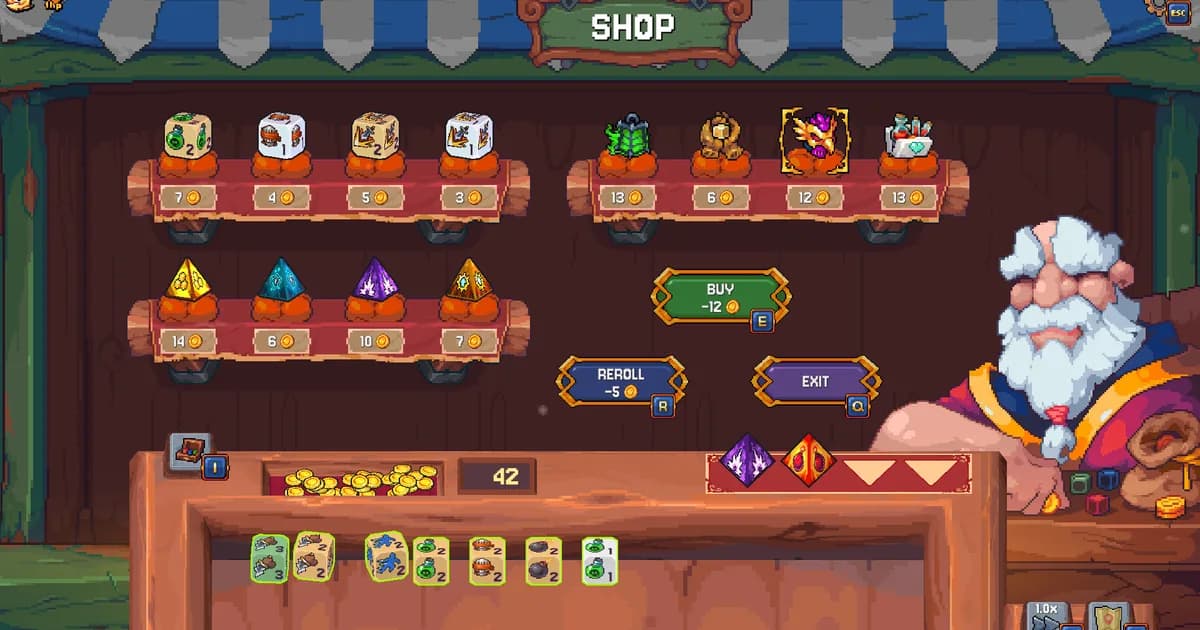
The shops before a boss node are where you counter-draft. If a hazard boss is coming, this is where a Redirect rune or a board-fixing tool is worth more than raw damage.
Named bosses: what's actually confirmed
Rune Dice doesn't publish a complete public roster of every floor boss by name, so treat any list claiming to be exhaustive with caution. What is confirmed: Blight Druid is a named Hard Mode boss, and defeating it is how you unlock the Druid class. If Druid is still locked for you, that fight is the specific target to build toward.
Beyond Blight Druid, Steam's achievement list references other named encounters (a "Jester"-tied achievement among them), but public sources don't document their exact mechanics in enough detail to write a reliable strategy section for each one yet. Rather than guess at mechanics that aren't confirmed, apply the general boss-control principles above (arena preview, webbed-dice response, rune timing) to whatever specific boss you're facing: they cover every fight because they're about how Rune Dice bosses work as a category, not any one boss's unique gimmick.
GODEEPER: Blight Druid is the one boss with a fully documented, confirmed fight and unlock path. Rune Dice Druid Unlock Guide: Blight Druid Boss Strategy →
Step-by-step: clearing a floor boss
-
Read the arena preview. Before combat, note the weak spot position and hazard layout. Decide your opening throw now.
-
Confirm the four-point check. HP, runes, damage, board control. If any is missing, you should have addressed it before entering. If you are already in, play more conservatively to compensate.
-
Commit a deliberate first throw. Aim damage dice at the weak spot and keep your throw clear of hazard zones. This is your most planned turn.
-
Watch for webbing. The moment your main damage die is disabled and the board is functionally dead with the boss about to attack, use Shuffle or Gravity. Do not force the consolation merge.
-
Spend runes on the losing-turn trigger. When the boss attacks next and you have no clean merge, commit a defensive or board-fixing rune immediately. Hold Redirect specifically for hazard avoidance.
-
Close on the weak spot. Once your board is stable, funnel damage into the previewed weak spot. You do not need to out-tempo the boss every turn, you need to survive its control attempts and land clean damage when the board allows.
GODEEPER: Class choice changes which boss tools you start with and how your dice behave. The strongest boss-clearing classes are not always the strongest early-game ones. Rune Dice Tier List: All 8 Classes Ranked →
Tips for deeper floor bosses
Later bosses escalate by stacking aggressive attack timing on top of board-control mechanics. The adjustments that matter:
Arrive with board-fixing tools, not just damage. A deck or class that can only push damage has no answer when a deep boss webs your key die. Shuffle, Gravity, and Redirect are what separate a deep-floor clear from a stall.
Hold one defensive rune in reserve specifically for the boss, every floor. The discipline of never entering a boss room empty-handed is worth more than the occasional extra merge you would have gotten by spending it earlier.
Treat the arena preview as mandatory reading, not optional. Deeper bosses have nastier hazard layouts, and the preview is the only place you get to plan around them for free.
Accept that some boss losses are draft losses. If you keep dying to webbing with no board-fixing rune available, the fix is in your relic and class choices earlier in the run, not in tighter play at the boss itself.
Frequently Asked Questions
How do you beat bosses in Rune Dice? Enter with full HP, full runes, and a damage plan. Commit at least one rune per boss, use defensive or board-fixing runes when the boss is about to attack and you have no clean merge, and plan your first throw from the arena preview.
What are webbed dice? Webbed dice are disabled by the boss, attacking your setup directly. A webbed main damage die makes the board look playable while it is dead. Use Shuffle or Gravity rather than forcing a tiny merge.
When should you use runes? On the current floor boss. Saving runes for a better turn usually loses the run first. Spend when the boss attacks next and your board has no clean merge.
What does Redirect do? It changes the landing zone for all dice in a throw, letting you avoid environmental hazards mid-combat.
How do you read the arena preview? Boss rooms preview the arena before combat. Note the weak spot and hazards, then plan your opening throw before turn one.
Why do bosses get harder deeper in? Deeper bosses stack aggressive timing with board-control mechanics. Bring board-fixing tools and a held defensive rune, not just damage.
Related Reading
The Rune Dice Complete Guide Hub is the central anchor for every Rune Dice system, from the physics dice throws through classes, relics, and New Game Plus.
The Rune Dice Relics Guide covers the relic drafting that determines whether you reach a boss with the board-fixing tools these fights demand.
The Rune Dice Tier List ranks all 8 classes, including which ones bring the strongest built-in boss-clearing tools.
- Rune Dice Archer Build: Heartseeker and the 40-Combo: Rune Dice Archer build guide covering the confirmed Bounty Fletching relic and 40-combo unlock.
- Rune Dice Physics Dice System: Throws, Merges & Chains: Rune Dice physics dice system explained: how throw angle and force decide merges, how chain reactions fire, and.
- Rune Dice New Game Plus Guide: NG+ Tips and Builds 2026: Rune Dice New Game Plus guide: how NG+ unlocks, what changes, which classes scale best, and encounter modifiers.
- Rune Dice Classic Mode: All 3 Locations in One Run: Rune Dice Classic Mode announced May 21 by developer Oleksii. Plays all three locations in one session. Playtest.
- Rune Dice Necromancer Build: Soul Die and Death Mark: Rune Dice Necromancer build guide covering the confirmed Soul Shackles and Cursed Medallion relics.
- Rune Dice Mage Build: Burn, Freeze, and Merge Chains: Rune Dice Mage build guide covering the real merge-chain mechanic and the burn vs freeze decision.
- Rune Dice Class Unlock Guide: How to Get All 8 Classes: Rune Dice class unlock guide covering all 8 classes.
- Rune Dice Druid Unlock Guide: Blight Druid Boss Strategy: Rune Dice Druid unlocks by defeating the Blight Druid in Hard Mode.
References
- Rune Dice on Steam: official store page, patch notes, and community discussions
- Kwalee official site: publisher page and studio information
Was this guide helpful?
About the author

Action & Design Desk
GameBrief's byline for platformers, horror and action games. Dry, short paragraphs, strong opinions about tutorials and boss design.
- Action, platformers and horror
- Tutorials, onboarding, boss design
- Sources listed per article
Keep reading
Rune Dice Class Unlock Guide: How to Get All 8 Classes
General · 8 min
Rune Dice New Game Plus Guide: NG+ Tips and Builds 2026
General · 7 min
Rune Dice Relics Guide: Best Builds and Relic Priority 2026
General · 8 min
Rune Dice Classic Mode: All 3 Locations in One Run
News · 5 min
Rune Dice Mage Build: 3 Element Paths and Merge Chains
General · 12 min
Rune Dice Druid Unlock Guide: 4 Dice and Boss Strategy
Guides · 8 min
Sponsored
Disclaimer
This article is published for informational and entertainment purposes. It does not constitute professional financial, legal, or technical advice. Game performance, online services, patch schedules, and store listings change. Verify critical details (pricing, system requirements, regional availability) with publishers and storefronts before you buy. Affiliate links, where present, help support our editorial work and are labelled in our affiliate disclosure.
Comments
Loading comments…