
GuideRune Dice
Rune Dice Tier List: All 8 Classes Ranked for 2026
About the game
Rune Dice
Smart Raven Studio · Kwalee
The Rune Dice tier list question is worth answering carefully because the eight classes play very differently from each other. This isn't a game where every class does roughly the same thing at different range. A Mage player and a Warrior player are genuinely playing different games, and the tier difference reflects that.
Updated 2026-10-02: This ranking is for standard runs, while Boss Rush reward dice can come from any class.
TL;DR: This is an editorial Rune Dice tier list: Mage, Rogue, and Archer are S; Paladin and Necromancer are A; Warrior, Druid, and Bard are B. The ranking compares the documented class dice and effects, not an official developer score. Warrior is our beginner recommendation because Shield and Stun are easy to understand.
Rune Dice tier list: quick answer (all 8 classes ranked)
| Tier | Classes | Why |
|---|---|---|
| S | Mage, Rogue, Archer | Broad damage/control tools in the documented dice pools |
| A | Paladin, Necromancer | Sustain, debuffs, and strong conditional effects |
| B | Warrior, Druid, Bard | Defensive, control, or setup-focused kits that reward a clear plan |
This is an editorial ranking, not a developer-published tier list. It uses the current class roster and effect descriptions from the Rune Dice references, then weighs how easy each named kit is to build around. It should be read as a recommendation, not as a claim that one class has a hidden numerical multiplier.
Step-by-Step: use this tier list
- Confirm that you are comparing the standard eight-class roster: Archer, Bard, Druid, Mage, Necromancer, Paladin, Rogue, and Warrior.
- Start with the documented dice and effects for the class, not with a fictional class name or an assumed resource mechanic.
- Pick relics and runes whose exact triggers match those dice or effects.
- Treat the S, A, and B labels as editorial guidance and re-check tooltips after a patch changes a class or effect.
A note on how to read this: S tier means our editorial ranking favors the class's documented tools for a standard run. It does not mean every S-tier run wins or that the game exposes an official ceiling/floor statistic.
GODEEPER: If you want to understand how the physics dice system works before reading about class-specific mechanics, the foundational breakdown is in the class guide. Rune Dice Guide: All 8 Classes, Relics and Dice Synergies →
S tier: Mage, Rogue, and Archer
Mage earns S in this editorial list because its documented pool covers four distinct effects: Fire deals damage over time, Freeze restricts movement while still allowing attacks, Lightning jumps between enemies with decreasing damage, and Arcane can deal bonus damage or heal. The published unlock guide lists Mage as a default class. The source does not establish a numerical "highest ceiling," so treat that phrase as a ranking judgment rather than a hidden stat.
Rogue is the other published default. Its documented dice are Backstab, Blind, Dodge, and Poison: Backstab is bonus damage from behind, Blind reduces accuracy, Dodge ignores the next direct enemy attack, and Poison deals damage per stack over time. The S-tier placement is our editorial view of that mix; the class is not being described with the unsupported edge-tile or flanking-zone rules removed from the older copy.
Archer rounds out S with Sniper, Pierce, Finisher, and Knockback dice. The effects reference describes Sniper as a long-range single-target attack, Pierce as bonus damage to the enemy behind the target, Finisher as bonus damage on the killing blow, and Knockback as pushing the target when possible. A published unlock guide reports a 40 combo in one throw. Archer is the class name; it is not Ranger, and the sources do not justify an absolute "strongest boss killer" claim.
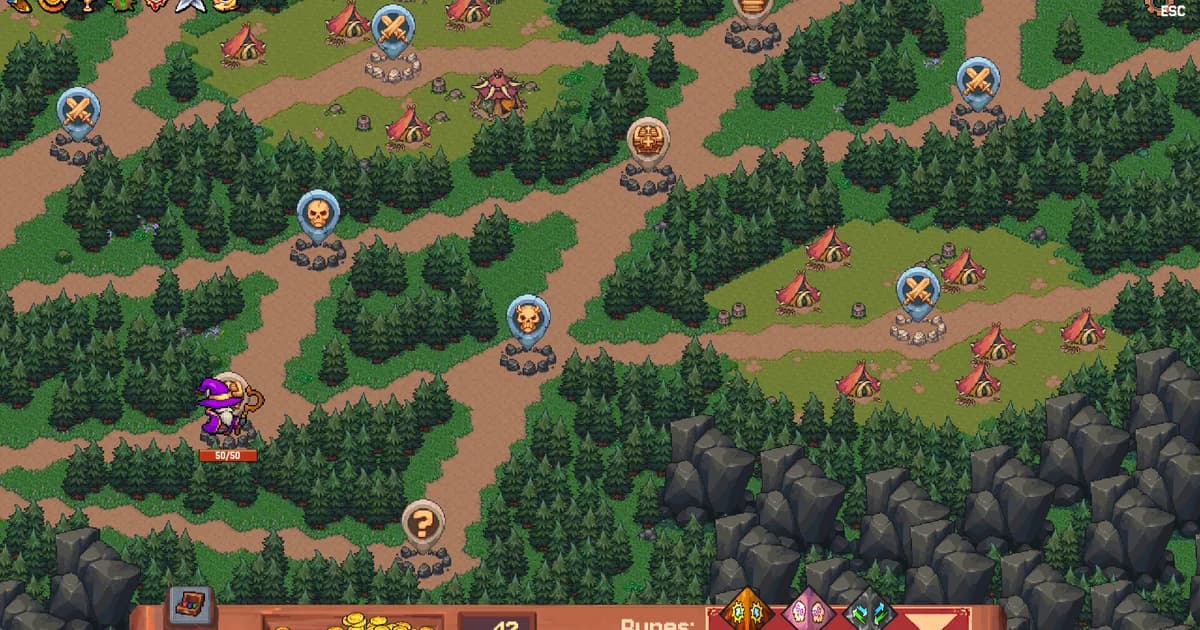
The shop between encounters: dice, relics, and runes are all purchased here, and prioritizing bomb dice pays off across nearly every class.
A tier: Paladin and Necromancer
Paladin sits in A because its documented dice cover Holy, Rage, Regeneration, and Sacrifice. Holy damage heals the hero, Rage has a stacking attack bonus, Regeneration heals at end of turn, and Sacrifice costs 1 HP. That gives the class a clear sustain plan, but the A placement is editorial. The published unlock guide reports defeating 20 mini-bosses.
Necromancer sits in A because its documented dice cover Curse, Death Mark, Drain, and Soul. Curse adds damage when a cursed enemy is hit, Death Mark damages other enemies when the marked enemy dies, Drain heals for a percentage of damage dealt, and Soul increases maximum HP. Cursed Medallion is a documented relic that starts enemies with two Curse stacks. The published unlock guide reports 50 dark knights, with the wiki warning that exact thresholds are not all documented.
B tier: Warrior, Druid, and Bard
Warrior is our beginner recommendation and sits in B because the documented kit is direct: Fury gains bonus damage against wounded enemies, Overwhelming cannot kill an enemy and leaves 1 HP, Shield blocks physical damage, and Stun prevents attacking or moving. Those are concrete tools, not a claim about hidden HP or a universal crowd-control multiplier. The published unlock guide reports defeating two unique bosses.
Druid sits in B as a setup-oriented class. Growth heals and raises maximum HP, Root prevents movement and deals damage over time, Spirit attacks three random enemies, and Thorn damages physical attackers. The published unlock guide reports defeating Blight Druid in Hard Mode; the map reference confirms that named boss.
Bard sits in B because its documented kit asks the player to manage effects: Inspire duplicates one merge effect and decreases by one, Encore returns to the field after activating, Strength boosts direct attacks, and Weakness reduces physical attack. The published unlock guide reports getting a die to value eight or higher by merging. No separate Bard resource or generic action-reuse rule is asserted here.
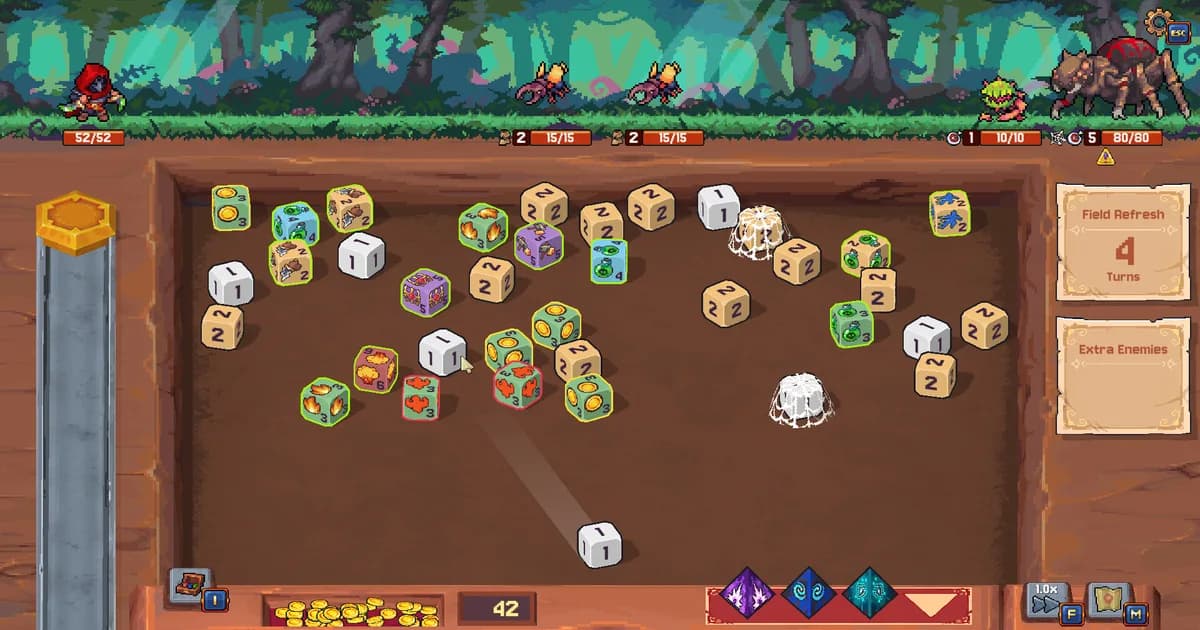
Relics (top-right row) and runes (bottom-left pyramids) show up in the same shop as dice. Reroll if the offering doesn't fit your current build.
Rune Dice tier list: picking your class for the run
Pick Mage if: you want a broad elemental toolkit. Read the Fire, Freeze, Lightning, and Arcane effects and choose relics that name one of those dice or effects.
Pick Rogue if: you want Backstab, Blind, Dodge, and Poison in the same class pool. The recommendation is about the documented effects, not an invented board-position rule.
Pick Archer if: you want Sniper, Pierce, Finisher, and Knockback. That long-range/targeting profile is why this editorial list places Archer in S; it is not an official boss-damage guarantee.
Pick Paladin if: you want Holy and Regeneration effects alongside Rage and Sacrifice. It is our sustain-focused A-tier recommendation, not an official beginner ranking.
Pick Necromancer if: you want Curse, Death Mark, Drain, and Soul effects. Check each tooltip rather than assuming an undocumented Soul-token economy.
Pick Warrior if: this is your first run and you want Shield and Stun as a readable defensive/control plan. The high-HP claim is not used here because it is not established by the cited class reference.
Pick Druid or Bard if: you prefer the documented setup effects: Growth/Root/Spirit/Thorn for Druid or Inspire/Encore/Strength/Weakness for Bard. This guide does not make an unverified NG+ scaling claim.
Tips for every tier
For Mage: compare Fire, Freeze, Lightning, and Arcane tooltips before choosing relics; the effects have different damage, control, chaining, and healing behaviours.
For Rogue: use Poison for damage over time, and remember that Backstab, Blind, and Dodge are separate named effects with separate conditions.
For Archer: learn what Sniper, Pierce, Finisher, and Knockback each target. Those documented effects are more reliable guidance than a universal claim about throw angles.
For Necromancer, Druid, and Bard: build around the named effects in their pools: Curse/Death Mark/Drain/Soul, Growth/Root/Spirit/Thorn, and Inspire/Encore/Strength/Weakness. Do not assume a hidden resource.
For all classes: the map reference lists Basic Combat, Elite Combat, Mini-Boss, Event, Shop, Upgrade, Chest, and Altar nodes. Choose between them from the actual reward and current build; this guide does not assign unsupported fixed rewards to a Jester or mini-boss.
GODEEPER: The Warrior's attrition-based approach shows up in other dice roguelites, including Die in the Dungeon's defense-build tier. Die in the Dungeon Dice Tier List →
Related Reading
- Rune Dice Guide: All 8 Classes, Relics and Dice Synergies: The foundational guide covering the documented class dice, effects, relics, runes, and merge references.
- Rune Dice Class Unlock Guide: How to Get All 8 Classes: Every unlock condition for the six locked classes, with the fastest route to each.
- Die in the Dungeon Dice Tier List: A dice roguelite with similar tier-ranking questions, useful for comparison on how positioning and dice typing affect rankings.
- Rune Dice Boss Guide: Beat Every Floor Boss & Webbed Dice: How to beat floor bosses, counter webbed dice with Shuffle and Gravity, and read enemy patterns.
- Rune Dice Physics Dice System: Throws, Merges & Chains: related coverage of the launch, merge, and chain systems; verify detailed interactions against current tooltips.
- Rune Dice Necromancer Build: Soul Die and Death Mark: Rune Dice Necromancer build guide covering the documented Soul and Death Mark dice effects.
- Rune Dice Complete Guide 2026: Classes, Relics, and Builds: related coverage of the eight classes, relics, unlocks, and dice synergies.
- Rune Dice Relics Guide: Best Builds and Relic Priority 2026: related relic coverage; check exact triggers against current relic text.
- Rune Dice Druid Unlock Guide: Blight Druid Boss Strategy: related Druid and Blight Druid coverage; re-check the reported condition against the current patch.
- Rune Dice New Game Plus Guide: NG+ Tips and Builds 2026: related later-mode coverage; this tier list does not verify NG+ rules.
Frequently Asked Questions
What is the best class in Rune Dice? This editorial list puts Mage, Rogue, and Archer in S tier. Their documented pools are Mage's Fire/Freeze/Lightning/Arcane, Rogue's Backstab/Blind/Dodge/Poison, and Archer's Sniper/Pierce/Finisher/Knockback. Rune Dice does not publish an official tier list.
Which Rune Dice class is best for beginners? Our beginner recommendation is Warrior because Shield and Stun provide a direct defensive/control plan. Paladin is an editorial second choice because Holy and Regeneration heal, but neither is an official ranking.
Is the Rune Dice Mage S tier? Yes, in this editorial list. Mage's documented Fire, Freeze, Lightning, and Arcane effects provide a broad elemental toolkit; the source does not establish a numerical highest ceiling or a universal low-floor rule.
Is the Rune Dice Archer strong? Archer is S tier in this editorial list because its documented Sniper, Pierce, Finisher, and Knockback effects cover long-range damage and targeting. A published unlock guide reports a 40 combo in one throw. Archer is the correct class name, not Ranger.
What tier is the Necromancer in Rune Dice? Necromancer is A tier in this editorial list. Curse, Death Mark, Drain, and Soul are its documented dice effects; Cursed Medallion is a documented relic that starts enemies with two Curse stacks. The published unlock guide reports 50 dark knights, but the wiki says exact thresholds are not all documented.
How many classes are in Rune Dice? Rune Dice has 8 classes: Archer, Bard, Druid, Mage, Necromancer, Paladin, Rogue, and Warrior. Rogue and Mage are listed as defaults in the published unlock guide; no Shadow or Cleric class appears in the current roster, and Archer is not Ranger.
Does Rune Dice have New Game+? This guide does not verify a New Game+ ruleset. Check current in-game progression and patch notes before applying the standard-run editorial list to another mode.
References
- Rune Dice on Steam: official store page describing distinct hero classes, unique abilities, dice, relics, and runes
- Rune Dice Heroes: current eight-class roster, themes, and signature dice
- Rune Dice Dice: class dice and documented effects
- Rune Dice Effects: effect-by-effect behaviour reference
- Rune Dice Relics: relic names and exact triggers, including Cursed Medallion
- Rune Dice Map: map node types and named bosses
- Rune Dice Achievements: tracked condition types and threshold caveat
- Rune Dice class unlock guide, Destructoid: published table of reported class unlock conditions
Was this guide helpful?
About the author

Senior Critic & Analyst
Former game data analyst turned critic with 11 years covering indie and mid-tier games. Based in Austin. Runs spreadsheets on games most people just play.
- 11 years games criticism
- Former game economy analyst
- Roguelike and strategy specialist
Keep reading
Rune Dice Complete Guide 2026: Classes, Relics, and Builds
Guides · 12 min
Rune Dice Druid Unlock Guide: 4 Dice and Boss Strategy
Guides · 8 min
Rune Dice Classic Mode: All 3 Locations in One Run
News · 5 min
Rune Dice Guide: All 8 Classes, Relics & Dice Synergies
General · 9 min
Rune Dice Boss Guide: Beat Bosses and Counter Webbed Dice
Guides · 9 min
Rune Dice Class Unlock Guide: How to Get All 8 Classes
General · 8 min
Game deals · affiliate links

Disclaimer
This article is published for informational and entertainment purposes. It does not constitute professional financial, legal, or technical advice. Game performance, online services, patch schedules, and store listings change. Verify critical details (pricing, system requirements, regional availability) with publishers and storefronts before you buy. Affiliate links, where present, help support our editorial work and are labelled in our affiliate disclosure.
Comments
Loading comments…