
GuideRune Dice
Rune Dice Physics Dice System: Throws, Merges & Chains
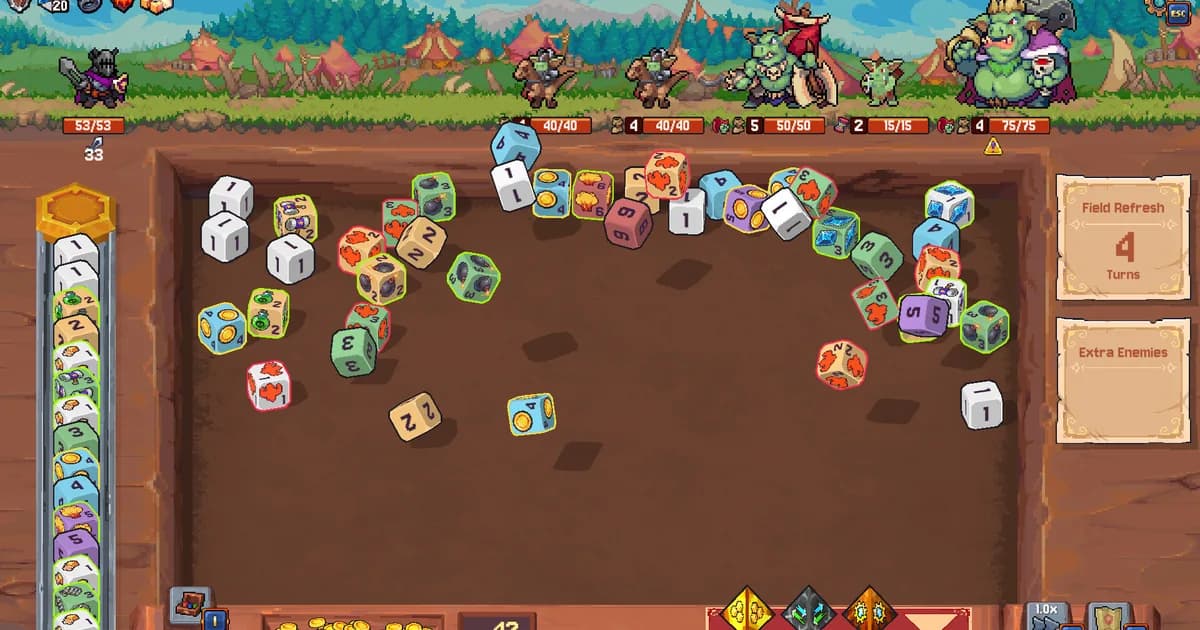
The Rune Dice physics dice system comes down to one thing: you don't roll dice, you throw them, and where a die bounces and lands decides as much as the face that comes up. Learn how a throw causes a merge and how a merge cascades into a chain, and the game stops feeling random and starts feeling like a shot you line up. Below: the throw, the merge, the chain, bank shots, and the aiming habits that turn one throw into a cascade.
Sponsored

About the game
Rune Dice
Smart Raven Studio · Kwalee
Updated 2026-10-16: Rune Dice's Steam reviews have risen from Mostly Positive to Very Positive, and since patch v1.2.2 the bottom edge of the board is a solid wall, so all four edges now bounce dice.
TL;DR: You throw dice that bounce off walls and collide like billiard balls; throw angle and force matter as much as the face value. A thrown die that contacts a same-value die merges into a higher value, which then auto-jumps toward the next match, chaining. Your thrown die does not have to be the one that merges: you can push another die into a match. Bank shots off the walls reach dice you cannot hit on a straight line.
Sponsored

Rune Dice physics dice system? (quick answer)
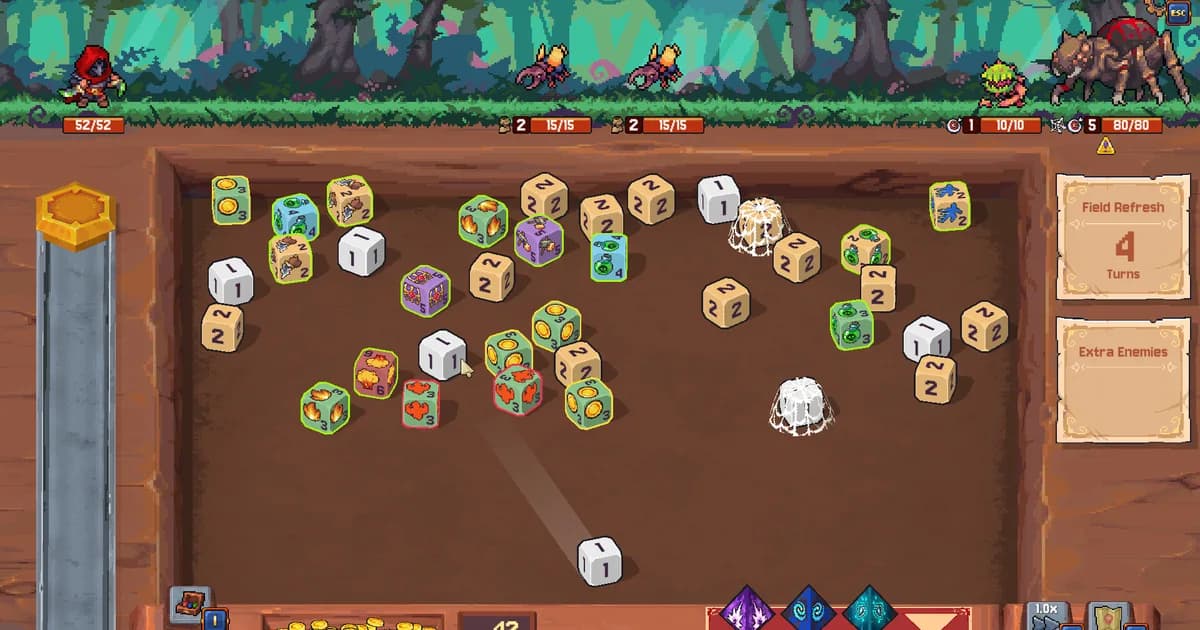
Rune Dice is a physics-based dice roguelike. Instead of a die appearing in a fixed grid slot, you throw it onto a battle board where it bounces off walls, collides with other dice already in play, and settles based on your throw angle and force. It behaves like a billiards table: momentum, angles, and collisions all carry.
That single design choice is why the game has a skill ceiling. The face value still matters, but the throw decides whether that value actually does anything. Two players with the identical dice and the identical board will get different results based purely on how they aim. The system rewards reading the board and lining up a throw, not just hoping for a good roll.
Rune Dice physics current status: October 2026
Rune Dice still sells for $14.99 on Steam, and its all-language reviews have climbed to Very Positive (read October 16). Two recent patches touch the physics directly. Patch v1.2.2 (August 12) made the bottom edge of the board "a solid wall," so dice that reach it bounce back "exactly like the other three edges" instead of being lost, and it stopped chain merges from freezing or veering off dice you knocked on purpose. Patch v1.3.1 (October 13) fixed the master die sometimes vanishing right after the throw when it hit the bottom edge at certain angles. The October 1 update added Boss Rush and Skirmish modes without changing the throw itself. Sources: Rune Dice on Steam and the official announcements feed.
Key takeaways
- You throw dice; they bounce off walls and other dice based on angle and force.
- A thrown die that contacts a same-value die merges into a higher value.
- The merged die auto-jumps toward the nearest matching value, starting a chain.
- Your thrown die does not have to be the one that merges: push a die into a match.
- Reading the board for mergeable matches, not just aiming at the nearest die, is the actual skill being tested.
- Bank shots off the side and back walls reach dice you cannot hit directly.
- The throw matters as much as the roll. This is the core skill of the game.
How the throw works
When it is your turn, you aim a die and set its force, then release. The die travels across the board, bounces off any wall it hits, and either collides with dice already in play or comes to rest in open space. The physics are consistent: the same angle and force into the same board produce the same result, which is what makes the system learnable rather than purely random.
Three things are under your control: the angle you aim, the force you apply, and which target you commit to. Everything else, where other dice already sit, which walls are nearby, how a collision deflects, is the board state you have to read before you throw.
The board is not just the open middle. You can throw dice off the walls deliberately, which is the foundation of bank shots (more below); since patch v1.2.2 that includes the bottom edge, which used to swallow dice. A throw that looks impossible on a straight line is often easy once you account for one wall bounce.
GODEEPER: The class you pick changes which dice you start with and how their faces behave, which changes what throws are worth setting up. Rune Dice Tier List: All 8 Classes Ranked →
How merges work
A merge is the core interaction. When a thrown die contacts another die of the same value, the two fuse into a single die of a higher value. That is the basic unit of progress: you are constantly trying to bring matching values into contact.
The detail most new players miss: your thrown die does not have to be the one that merges. You can throw a die into a third die and push that die into a matching value. This is the difference between a beginner and a strong player. A beginner aims their die straight at the value they want to merge. A strong player sees that they can hit a die already on the board and shove it into a match, reaching a merge that a direct throw could not set up.
This opens real tactical angles. If your moving die cannot reach two matching values directly, but one of them sits next to a third die you can hit, you throw at the third die and use it as a cue ball. The board becomes a puzzle of which collision produces the contact you need.
The game tells you outright: use bounces to merge other dice. Your thrown die does not have to be the one that merges, you can bank into a die and push it into a match.
How chain reactions fire
This is where the damage comes from. After a merge, the new higher-value die does not just sit there: it automatically jumps toward the nearest die of its new value. If it reaches a match, it merges again. If that produces another match within reach, it continues. One throw can cascade through several merges in sequence.
That cascade is the chain reaction, and it is the heart of Rune Dice scoring. A single merge is a small gain. A chain of four or five merges off one throw is a turn that wins the fight. The skill is not producing one merge: it is arranging the board across turns so that when you finally trigger a merge, the resulting die has a runway of matches to jump through.
Practically, that means you sometimes hold off on an obvious small merge to instead seed the board with values that will chain later. A throw that sets up next turn's cascade is often worth more than a throw that scores a single merge now. Reading two turns ahead is what separates a stalled run from a snowballing one.
Relics amplify this. If you have stacked Bomb dice relics, for instance, the second die's explosion can trigger off the first die's landing, producing multi-dice chains on a single throw that a vanilla board could not.
Relics are what turn a modest chain into a cascade. Bomb-style and class relics (Mage frost, Rogue strikes) change what a single well-aimed throw can trigger.
GODEEPER: Which relics turn a modest chain into a run-ending cascade, and how to draft toward them. Rune Dice Relics Guide: Best Builds 2026 →
A note on position-based relics
The core damage system, confirmed above, runs on merges: same-value dice colliding and chain-hopping to their next match. Some players and guides also describe rarer relics that care about dice landing near each other without merging. This isn't independently confirmed in official patch notes or the game's own relic descriptions, so treat any specific "adjacency bonus" claim (which relic, what trigger distance, what it does) as unverified rather than a core system to build around.
The safer, confirmed approach for any class is the merge-chain system itself: throw accuracy and reading which dice can chain into further merges is what the game's own description and patch notes consistently point to as the core skill, regardless of which class you're playing.
Bank shots: using the walls
Because the physics are billiard-like, the angle a die hits a wall is the angle it leaves. That makes bank shots a reliable tool, not a gamble. Throw a die off the side or back wall and it ricochets along a predictable path into a die you could not reach on a straight line.
Bank shots solve the crowded-board problem. As a fight goes on, dice pile up and direct lines get blocked. The die you need to merge is tucked behind two others, or pressed against the far wall where no straight throw reaches it. A bank shot off the back wall drops in behind the obstruction and makes contact from an angle nothing else can.
The practical habit: before you commit to a hard straight throw into a crowded center, check whether a wall gives you a cleaner line. Often the bank shot is not just possible but safer, because it avoids deflecting off the dice clogging the middle.
Tips for reading the board
A few habits turn the physics system from chaotic to controllable.
Aim for outcomes that survive variance. The board is not perfectly deterministic once collisions stack, so prefer a throw that produces a good result across several likely bounces over a throw that only works on one exact path.
Throw soft when you want placement, hard when you want a collision. A setup turn wants dice that settle gently into position for a future merge. A merge or a cue-ball push wants momentum to carry through contact.
Set up chains a turn early. The biggest swings come from a throw that cascades, and cascades need a board seeded with reachable matches. A turn spent positioning is often worth more than a turn spent on a single merge.
Use the walls before forcing the center. When the middle is crowded, a bank shot off a wall is usually a cleaner line than driving through traffic.
Step-by-Step: set up a physics run
Step 1: Scan the board before throwing. Identify same-value pairs, open wall angles, and a possible cue-ball target before choosing force.
Step 2: Start with a soft setup throw. Place a die where a later merge can reach it rather than forcing a low-value collision immediately.
Step 3: Use the wall for blocked matches. Choose a bank shot when the direct line is crowded, then read the likely bounce and collision path.
Step 4: Trigger the chain when the runway is ready. Merge only after the new die has reachable equals, so the automatic hop can turn one contact into a cascade.
Frequently Asked Questions
How does throwing work in Rune Dice? You throw dice that bounce off walls and collide with other dice, settling by throw angle and force, like billiards. You can bank dice off the sides and back walls to reach hard-to-hit dice.
How do dice merge? A thrown die contacting a same-value die fuses into a higher value, which then jumps toward the nearest matching value. Your thrown die does not have to be the one that merges.
How do chain reactions work? After a merge, the new die seeks its equals and merges again if it can reach one, cascading. Chains are where most damage comes from.
Do any relics care about dice position instead of merges? Some players describe position-based relics like this, but it's not independently confirmed. The confirmed core system is the merge-and-chain mechanic covered above.
What is a bank shot? Throwing a die off a wall so it ricochets into a die you cannot hit directly. The angle in equals the angle out, so it is reliable.
Why did my throw not merge? The die stopped short, hit a non-matching value, or the collision pushed the target away. It is almost always an aim or force problem, not the dice.
Related Reading
The Rune Dice Complete Guide Hub anchors every Rune Dice system, from the dice physics through classes, relics, and New Game Plus.
The Rune Dice Tier List ranks all 8 classes, including which ones best exploit the merge-chain system.
The Rune Dice Boss Guide covers how to apply throws, merges, and runes against the floor bosses where the physics skill is tested hardest.
- Rune Dice Beginner Guide: a first-run route for learning classes before optimizing physics-heavy chains.
- Rune Dice New Game Plus Guide: how the physics system changes when a run carries into New Game Plus.
- Rune Dice Necromancer Build: Soul Die and Death Mark: Rune Dice Necromancer build guide covering the confirmed Soul Shackles and Cursed Medallion relics.
- Rune Dice Archer Build: Heartseeker and the 40-Combo: Rune Dice Archer build guide covering the confirmed Bounty Fletching relic and 40-combo unlock.
- Rune Dice Mage Build: Burn, Freeze, and Merge Chains: Rune Dice Mage build guide covering the real merge-chain mechanic and the burn vs freeze decision.
- Rune Dice Classic Mode: All 3 Locations in One Run: Rune Dice Classic Mode announced May 21 by developer Oleksii.
- Rune Dice Class Unlock Guide: How to Get All 8 Classes: Rune Dice class unlock guide covering all 8 classes.
- Rune Dice Druid Unlock Guide: Blight Druid Boss Strategy: Rune Dice Druid unlocks by defeating the Blight Druid in Hard Mode.
References
- Rune Dice on Steam: official store page, patch notes, and community discussions
- Rune Dice official announcements: current v1.2.4 context and the physics/merge patch trail
- Kwalee official site: publisher page and studio information
Was this guide helpful?
About the author

GameBrief's byline for metroidvanias, RPGs, comparisons and design history. Places each game in its genre and argues both sides before picking one.
- Metroidvanias and RPGs
- Comparisons and design history
- Sources listed per article
Keep reading
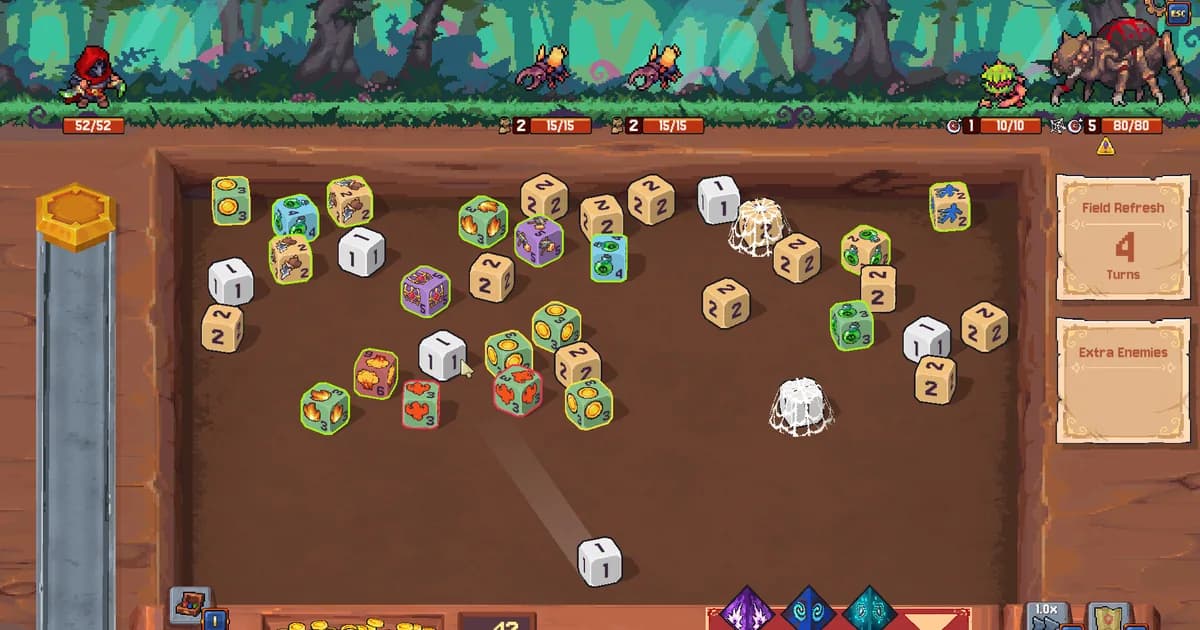
Rune Dice Necromancer Build: Soul Die and Death Mark
Guides · 11 min
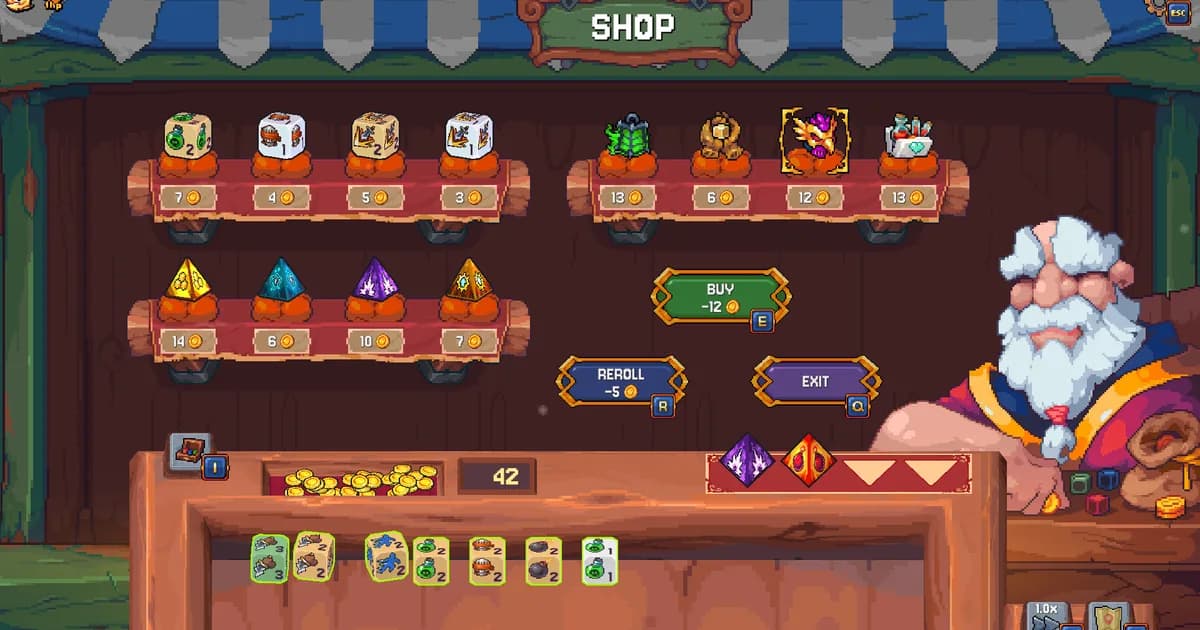
Rune Dice Mage Build: 3 Element Paths and Merge Chains
General · 12 min
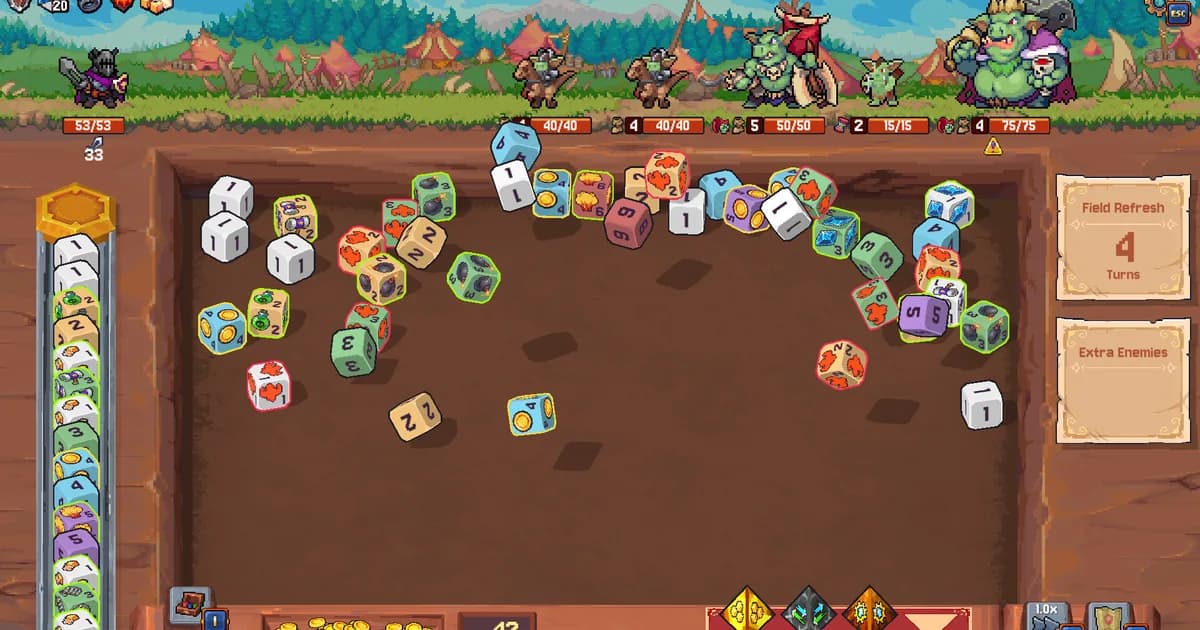
Rune Dice Archer Build: Heartseeker and the 40-Combo
Guides · 10 min
Rune Dice Relics Guide: Best Builds and Relic Priority 2026
General · 8 min
Rune Dice New Game Plus Guide: NG+ Tips and Builds 2026
General · 7 min
Rune Dice Class Unlock Guide: How to Get All 8 Classes
General · 8 min
Sponsored
Disclaimer
This article is published for informational and entertainment purposes. It does not constitute professional financial, legal, or technical advice. Game performance, online services, patch schedules, and store listings change. Verify critical details (pricing, system requirements, regional availability) with publishers and storefronts before you buy. Affiliate links, where present, help support our editorial work and are labelled in our affiliate disclosure.
Comments
Loading comments…