
GameBrief · Guides
Active Matter Beginner Guide: Editions and Zones Explained
Reviewing
Active Matter
Matter Team
This Active Matter beginner guide covers what's actually confirmed on launch day: which edition is worth buying, how the PvP, PvE, and PvPvE zone split works, and what your first extraction raid looks like mechanically. Community tactics for a genre this new don't exist yet, so treat this as the official mechanics laid out clearly, not a wiki of discovered tricks.
TL;DR: Buy the $29.99 Standard Edition first; every tier plays identically and higher editions only add starting gear, not content. Zones come in three flavors, PvPvE, PvP-only, and PvE-only, so you can dodge or seek out other players by picking your raid type. Harvest active matter from AM-transformed creatures, other players, or matter clusters, then extract before the zone's collapse timer runs out; dying loses everything you brought in. Prime, the premium currency, is a one-time allocation per edition, not an ongoing pay-to-win store.
Which Active Matter edition should you buy? (quick answer)
Start with the $29.99 Standard Edition unless you're already certain you'll be playing for weeks. Every edition, from Standard up through the pricier Advanced and Premium/Deluxe bundles, plays the identical game with identical zone access and weapon availability. The only thing a higher edition buys is a better starting inventory: more weapons, more mods, and more equipment sitting in your stash on day one instead of things you'll find or craft yourself. If you end up sticking with the game, you'll earn most of that starting gear naturally within your first several raids anyway.
Key Takeaways
- Every edition plays the same game; buy Standard first and upgrade later if you stay
- Zones are split into PvPvE, PvP-only, and PvE-only formats, and you choose which one to queue into
- Active matter, the core resource, comes from AM-transformed creatures, other players, or matter clusters found in the world
- Dying in a raid loses your entire loadout for that run, so don't carry gear you can't afford to lose on your first attempts
- Prime, the premium currency, is a one-time per-edition allocation, not a live microtransaction store
Step-by-Step: your first raid
1. Pick a PvE-only zone for your first few raids. Gaijin's own FAQ confirms not every location mixes in other players. Starting in a PvE-only zone removes the single biggest unknown (a geared-up human opponent) while you're still learning where extraction points are and how the inventory and looting screens work.
2. Bring the cheapest loadout you're comfortable losing. Whatever you spawn with disappears permanently if you die before extracting. Early raids are for learning zone layout and the extraction timer, not for testing your best gear. Treat your first handful of runs as scouting trips.
3. Prioritize active matter and containers over fighting AM-transformed creatures head-on. The three confirmed harvesting sources are killing transformed creatures, taking it from other players, or picking it up directly from matter clusters in the environment. Clusters and containers are the lower-risk option while you're still learning enemy attack patterns.
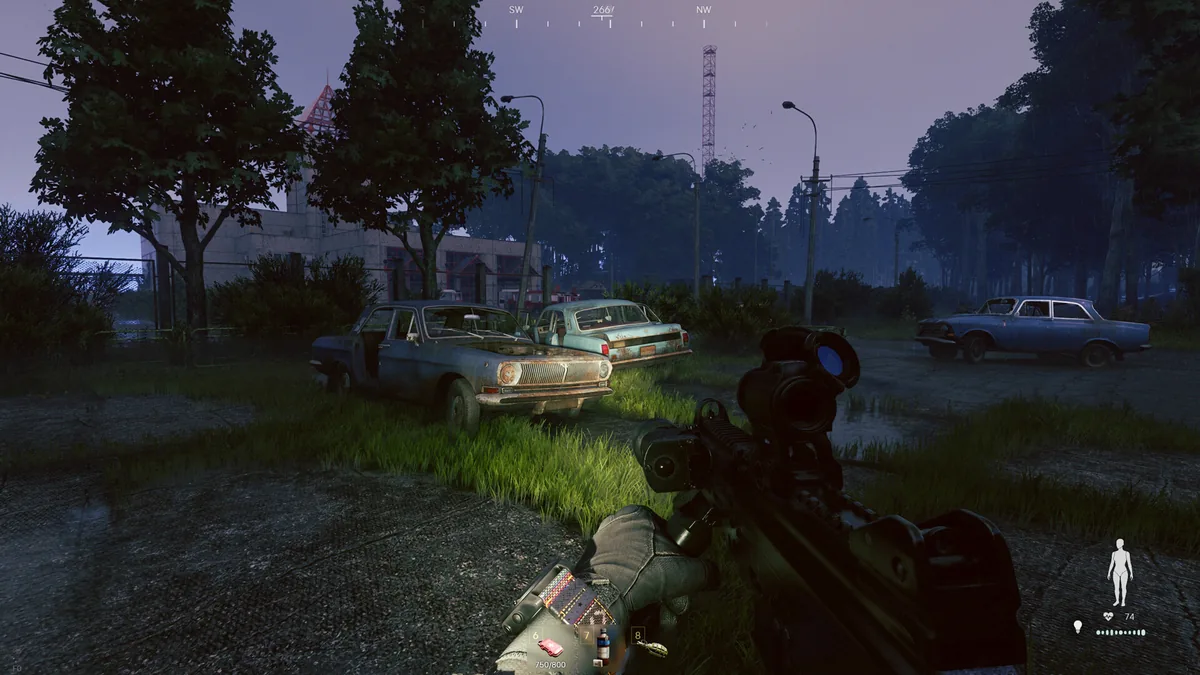 Caption: Approaching the Soviet research complex at dusk, one of the quieter moments between the anomaly-heavy set pieces the trailers focus on.
4. Watch the clock, not just the loot. Zones collapse on a timer, and Gaijin's store description is direct that everything left inside, including you, ceases to exist along with the zone. Extraction isn't optional or something to handle "eventually" the way it can feel in some looter-shooters. Build in walking time to a known extraction point before the window closes, rather than pushing for one more container.
5. Read the zone type before you queue. PvPvE zones carry the highest risk and (presumably) the best rewards, since that's where other operatives are also hunting the same active matter you are. PvP-only zones strip out the environmental monster threat entirely, turning every encounter into a gunfight. If you're specifically trying to avoid a firefight this session, a PvE-only zone is the one setting that guarantees it.
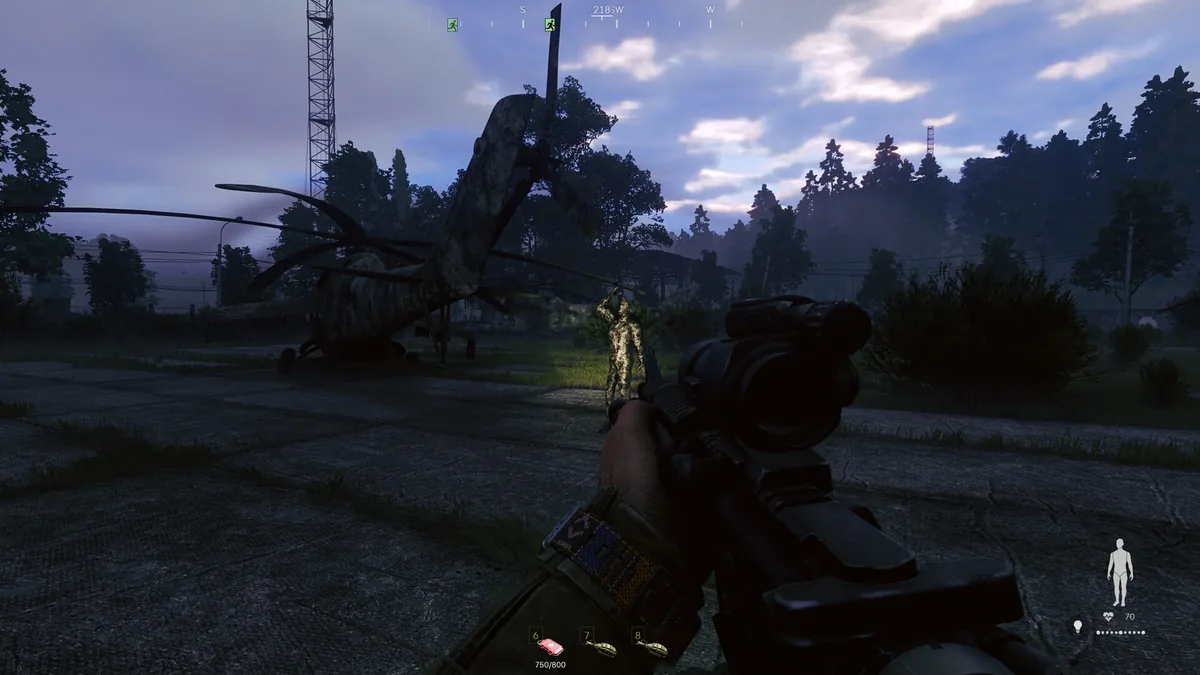 Caption: A tense standoff with another operative near a crashed helicopter, the kind of encounter you'll only run into in a PvPvE or PvP-only zone.
What "active matter" actually does, mechanically
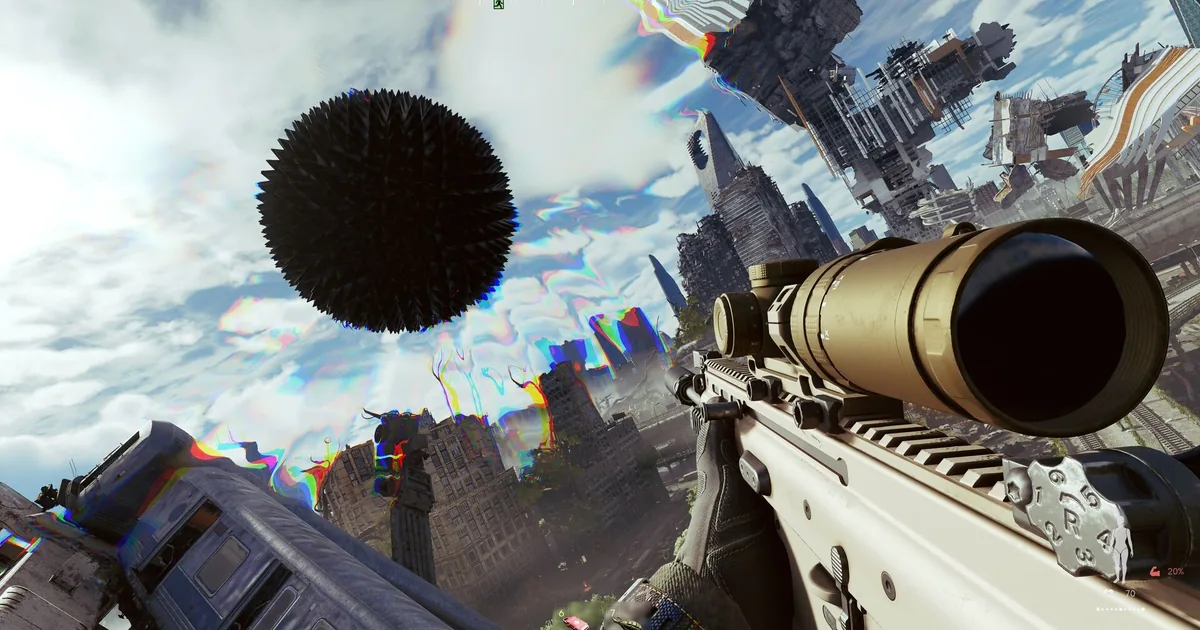
The premise (an unstable multiverse substance that bends space, time, and pulls in operatives from other timelines) is mostly narrative dressing, but it has one concrete gameplay function worth understanding early: it's the reason the maps look the way they do. The visible anomalies, the fractured buildings hanging inverted in the sky, the spiked black orbs drifting over the skyline, aren't just set dressing. They're the physical manifestation of the resource you're there to collect, and Gaijin's official materials describe active matter as actively warping gravity and space topology in real time around these effects. Treat unusual terrain near a visible anomaly as worth investigating, not just a graphical flourish to admire and move past.
AM-transformed creatures are the other visible effect: operatives and survivors who lost themselves to prolonged active matter exposure, now hostile on sight. They're a confirmed, named threat category separate from human opponents, which means learning their attack patterns is worth doing early rather than treating every red-glowing enemy the same way you'd treat a player. Our Active Matter launch day breakdown covers where this fits into the game's broader multiverse premise, if you want the lore context behind why these creatures exist at all.
Understanding the three edition tiers
| Edition | Price | What you start with |
|---|---|---|
| Standard | $29.99 | 5 weapons, 1 weapon mod, 10 equipment items |
| Advanced | $49.98 | 8 weapons, 3 mods, 17 equipment pieces |
| Premium/Deluxe | $79.97 | 16 weapons, 10 mods, 26 equipment items, cosmetics |
An Elite Squad tier also exists, bundling the top edition with two Standard copies for friends, sold exclusively through Gaijin's own store rather than Steam. Since Gaijin's FAQ is explicit that content access doesn't change between tiers, the practical question is just how much starting inventory you want sitting in your stash before your first raid, not which version of the game you're buying.
GODEEPER: Active Matter isn't the only extraction-style game worth checking out this year. Riftstorm Beginner Guide: Extraction and Lythograms → covers a different take on the same core loop.
The three launch zones
Three biomes are confirmed at launch, and they read as genuinely different spaces rather than reskins of the same map layout:
The Soviet research island. Restricted-access labs, domed greenhouse structures, and abandoned military hardware, now visibly warped by whatever the research staff were studying before the anomaly took hold.
The Central African quarantine zone. Confirmed as a launch biome in Gaijin's own materials, though specific landmark details haven't been detailed as thoroughly as the other two maps in official previews so far.
The abandoned U.S. coastal city. Overgrown streets, looted storefronts, and one of the more visually striking anomaly effects: a fractured, partially inverted mass of skyscraper debris suspended in the sky above the skyline.
Each zone reportedly supports different combinations of the PvP, PvE, and PvPvE formats, so the biome you pick and the format you pick are two separate decisions worth making deliberately rather than queueing into whatever comes up first.
GODEEPER: Active Matter isn't the first realistic tactical shooter to build its whole economy around persistent cash and loadout risk. WARDOGS Money and Loadout Guide → covers how a different 2026 shooter handles the same "what can you afford to lose" tension.
Common early mistakes worth avoiding
A handful of mistakes are easy to predict from the mechanics Gaijin has already confirmed, even without a week of community data behind them yet.
Treating your first raid like a looter-shooter with no real stakes. The collapse timer and full-loss-on-death rule mean Active Matter punishes the "grab everything, sort it out later" instinct that works in games with safer extraction windows. Decide what you actually need before the timer forces the decision for you.
Ignoring the zone-type label when queueing. It's tempting to queue into whatever raid loads fastest, but the PvP, PvE, and PvPvE split exists specifically so you can control your risk exposure. Skipping that choice on a night you specifically wanted a quieter PvE run defeats the point of the system.
Assuming a higher edition makes you stronger long-term. Since every edition accesses the same weapon pool and zones, an Advanced or Premium buyer's early advantage is a head start, not a permanent gap. Standard Edition players catch up through normal play; there's no gear tier locked behind a purchase, similar to how WARDOGS's beginner economy resets the stakes every match regardless of what you bought at launch.
Skipping the co-op option entirely. Active Matter supports solo or small-squad raids, and extraction games generally reward a coordinated partner over going in alone, the same squad-coordination logic covered in RIFTSTORM's co-op guide for a different game built around the same core loop.
Related Reading
- Active Matter Launches Today: Gaijin's Extraction Shooter: the full launch-day breakdown, including Gaijin's track record and why the paid-only model is a real bet in 2026's extraction shooter field.
- Riftstorm Beginner Guide: Extraction and Lythograms: another extraction-loop game for players comparing options in the genre right now.
- Bodycam Reissad Points Guide: a different realistic-military-shooter economy worth knowing if you're weighing multiple tactical shooters this month.
- RIFTSTORM Early Access Review: a full verdict on a genre-adjacent extraction game, useful context if you're deciding between more than one this month.
- Aniimo Release Date: Free Creature-Catcher Arrives Sept 16: a completely different genre launching the same week, if you're just browsing for what's new right now.
Frequently Asked Questions
Which Active Matter edition should you buy? Standard ($29.99) if you're unsure you'll stick with the genre; it plays identically to every other tier. Higher editions only add starting weapons, mods, and equipment, they don't unlock content, so upgrade later once you know you're staying.
What's the difference between PvP, PvE, and PvPvE zones? PvPvE zones have both other players and AM-transformed creatures. PvP-only zones are human versus human with no environmental monsters. PvE-only zones remove other players entirely. You choose the format per raid rather than every match forcing a player encounter.
What happens if I die in a raid? You lose whatever you were carrying into that raid, loadout and looted items alike, and the zone continues without you. The time-loop framing means your operative wakes up again for the next raid, but nothing you were holding carries forward from a failed run.
Do I need Prime currency to compete? No confirmed pay-to-win systems exist. Prime is a one-time allocation per edition rather than an ongoing microtransaction store, and every edition uses the same weapon pool and zone access.
How long does a raid last? Zones have a fixed collapse window before they cease to exist along with everything still inside, though Gaijin hasn't published exact per-map timers. Treat the extraction point as a hard deadline, not something to handle later in the raid.
References
- Active Matter on Steam: official store page, editions, and system requirements.
- Active Matter official site FAQ: edition contents, monetization model, and confirmed zone/map details.
Was this guide helpful?
About the author

Senior Critic & Analyst
Former game data analyst turned critic with 11 years covering indie and mid-tier games. Based in Austin. Runs spreadsheets on games most people just play.
- 11 years games criticism
- Former game economy analyst
- Roguelike and strategy specialist
Keep reading


Disclaimer
This article is published for informational and entertainment purposes. It does not constitute professional financial, legal, or technical advice. Game performance, online services, patch schedules, and store listings change. Verify critical details (pricing, system requirements, regional availability) with publishers and storefronts before you buy. Affiliate links, where present, help support our editorial work and are labelled in our affiliate disclosure.
Comments
Loading comments…