
GameBrief · General
Rift Wizard 3 Builds Guide: Best School Synergies 2026
Reviewing
Rift Wizard 3
Dylan White, Khoops, Jacob Martinez · Dylan White
Knowing each school in isolation gets you to realm 6. Knowing how they combine gets you to realm 20.
This Rift Wizard 3 builds guide is for players past the beginner wall: you understand fire and lightning, you've hit an arcane ceiling, and you're wondering why runs that felt strong through realm 5 fall apart at 8. The answer is almost always a build that covers what it needs to cover rather than a build that goes deep on what it already has.
TL;DR: Four pairings come up often in Rift Wizard 3 Early Access discussion: fire+construct (a common, forgiving foundation), lightning+arcane via crafting (real Steam-confirmed backing, treated by some as a higher ceiling), dark+nature summons (discussed as high-risk high-reward, though unconfirmed as an official synergy), and holy as a coverage slot (commonly described as strongest against undead). None of these four are an officially published tier list, only the lightning-arcane crafting effect is directly Steam-confirmed. The crafting system creates damage outputs that don't exist through spells alone. By realm 5, your build is safer with two tags that cover each other's weaknesses.
Rift Wizard 3 builds guide: which synergies actually work? (quick answer)
The game has 500+ spells and artifacts, and there's no clean set of eight discrete schools to pair up, spells and monsters carry overlapping tags instead. Most possible pairings are just two damage tags that don't interact. Four pairings come up often in player discussion, with varying degrees of confirmation: fire+construct is commonly described as working because constructs take hits that let fire do its job (plausible, but not an officially documented mechanic); lightning+arcane has a real Steam-confirmed crafting effect that lets arcane damage output lightning; dark+nature is discussed as working because nature summons create a front line for dark's riskier spells (unconfirmed by any source we could find); holy is commonly used as a third slot against enemy types it's said to counter (also unconfirmed in detail).
Every strong Rift Wizard 3 build this guide has tested shares one trait: the two or three tags in it do different things. Damage + protection. Direct damage + crowd control. Primary tag + crafting bypass. When both tags do the same thing (two direct-damage tags with no CC, no summons, no movement options), the build works until it doesn't, and when it stops working, there's nothing to fall back on.
Key takeaways
- Fire+construct is a commonly recommended two-tag foundation; constructs absorb hits while fire clears rooms (a plausible, not officially documented, mechanic)
- Lightning+arcane's crafting synergy has real backing: Steam confirms a craft effect that routes arcane damage through a lightning channel
- Dark+nature is discussed as high-ceiling, but the specific synergy isn't confirmed by any source; treat it as a build to test, and mind dark's self-cost either way
- Holy is commonly described as covering undead-heavy realms; use as a third slot, not a primary, until you've verified it yourself in a run
- By realm 4, a build without two tags is a riskier bet
- The crafting system is where the game's most powerful build interactions happen; check it at every realm
- Construct summons belong in any multi-tag build regardless of primary tag choice
Fire + construct: a common foundation pairing
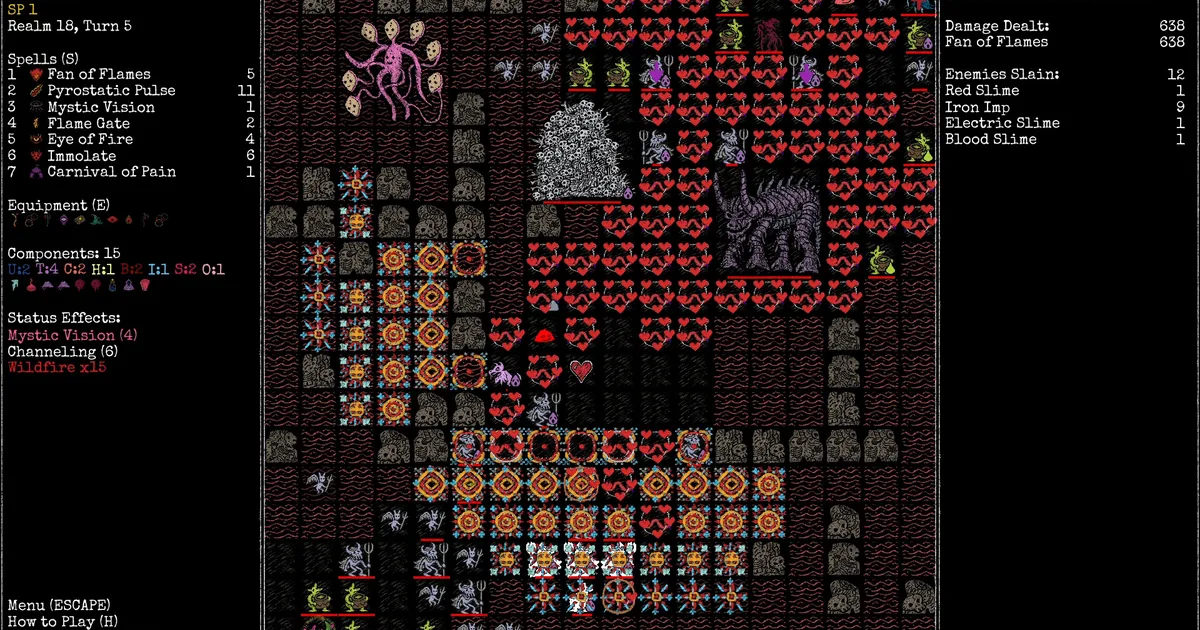
Fire+construct isn't the flashiest Rift Wizard 3 build, but it's a commonly recommended route to realm 20 for players still learning the game. The logic is straightforward, even if it isn't an officially documented mechanic: construct summons absorb attacks and block enemy movement, which in theory gives your fire spells uninterrupted casting turns.
Fire works best when enemies aren't adjacent to the wizard. Its AoE expressions rely on being able to hit groups without immediately taking retaliatory hits. Construct summons can help with this by standing between the wizard and the threats. A construct placed at the entrance of a spawner room is commonly described as letting fire spells clear the spawner before enemies close the gap.
What's said to set fire+construct apart from other pairings: each tag actively improves the other's performance rather than just covering a gap. Fire AoE hits groups that would otherwise overwhelm a construct. Constructs buy fire casters the positioning they need. We couldn't find an official source confirming this interaction beyond player discussion, so treat it as a build worth testing rather than a guaranteed synergy.
Legheads, a real Steam-named enemy some players say resists fire, shouldn't affect a construct's own function either way, since Construct is a separate creature-type tag from Physical, not tied to fire resistance. You'll likely still want a secondary damage option ready for Leghead realms regardless.
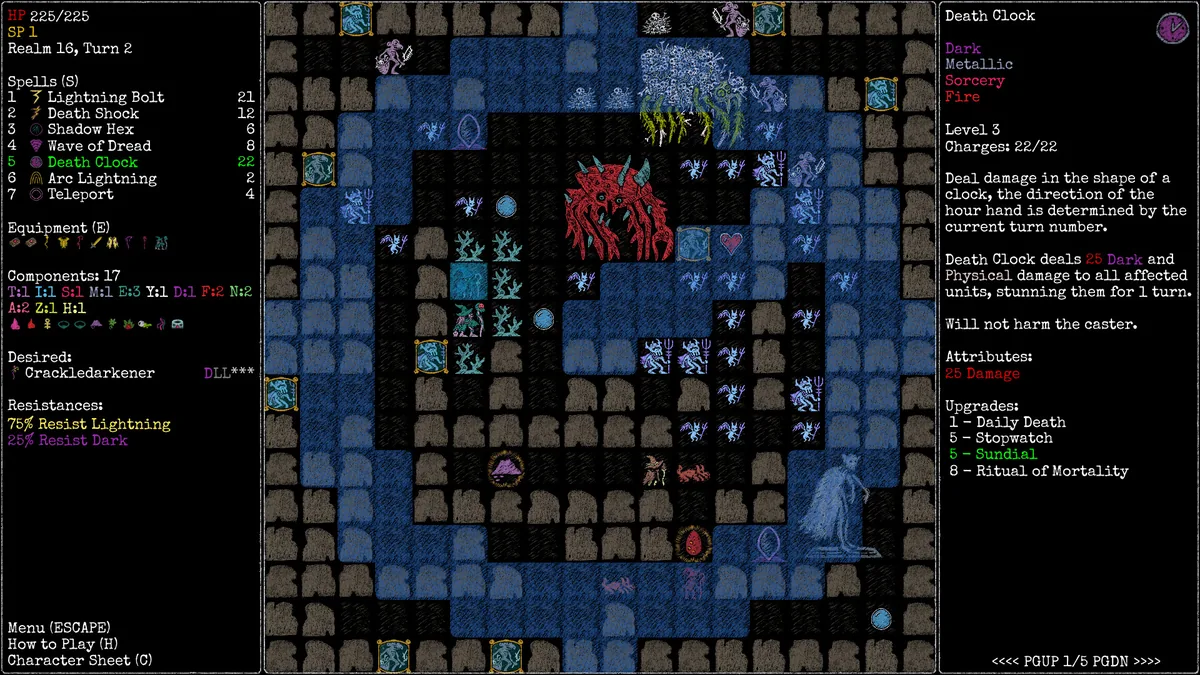 Spell descriptions show tags, charge cost, and exact effect radius before you commit a pick. Reading these carefully matters as much as any synergy pairing.
GODEEPER: For the full tag breakdown before committing to a synergy path, the Rift Wizard 3 spell guide covers the major tags and their weaknesses. Rift Wizard 3 Spell Guide: How to Build from 500+ Spells →
Lightning + arcane: the crafting-powered pairing
Lightning+arcane is a build some players treat as the highest-ceiling option in Rift Wizard 3 Early Access, and the crafting system is why. On their own, lightning and arcane don't obviously combine: lightning chains to multiple targets while arcane modifies how spells behave. The interaction that's actually confirmed appears at the crafting tier.
Steam's own store page confirms a crafting effect for Rift Wizard 3 that makes lightning "fly out of your arcane damage." The damage channel is lightning; the spells remain arcane-classified. That part is real. What isn't confirmed anywhere we could find: whether this specifically counters Void Child, the enemy some players describe as tough for arcane builds. It's a reasonable thing to test (lightning output through an arcane-classified spell might dodge an arcane-specific resistance if one exists), but not something to state as documented fact. Separately, arcane spells are commonly described as having larger damage multipliers at the top of their power curve than lightning spells; routing that multiplier through a lightning channel is the appeal, even if the exact numbers aren't published anywhere.
The drawback is build construction cost. You need arcane spells, lightning spells, and the crafting components to make the cross-tag effect. That's three investment paths running simultaneously through the early realms. Runs that try to go lightning+arcane and run out of skill points before the crafting combination comes together can leave you with two underpowered tags rather than one strong synergy. The build rewards knowing when to prioritize crafting components over spell upgrades.
What this build looks like in practice at realm 8: arcane spells with damage outputs modified by the crafting effect, lightning spells hitting groups when the arcane-triggered output misses clustered targets, and one construct summon (practically always worth having regardless of primary tag choice) filling the threat-absorber slot.
Dark + nature: discussed as high-risk, high-ceiling
Dark+nature comes up in player discussion as the build type that produces the most impressive runs and the most abrupt deaths, though we couldn't independently confirm this as a documented synergy in any official source. The idea is that nature summons take the front line while dark spells curse and drain enemies from range, giving you both a damage layer and a front-line presence that pure damage builds don't have.
Nature summons are commonly described as slower to kill than constructs (biological rather than mechanical, which may interact differently with enemy damage types), which would mean they last longer in some rooms and shorter in others. Dark spells, particularly at higher upgrades, are described as dealing meaningful damage against individual priority targets, useful when a powerful enemy survives the summon's pressure. Treat these specifics as community reports worth testing yourself, not confirmed mechanics.
The one part of this pairing that's genuinely grounded in the game's own design is dark's self-cost: some of the school's strongest spells carry an HP cost or corruption penalty. Runs that go heavy dark risk a health floor problem: by realm 10, spells that hit well cost a few HP each, and if summons aren't surviving long enough to absorb the rest, that damage reaches the wizard. Pick dark spells by cost-to-output ratio, not just raw damage numbers.
Against undead enemies, dark spells are commonly described as performing well. Whether dark has "no special problem" against Void Child, as some players claim, isn't something we could confirm, since Void Child's exact resistances aren't documented anywhere we found. Treat any claim about dark's matchup coverage against specific named enemies as unverified until you've tested it yourself.
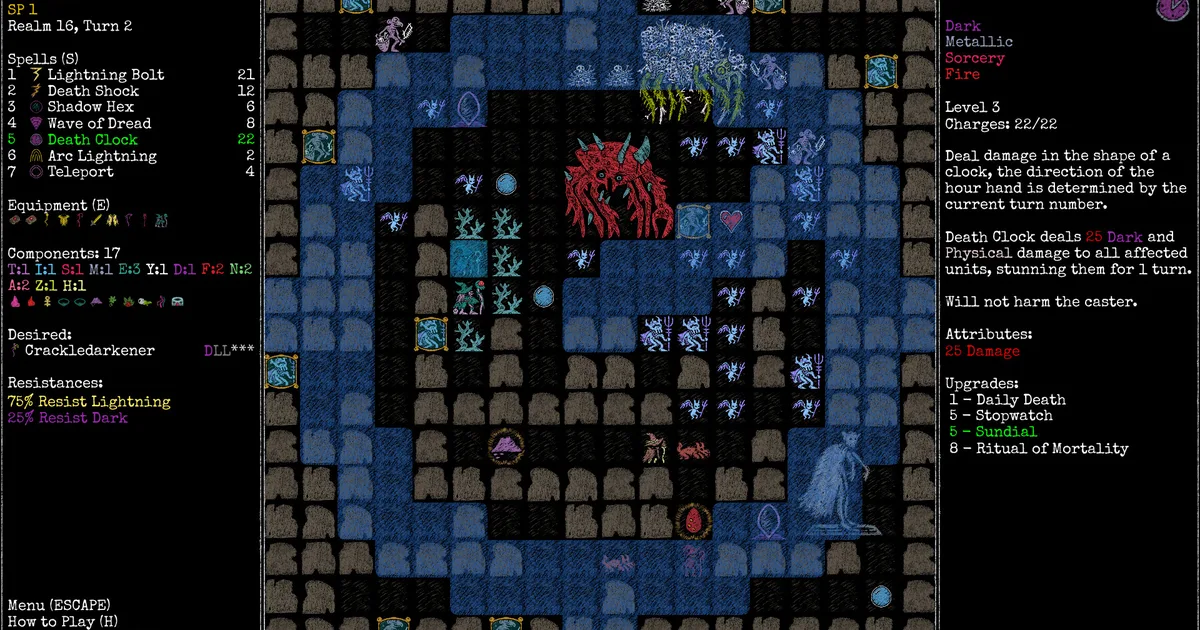
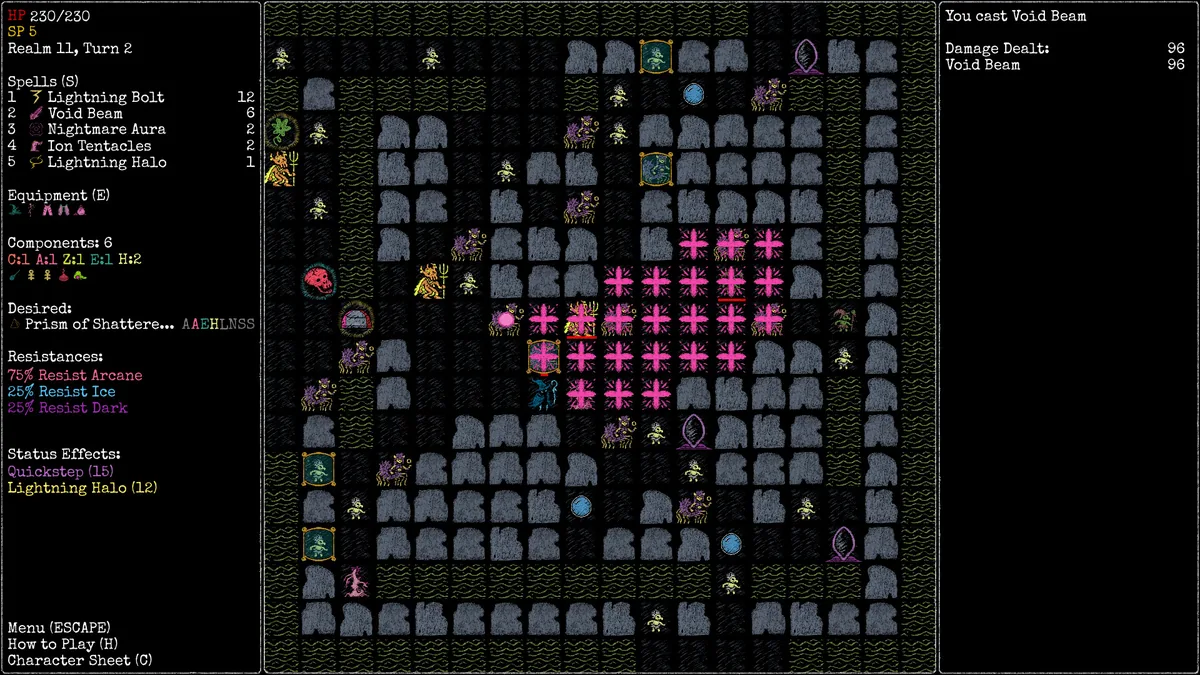 The resistance panel on the left updates in real time as status effects stack. Checking it before committing a high-cost spell like this one is part of playing any synergy build well, and it's more reliable than any secondhand resistance claim.
GODEEPER: For a broader comparison of build archetypes across roguelikes, the LegionBound synergy guide covers how cross-class synergies function in a different system with a similar multi-tag build philosophy. LegionBound Synergy Guide: All Classes and Groups →
Holy as a coverage tag
Holy doesn't work as a primary tag in most Rift Wizard 3 builds by most player accounts. Its damage output is commonly described as strongest against undead and dark-aligned enemies, which would make it disproportionately strong in specific realms and weaker in others, though we didn't find an official breakdown confirming the exact matchups. The commonly recommended use is as a third slot, not a first or second.
The portal preview system makes holy viable as coverage regardless of the exact matchup details. Before entering any realm, you can see what enemy types it contains. If the preview shows an undead-heavy room composition, one or two holy spells are commonly said to handle the encounter more efficiently than expanding your primary tag's coverage. After the realm, those spell slots don't need to stay full of holy purchases. You can rebuild toward your primary synergy at the next portal.
This isn't a "holy build": it's using holy as one of many tools in an overlapping tag system, not a clean set of eight discrete schools. Treating holy the same way you'd treat a second-choice damage tag (buying it consistently across multiple realms, upgrading it the same as your primary tag) dilutes skill points without adding the benefit that makes multi-tag builds strong.
Step-by-Step: identifying which synergy a run can support
This is where a Rift Wizard 3 builds guide gets genuinely useful: not every run can access the synergy you planned for. Spell availability is random. Here's how to evaluate which path a run can support by the time you exit realm 4.
Realm 1-2: Identify your strongest early damage tag. Don't commit to a synergy until you know what spells are appearing. A run that offers fire spells heavily in realms 1-2 is a fire-primary run.
Realm 3: Add your first summon or construct. Regardless of the synergy target, every build wants a threat absorber by this point. A construct summon is the most reliable option; a nature summon works if the run isn't offering constructs.
Realm 3-4: Evaluate what the crafting pool is showing. If arcane spells and components are appearing, the lightning+arcane path is available. If they aren't, don't force it. Use the natural spell offerings to identify the second tag the run wants to be.
Portal out of realm 4: Check your spell list against the role needs from the spell guide: priority kill, AoE clear, translocation, threat absorber. If any need is unmet, fill it from whatever tag the current portal offers, even if that tag wasn't in your original plan. The role matters more than the tag.
Realm 5+: Commit to the two or three tags you have evidence for. Stop buying new tags. Each new tag beyond three costs you upgrade depth in the tags you've already invested in.
Tips: common build mistakes in Rift Wizard 3
Committing to a synergy before the run supports it. The lightning+arcane crafting build requires specific crafting components. If realms 1-3 haven't offered those components, the build doesn't exist yet. Running two shallow tags while hoping crafting components appear is worse than building one strong tag with a summon.
Ignoring constructs because they don't damage. Construct-tagged spells rank near the bottom of "obvious power" for first-time players because constructs don't deal damage. They're not there to deal damage. Runs that skip constructs face every spawner room and every fast enemy with no buffer between them and the wizard. The construct's value is absorbing the turns where enemies would otherwise kill you.
Upgrading a spell twice before covering your basic roles. Each spell gets two upgrade picks from four options, which is compelling and specific. But spending two upgrades on one spell before you have a translocation spell, a summon, and backup damage means losing a run because no upgrade choices mattered more than having those basics.
Dark builds that ignore the health floor. Dark spells with self-cost mechanics are worth using, but tracking your HP floor matters. A dark build that's on 60 HP at the start of realm 8 (after losing 40 HP to spell costs across earlier realms) is in a different risk position than the same build at 95 HP. Some dark spell selections aggressively optimize damage at the cost of sustainability. Prefer dark spells with manageable costs until you're familiar with how fast health drops in the mid-game.
Treating holy as a damage tag. Holy is commonly described as strong against undead. Against non-undead enemies, it's said to underperform at the same investment level as fire or lightning. A run that goes heavy holy outside of undead-heavy realms is a run that's split skill points into a tag that doesn't work against most enemies.
Related Reading
- Rift Wizard 3 Spell Guide: How to Build from 500+ Spells -- covers the real overlapping tag system, enemy resistance notes, and the role needs a run typically has to fill before realm 10
- Rift Wizard 3 Tips: 9 Rules for Surviving Early Runs -- survival mechanics and portal usage that layer on top of build decisions
- Rift Wizard 3 Early Access Launch Preview -- overview of what launched in Early Access and the planned content roadmap
Frequently Asked Questions
What is the best build in Rift Wizard 3? No Rift Wizard 3 builds guide can give you one confirmed universal answer, but fire+construct is a commonly recommended foundation for new players: fire handles AoE and priority kills, construct summons absorb hits while you cast. Lightning+arcane via crafting is a build some players treat as the highest-ceiling option, backed by a real Steam-confirmed damage effect.
Should I specialize in one school or use multiple? Multiple, most likely. Single-tag runs risk stalling when they hit a resistant enemy. Legheads and Void Child are real enemies some players say resist fire and arcane specifically, though neither mechanic is officially confirmed. The crafting system is designed to reward two and three-tag builds through cross-tag effects either way.
How does the lightning+arcane crafting synergy work? A confirmed Steam crafting effect lets arcane damage trigger secondary lightning output. Your spells remain arcane-classified, but the damage channel is lightning. Some players believe this helps against Void Child specifically, though that enemy's exact resistances aren't officially documented.
What does the construct school add to a build? Construct spells summon mechanical entities that block enemy movement and absorb attacks. In any build, a construct provides a buffer between enemies and your wizard. Any tag can fill the damage role; construct fills the threat-absorber role that every run needs.
When should I start thinking about synergy? By realm 4 is a reasonable target. Some players report realm 5 introduces enemies that punish single-tag builds. If you're still running one tag at the portal exiting realm 4, picking a second from the options available is the safer play regardless of what they look like.
Does dark combo well with anything? Players commonly discuss pairing dark with nature: nature summons take the front line while dark spells curse enemies from range. We couldn't independently confirm this as a documented synergy, so treat it as a combination to test, keeping dark's HP cost in mind either way.
What's the best use of the crafting system? Cross-tag damage effects. The crafting system creates outputs that spells alone can't, such as arcane damage triggering lightning or giving certain summons fire breath (both Steam-confirmed). These bypass enemy immunities while keeping your primary tag's upgrade investment intact.
References
- Rift Wizard 3 on Steam -- Early Access launch page, 500+ spells, Steam Workshop support
- Rift Wizard 3 official trailer -- gameplay footage showing multi-school builds in action
- r/roguelikes -- active discussion for build theory and community testing
Was this guide helpful?
About the author

Indie & JRPG Critic
Indie game evangelist and lifelong JRPG fan covering small studios since 2017. Mumbai-born, London-based. Writes the way she talks.
- 7 years indie games coverage
- JRPG and visual novel specialist
- Narrative design focus
Keep reading

Disclaimer
This article is published for informational and entertainment purposes. It does not constitute professional financial, legal, or technical advice. Game performance, online services, patch schedules, and store listings change. Verify critical details (pricing, system requirements, regional availability) with publishers and storefronts before you buy. Affiliate links, where present, help support our editorial work and are labelled in our affiliate disclosure.
Comments
Loading comments…