
ReviewRoad to Vostok
Road to Vostok Review: Solo Dev Survival FPS Earns It
Road to Vostok review: permadeath and physics looting give this solo-developed FPS real tension; its launch report lists 140,000 copies in five days.
A Road to Vostok review this week is really a review of a hypothesis: that one developer, working without studio backing, can build a survival FPS with enough mechanical integrity to compete for attention against extraction shooters assembled by teams of fifty. The official launch report covered 140,000 copies sold in the first five days; the current Steam snapshot is still Very Positive, so Road to Vostok has tested that hypothesis and passed.
Sponsored

About the game
Road to Vostok
Road to Vostok Ltd. · Road to Vostok Ltd.
Reception
Pros
- Physics-based looting adds tactile weight and consequence to every shelter raid
- Permadeath zone generates pressure that safe-zone survival games cannot replicate
- Tetris-style inventory grid forces meaningful resource decisions per run
- The official launch report covered 140,000 copies sold in five days
Cons
- Launch-time Russian-language reviews were Mixed; the current all-language Steam snapshot is Very Positive
- Build 2 is now live with AI vs. AI combat, character variants, and new AI behaviors; this review evaluates Build 1
- Post-launch hotfix pace limited by solo dev bandwidth (11,000+ unread emails by day five)
Verdict
Road to Vostok earns Very Positive reviews by designing tension through mechanics, not scripted set-pieces: and the numbers back it up.
That number (140,000 in five days) deserves context. Most independent Early Access launches consider 10,000 copies a strong result. Road to Vostok hit nearly fifteen times that. At peak, 31,891 concurrent Twitch viewers watched it being played. Daily active users averaged 25,421 in the first week. These are metrics that publisher-backed games with marketing budgets frequently fail to hit. Something is working.
Updated 2026-10-01: Build 2 is now live, so the AI criticism below is a Build 1 snapshot; the full update report covers the confirmed additions and still-missing Nomad content.
Sponsored

Current status: October 1, 2026
Steam currently lists Road to Vostok at $19.99, and its all-language user reviews read Very Positive. The official Build 2 announcement advertises a 25% Steam Autumn Sale discount from October 1 through October 8, although the live US store page still returned the regular price with no active discount at the October 1 check. Build 2, version 0.2.0.0, released September 30 and adds AI vs. AI combat, AI character variants, Nomads, two maps, and new traders. The Build 2 update report notes that new trader tasks and Nomad shelter features remain planned for the following weeks. Treat the 140,000-copy figure below as a launch result, not a current sales count.
Key Takeaways
- Road to Vostok launched April 7, 2026 into Early Access, developed solo under Road to Vostok Ltd. Current price: $19.99.
- Steam user reviews: Very Positive across all languages
- Launch-time Russian-language reviews were Mixed; that historical regional snapshot should not be read as the current all-language label
- Core loop escalates across three zones: Area 05 (safe), Border Zone (factions), Vostok (permadeath)
- No PvP, no co-op: singleplayer only. All danger comes from AI factions (Bandits, Guards, Military)
- Physics-based looting and Tetris-style inventory grid are the mechanical differentiators
- Build 2 is live with AI vs. AI combat, AI character variants, and new AI behaviors; this review's AI criticism describes Build 1
Road to Vostok Review: Overview
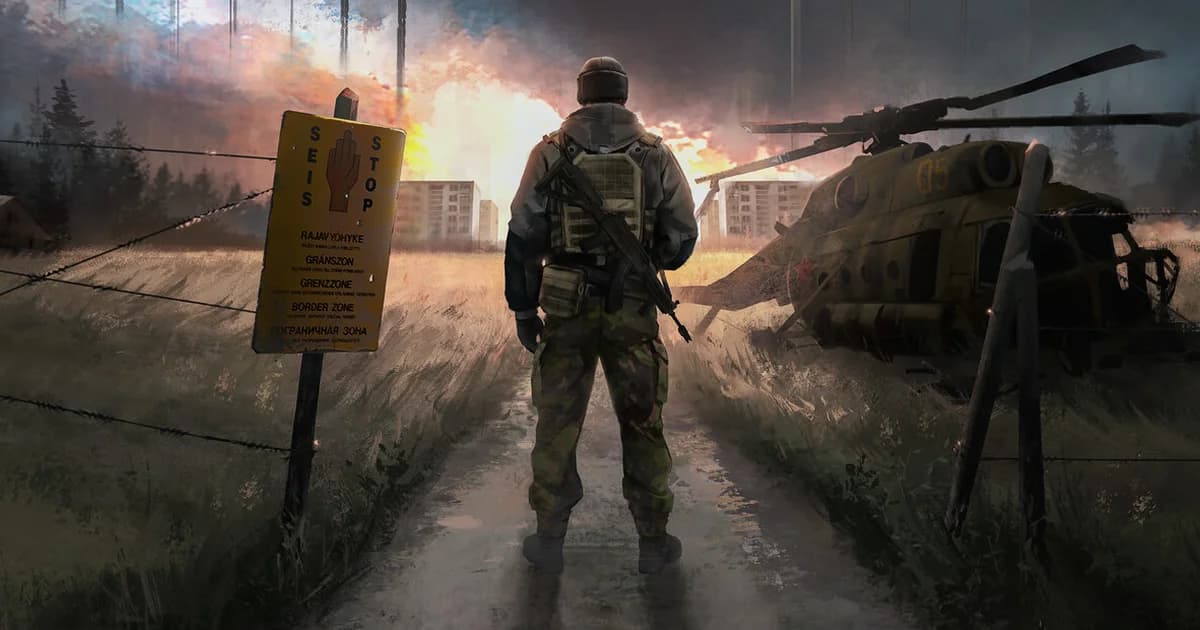
Road to Vostok is a hardcore singleplayer survival game set in a fictionalized stretch of the Finland-Russia border. Players begin in Area 05, use it as a staging ground for supplies, skills, and shelter upgrades, then work outward through a guarded Border Zone and eventually into Vostok itself: the permadeath zone that gives the game its name and its stakes.
The developer ran multiple free public demos before the April 7 Early Access launch, which built a community before units were sold rather than after. That approach explains a portion of the front-loaded review volume. Players arrived already invested. The launch post on Steam from Road to Vostok Ltd. acknowledged approximately 11,000 unread emails within days, which is the kind of bottleneck problem that successful solo launches produce and that no amount of advance planning fully solves.
Road to Vostok positions itself against the extraction shooter genre by removing the feature that genre is most associated with: PvP. There are no other players in this game. The danger comes entirely from AI factions (Bandits, Guards, and Military) each with distinct patrol behaviors and loot profiles, plus the environment itself. For players who find the anxiety of player-versus-player extraction games more frustrating than exciting, this is a structural solution, not a compromise.
The Early Access roadmap puts quarterly content updates on the schedule. Build 2 is now live with AI vs. AI combat, AI character variants, and new AI behaviors. The official update says new trader tasks and Nomad shelter features are still planned for the following weeks. The full-release target roughly doubles the current map count, weapon roster, trader network, and item pool. Modding support and shared shelters are listed as full-release features. The developer estimates 2-4 years in Early Access, which is a realistic range for a solo project at this scope.
Gameplay in the Border Zone
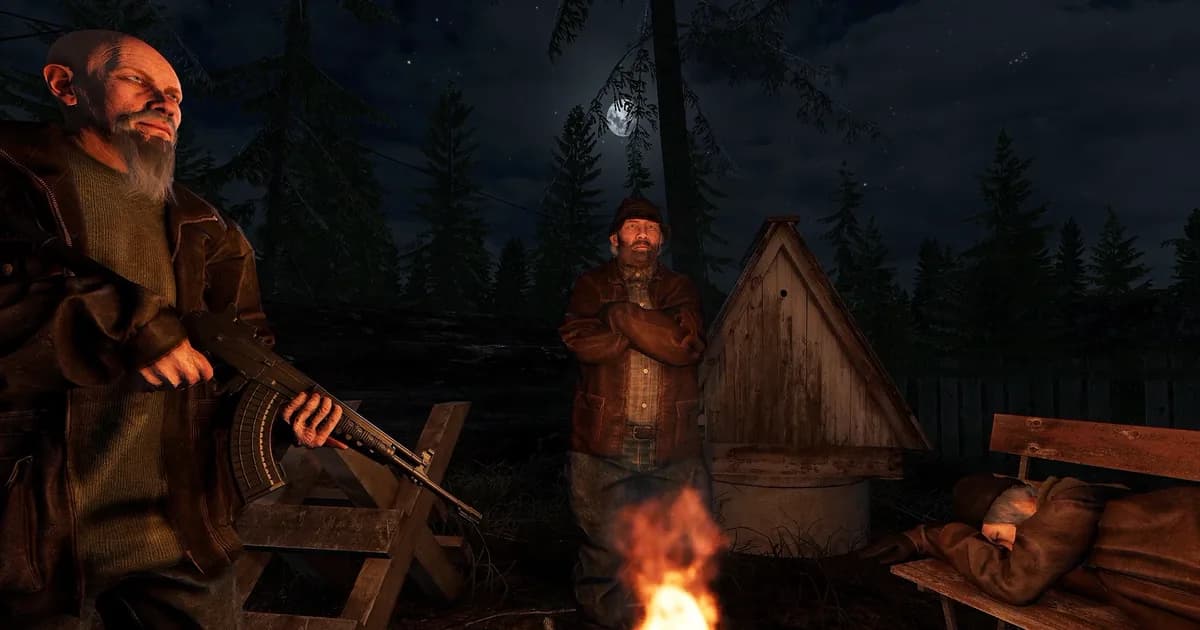
The survival loop in Road to Vostok is built around escalating zones. Area 05 functions as a base: NPC traders exchange gear for currency, crafting benches let players process raw materials, and the shelter system allows furniture placement and workstation installation. Players can customize their shelter across runs, which gives the progression a physical home rather than an abstract menu screen.
Area 05 functions as your base: NPC traders, crafting benches, and shelter customization before pushing into the Border Zone.
The Border Zone introduces factions. Bandits patrol the perimeter areas. Guards occupy checkpoints. Military units appear in higher-density sectors with heavier equipment and tighter patrol routes. The earlier Build 1 review described these patrols as mechanically consistent, with patterns that could be observed and exploited. Build 2 is now live with new AI systems, but its official changelog does not document how those systems change patrol routes. That earlier assessment is not a Build 2 mechanic guide.
Physics-based looting separates Road to Vostok from most genre contemporaries in a specific, felt way. Items in the environment exist as physical objects. Reaching into a crate and grabbing a rifle means physically manipulating the object in game space, not pressing a single "take all" button that abstracts the interaction into an inventory transaction. The looting process takes time and attention, which creates windows of vulnerability during raids that don't exist in games where looting is instantaneous.
The Tetris-style inventory grid compounds this. A rifle's shape occupies a specific grid footprint. A medical kit occupies a different one. A box of rounds occupies another. Loading out for a run requires solving a spatial puzzle about what fits alongside what, which maps directly to the decision of what to prioritize recovering. The decision to leave behind a moderately valuable item because it won't fit next to the equipment already committed to carrying has weight that pure weight-limit systems don't generate.
Note: Physics looting means items can be placed by accident and dropped in awkward positions, and the tutorial spends little time on how it feels. Expect the first runs to be clumsy before deciding whether the system works for you.
Day/night cycles simulate a full 24-hour environmental rhythm. Weather varies across sessions. Seasonal shifts change the visual and navigation conditions. Dynamic world events (airdrops, faction skirmishes, crash sites) provide non-scripted mid-session disruptions that keep the surface experience varied without relying on content volume that isn't there yet. At Early Access launch, these systems give Road to Vostok more environmental life than its map count alone would suggest.
Players interested in the permadeath and roguelite tension of Road to Vostok may also find value in All Hail the Orb and the best roguelike games of 2026 as reference for genre context. For a very different kind of PC survival game from the same 2026 window, the Romestead review covers how co-op changes the tension calculus completely.
The Permadeath Problem: and Why It Works
The Vostok zone is gated behind the Border Zone and requires gear, preparation, and patience to reach. When players do cross into it, the stakes shift. Death in Area 05 or the Border Zone means a respawn with a penalty. Death in Vostok means losing the character permanently: gear, progress, and identity all gone.
This is not a new mechanic. What Road to Vostok does with it is structural: the three-zone escalation means the permadeath zone is earned access rather than an immediate starting condition. Players who aren't ready for Vostok don't have to enter it. The pressure comes from the voluntary nature of the crossing: you chose to go, you knew the stakes, the tension is self-authored.
Where permadeath typically frustrates is when it's imposed before players have enough agency to make meaningful survival decisions. Road to Vostok's zone structure builds that agency first. Area 05 teaches the mechanics. The Border Zone tests them against real opposition. Vostok asks for an accounting. That's a reasonable instructional sequence. The earlier claim that Border Zone AI was less demanding was a Build 1 assessment; the official Build 2 post does not document the current difficulty change.
The Tetris-style inventory grid forces real decisions about what to carry: a rifle and med kit together leave little room for ammunition.
Road to Vostok Review Verdict: Who It Suits
The question for any Early Access review is whether the current build justifies the price for what it is now, not for what it promises to become. For one kind of player, Road to Vostok clearly does.
Who it suits: solo players who want extraction-shooter tension without other players. The three-zone climb, the permadeath crossing into Vostok, physics looting and the inventory grid are all in the game now, not on a roadmap, and at its list price it sits inside the best indie games under $20 range for hardcore survival fans.
Who should wait: anyone who needs co-op or PvP, which the game does not offer, and anyone who wants a finished map and item pool. The developer estimates two to four years in Early Access, Build 2's new AI systems are not fully documented, and one developer with 11,000 unread emails will answer slowly. At launch the Russian-language reviews were Mixed, a gap the developer has not explained.
Road to Vostok is not finished, and it does not pretend to be. What it has already is enough for the first group.
Frequently Asked Questions
Is Road to Vostok worth buying in Early Access right now? Yes, with caveats. The survival loop, permadeath zone, and physics looting are functional and deliver genuine challenge. Build 2 is now live with AI vs. AI combat, character variants, and new AI behaviors, but this review evaluates Build 1. Buyers comfortable with Early Access uncertainty will get a solid foundation; players wanting a polished final product should wait.
Is Road to Vostok singleplayer only? Road to Vostok is singleplayer-only. There is no co-op and no PvP. All faction encounters are with AI-controlled Bandits, Guards, and Military NPCs.
What is the Vostok zone? Vostok is the permadeath zone at the game's furthest point. Area 05 and the Border Zone allow respawning with a gear penalty. Vostok is different: any death there permanently deletes your character and everything on them.
When will Road to Vostok leave Early Access? The developer estimates a 2-4 year Early Access window with quarterly content updates. The full release is planned to include roughly double the current maps, traders, tasks, weapons, and items, plus modding support and shared shelter features.
Why are Russian-language reviews Mixed while English reviews are Very Positive? As of launch, Russian-language reviews sit at Mixed with 447 reviews. The developer has not publicly addressed the disparity. It may reflect localization quality, cultural expectations around the Finland-Russia setting, or community factors outside the English-speaking playerbase.
Related Reading
Starting Road to Vostok and not sure where to focus first? The Road to Vostok beginner guide covers the early-game zone structure, inventory priorities, and what the review covers at a high level.
- Mina the Hollower Review: Yacht Club's Gothic New World: a gothic action-adventure comparison.
- Luna Abyss Review: Bullet Hell in First-Person Horror: a first-person horror comparison.
- Romestead Review: Roman Survival That Earns the Raid: another survival review with raid pressure.
- CALX Preview: What the Free Demo Shows Before Launch: what the free demo of another 2026-27 action game shows before launch.
- Solarpunk Game Review: Floating Island Survival 2026: a quieter survival contrast.
- Cursemark Review: A Roguelite Built Around Rune Depth (2026): another systems-first roguelite review.
- No More Room in Hell 2 Beginner Guide: Perks and Loadouts: a survival-focused co-op shooter comparison.
References
- Road to Vostok on Steam
- Road to Vostok official Steam announcements: current SITREP posts and Build 2 status
- Road to Vostok Official Website
- Road to Vostok YouTube Channel
About the author

Systems & Economy Desk
GameBrief's byline for roguelikes, strategy and simulation. Reads patch notes, wiki tables and Steam stats and puts the numbers on the page.
- Roguelikes, strategy and simulation
- Builds, progression and economy
- Sources listed per article
Keep reading
Road to Vostok Beginner Guide: Zones, Loot, and First Runs
General · 9 min
Road to Vostok Nomads: Reputation, Spawns, and What Is Next
General · 6 min
Road to Vostok Build 2 Adds Nomads, AI Combat, and Maps
News · 5 min
shapez 2 1.0 Arrives April 23: Manufacture Mode and Mods
General · 3 min
SimplePlanes 2 Early Access Opens April 28: What's Changed
General · 3 min

Away From Life Early Access: Mixed Reviews Explained
General · 7 min
Sponsored
Disclaimer
This article is published for informational and entertainment purposes. It does not constitute professional financial, legal, or technical advice. Game performance, online services, patch schedules, and store listings change. Verify critical details (pricing, system requirements, regional availability) with publishers and storefronts before you buy. Affiliate links, where present, help support our editorial work and are labelled in our affiliate disclosure.
Comments
Loading comments…