
GuideRomestead
Romestead Professions: All 8 Starting Classes Ranked
Six starter kits are quick crafts and one is a minor trinket. The Scholar's scroll is the only kit worth choosing a profession for.
VerdictStart as a Scholar. The rest give you a quick craft or a small trinket plus a minor skill bump, so pick among them for taste, not power.
Of the eight Romestead professions, pick the Scholar. Its Scroll of the Novice is the one starting item that's both strong and slow to get any other way: crafting it takes a Leatherworker and Mercury. Six of the other kits are things you can craft in your first few minutes, the Lobber's is a minor trinket, and the skill bumps are what the community wiki calls "mostly negligible." So choose the Scholar for power, and any of the rest for the kind of first hour you want.
Sponsored

About the game
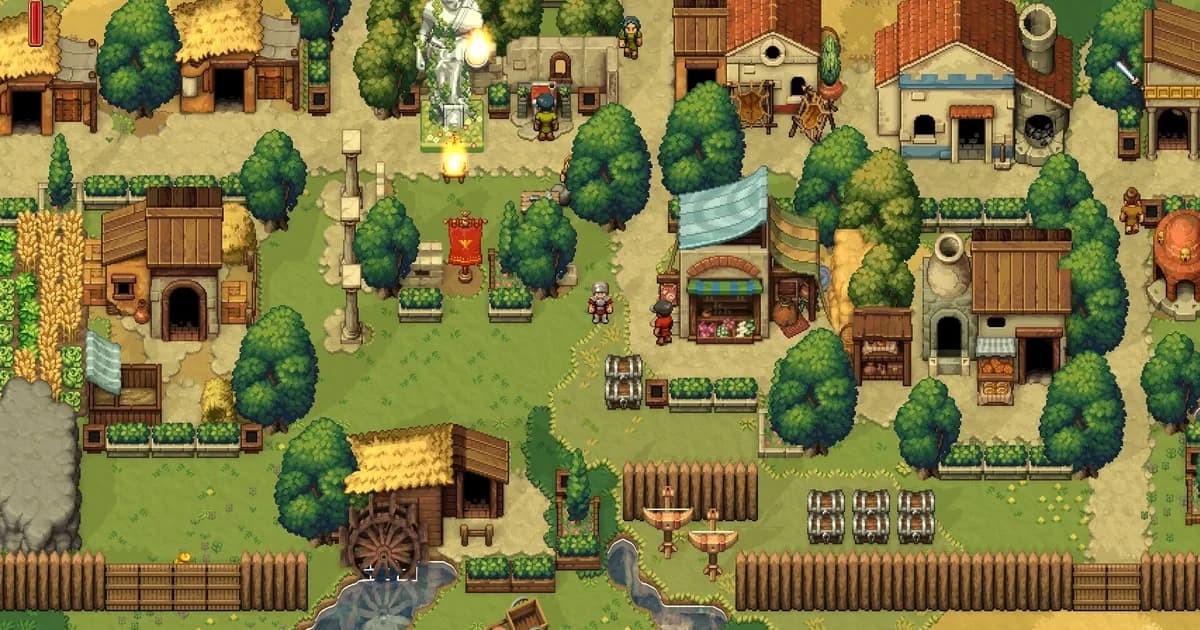
Romestead
Beartwigs · Three Friends
Updated 2026-10-19: We re-checked every kit against the wiki and the character-creation screen. The Scroll of the Novice's second attack is Stoneskin (an armor buff), not a charged blast; every profession except the Lobber also starts with Sandals; and the Workbench, Hasta and Wooden Shield are all hand crafts, so Mechanicus drops out of the top tier.
Sponsored

What every Romestead profession starts with
Everyone gets a Civilian Tunic, Sandals and five Cooked Small Game. The profession adds +5 to one skill and one item. The percentage is what that +5 is actually worth, from the wiki's per-level skill table.
| Profession | Skill (+5) | What +5 does | Starting item | Can you craft it early? |
|---|---|---|---|---|
| Scholar | Scrolls | +1.5% scroll damage | Scroll of the Novice | No: needs a Leatherworker and Mercury |
| Legionary | Spears | +1.5% spear damage | Flint Hasta (4-5 piercing, fast) | Yes, by hand |
| Gladiator | Swords | +1.5% sword damage | Flint Gladius (3-4 slashing, fast) | Yes, after the first quest |
| Phalanx | Shields | 2.5% less energy to block | Wooden Shield (block 20, 120 degrees) | Yes, by hand |
| Lobber | Throwing | +1.5% thrown damage | Wrist Wraps (+1 throwing attack power), no Sandals | Never: no recipe |
| Mechanicus | Construction | +4% build progress per hit | Workbench | Yes, by hand |
| Woodcutter | Woodcutting | +5% damage to trees | Flint Axe | Yes, after the first quest |
| Miner | Mining | +5% damage to rocks and veins | Flint Pickaxe | Yes, after the first quest |
The "first quest" is Acquiring Materials; once it's done, the Gladius, Axe and Pickaxe can be crafted straight from your inventory. Skills keep leveling from use whatever you picked, and leveling them also earns Favour points for passive talents, so no profession closes a door.
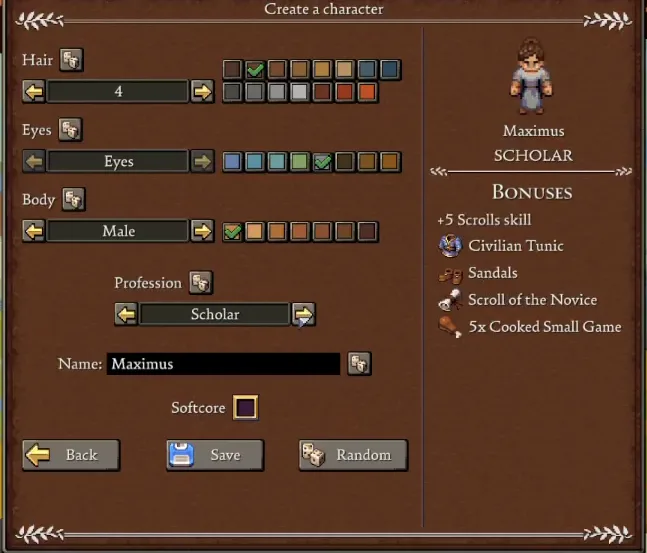 Screenshot: Solari (Archive), "Romestead: Every profession and their Benefits!" on YouTube, 0:29
S tier: Scholar
The Scroll of the Novice is an off-hand with two moves. Force Blast, the main attack, hits for 6-8 bludgeoning damage and costs 30 energy. The alt attack, Stoneskin, costs 70 energy and gives you +4 armor for 30 seconds. That's damage from range and a panic button in one slot, from minute one.
What makes it S tier is the recipe. Crafting your own takes 2 Leather at a Leatherworker, and the recipe is unlocked through Mercury, so a non-Scholar won't be holding one until the town has grown a bit. Players who've tried it are blunt. "Yea I've tried scholar and its insanely OP early," Potential-Alps-617 wrote in a r/Romestead thread about scrolls. "With bow you deal 1-2 dmg to guardian early, 7-10 with spell.. you 2 hit boar with quick spell casts."
The catch is energy. Ranged attacks spend the same pool you dodge with, and Flashy_Sound8021 frames it as the price of the power: "not beying able to spam dodge is a tradeoff and if you build properly not a issue at all if anything scrolls need a nerf." The scroll's numbers have moved before (version 0.25.1 swapped its old Cosmo Bolt for Force Blast and raised Stoneskin's cost from 40 to 70), so expect more tuning during Early Access.
GODEEPER: Ranged damage helps, but the nights are where runs end. Romestead Night Raid Defense Guide →
A tier: Legionary and Mechanicus
Legionary. The Flint Hasta is the hardest-hitting melee starter at 4-5 piercing, and it's fast. You can make one by hand from 4 Wood Sticks and 3 Flint Shards, so the Legionary saves you a craft rather than giving you something rare. We'd take it if you want to learn melee from the first swing and don't fancy managing energy for spells. Our weapons tier list covers where spears end up later (spoiler: not near the top).
Mechanicus. The Workbench is the station every building goes through, from the Altar up. It's also a hand craft (4 Wood Planks, 4 Wood Sticks), so what you really get is a few minutes back and +5 Construction, which adds 4% progress to each hammer hit. Take it if you want to lay out your town before you leave the clearing; skip it if you'd rather have a weapon.
Screenshot: Steam store page
B tier: Gladiator, Woodcutter, Miner and Phalanx
Gladiator. The Flint Gladius trades a point of damage against the Hasta (3-4 slashing) for a short-sword feel, and it's craftable after the first quest. Pick it because you like swords. Solari, whose one-minute video below walks through all eight kits, picks it for exactly that reason at about 0:40: "I like to go gladiator honestly," adding that "the combat's slow as far as getting your strength up," so he takes the sword bonus where he can.
Woodcutter and Miner. These two get the biggest raw bonus: +5 is worth 5% more damage to trees or rocks. The Flint Axe and Flint Pickaxe are both on the craft list once the first quest is done, though, so the head start fades fast. Take the Woodcutter if you plan to build big early; take the Miner only if stone is what's holding you up.
Phalanx. The Wooden Shield blocks 20 across a 120-degree arc, and +5 Shields makes each block cost 2.5% less energy. It's the defensive start, but the shield is a hand craft (4 Wood Planks, 2 Wood Sticks) and it's an off-hand, so you'll still be punching until you make a weapon. Fine for co-op tanks; we'd skip it solo.
Screenshot: Steam store page
C tier: Lobber
The Lobber is the odd one. Its Wrist Wraps (+1 throwing attack power) have no crafting recipe at all, so this is the only way to own a pair. But it's the one profession that doesn't start with Sandals, and a trinket worth +1 to thrown damage is a thin trade. Pick it only if you already know you want a throwing build and like the idea of the Colosseum wraps; everyone else should start elsewhere.
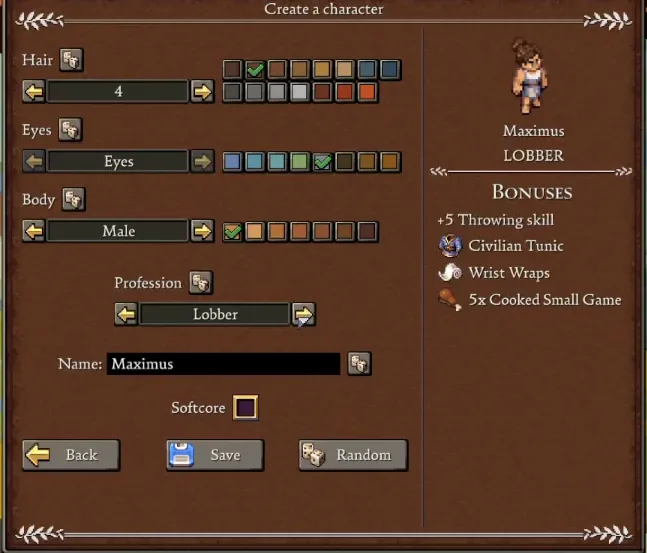 Screenshot: Solari (Archive), "Romestead: Every profession and their Benefits!" on YouTube, 0:28
Watch every kit in a minute
Solari's short clicks through the profession list on the character screen, so you can see each kit before you commit. The Lobber shows up at about 0:28, the Scholar at 0:29 and the Mechanicus at 0:38.
Mistakes to avoid
- Treating the profession as your class. It isn't one. Skills rise from use, so a Scholar who spends an evening chopping trees is a woodcutter by the end of it.
- Picking Mechanicus for the Workbench alone. It's eight pieces of wood. If you want the Workbench, gather them.
- Expecting the Lobber's kit to carry you. You start without Sandals and without a weapon; plan to craft a Hasta or Gladius early anyway.
- Ignoring energy as a Scholar. Force Blast and dodging share the pool. Cast, then keep enough in reserve to roll.
GODEEPER: Your citizens use the same skill logic you do, so a good profession pick for you is a good job pick for them. Romestead Villagers Guide: Recruit, Assign, Happiness →
Solari's video dates from July. Since then, the patch notes up to the October 6 hotfix haven't named a starting item; the Autumn Update (0.26.1) did add "new spells to some scrolls," but the wiki's Scroll of the Novice page, edited in October, still lists Force Blast and Stoneskin. We'll recheck the kits when the next roadmap update lands.
Related Reading
- Romestead Complete Guide Hub: every Romestead system in one place, from gods and bosses to building and biomes.
- Romestead Survival Tips Guide: the first-hour priorities that keep any profession alive through night one.
- Romestead God System Guide: All Deities: Mercury, Mars and the rest, and what worshipping each unlocks.
- Romestead Denarius Money Guide: how your early wood and stone turn into denarii.
- Romestead Biome Guide: All 4 EA Biomes: where each resource and threat lives.
- Romestead Buildings Guide: All Buildings & Build Order: what to put down first once the Workbench is placed.
- Romestead Bosses: All 5 Bosses and How to Beat Them: the fights your starting weapon eventually has to handle.
- Romestead Review: Roman Survival That Earns the Raid: our overall take on the Early Access build.
References
- Romestead on Steam: Early Access store page and patch notes from Beartwigs and Three Friends.
- Character creation (Romestead Wiki): every profession's skill bonus and starting items.
- Skills (Romestead Wiki): what each skill level is worth.
- Scroll of the Novice (Romestead Wiki): attacks, energy costs and recipe.
- Solari (Archive) on YouTube: the character screen for all eight professions.
Frequently Asked Questions
How many professions are in Romestead? Eight: Gladiator, Legionary, Lobber, Mechanicus, Miner, Phalanx, Scholar and Woodcutter. Each adds +5 to one skill and one starting item on top of a Civilian Tunic, Sandals and 5 Cooked Small Game. The Lobber is the exception: Wrist Wraps replace the Sandals.
What is the best profession in Romestead for beginners? Scholar. Its Scroll of the Novice is a ranged attack you'd otherwise need a Leatherworker and Mercury to craft. Six of the other starting items can be crafted early, and the Lobber's Wrist Wraps are only a +1 throwing trinket.
Does your profession lock your playstyle in Romestead? No. Skills level by using the matching weapon or tool, so any character can raise any skill. The profession's +5 is worth between 1.5% and 5% depending on the skill, and the community wiki calls the skill bonuses mostly negligible.
Is Scholar or Mechanicus better in Romestead? Scholar. The Mechanicus Workbench is crafted by hand from 4 Wood Planks and 4 Wood Sticks, and its +5 Construction adds 4% progress per hit. The Scholar's scroll takes a Leatherworker and Mercury before you can make one.
Was this guide helpful?
About the author

News Desk
GameBrief's byline for industry news, patch notes, studio announcements and esports results. Tight sentences, dated facts.
- News, patch notes and early access
- Industry and esports results
- Sources listed per article
Keep reading

Romestead Tips: 12 Things to Know Before Your First Night
General · 8 min
Romestead Bosses: All 5 Bosses and How to Beat Them
General · 9 min
Romestead Roadmap 2026: What Beartwigs Has Confirmed
General · 7 min
Romestead Buildings Guide: All 25 Buildings & Build Order
General · 17 min
Romestead Villagers Guide: Recruit, Assign & Keep Happy
General · 9 min
Romestead Iron: Where to Find It and How to Farm It
Guides · 8 min
Sponsored
Disclaimer
This article is published for informational and entertainment purposes. It does not constitute professional financial, legal, or technical advice. Game performance, online services, patch schedules, and store listings change. Verify critical details (pricing, system requirements, regional availability) with publishers and storefronts before you buy. Affiliate links, where present, help support our editorial work and are labelled in our affiliate disclosure.
Comments
Loading comments…