
GuideRomestead
Romestead Night Raid Guide: Defend Against the Fallen
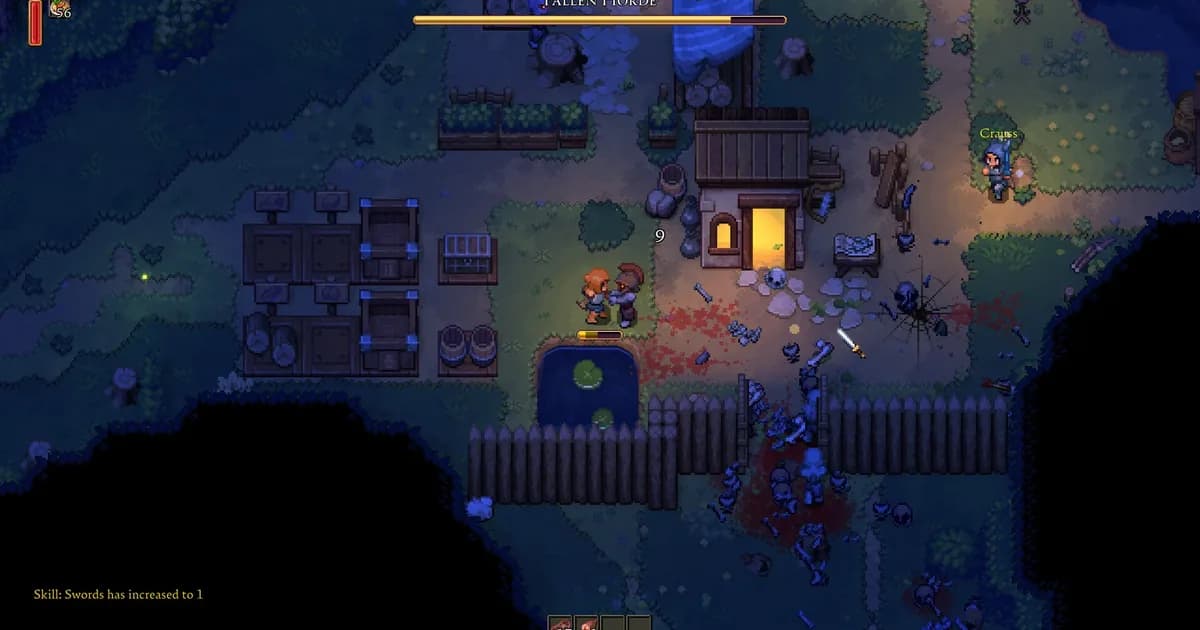
Most Romestead night raid guides focus on walls. That's the right instinct with the wrong priority order. The fallen don't queue up at your gate and wait for an opening. They go for your Blacksmith.
About the game
Romestead
Updated 2026-10-05: The linked biome summary now identifies the Lumber Yard as usable in Forest and Volcanic but not Desert.
That changes how you should think about defense from day one.
TL;DR: In Romestead night raids, the fallen target production buildings rather than perimeter walls. Place torches around your Blacksmith and Farmstead before nightfall: the fallen don't enter lit areas effectively. Walls fill gaps, but light coverage is your actual first line of defense. Raid intensity scales as you progress, so mid-game raids require upgrading your approach, not just adding more of the same.
Step-by-Step: Defending the first night raid
1. Identify the targets: protect the Blacksmith first and the Farmstead second because the fallen prioritize production buildings.
2. Ring the Blacksmith with torches: establish light coverage before spending the remaining lumber on walls.
3. Light the Farmstead: cover the second key production building before extending the outer perimeter.
4. Fill the approach gaps: build wall sections along the routes the fallen use to reach those buildings.
5. Assign raid roles: have one player maintain torches and walls while another fights; larger groups can assign Scorpio and production defenders.
How do Romestead night raids work? (quick answer)
At nightfall, the fallen emerge and attack your settlement. These are reanimated Roman citizens, and they specifically target your production buildings. The Blacksmith is the primary target because it's the building that makes everything else function.
Your defensive job is keeping the fallen away from specific buildings inside your perimeter. That distinction changes the build order significantly.
Torches are more effective than walls early on. The fallen struggle to enter well-lit areas. A torch placed near your Blacksmith does more defensive work in the first three nights than a partially complete wall on the wrong side of your settlement.
What the fallen actually target
The fallen in Romestead night raids aren't random. They navigate toward your production buildings, and the Blacksmith is consistently the highest-priority target. This matters because:
- A Blacksmith sitting in an unlit area behind an incomplete perimeter is almost certain to take damage
- Walls on the wrong side of your settlement don't help if the fallen route around them toward the Blacksmith
- Farmsteads are secondary targets; protecting food production matters too, though the Blacksmith takes priority
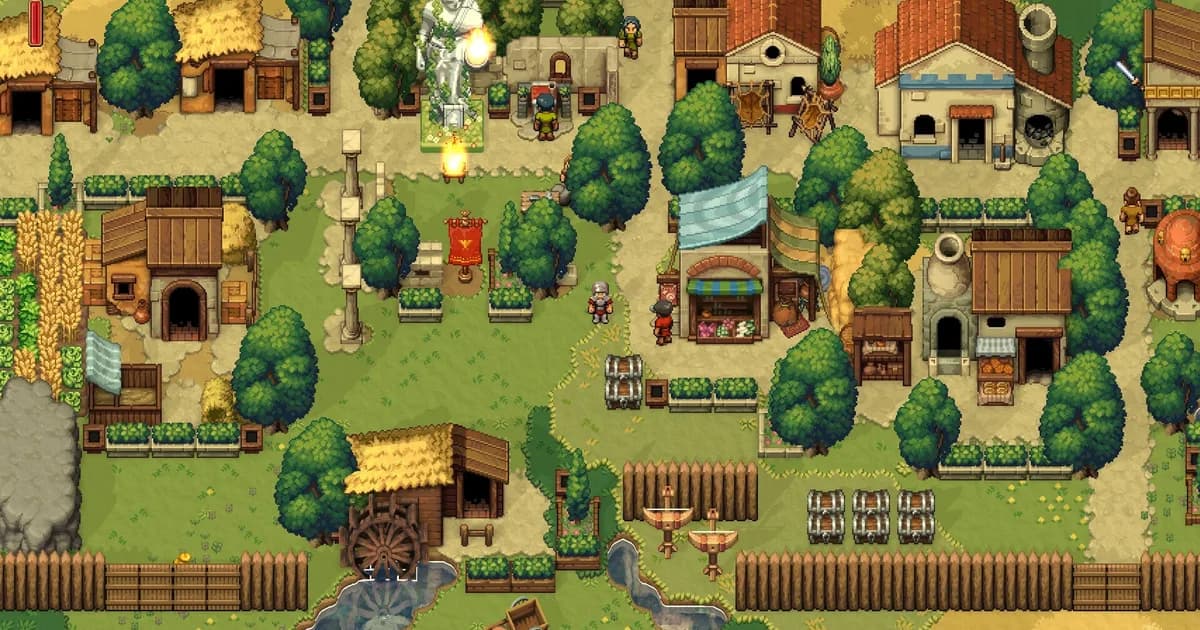
The practical implication: map your Blacksmith and Farmstead positions before you plan your defenses. Your defensive layout should be oriented around those buildings, not around your settlement's outer edge.
GODEEPER: Understanding which buildings to protect is easier with the god system's tech tree in view. Romestead God System Guide: All 7 Roman Gods Explained →
Torch placement: your actual first line of defense
The standard Romestead night raid setup for new players is to build walls first and torches later. This is the wrong order.
Torches placed around a production building are the most cost-effective defense per resource in the first few nights. The fallen don't enter lit zones effectively. A ring of torches around your Blacksmith creates a defensive barrier that costs less lumber than a full wall section and activates faster.
The priority order before your first night:
- Place torches in a ring around your Blacksmith
- Place torches around your Farmstead
- Build wall sections to fill the unlit approach gaps between torched areas
- Extend the perimeter from there using remaining lumber
You don't need a complete four-sided wall to survive the first night. You need lit perimeters around your key buildings and wall coverage on the most direct approach routes. Prioritize light, fill gaps with walls.
Wall strategy: where to build them
Walls are essential in Romestead night raids, but targeted placement beats spreading them everywhere. A few sections on the main approach routes to your Blacksmith matter more than a half-complete perimeter around your whole settlement.
Building tips:
- Build walls along the routes the fallen use to approach your key buildings, not just around the settlement edge
- Wall sections behind or beside your Blacksmith matter more than walls far from it
- Incomplete perimeters create routing problems: the fallen will find the gap and use it to reach your production buildings faster than if you'd just lit the area instead
The rock-throwing mechanic adds a mobile defense layer. Rocks (and other physical resources you're carrying) can be thrown at the fallen during raids. The Romestead resource system treats carried objects as physical items, and throwing them is a viable combat option when melee range is too risky.
Scaling your defense as raids get harder
Raid intensity in Romestead night raids scales as you progress. The fallen you face in week two of a run aren't the same as the fallen on night one. What works early won't hold indefinitely.
Mid-game defense requires two things the early-game setup doesn't:
- More torch coverage as your settlement expands (new buildings mean new targets)
- Better walls on the approach routes you established early (fallen in later waves navigate more aggressively)
Mid-game raids require extending your torch line as your settlement grows, not just adding more walls.
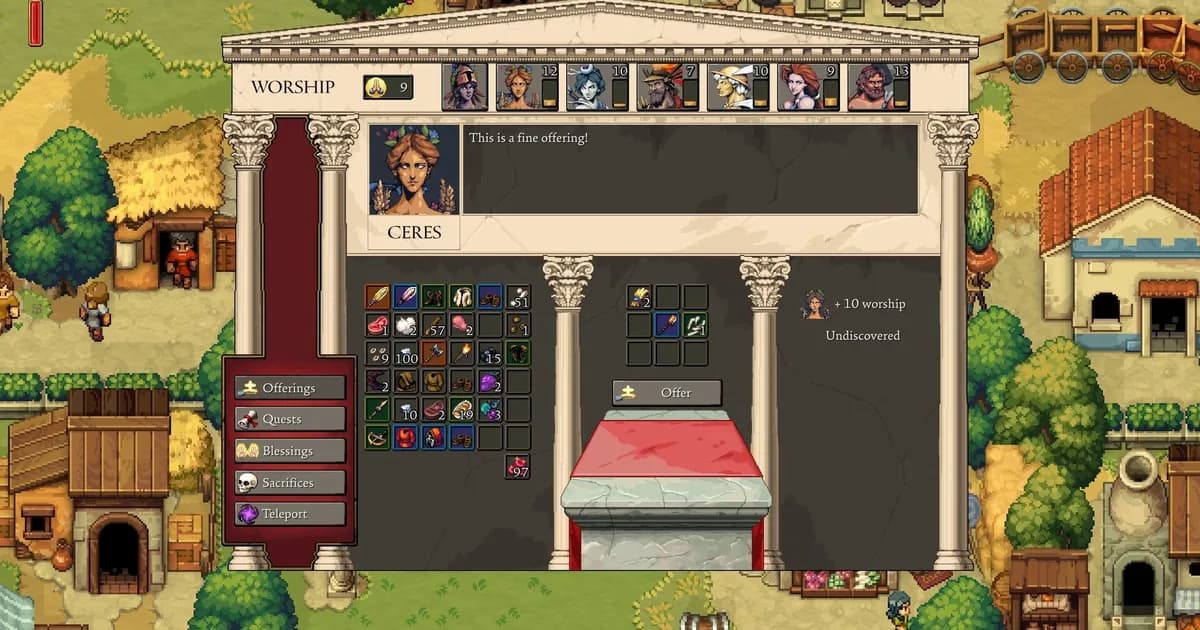
The god system plays into defense scaling. Mars' branch includes automatic Scorpios (ballista-type siege weapons) that provide automated raid defense without requiring a player to actively fight. In co-op sessions, one player covering the Scorpios while another maintains building operations gives you much more stability than two players trying to fight the fallen manually.
Co-op defense roles
With 1-8 players, Romestead night raids divide naturally into roles that make the settlement noticeably easier to defend. Solo play requires you to manage both building tasks during the day and active combat at night, which creates a real juggling problem by week two.
Two-player minimum split:
- One player maintains torch lines and wall repairs during raids
- One player actively fights the fallen as they breach or approach
At larger group sizes (4-8 players), add:
- One dedicated god-system manager who controls which Scorpios are active
- Production building defenders who stay near the Blacksmith and Farmstead specifically
Difficulty scales down with more players but the fallen also come in larger waves. More players don't make the raids easier so much as they make the raid manageable to coordinate.
Torch placement determines which buildings the fallen target. A closed torch ring around the Blacksmith redirects attackers to less critical perimeter points.
GODEEPER: Splitting Scorpio duty from building upkeep is one of several roles worth assigning ahead of a raid. Romestead Co-op Guide: 1 to 8 Players, Roles, Scaling →
Key takeaways
- Romestead night raids target production buildings, not perimeter walls: protect Blacksmith and Farmstead first
- Torches before walls: place light around key buildings before nightfall, fill gaps with walls after
- The fallen don't enter lit areas effectively: a torch ring around your Blacksmith is your most cost-effective early defense
- Raid intensity scales with progress: mid-game raids require expanded torch coverage and better wall positioning
- Rocks and carried physical resources can be thrown as improvised weapons during raids
- Mars' Scorpio ballista automates ranged defense; worth prioritizing in the god system if raids are your main bottleneck
Related Reading
- Romestead God System Guide: All 7 Roman Gods Explained: The tech tree and blessing system that unlocks Scorpio ballistas and Vulcan's defense upgrades.
- Romestead Survival Tips: 12 Things to Know Before Your First Night: The broader survival context that puts night raids in perspective alongside resource management and god offerings.
- Romestead Review: Roman Survival That Earns the Raid: Full EA review with notes on how the raid design holds up across a full run.
- Romestead Complete Guide Hub: the wider reference for biomes, bosses, buildings, and progression.
- Romestead Co-op Guide: 1 to 8 Players, Roles, Scaling: Romestead co-op guide: role split for 2-8 players, wave scaling, Blacksmith defense priority, Altar Level 2 teleportation unlock,....
- Romestead Biome Guide: All 4 EA Biomes, Bosses, Resources: Romestead biome guide: all 4 EA biomes explained. Boss HP, gear tiers, building restrictions (Lumber Yard Forest and Volcanic, not Desert), and god....
- Romestead Research Papers: How to Get Them Fast 2026: Romestead research papers drop from volcano dungeon chests. Here is where to farm them, the University build cost,....
References
- Romestead on Steam
- Romestead Devlog I (official Beartwigs): Settlement defense systems and fallen behavior
- Romestead Wiki: Fallen: Fallen citizen enemy type and behavior patterns
- r/Romestead community: Community defense tips and early-access raid reports
Frequently Asked Questions
How do you defend against night raids in Romestead? Torches first, walls second. The fallen don't enter lit areas effectively, so light coverage around your Blacksmith and Farmstead matters more than complete perimeter walls. Place torches first, build walls on the approach gaps.
What do the fallen target in Romestead raids? Production buildings, with the Blacksmith as the primary target. Position your defenses around your key buildings, not just along your settlement's outer edge.
Do torches stop the fallen in Romestead? Torches significantly reduce fallen effectiveness in lit areas. They don't stop raids entirely but they make the fallen route around lit zones, which is often enough to protect a key building for the night.
How many players help with raids in Romestead? 1-8 players with difficulty scaling. Two players cover builder and fighter roles naturally. Larger groups add Scorpio management and dedicated production building defenders.
Do Romestead raids get harder as you progress? Yes. Raid intensity scales as you progress, requiring expanded defenses and more torch coverage as your settlement grows.
Can you throw rocks at the fallen in Romestead? Yes. Physical resources you're carrying can be thrown at the fallen during raids. It's a meaningful combat option when you don't have a full combat build online yet.
What buildings should I protect first in Romestead? Blacksmith first, Farmstead second. The fallen prioritize production buildings, and losing your Blacksmith during a raid stalls your gear and crafting progression.
Was this guide helpful?
About the author

Action & Design Desk
GameBrief's byline for platformers, horror and action games. Dry, short paragraphs, strong opinions about tutorials and boss design.
- Action, platformers and horror
- Tutorials, onboarding, boss design
- Sources listed per article
Keep reading
Romestead Gods: All 7 Deities & Who to Worship First
General · 9 min
Romestead Review: Roman Survival That Earns the Raid
Reviews · 9 min
Romestead Biome Guide: All 4 EA Biomes, Progression 2026
General · 12 min
Romestead Wiki 2026: All Biomes, Gods, Raids and Co-op Guide
General · 22 min
Romestead Denarius Guide: How to Make Money Fast 2026
General · 9 min
Romestead Research Papers: How to Get Them Fast 2026
General · 8 min
Game deals · affiliate links

Disclaimer
This article is published for informational and entertainment purposes. It does not constitute professional financial, legal, or technical advice. Game performance, online services, patch schedules, and store listings change. Verify critical details (pricing, system requirements, regional availability) with publishers and storefronts before you buy. Affiliate links, where present, help support our editorial work and are labelled in our affiliate disclosure.
Comments
Loading comments…