
GuideRomestead
Romestead Tips: 12 Things to Know Before Your First Night
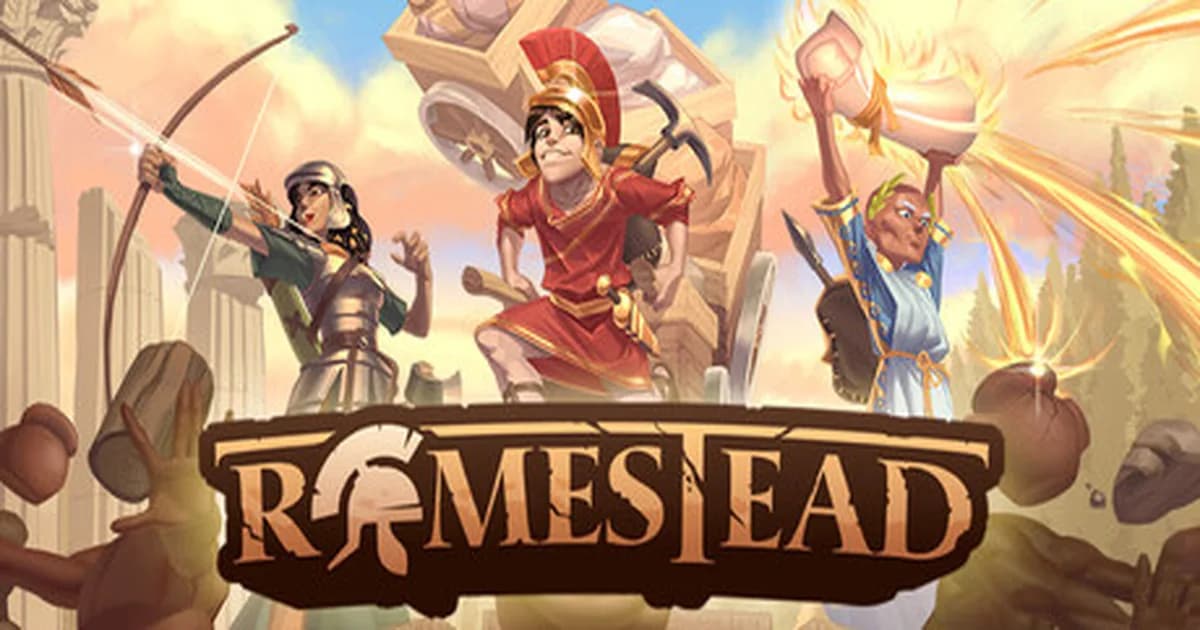
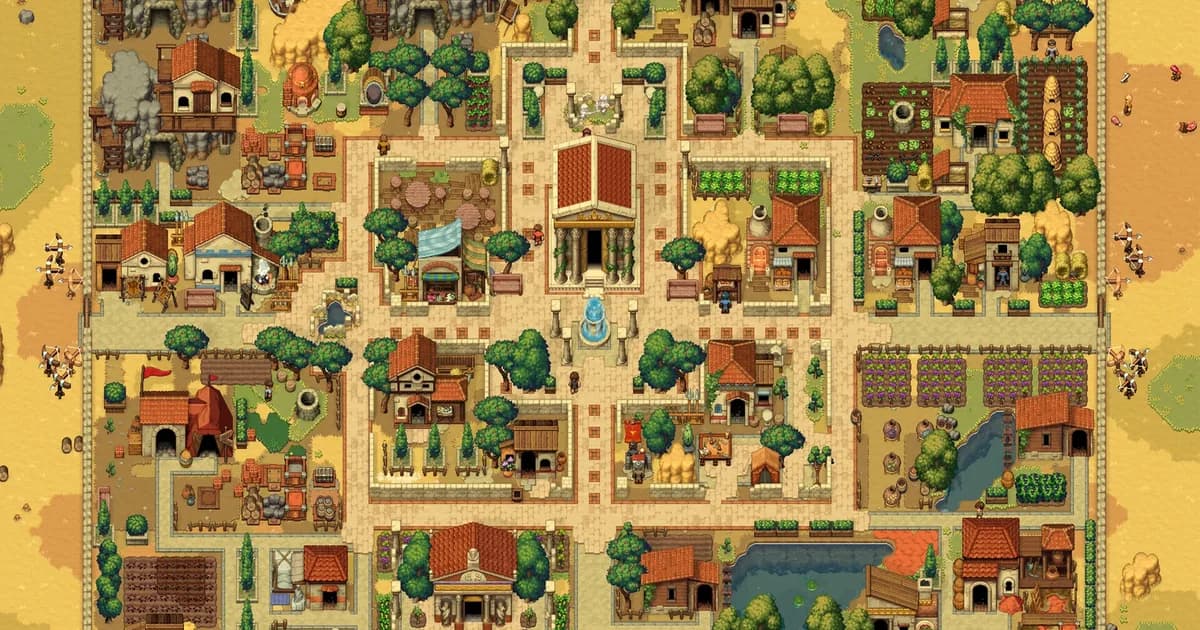
Romestead tips: here's what the game doesn't spell out. Beartwigs hit 250,000 wishlists before the May 25 EA launch, and a lot of those players came in through the demo. The demo had a specific quirk: it felt more like a city builder than the actual game. The developer caught this before launch and changed the store artwork to better show the survival and adventure side.
Sponsored

About the game
Romestead
Updated 2026-10-05: The Lumber Yard can be placed in Forest and Volcanic but not Desert, so the linked biome summary now reflects the current restriction.
That confusion matters for tips, because if you approach Romestead like a settlement sim first, you'll be undefended when the undead show up.
TL;DR: Romestead is a Roman survival builder where the night brings undead raids. Physical resources (lumber, rocks) are actual objects you carry or cart; stockpiling everything in your inventory doesn't work at scale. Restore Roman gods via offerings to unlock tech. Lumber mills run faster when surrounded by more trees. Play 1-8 players with scaled difficulty.
Sponsored

Step-by-Step: Preparing for your first night
1. Gather physical resources: collect lumber and rocks, then place storage near the work area instead of carrying every item back to the settlement.
2. Place the lumber mill in a forest: nearby trees improve its processing speed, and trees planted after placement also count.
3. Build torches before walls: light the core buildings first, then use remaining lumber to fill defensive gaps.
4. Assign the group gap: in co-op, put one player on building and torches while others gather resources and prepare for combat.
5. Start the offering loop: restore a god through offerings, choosing Mars for raid pressure, Ceres for food pressure, or Minerva for crafting progression.
What is Romestead? (quick answer)
Post-apocalyptic Rome where the gods have gone silent and the dead walk at night. You build a settlement, recruit artisans, restore divine favor through offerings, and defend your people through each night. Developer Beartwigs (published by Three Friends) launched it in Early Access May 25, 2026, estimated 1-2 years before full release. The game supports 1-8 players with online and LAN co-op.
Romestead tips: key facts before you start
- Developer: Beartwigs, publisher: Three Friends
- EA launch: May 25, 2026 (~1-2 years until 1.0)
- 1-8 players online or LAN co-op, difficulty scales with player count
- Physical resources: lumber and rocks exist as objects in the world, not abstracted inventory numbers
- Undead appear at night (settlement defense is not optional)
- Restoring gods via offerings unlocks tech trees and passive buffs
- Lumber mill speed is determined by nearby trees: placement and planting matter
- Role specialization available: combat, magic, farming, building, ranged, exploration
1. Physical resources work differently here
The single biggest adjustment coming from other survival games is that lumber and rocks aren't just numbers in your inventory. They're physical objects. A cut log has to actually be carried to where you need it, or put on a cart and transported.
This has two practical consequences. First, carts aren't optional; build one early. Hauling material by hand from your logging area to your construction site will cost you hours that could go to actual building. Second, don't try to inventory-fill before starting a build. Start the build near the resources, then work outward.
The throw mechanic also matters more than it looks. Rocks you carry can be thrown defensively in a pinch. Don't dismiss the physicality as a visual quirk; it's load-bearing game design.
2. Torches before walls
Most new players build walls first on night one. The better order is torches first, then walls.
Undead are drawn to darkness and deterred by light. A ring of torches around your settlement's core structures does more immediate work than a half-finished wall circuit. Once torches are up and your critical buildings are lit, fill the perimeter gaps with walls using remaining lumber. Don't try to fully wall the entire settlement on day one unless you have enough material pre-staged.
In co-op, one player can be running torch placements while another handles wall sections. That division of labor beats both players trying to complete walls before sundown.
3. Place your lumber mill in a forest, not a clearing
The lumber mill's processing speed directly scales with how many trees are nearby. Trees present at the time you drop the building set the base speed. But new trees planted around the mill after placement also contribute, and this is confirmed by community testing, and the developer's patch notes mention tree proximity as a mill speed factor.
Find a dense section of forest and build your mill inside it. If you've already placed the mill somewhere bad, start planting trees in a ring around it. The improvement isn't instant, but it accumulates. Don't clear every tree near the mill. Leave a buffer zone and harvest farther out.
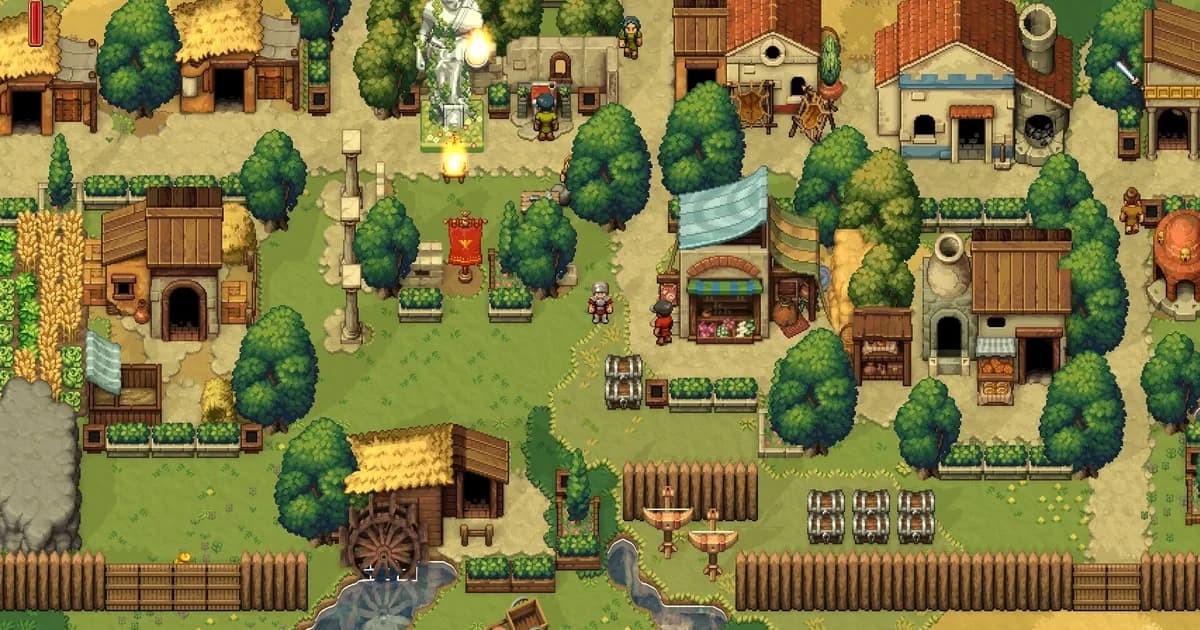
Lumber mill sited inside the forest. Trees on all sides provide a processing speed bonus. Don't clear the canopy around it: harvest farther out and leave the nearby trees intact.
GODEEPER: Romestead launched alongside Solarpunk, another co-op survival builder with a very different tone. Solarpunk Review 2026 →
4. Divine offerings: which god to prioritize
There are multiple Roman gods you can restore through offerings at their shrines. Each god governs a different domain. Minerva covers crafting and technology upgrades. Mars improves your combat effectiveness against the undead. Ceres affects food and agricultural output.
The right priority depends on what's killing your run. If you're dying to undead raids, Mars first. If your settlement starves before raids are a problem, Ceres. Most players who have no survival experience in this type of game will benefit most from Mars early, because the combat night is what ends runs. Minerva is a strong second because better crafting makes every other system easier.
The offerings themselves require materials you'd be gathering anyway. Nothing exotic is gating your first shrine restoration. Don't wait until you've "set up base" to start the offering loop.
5. Match your role to the group gap
Romestead has six distinct playstyles: combat, ranged, magic, farming, building, and exploration. In solo, you'll necessarily juggle several. In co-op, communication about who is covering what matters from session one.
The most common mismatch is everyone picking combat-adjacent roles because the undead are scary, then nobody builds defenses fast enough. Assign one player to be the dedicated builder for at least the first two days. They handle structures and torches; everyone else handles resource gathering and eventual combat training.
Exploration characters are undervalued in early EA. The handcrafted dungeons and points of interest contain resources and items that accelerate your settlement faster than grinding base materials. Getting an explorer out early pays off.
6. Recruit Carpenters before you need buildings
The Carpenter NPC helps you complete buildings faster. Recruit them before you start a building-heavy day, not during one. Recruiting in general is worth doing early and often: our Romestead villagers guide covers where lost Romans shelter and how Trait-matched assignments keep the whole settlement productive.
Artisan NPCs generally improve every system they're attached to. The early-game trap is building up a stockpile of materials before placing artisans, thinking you'll do it "properly" later. The artisan benefit compounds. A Carpenter present from day two is worth significantly more than one recruited on day five when your build queue is already behind.
A Carpenter working on settlement construction. Recruit them before the build queue grows, not after. The benefit compounds across all active builds.
GODEEPER: For another Roman-adjacent survival game with deep progression, Lost Castle 2 launched as 1.0 on June 11. Lost Castle 2 Review 2026 →
7. Trade routes are a mid-game multiplier
Romestead has a trade system between settlements. The idea is specialized towns: one farming settlement, one materials town, one crafting hub, goods routed between them.
Don't try to build a self-sufficient single settlement. The game is designed around the trade network. By mid-game, a farming town that feeds a combat-ready production town is dramatically more efficient than one settlement trying to do everything.
The early game doesn't make this obvious because you're just trying to survive the nights. But plan your second settlement with a specialization in mind when you expand.
8. Inventory vs. storage matters
Carrying capacity is limited and physical. Your personal inventory fills fast if you're trying to collect everything. Build storage near your active work areas, not just at your base.
The typical mistake: carrying 20 items back to base, depositing them, walking back to the resource site. Better: place a storage crate at the resource site, fill it, transport the full crate to base with a cart, empty it there. This is especially relevant for stone and ore, which are heavy and abundant.
Frequently Asked Questions
How do you survive the first night in Romestead? Torches first, walls second. Light coverage around key buildings deters undead more effectively than incomplete walls. Get a torch ring around your core structures before sundown, then fill perimeter gaps with walls using leftover lumber.
How does the lumber mill work in Romestead? Speed scales with nearby trees, including trees planted after placement. Build inside a forest or plant trees in a ring around an existing mill. Don't clear the forest immediately around it; harvest farther out.
What do divine offerings do in Romestead? Offerings at god shrines restore divine favor and unlock tech tiers and passive buffs. Mars first if raids are your bottleneck, Ceres if food is the problem, Minerva for crafting progression generally.
Is Romestead good for solo play? Yes, difficulty scales down for fewer players. Solo is viable but night defense is noticeably smoother with 2+. The main co-op advantage is role specialization: builder + fighter is much cleaner than one player handling both.
Can you play Romestead on Steam Deck? No official Deck verification at EA launch. The game has controller support. Community reports suggest it runs but without official confirmation, performance is unverified.
How many players can play Romestead co-op? 1-8 players, online or LAN co-op. Difficulty scales with player count. Steam Cloud supported.
What is the Romestead Early Access price? Check the Steam page for current pricing; Beartwigs has said the price will increase before 1.0. EA period is estimated at 1-2 years from May 2026.
Related Reading
- Romestead Early Access Review 2026: The full review covering what Romestead gets right and where the EA build still has gaps.
- Solarpunk Review 2026: Another co-op survival builder from the same launch window, very different tone: cozy floating islands versus undead Roman ruins.
- Lost Castle 2 Review 2026: 1.0 release of the 2D beat-'em-up roguelite that shares the "build and fight" loop with Romestead's combat layer.
- Romestead Co-op Guide: 1 to 8 Players, Roles, Scaling: Romestead co-op guide: role split for 2-8 players, wave scaling, Blacksmith defense priority, Altar Level 2 teleportation unlock,....
- Romestead Biome Guide: All 4 EA Biomes, Bosses, Resources: Romestead biome guide: all 4 EA biomes explained. Boss HP, gear tiers, building restrictions (Lumber Yard Forest and Volcanic, not Desert), and god....
- Romestead God System Guide: All 7 Roman Gods Explained: Romestead god system explained: all 7 Roman gods, two worship mechanics, what each deity unlocks, and which god....
- Romestead Professions: All 8 Starting Classes Ranked: all 8 starting professions ranked, what each gives at creation, and why Scholar and Mechanicus are the best first picks.
- Romestead Bosses: All 5 Bosses and How to Beat Them: all 5 bosses and the prep that clears each, from the Guardian of Minerva to the Talos Prototype.
References
- Romestead on Steam: Beartwigs / Three Friends, Early Access May 25, 2026
- Romestead Steam News: Early Access Approaches: Developer post confirming EA mechanics, artisan features, Volcanic biome
- r/Romestead: Community reports on lumber mill behavior and first-night strategy
Was this guide helpful?
About the author

Systems & Economy Desk
GameBrief's byline for roguelikes, strategy and simulation. Reads patch notes, wiki tables and Steam stats and puts the numbers on the page.
- Roguelikes, strategy and simulation
- Builds, progression and economy
- Sources listed per article
Keep reading
Romestead Professions: All 8 Starting Classes Ranked
General · 9 min
Romestead Bosses: All 5 Bosses and How to Beat Them
General · 9 min
Romestead Roadmap 2026: What Beartwigs Has Confirmed
General · 7 min
Romestead Buildings Guide: All 25 Buildings & Build Order
General · 17 min
Romestead Villagers Guide: Recruit, Assign & Keep Happy
General · 9 min
Romestead Iron: Where to Find It and How to Farm It
Guides · 8 min
Sponsored
Disclaimer
This article is published for informational and entertainment purposes. It does not constitute professional financial, legal, or technical advice. Game performance, online services, patch schedules, and store listings change. Verify critical details (pricing, system requirements, regional availability) with publishers and storefronts before you buy. Affiliate links, where present, help support our editorial work and are labelled in our affiliate disclosure.
Comments
Loading comments…