
GuideRomestead
Romestead Biome Guide: All 4 EA Biomes, Progression 2026
This Romestead biome guide covers all four Early Access biomes in progression order, with the specifics most guides skip. They aren't just reskins with harder enemies: each one introduces a new ore tier, gates specific buildings, has distinct boss fights with confirmed HP values and drops, and pairs with a specific god investment that amplifies what that biome does best.
Sponsored

About the game
Romestead
TL;DR: Romestead has 4 biomes in EA: Plains (Guardian of Minerva, 225 HP, unlocks Blacksmith), Forest (Lumberyard hub, Bronze tier), Desert (Satyr-dominated, Cyclops boss, Tectonic armor), and Volcanic (hardest enemies, best citizen stats, Blacksmith boost, Great Phoenix of Arabia 1,200 HP + Talos Prototype 1,800 HP, Firescale armor). Lumberyards work in Forest and Volcanic, but not Desert. Blacksmith in Volcanic gets a permanent lit furnace and production boost. One more biome, still unnamed, is teased for a later winter release.
Sponsored

Romestead biome guide: how progression works (quick answer)
Biome progression is linear in Romestead. You start in the Plains, defeat the biome boss, unlock the next crafting tier, and move into the next biome with your settlement intact. You don't leave your original settlement behind; you expand into new biomes as you unlock access to them.
The Plains and Desert contain the clearest progression bosses, but the Forest-to-Desert transition is gear-gated rather than a dedicated Forest boss kill. The boss fight and gear loops are still connected: boss drops and ore unlock the next armor tier, which in turn requires a higher Blacksmith level and further god investment. Think of the route as boss or barricade, new recipe, god upgrade, next biome, not as a boss in every biome.
Certain buildings are biome-restricted. This isn't flavor; it actively shapes what production infrastructure you can take with you as you progress. Knowing the restrictions before you commit to a build layout matters more than most guides explain.
Updated 2026-10-05: The live Early Access build is now 0.26.2_3, with Mundus Cerialis added after the 0.26.1_6 hotfix line.
Romestead status: September 2026
The current Early Access build is 0.26.2_3. The October 1 official patch notes add the Mundus Cerialis seasonal event, four unnamed equipment items, one unnamed boss fight, and a new enemy variant. The September 4 0.26.1_6 hotfix fixed Steam Deck dialogue positioning, localization, and the Deposit All interaction. Beartwigs also announced that Romestead has passed 500,000 players and that the next major update is planned to add a new biome, enemies, equipment, treasures, buildings, and bosses, but no date or biome name is confirmed.
The Autumn Update changed more than the biome count conversation. It added controller and Steam Input support, more than 20 unique dungeons, 70-plus challenge rooms, new weapons, a repair job, a network indicator, and new rooms and traps. New dungeons require a new world, so an existing settlement can remain playable while missing some of the update's new content. Treat the four biomes below as the current playable map, not as a promise that the next biome is already available.
The Romestead updates tracker is the right place to check whether a later patch has moved one of these boundaries; this guide keeps its biome count tied to the current playable build.
Step-by-Step: Progressing Through All 4 Biomes
1. Clear the Plains and defeat the Guardian of Minerva: track her nest via the statue shadows around the Plains, break her egg to trigger the fight, and her death unlocks the Blacksmith for all future metalworking.
2. Build toward Bronze tier in the Forest: mine Tin alongside the Copper you already have, reach Blacksmith Level 2, and set up your Lumberyards here since the Desert won't allow them.
3. Push past the Satyr barricade into the Desert: fight through the fortified Satyr camps beyond it, defeat the Cyclops (10,000 HP) inside the Eye dungeon via the Virgil's Poem quest, and use the Cyclops Shards to craft Tectonic Armor at Blacksmith Level 5.
4. Enter the Volcanic biome with Tectonic gear: mine Iron near the dungeon entrances, defeat the Great Phoenix of Arabia (1,200 HP) and Talos Prototype (1,800 HP), and craft Firescale Armor once you have Iron Nails, Ember Cloth, and Cured Hide.
Plains: starting biome and the Guardian of Minerva
The Plains is where every settlement begins. Copper ore is the native resource and the starting tier for all metalwork. Citizens here have the lowest base stats of any biome in the game; the harder the biome, the higher the stats of recruitable citizens you'll find.
The Guardian of Minerva is the Plains boss. She's a large owl-type creature with 225 HP and Nature-element attacks including Dive Bomb, Charged Jump, Shockwave, and Lightning. You find her by tracking the shadows from statues scattered around the Plains, which point toward her nest. Breaking her egg triggers the encounter.
Her death is the gating event for the entire crafting tree. The Blacksmith unlocks only after completing "The Giant Owl" quest (the Guardian of Minerva quest). Without a Blacksmith, you can't smelt bars or craft metal gear. Getting to her and winning is the most urgent objective in the first session.
Her drops include Copper Bar, Poisoned Arrow, Quadrans, Denarius, Guardian's Feather, Guardian's Talon, and Guardian's Eye. She also drops random pieces from the Feathered armor set (Feathered Hood, Feathered Armor, or Feathered Boots). These are the first real gear upgrades over starting equipment.
Minerva governs Wisdom and unlocks scholar and wizard class progression. Her god investment matters early because defeating her boss triggers the first divine knowledge unlock at the Altar.
GODEEPER: The god system and how to prioritize divine investment across all 7 Roman deities. Romestead God System Guide: All 7 Roman Gods Explained →
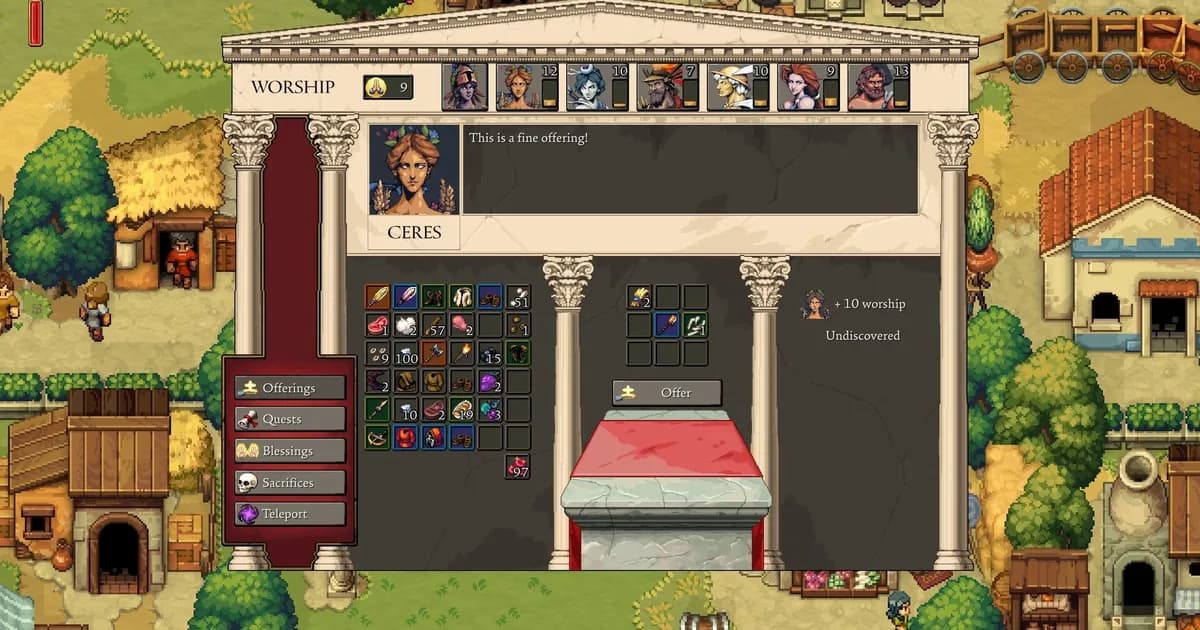
The Worship screen at the Altar: offerings to your chosen god unlock blessings tied to that deity's branch.
Forest: the Lumberyard biome and Bronze tier
The Forest is the second biome in progression order and the biome where Lumberyard production really centers. Lumberyards work here and, as of a post-launch patch, in the Volcanic biome too; only the Desert is off-limits. If you want automated lumber production set up before the Desert phase, this is where to build it.
Unlike the Plains (which gates the Blacksmith behind the Guardian of Minerva), the Forest has no dedicated boss of its own. Progression into the Desert is gear-gated rather than boss-gated: you need to reach Bronze tier (Blacksmith Level 2) and get past the Satyr barricade at the Desert entrance. That distinction matters for planning: you don't need to hunt down a specific target before moving on, you just need to have the right gear crafted.
Bronze requires both Copper Bar and Tin Bar. Tin becomes accessible as you push further from the Plains, with the Forest introducing it as the next ore in the progression chain. The Forest-to-Desert transition is effectively a crafting milestone: once you can produce Bronze consistently, you're ready to push past the Satyr barricade.
The Forest is your main window for Lumberyard investment during the Desert phase, since the Desert itself won't let you build one. A strong Forest Lumberyard setup (2-3 Lumberyards with assigned workers) will stockpile enough lumber to get you through the Desert; you can add more Lumberyards once you reach the Volcanic biome. Place and staff them before you push east.
Diana is the natural god pairing for the Forest. She governs Nature, Hunting, and the Moon, and her branch includes bow upgrades, Spreadshot, and Leatherworker progression. Forest hunting runs pair naturally with her ranged damage bonuses. Building Diana's tier before leaving the Forest also means you arrive in the Desert with a ranged weapon upgrade, which makes the Satyr camps significantly more manageable.
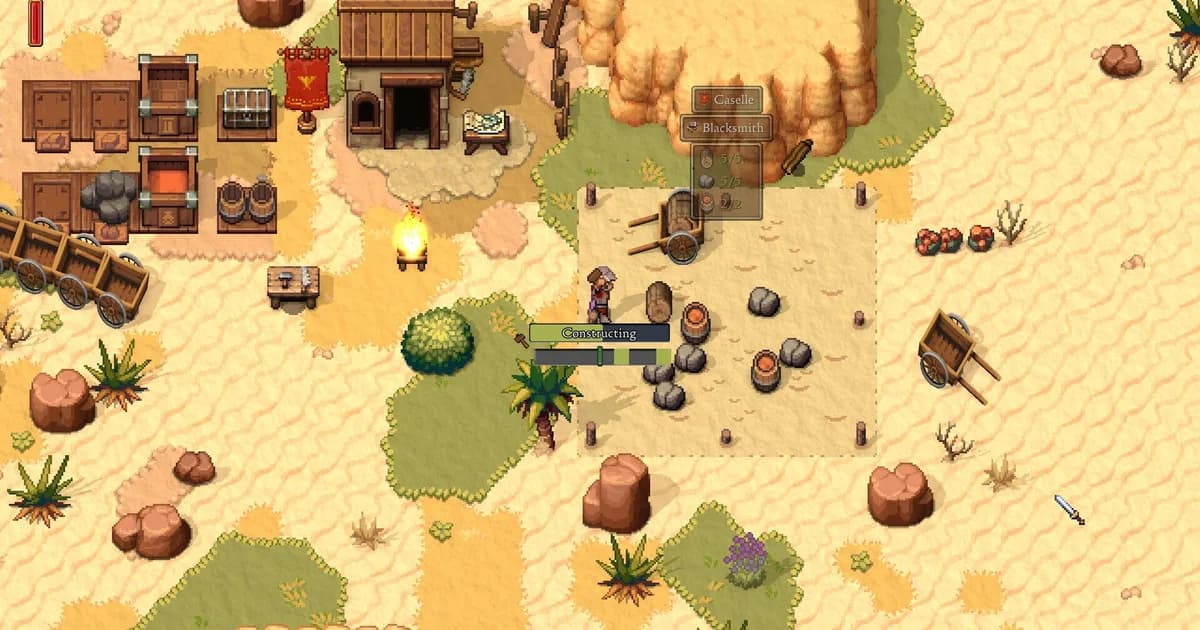
Desert: Satyrs, Tin, and the Cyclops
The Desert introduces Satyrs as the dominant enemy faction. There's a barricade at the Desert entrance that acts as the first real challenge to entering the biome. Beyond that point, massive Satyr camps are positioned throughout the zone, and Satyrs are more organized and fortified than the Fallen citizens you fought in the Plains and Forest.
Tin is the Desert ore. Combined with Copper, it produces Bronze Bars at the Blacksmith. The Desert also introduces the Tectonic gear tier, which requires Cyclops Shards from the main boss.
Two bosses are in the Desert. Pyzifax is the optional side boss with 500 HP found at a Desert Camp. His drops include Cape of Pyzifax Banner, Sapphire, and Tin Bar, plus random gear from a larger loot table (Assassin's Scroll, Fools' Gold, Gardener's Gloves, and others). He's not a progression gate, but the Tin Bar drop and optional gear make him worth targeting before you push to the main boss.
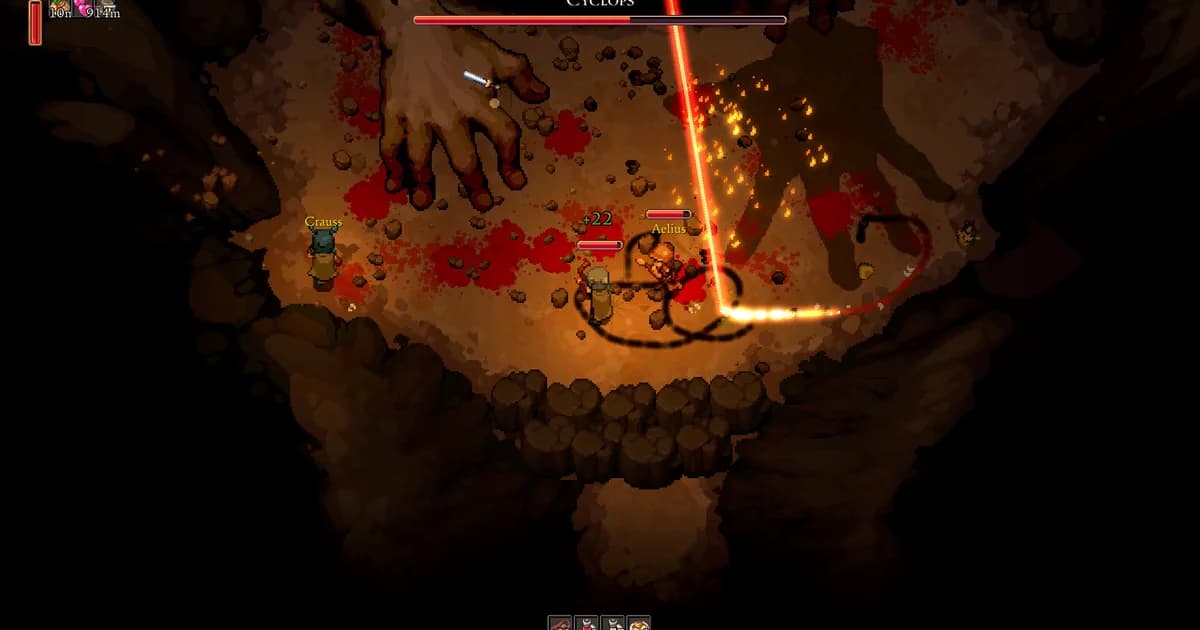
The Cyclops is the mandatory Desert boss. He sits at 10,000 HP inside the Eye dungeon, accessed via the Virgil's Poem quest. The HP jump from 225 (Guardian of Minerva) to 10,000 is sharp; show up with full Bronze or better gear and a solid night defense setup before attempting the Eye.
His guaranteed drops include Granite Tooth, Nail of the Cyclops, Cyclops Shard, Quadrans, Traveler's Coin, and Denarius, plus one of Bronze Bar, Chitin, or Linen. The Cyclops Shard is the critical material: it's used to craft Tectonic Armor at Blacksmith Level 5. Random drops include Tectonic Helmet, Tectonic Armor, or Tectonic Boots. Tectonic is the gear tier that carries you into the Volcanic biome.
Lumberyards cannot be built in the Desert. If your production setup relied heavily on automated lumber, that dependency needs to be addressed before you commit to Desert expansion.
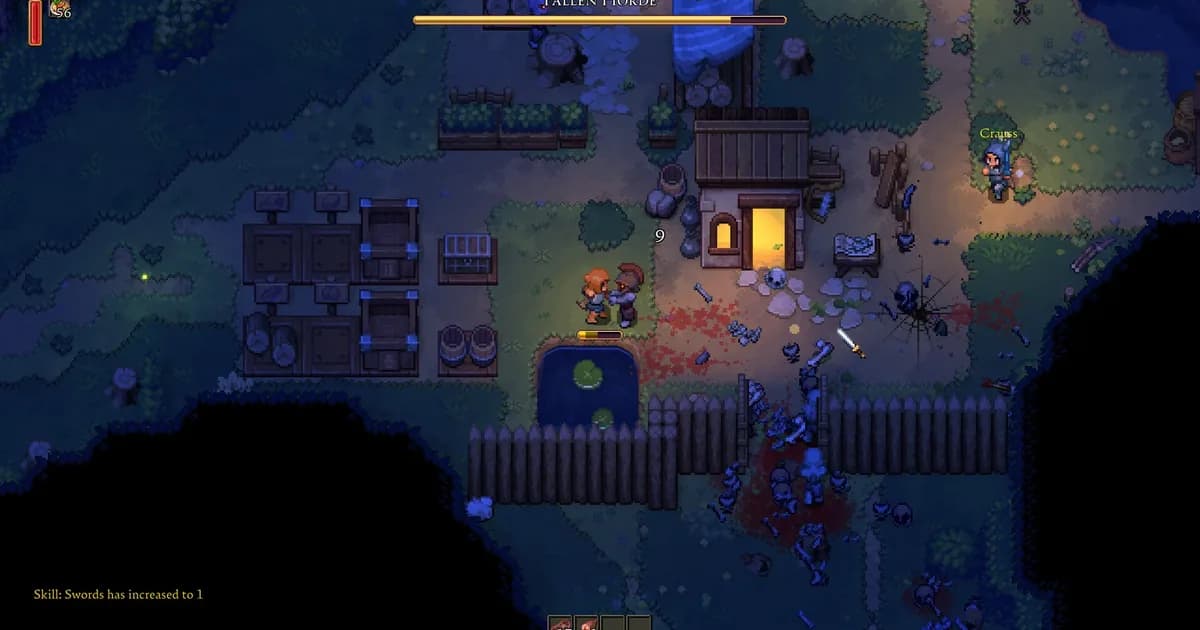
GODEEPER: The fallen continue raiding in the Desert, and production buildings are still primary targets. Romestead Night Raid Guide: Defend Against the Fallen →
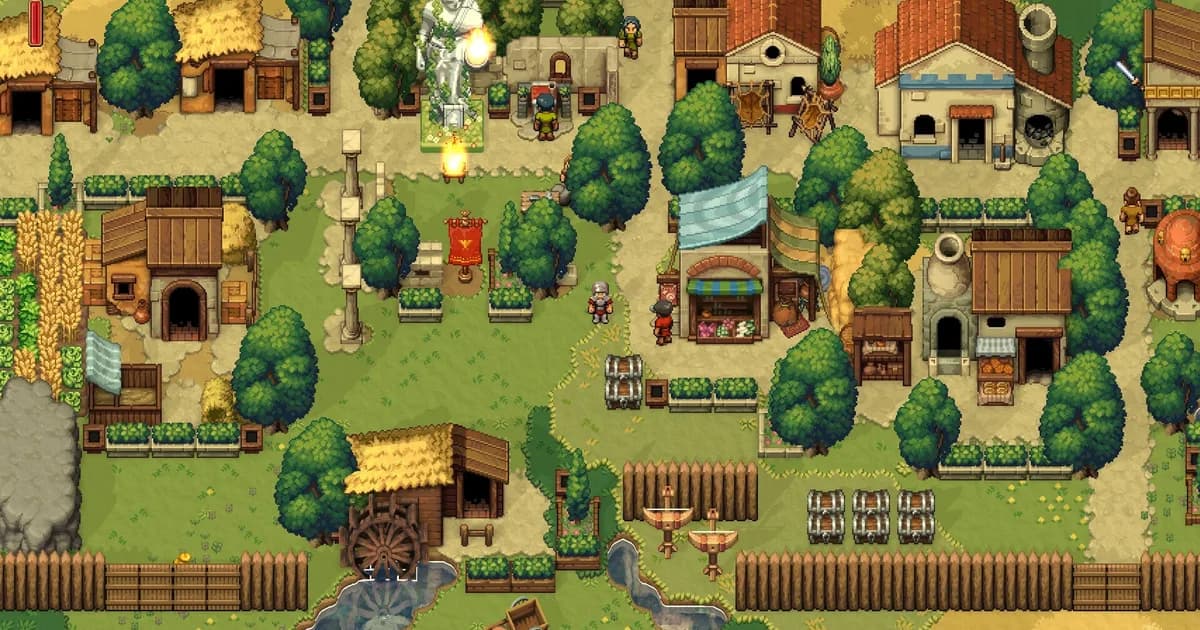
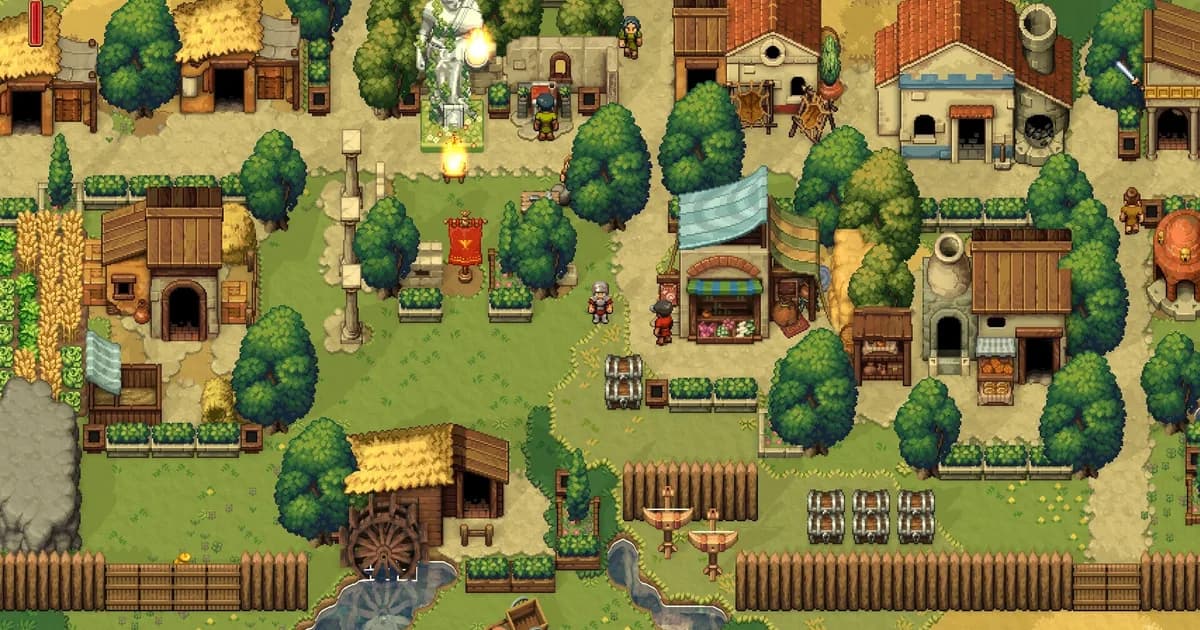
A late-game settlement built out around a central plaza. This is what a Plains base looks like once production and Worship buildings are fully established.
Setting up a base in the Desert biome
Moving into the Desert doesn't mean starting over. Your Plains and Forest buildings stay where they are; you're extending your settlement eastward. The practical challenge is that the Desert imposes real restrictions and has more aggressive enemies than anything you've faced in the Forest.
What you can and can't build. The Lumberyard is banned in the Desert, so all lumber production stays in the Forest. Everything else: Blacksmith, Farmstead, Food Storage, Town Core, Altar, Logistics Tent, Carpenter, University prerequisites, and Torches all place normally. A second Farmstead in the Desert is worth building if you have the population to staff it. The Desert has its own crop plots; you don't need to haul food across biomes if you staff Desert farming properly.
Satyr threat patterns. Satyrs are more organized than the Fallen who raided your Plains settlement. They operate in fortified camps rather than loose roaming groups. Night raids in the Desert come from multiple angles at once, and Satyrs can breach light networks that held up fine against undead. Extend your Torch perimeter before the first desert night, not after. Gaps that went unnoticed in the Forest will get punished here.
Base placement in desert terrain. Position your Desert outpost near a natural chokepoint, ideally between rock formations that reduce the number of approach directions. The Eye dungeon (where the Cyclops waits with 10,000 HP) is in the Desert interior. Build far enough from it that scouts don't trigger the Virgil's Poem chain before you're geared to push it.
God investment for the Desert phase. Mars is the most useful god investment before and during Desert clearing. His combat bonuses compound against Satyr camps and make the Cyclops fight less punishing. Vulcan becomes the priority immediately after: his Blacksmith upgrades (Levels 3-6) are the prerequisite for Tectonic Armor and for the Volcanic biome's passive production bonus. Get Mars to a useful combat threshold in the Desert, then shift Worship investment toward Vulcan for the Volcanic push.
Volcanic: the hardest biome and Blacksmith territory
The Volcanic biome is the newest addition in the EA launch, added specifically for Early Access after the demo shipped the first two biomes. The developer described it as "bringing a fiery challenge to those who dare to face the two legendary foes slumbering within."
Two bosses guard the Volcanic biome: the Great Phoenix of Arabia (1,200 HP) at the Scorched Shrine, and the Talos Prototype (1,800 HP) inside the Temple of Vulcan. Talos has the highest HP of the two Volcanic bosses, though it's still well short of the Cyclops's 10,000 HP in the Desert. The Phoenix is the more mechanically demanding fight: Phase 2 sends fire projectiles from every angle while the Phoenix accelerates its attack speed significantly. Bring a bow for the Phoenix: range lets you deal damage while staying mobile. Phoenix drops include Phoenix Feather, Phoenix Ash Sample, Phoenix Feather Cape, and Pyromancer's Ring. Talos drops Core Vessel, Talos Plate, Talos Bolt, and Research Paper slots. Both drop materials for Firescale Armor.
Firescale is the Volcanic gear tier: crafted from Iron Nails, Ember Cloth, and Cured Hide at Leatherworker Level 5. Iron appears at this tier, meaning the Volcanic biome introduces Iron as its native ore (our Romestead iron guide covers where to mine it and what to craft first). Prepare Aloe Salves before entering; the developer specifically mentioned them as recommended preparation, which implies fire damage or burn hazards from the environment or enemies.
The Volcanic biome has the hardest enemies and the best citizen recruit stats. A citizen found in the volcanic region will have better base stats than one from the Plains. If you're looking to upgrade your settlement's population quality, the Volcanic biome is where the highest-tier recruits live.
The building interaction that makes this biome unique: a Blacksmith placed in the Volcanic biome gets a permanently lit furnace and a production speed boost from the volcano. This isn't a minor buff; it's a passive that runs without fuel costs and makes the Blacksmith meaningfully faster. Positioning your Blacksmith in the Volcanic biome (or building a second one there) is one of the high-value strategic decisions in mid-to-late game.
Vulcan is the god pairing for this biome. He governs fire, forges, and construction materials. His Blacksmith upgrade path (Levels 3-6) directly combines with the volcano's passive Blacksmith boost. High Vulcan investment before entering the Volcanic biome turns that combination into a real production advantage.
Lumberyards can be built here, unlike the Desert: a patch reversed the original restriction and added the ability to harvest coal from a Volcanic Lumberyard. Dungeons and locations are more numerous in the Volcanic biome than in any earlier one; the developer noted they put "tonnes of love" into the volcanic zone.
Iron ore in Romestead: where it spawns and how to farm it
Iron is the Volcanic biome's native ore, and it's the only place to reliably mine it. Ground nodes appear near dungeon entrances in the volcanic zone, the same areas where enemy density is highest. The hostile environment concentrates nodes near the structures you're already clearing.
There's a passive production path that doesn't require manual mining: build a Quarry inside the Volcanic biome and assign a Miner at Level 5 or higher to it. That combination produces Iron ore without you having to grind nodes manually. Reaching Miner Level 5 takes time, so the manual node route fills the gap while you build up your worker base.
Iron can also appear rarely in the Desert, but that source is unreliable enough that the volcanic zone should be your only planned Iron farming location. If you've cleared the Volcanic biome entrance and are running Bronze gear, don't wait on Desert Iron spawns. Push to the volcano.
The Blacksmith passive that activates inside the Volcanic biome compounds with Iron farming: a permanently lit furnace and a production speed boost means you smelt Iron Bars faster than you would anywhere else. Building your primary Blacksmith in the Volcanic biome (or relocating it once you've cleared the entrance) turns the passive into a real throughput advantage over a long farming session.
Iron Nails, Ember Cloth, and Cured Hide are the three components for Firescale Armor (at Leatherworker Level 5). Iron is the bottleneck of that recipe, so establishing the volcanic Quarry and Miner Level 5 unlock is effectively the first thing to prioritize once you're in the Volcanic biome.
GODEEPER: Everything about finding, mining, and smelting Iron Bars in one place. Romestead Iron Guide: Where to Find Iron and How to Farm It →
Ore and gear progression by biome
Every biome introduces a new ore tier and a corresponding armor set. The loop is consistent: clear the biome, mine the ore, smelt bars, craft the next armor tier, push to the next biome.
| Biome | Native Ore | Armor Tier | Blacksmith Level | Notes |
|---|---|---|---|---|
| Plains | Copper | Feathered (drops) | Level 1 | Unlocked after Guardian of Minerva |
| Forest | Tin | Bronze | Level 2 | No boss; gear-gated transition |
| Desert | Tin + Copper | Bronze + Tectonic | Level 3-5 | Tectonic requires Cyclops Shard |
| Volcanic | Iron | Firescale | Level 5+ | Iron Nails + Ember Cloth + Cured Hide |
The Feathered set is a drop reward from the Guardian of Minerva, not crafted. Every other set is crafted at the Blacksmith after the biome's gating event. Bronze is the bridge tier: it spans both the Forest and Desert phases, with Tectonic replacing it once you have Cyclops Shards.
Building rules across biomes (summary)
The building restriction system affects your long-term settlement planning more than most players realize on first playthrough. The confirmed restrictions:
Lumberyard works in the Forest and the Volcanic biome (a Volcanic Lumberyard can also harvest coal). It's banned only in the Desert.
Blacksmith works everywhere, but the Volcanic biome adds a passive lit furnace and production boost. There's no drawback to eventually positioning your best Blacksmith in the volcanic zone.
The next biome is still future content. Beartwigs' official autumn announcement confirms that a new biome is planned for a later major update, but it does not name the biome or set a release date. Do not treat old file references or winter-teaser language as a playable fifth biome.
Knowing this before you lay down a production-heavy Forest settlement means you won't over-commit Lumberyard infrastructure expecting to replicate it in the Desert. One strong Lumberyard setup in the Forest should stockpile enough lumber to fund the Desert phase, and you can pick lumber production back up once you reach the Volcanic biome.
Key takeaways
- Romestead has 4 playable biomes in EA: Plains, Forest, Desert, Volcanic. A future major update is planned to add another biome, but its name and date are not confirmed.
- Plains boss (Guardian of Minerva, 225 HP) gates the Blacksmith. Defeat her first.
- Forest has no dedicated boss. Progression to Desert is gear-gated (Bronze tier + past the Satyr barricade).
- Desert has two bosses: Pyzifax (500 HP, optional dungeon) and the Cyclops (10,000 HP, mandatory). Cyclops Shards craft Tectonic Armor.
- Volcanic biome: hardest enemies, best citizen stats, Blacksmith gets passive lit furnace + speed boost. Two bosses: Great Phoenix of Arabia (1,200 HP, Scorched Shrine) and Talos Prototype (1,800 HP, Temple of Vulcan). Firescale/Iron gear tier.
- Iron spawns in the Volcanic biome near dungeon entrances. Passive production via Quarry requires Miner Level 5+.
- Lumberyard works in the Forest and the Volcanic biome (where it can also harvest coal). Cannot be built in the Desert.
- Citizens from harder biomes have better base stats than Plains recruits.
- God pairings: Minerva (Plains), Diana (Forest), Vulcan (Volcanic), Ceres (wherever food production bottlenecks).
Related Reading
- Romestead Wiki: All Biomes, Gods, Raids and Co-op: the complete Early Access reference linking every Romestead system in one place.
- Romestead God System Guide: All 7 Roman Gods Explained: How the 7 gods map to tech trees and which to invest in per biome phase.
- Romestead Night Raid Guide: Defend Against the Fallen: The fallen raid production buildings in every biome; torch and wall strategy that works from Plains through Volcanic.
- Romestead Early Access Review 2026: Full EA review covering how the biome progression holds up across a complete run.
- Romestead Buildings Guide: All Buildings and Build Order: where to place production buildings as biome restrictions change.
- Romestead Medusa Boss Guide: the current petrification encounter and the preparation that sits outside the four-biome route.
- Romestead Updates Tracker: dated patch history for the Autumn Update and later fixes.
- Romestead Trading Post Logistics Guide: routes, storage, and the logistics layer behind multi-biome settlements.
- Romestead Research Papers Guide: research progression that supports higher Blacksmith and biome requirements.
- Romestead Villagers Guide: recruit stats, assignments, and population quality by region.
- Romestead Weapons Tier List: weapon choices for Satyr camps, the Cyclops, and Volcanic bosses.
- Romestead Professions Guide: starting classes and god-aligned roles for the early biome push.
- Romestead Co-op Guide: 1 to 8 Players, Roles, Scaling: role split for 2-8 players, wave scaling, Blacksmith defense priority, and Altar Level 2 teleportation.
- Romestead Tips: 12 Things to Know Before Your First Night: physical resource carts, divine offerings priority, night defense prep, and lumber logistics.
- Romestead Denarius Guide: How to Make Money Fast 2026: denarius from dungeons and treasure, plus practical early money routes.
- Romestead Bosses: All 5 Bosses and How to Beat Them: the Guardian of Minerva, Cyclops, Phoenix, Talos, and other current bosses.
References
- Romestead on Steam
- Romestead official announcements: Autumn Update 0.26.1, patch fixes, the 500,000-player note, and future biome scope.
- Romestead Devlog VIII (official Beartwigs): EA launch announcement with Volcanic biome details
- Romestead Wiki: Biomes: Biome index and progression order
- Romestead Wiki: Guardian of Minerva: Plains boss drops and mechanics
- Romestead Wiki: Cyclops: Desert boss drops and quest trigger
Frequently Asked Questions
How many biomes are in Romestead Early Access? Four are playable now: Plains, Forest, Desert, and Volcanic. The official autumn update says a new biome is planned for a future major update, but gives no name or date. The Forest-to-Desert transition is gear-gated by Bronze and the Satyr barricade, so not every biome transition requires a dedicated boss kill.
What is the first boss in Romestead? The Guardian of Minerva, a 225 HP owl in the Plains. Her death unlocks the Blacksmith. Find her by following the shadows from Plains statues to her nest and breaking the egg.
How do you get to the Desert biome? Progress through the Forest biome and reach Bronze gear tier. The Desert entrance has a Satyr barricade as an initial challenge. Defeat it and you can explore the Desert's Satyr camps and reach the Eye dungeon.
What is the Cyclops boss in Romestead? The main Desert boss at 10,000 HP, inside the Eye dungeon, triggered by the Virgil's Poem quest. His Cyclops Shards craft Tectonic Armor at Blacksmith Level 5. Pyzifax (500 HP) is a separate optional boss at a Desert camp.
Can you build a Lumberyard in the Desert or Volcanic biome? You can build it in the Volcanic biome (a patch lifted that restriction and added coal harvesting there), but not in the Desert. Establish your lumber production in the Forest before the Desert phase.
What makes the Volcanic biome different? Hardest enemies, best citizen stats, and a unique Blacksmith mechanic: the building gets a permanently lit furnace and production boost from the volcano. Two legendary bosses: Great Phoenix of Arabia (1,200 HP at Scorched Shrine) and Talos Prototype (1,800 HP at Temple of Vulcan). Firescale Armor is crafted here using Iron Nails, Ember Cloth, and Cured Hide.
Which god pairs best with each biome in Romestead? Minerva for Plains (she's the boss; her quest unlocks the Blacksmith), Diana for Forest (hunting and Nature domain), Ceres for wherever food pressure hits (usually Plains-to-Forest transition), Vulcan for Volcanic (fire and forge; his Blacksmith upgrades compound with the volcano boost).
Was this guide helpful?
About the author

Indie & JRPG Desk
GameBrief's byline for indie, JRPG, visual novel and cozy games. Warm, direct, and willing to say which one to buy.
- Indie, JRPG and visual novels
- Early access and survival
- Sources listed per article
Keep reading
Romestead Wiki 2026: All Biomes, Gods, Raids and Co-op Guide
General · 22 min
Romestead Review: Roman Survival That Earns the Raid
Reviews · 9 min
Romestead Night Raid Guide: Defend Against the Fallen
General · 8 min
Romestead Gods: All 7 Deities & Who to Worship First
General · 9 min
Romestead Denarius Guide: How to Make Money Fast 2026
General · 9 min
Romestead Research Papers: How to Get Them Fast 2026
General · 8 min
Sponsored
Disclaimer
This article is published for informational and entertainment purposes. It does not constitute professional financial, legal, or technical advice. Game performance, online services, patch schedules, and store listings change. Verify critical details (pricing, system requirements, regional availability) with publishers and storefronts before you buy. Affiliate links, where present, help support our editorial work and are labelled in our affiliate disclosure.
Comments
Loading comments…