
GuideRomestead
Romestead Gods: All 7 Deities & Who to Worship First
The Romestead gods are the main progression axis, and the system does something most survival builders don't: your technology tree is a theology argument. Which Roman deity you restore to favor first changes what buildings you can construct, what passive bonuses your settlement accrues, and how your combat loadout develops.
About the game
Romestead
Updated 2026-10-05: The Lumber Yard is documented as usable in Forest and Volcanic but not Desert, correcting the linked biome summary.
Seven gods are confirmed for the Early Access build. Minerva is always first. After that, what you invest in shapes the entire run.
TL;DR: Romestead has 7 gods: Minerva, Ceres, Diana, Mars, Mercury, Venus, Vulcan. Two separate systems govern worship: Worship Level (raised through offerings at the Altar) and Favor Points (earned through gameplay and spent on active abilities). Only one Blessing can be active at a time. Boss drops are also offerings that unlock divine knowledge for new recipes and buildings. Start with Ceres if your food supply is your bottleneck; Mars if your raid defense is the immediate problem.
How does the Romestead god system work? (quick answer)
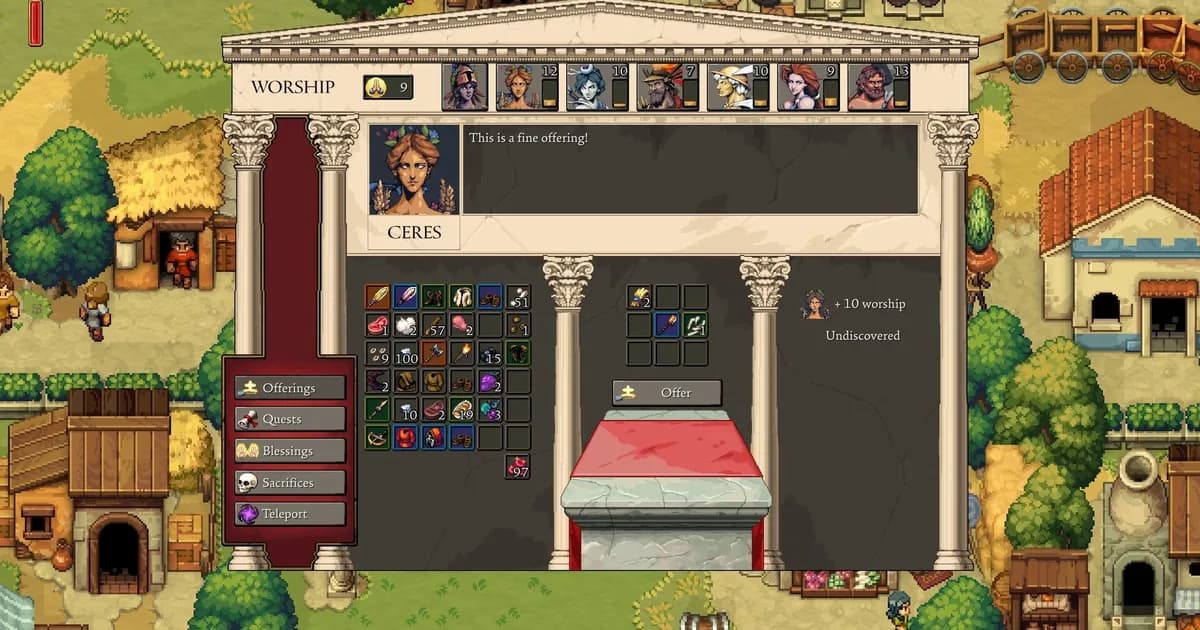
You restore Roman gods through two parallel systems. Worship Level rises when you make offerings at the Altar: cooked food, crafted gear, hunt materials. Each god has different preferences, and the item type determines how much Worship it generates. A higher Worship Level with a given god unlocks new buildings, technology tiers, and decorations tied to that deity's domain.
Favor Points are separate. You earn them by playing: exploring, building, fighting, growing. You spend them to unlock god-specific skills and active abilities, like the Minerva-path Shield Slam that uses armor weight to knock enemies back.
The two systems run in parallel. Offerings build your tech base. Favor Points build your active combat tools. Neglect either one and your mid-game stalls.
All 7 gods in Romestead
The Early Access build includes exactly 7 gods. Developer Beartwigs confirmed this in the demo listing ("7 Roman gods to earn favor with"). No other gods have been announced for future updates.
| God | Domain | What its branch unlocks |
|---|---|---|
| Minerva | Wisdom | First god to reach you; scholar and wizard progression, the research tree |
| Ceres | Agriculture | Food: Estates, Farmsteads, Bakeries, Watermills, and crop bonuses |
| Diana | Nature, Hunting | Ranged combat: bow upgrades, the Spreadshot ability, ranged bonuses |
| Mars | War | Melee: attack power, armor construction, automatic Scorpios (ballistae) |
| Mercury | Trade, Innovation | Economy: magic damage, vendor pricing, market construction |
| Venus | Love, Beauty | Attack speed, energy, and citizen morale and expertise (quality of life) |
| Vulcan | Fire, Forge | Defense, fire resistance, quarries, blacksmiths, construction materials |
Each god below is broken down in full, including what to prioritize and when.
Minerva (Wisdom)
Minerva reaches you first. The developer confirmed this in Devlog I: "She's the first to reach you. But not the only one." She governs wisdom and learning, and her branch handles scholar and wizard class progression. Investing enough in Minerva triggers the first boss encounter: the Guardian of Minerva. That boss's drop is itself an offering that unlocks further divine knowledge.
Minerva's branch is the clearest early-game research tree. If your group wants the ability to develop specialist combat roles, Minerva investment gets there faster than any other starting pick. It pairs directly with the University tech system, so our Romestead research papers guide covers how to farm the papers that unlock those advanced recipes.
Ceres (Agriculture and Crops)
Ceres covers food production. Her branch unlocks Estates, Farmsteads, Bakeries, and Watermills, along with crop production bonuses. Food pressure becomes the primary bottleneck in most settlements by day 3, especially in Forest biome where resource density is higher but crop space is more managed.
The Blessing of Ceres adds 25% overall Health. It's a defensive passive that pairs well with melee-focused groups who want survivability without spending Mars' Worship on armor.
Ceres unlocks Farmsteads and Bakeries: invest here if food becomes your first bottleneck.
GODEEPER: For a full breakdown of the night defense mechanics that make god investment urgent, Romestead Survival Tips: 12 Things to Know Before Your First Night →
Diana (Nature, Hunting, the Moon)
Diana's branch covers ranged combat. Confirmed unlocks include bow upgrades (required for high-end bow builds), the Spreadshot ability, and bonuses to ranged damage, energy, and critical hits. Her branch also includes Leatherworker upgrades.
Diana is the dedicated ranged combat god. If your group assigns one player specifically to hunting and ranged raid defense, Diana investment pays back faster than investing spread across multiple gods. A Spreadshot setup during raids makes the Fallen's production building targeting easier to intercept.
Mars (War)
Mars governs melee combat. His branch includes melee attack power buffs, armor construction, automatic Scorpios (ballista-type siege weapons), and military structures. The Blessing of Mars adds 10% overall melee attack power.
The Scorpios are the key Mars unlock for group play. Automatic ballista targeting means less micro-management on defensive setups, which matters most when a full 8-player raid requires coordinating multiple defense lines simultaneously.
There's lore conflict between Mars and Vulcan in the wiki: Mars objected to Vulcan's plans to replace Roman warriors with elemental constructs. Flavor text only. Worshipping both carries no mechanical penalty.
Mercury (Speed, Innovation, Trade)
Mercury's branch covers magic damage, vendor pricing, and market construction. He's the economic god. If your run depends on trading surplus resources or you want magic-damage builds for specific dungeon compositions, Mercury becomes relevant in the mid-to-late game.
Mercury is generally a secondary or tertiary investment. His market construction unlock matters more in longer runs where trade flow determines what you can build. Solo players or small groups often skip him in the first 10 days. If trade is your money engine, our Romestead Denarius guide breaks down how Mercury's vendor pricing fits the wider dungeon-running money loop.
Venus (Love and Beauty)
Venus provides attack speed bonuses, energy, and buffs to citizen expertise and morale. Her branch is a quality-of-life investment: settlement morale affects productivity in several ways, and citizen expertise determines how efficiently your artisans work.
Venus is useful in large group runs (5-8 players) where managing morale across a bigger population becomes a real logistical concern. She's less critical in solo play where morale management is simpler.
Vulcan (Fire and Forge)
Vulcan governs defense, fire resistance, quarries, blacksmiths, and construction materials. He's the production and infrastructure god. High Vulcan investment speeds up construction, and his fire resistance branch matters directly in the Volcanic biome, where environmental hazards affect where you can safely place buildings.
Blacksmith access through Vulcan is a key mid-game unlock. The fallen citizens prioritize your Blacksmith during night raids. Getting Vulcan's defensive upgrades around the building you most need protected is a satisfying loop.
The offering system: what to give and when
Each god in the Romestead god system prefers different offerings. Cooked food, crafted gear, and hunt materials are the three confirmed categories. The specific preference isn't fully documented yet (the wiki is still being built), but the dev confirmed that item type determines Worship gain per offering.
Boss drops are a separate offering type. Each of the 5 bosses in the EA build drops a unique item you can take to the Altar. These offerings bypass the standard preference system and unlock divine knowledge directly: new item recipes, new buildings, and upgrades for existing structures. This is why the boss priority matters beyond the fight itself. A boss drop offered to the right god can open a building tier several sessions earlier than standard offerings would.
The Altar itself needs upgrades via the Carpenter. Altar level 2 unlocks teleportation between settlements, which changes co-op logistics significantly in large-group runs where players are spread across the map.
Blessings: one at a time
The Romestead god system gives each deity a Blessing, a passive bonus you activate at the Altar. Only one Blessing can be active at any point. You can switch freely, but you can't stack two simultaneously.
Known Blessings:
- Ceres: +25% overall Health
- Mars: +10% overall Melee attack power
Blessings are separate from tech trees. You can be invested in both Ceres and Mars simultaneously (both Worship Levels rising, both tech trees partially unlocked) while only one Blessing is active. Switch the Blessing based on the current phase: Ceres' health bonus is better for daytime resource work; Mars' melee bonus is more useful during night raids.
Which god should you invest in first?
Minerva is fixed. She finds you. In the Romestead god system, after Minerva the two viable starting picks for most groups are Ceres and Mars.
Ceres first: if food production is behind, Farmsteads and Bakeries are the fix. Most settlements hit food pressure before defensive pressure, especially in the Forest biome where initial resource gathering competes with crop space. Ceres' +25% Health Blessing also covers the early combat vulnerability while your walls are still incomplete.
Mars first: if your group has a dedicated combat player and wants the Scorpio ballista early, Mars is the faster path to automated raid defense. The Blessing's 10% melee bonus is narrower than Ceres' health buff, so this pick rewards groups confident in their survival setup already.
After your second god investment, Diana is the next natural pick if ranged builds are part of the group's composition. Vulcan becomes high priority once the Volcanic biome or late-game Blacksmith defense becomes a concern.
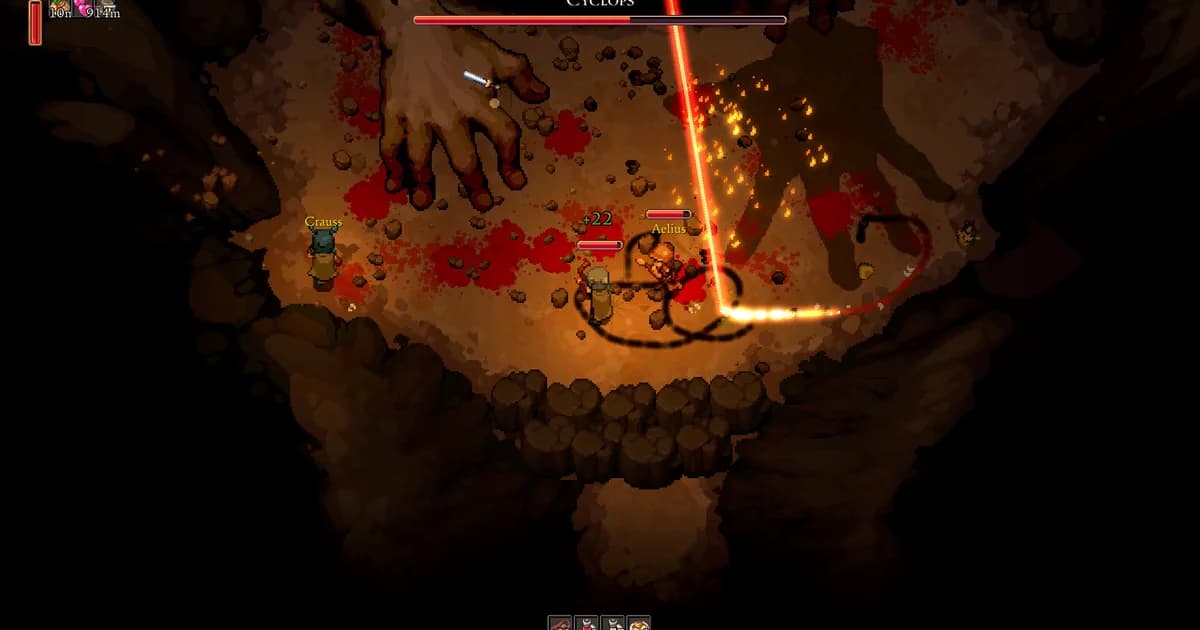
Boss arenas are where god investment pays off: Mars and Vulcan blessings sharpen the combat loadout you bring into fights like this, and clearing them is what gates the next biome.
GODEEPER: For the Early Access review covering what each god investment feels like in practice across multiple playthroughs, Romestead Review: Roman Survival That Earns the Raid →
Step-by-Step: Choosing your first god
1. Restore Minerva first: Minerva is the fixed first god in the Early Access progression.
2. Use the Altar for offerings: cooked food, crafted gear, and hunt materials raise Worship Level, while boss drops can unlock divine knowledge directly.
3. Choose Ceres or Mars next: pick Ceres when food and health are the immediate problems, or Mars when a combat-heavy group wants melee power and Scorpio defenses.
4. Keep Favor Points separate: Worship Level unlocks the god's progression, while Favor Points come from gameplay and pay for god-specific abilities.
5. Activate one Blessing: investments in multiple gods can coexist, but only one Blessing can be active at a time, so switch it to match the current task.
Key takeaways
- The Romestead god system has 7 gods in EA: Minerva (always first), Ceres, Diana, Mars, Mercury, Venus, Vulcan
- Two systems: Worship Level (offerings at Altar) and Favor Points (gameplay, spent on abilities)
- Boss drops are offerings that unlock divine knowledge, bypassing standard offering preferences
- Only one Blessing active at a time; you can hold investments in multiple gods simultaneously
- Altar level 2 at the Carpenter unlocks settlement-to-settlement teleportation
- For most solo players: Ceres first after Minerva; for combat-heavy groups: Mars first
Related Reading
- Romestead Wiki: complete Early Access reference: every Romestead system in one place, from the god tech tree to biomes, raids, and co-op.
- Romestead Survival Tips: 12 Things to Know Before Your First Night: The defense and resource side of the loop, covering what the god system is protecting.
- Romestead Review: Roman Survival That Earns the Raid: Full EA review with practical notes on how each god investment felt across multiple sessions.
- Outbound Complete Guide Hub: Co-op survival builder in a similar vein, different genre, if Romestead's co-op angle is what drew you in.
- Romestead Co-op Guide: 1 to 8 Players, Roles, Scaling: Romestead co-op guide: role split for 2-8 players, wave scaling, Blacksmith defense priority, Altar Level 2 teleportation unlock,....
- Romestead Night Raid Guide: Defend Against the Fallen: Romestead night raid guide: the fallen target your Blacksmith first. How to use torches, protect production buildings, and....
- Romestead Biome Guide: All 4 EA Biomes, Bosses, Resources: Romestead biome guide: all 4 EA biomes explained. Boss HP, gear tiers, building restrictions (Lumber Yard Forest and Volcanic, not Desert), and god....
- Romestead Professions: All 8 Starting Classes Ranked: the 8 starting professions ranked, what each starts with, and the best picks before you worship your first god.
- Romestead Buildings Guide: the construction order and structures that each god's progression helps unlock.
References
- Romestead on Steam
- Romestead Devlog I (official Beartwigs): Worship and Favor systems, Minerva confirmation
- Romestead Wiki: Gods: Individual god domain list and tech tree stubs
- Romestead Wiki: Worship: Blessing system and offering mechanics
- Romestead Devlog IV: r/Romestead: Worship Wednesday series context
Frequently Asked Questions
How many gods are in Romestead? Seven: Minerva, Ceres, Diana, Mars, Mercury, Venus, and Vulcan. Minerva is always the first you encounter.
How do you increase worship in Romestead? Two parallel systems: Worship Level rises through offerings at the Altar (cooked food, crafted gear, hunt materials, or boss drops). Favor Points are earned through gameplay and spent on active abilities and skills.
Can you worship multiple gods in Romestead? Yes. Only the Blessing is mutually exclusive (one active at a time). You can invest in multiple gods' tech trees and Worship Levels simultaneously without penalty.
What does Minerva unlock in Romestead? Wizard and scholar class progression, and she triggers the first boss (Guardian of Minerva). She is always the first god you encounter and is not optional.
What do boss drops do in Romestead? Boss drops are unique items you offer at the Altar to unlock divine knowledge: new item recipes, buildings, and tech upgrades. There are 5 bosses in the EA build.
What is the Altar in Romestead? The Altar is the hub for the god system. You make offerings here, activate Blessings, and apply boss-drop knowledge. Level it up to 2 at the Carpenter to enable teleportation between settlements.
Which god should I start with in Romestead? After Minerva (mandatory first contact): Ceres for food production and health survivability, Mars for melee combat and automated Scorpio defenses. Most solo players go Ceres first.
Was this guide helpful?
About the author

Systems & Economy Desk
GameBrief's byline for roguelikes, strategy and simulation. Reads patch notes, wiki tables and Steam stats and puts the numbers on the page.
- Roguelikes, strategy and simulation
- Builds, progression and economy
- Sources listed per article
Keep reading
Romestead Night Raid Guide: Defend Against the Fallen
General · 8 min
Romestead Review: Roman Survival That Earns the Raid
Reviews · 9 min
Romestead Biome Guide: All 4 EA Biomes, Progression 2026
General · 12 min
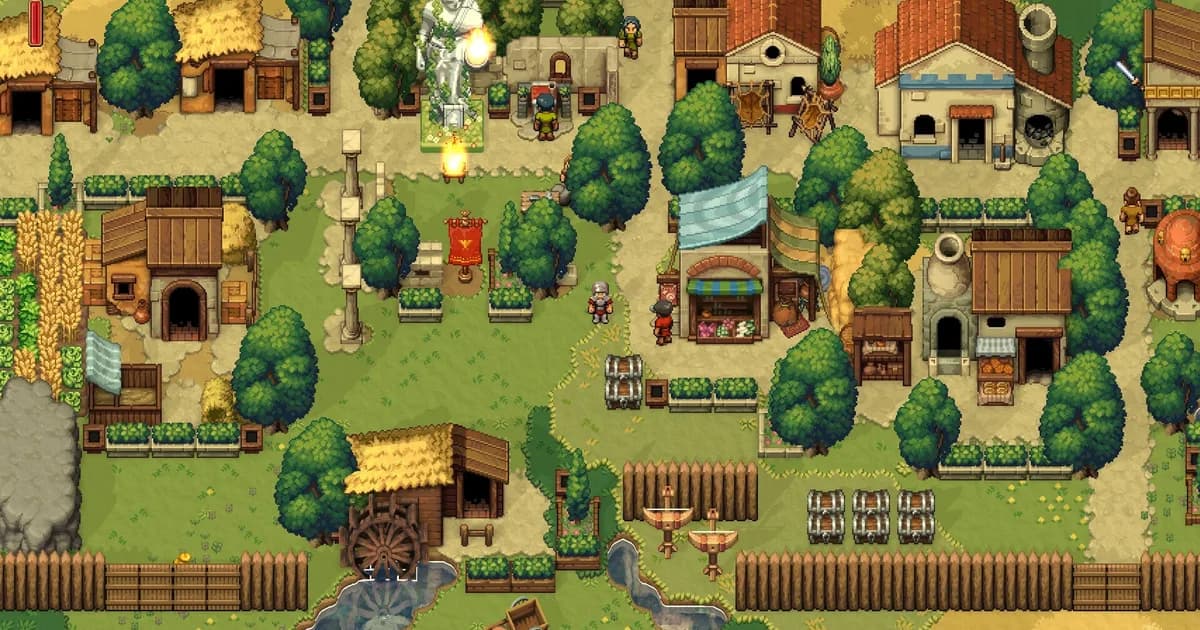
Romestead Wiki 2026: All Biomes, Gods, Raids and Co-op Guide
General · 22 min
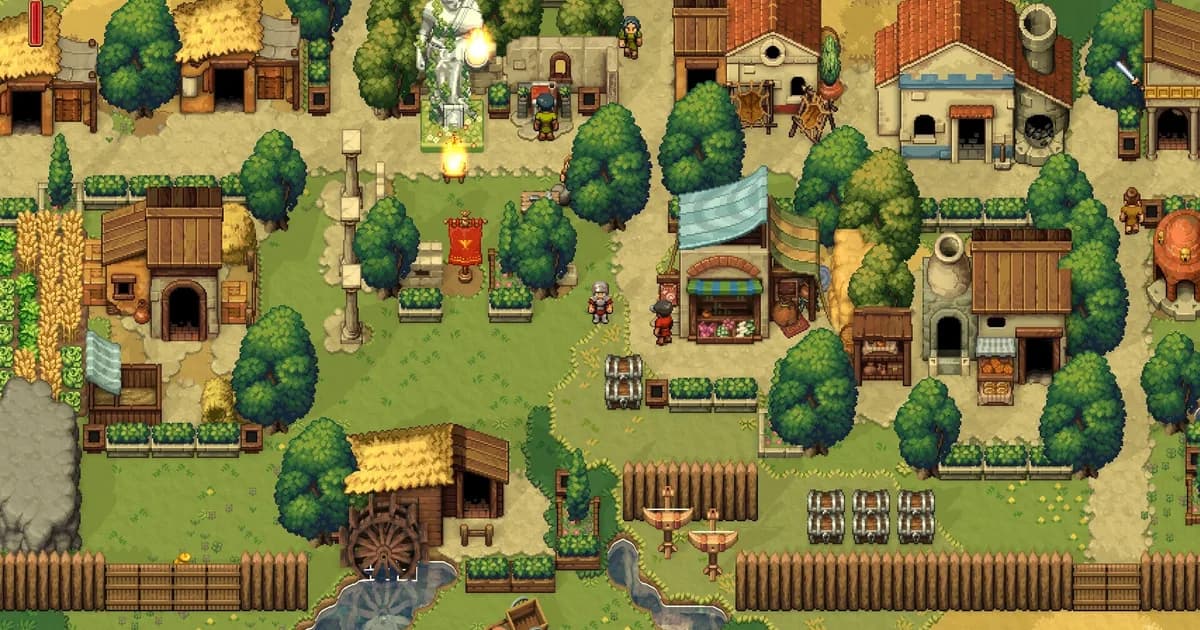
Romestead Denarius Guide: How to Make Money Fast 2026
General · 9 min
Romestead Research Papers: How to Get Them Fast 2026
General · 8 min
Game deals · affiliate links
Disclaimer
This article is published for informational and entertainment purposes. It does not constitute professional financial, legal, or technical advice. Game performance, online services, patch schedules, and store listings change. Verify critical details (pricing, system requirements, regional availability) with publishers and storefronts before you buy. Affiliate links, where present, help support our editorial work and are labelled in our affiliate disclosure.
Comments
Loading comments…