
GuideSunderfolk
Sunderfolk Vanguard Guide: Grit, Retaliation, Best Builds
The Sunderfolk Vanguard guide exists because most players who try the class get the passive backwards. Grit doesn't come from getting hit. It comes from certain Skill Cards that deal damage. Miss that, and the Vanguard feels like a tank with no actual defense; understand it, and the class rewards choosing the right attacks at the front line rather than turtling.
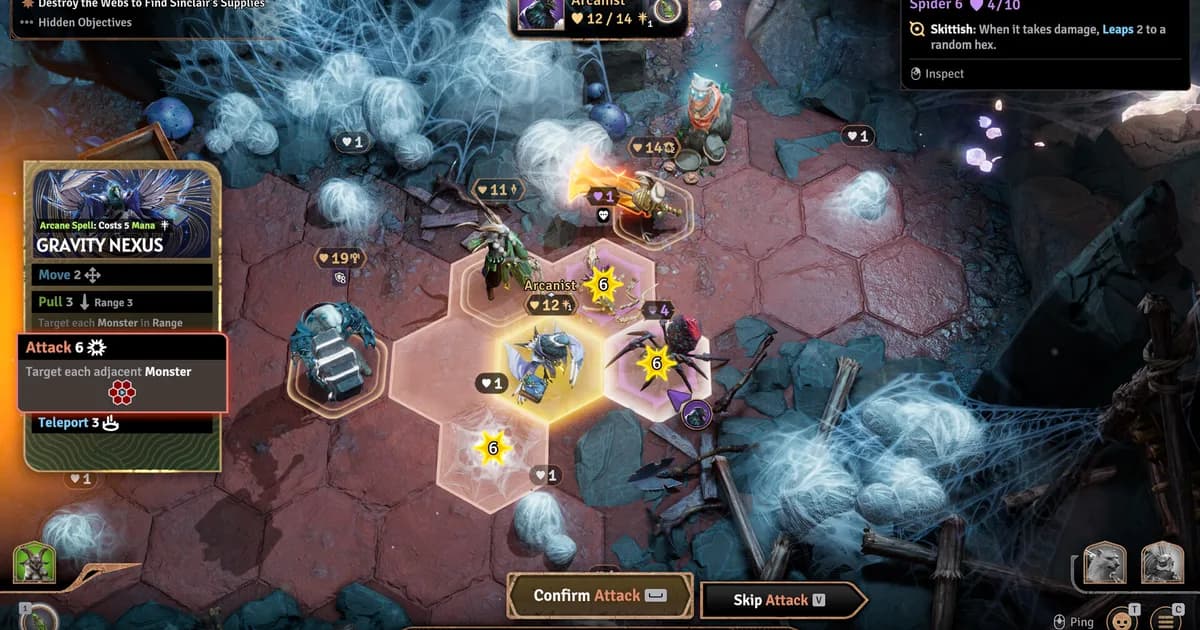
There's also a persistent myth worth killing directly: the Vanguard does not have a Taunt ability. Nothing in its kit forces enemies to target it over anyone else. If a guide tells you otherwise, it's wrong.
Updated 2026-10-05: Corrected the linked Pyromancer advice to describe Firepower setup and area attacks, not an unsupported fire-spread mechanic.
TL;DR: The Vanguard is a frontline class added in Update 2.0. Certain Skill Cards build Grit, which increases damage and reduces incoming damage while active. If an enemy hits while Grit is active, the passive can retaliate and remove a stack. There's no Taunt ability. Best builds use cards that build Grit, then spend the resource before incoming hits consume it. Pairs well with Pyromancer.
Sunderfolk Vanguard guide: quick answer
The Vanguard's job is to use the Skill Cards that build Grit and stay in the fight, not to bait attacks. While Grit is active, it hits harder and takes less damage. If an enemy connects while it is holding Grit, the passive can retaliate and burn a stack.
There's no ability that redirects enemy targeting toward the Vanguard specifically. The class works by being durable enough to hold the front line and by converting its own attacks into a growing buff, not by soaking hits passively while everyone else fights around it.
GODEEPER: How Vanguard fits into Sunderfolk's full class lineup and the party tiers for different group sizes. Sunderfolk Complete Guide: All 7 Classes →
Key takeaways
- Vanguard was added in Update 2.0, the seventh class in the game
- Passive is Grit: certain Skill Cards build the resource; if an enemy hits while Grit is active, retaliation can trigger and remove a stack
- Grit: increases damage dealt and reduces incoming damage while active
- No Taunt ability exists in the Vanguard's kit; nothing forces enemy targeting
- Best paired with Pyromancer or in 4-player groups
- Solo pairings: Vanguard + Ranger or Vanguard + Arcanist
How Fighting Spirit and Grit actually work
Grit comes from the Vanguard's passive and certain Skill Cards, and it works backwards from how most players expect a tank passive to work: you don't gain it by getting hit, and not every Attack creates it.
The official hero description says certain Skill Cards that deal damage build Grit. While Grit is active, hits deal more damage and Vanguard takes less damage, so the class's value depends on selecting the cards that explicitly build the resource rather than assuming every Attack does.
The retaliation piece is conditional, not automatic on every single hit. If you are holding Grit and an enemy attacks, the passive can retaliate and remove a stack. Once the resource is gone, the counter cannot trigger until a Skill Card builds Grit again. The loop rewards a Vanguard who keeps using the right cards, not one who just stands still soaking hits.
There's no Taunt ability anywhere in the kit. Nothing forces a monster to attack the Vanguard over anyone else. The class works by being durable enough to survive at the front, not by redirecting attention.
The Vanguard's ability cards
The Vanguard's 9 skill cards split roughly into two jobs: closing distance with Knockback, or converting stacked Grit into a bigger hit.
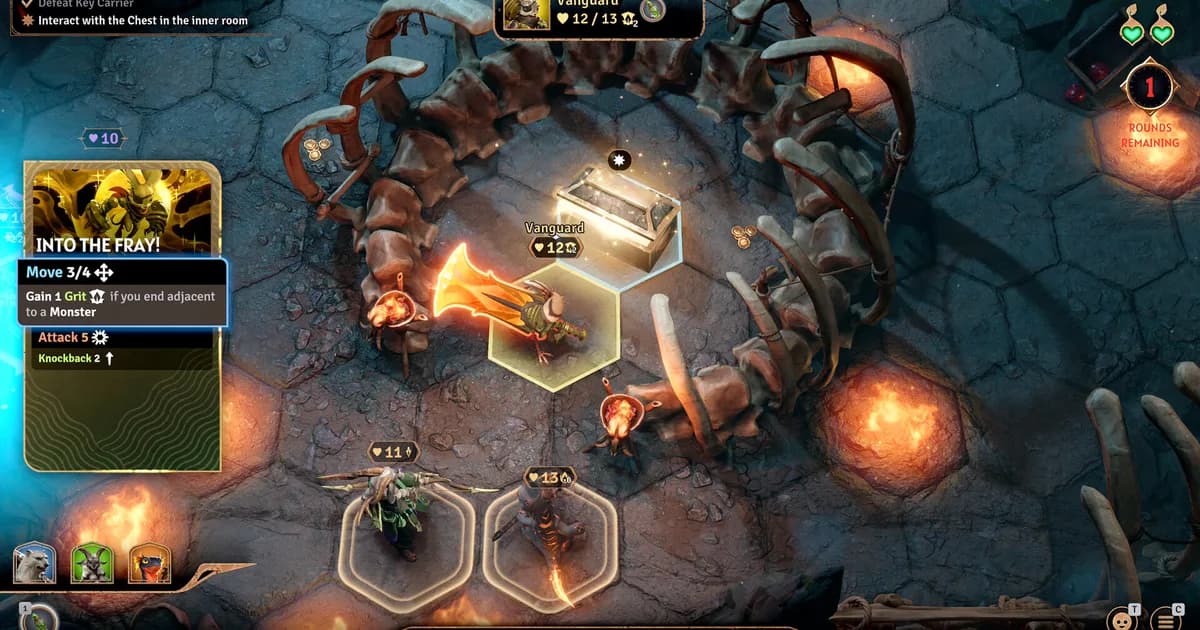
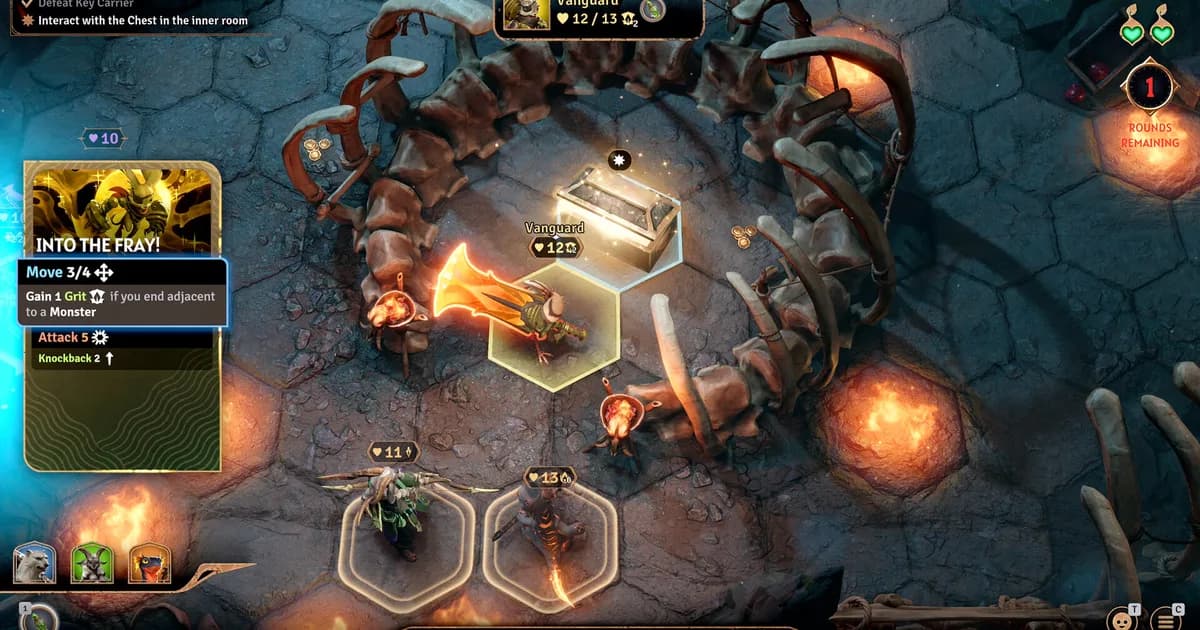
Movement and Knockback cards make up most of the kit. Into the Fray! moves 4 hexes (granting a Grit stack if you end adjacent to a monster) before attacking and knocking the target back 2 hexes. Knock 'em Back and Smash lean further into Knockback, pushing enemies away and, on Knock 'em Back, applying Slow if the target is a monster. Bladefall and It's Hero Time hit every adjacent hex or several parallel lines at once, better against grouped enemies than a single target.
Buster is the clearest Grit-spending card: it deals +2 damage for every Grit stack you're holding, then burns all of it and doesn't gain Grit back from that attack, trading your accumulated buff for one large hit. Timing matters: dump it when you're at max Grit, not the turn right after you've already spent it.
Preparation is the closest thing to a support card: it heals 3, cleanses a debuff, and grants Grit on top, useful when the party needs a breather rather than more damage. There's no dedicated "Shield" card family; Buster happens to grant a small Shield as a secondary effect, but it isn't a build path on its own.
A Vanguard mid-Into the Fray, closing the gap toward an objective while positioned to draw enemy attention away from the two allies behind. The card's adjacent-to-a-monster condition can build Grit; taking the hit afterward is not the source.
Step-by-Step: Playing Vanguard Around Grit
1. Use cards that build Grit: a Vanguard playing purely defensively never creates the resource that makes the class work, so read each Skill Card's Grit condition before committing it.
2. Track your Grit state: once the resource is active, decide whether to spend it before incoming hits remove stacks, and hold a stack-spending card like Buster for a useful window.
3. Stay adjacent to monsters, not away from them: the retaliation counter only fires if a monster hits you while you're holding Grit, so positioning at the front (not baiting attacks, since there's no Taunt) is what keeps the loop running.
4. Spend Buster when you're topped up: it converts your full Grit stack into bonus damage in one hit, then resets you to zero, so use it right before a lull, not right after building Grit back up.
5. Pair with a real damage source: Grit's counter and damage bonus add up over a long fight but won't close out encounters by itself. Pyromancer or a second damage dealer like Ranger or Arcanist covers what Grit can't.
Best Vanguard builds
Grit uptime build (recommended): Prioritize cards that build Grit without overextending. Into the Fray! and Smash combine movement, Knockback, and an attack into one card, so you stay active without burning multiple slots to reposition. Hold Buster for a strong Grit window, then spend the resource for bonus damage.
Control build: Lean into Bladefall, It's Hero Time, and Knock 'em Back for their Knockback and multi-target hits. This build spends more on repositioning enemies (useful alongside Pyromancer's fire zones or Arcanist's Pull) and less on raw single-target damage, trading some personal output for battlefield control.
Sustain build (situational): Add Preparation for the heal, debuff cleanse, and Grit gain in dungeons with heavy debuff-stacking enemies or long boss fights where staying alive matters more than maximizing damage per turn.
Between dungeons you return to Arden to upgrade cards and spend currency. The Vanguard's card upgrades at the Workshop are where the Grit and Shield builds above actually get built.
Vanguard party compositions
2 players: Vanguard + Ranger or Vanguard + Arcanist. You need the second character to deal damage since Vanguard retaliation alone won't close out fights efficiently. Arcanist works slightly better because their damage doesn't require line-of-sight positioning that conflicts with the Vanguard's front-blocking role.
3 players: Vanguard, Bard, and one damage dealer. Bard multipliers apply to Grit-fueled damage the same as other sources, which makes the Bard a better third pick here than Ranger alone. The Bard's team buff adds value to every attack the Vanguard's Grit stack is boosting.
4 players: Berserker, Bard, Vanguard, Pyromancer is one strong configuration. Berserker handles fast kills, Vanguard holds the front against whatever Berserker doesn't eliminate immediately, Bard multiplies both, Pyromancer deals AoE while Vanguard soaks and counters whatever comes back. The issue is two frontliners can crowd the grid in tight rooms. Position Vanguard back one row when Berserker is already at the front.
GODEEPER: How the Berserker's Protector's Fury stacks compare to Vanguard's passive Grit approach for frontline damage output. Sunderfolk Berserker Guide →
When NOT to pick Vanguard
The Vanguard is weaker in:
- Speed-run style play where you're clearing encounters in two turns or fewer. Grit doesn't get enough turns to build up before the fight is over.
- Groups with no Bard and heavy ranged damage. Without positioning support, keeping the Vanguard adjacent to enemies while ranged damage dealers need open lines creates constant grid conflicts.
- Your first run. Fighting Spirit's attack-to-build-Grit loop is less obvious than a class that just deals damage on every card. Berserker gives clearer feedback on what you're doing right or wrong.
The Vanguard isn't hard to play, but it's easy to misplay by treating it as a class that only needs to stand still. If you are not using the Skill Cards that build Grit, the retaliation never fires and the damage reduction never kicks in. The fix is simple: prioritize those cards when the condition is safe, and let the counter be a bonus on top of the frontline plan.
Related Reading
-
Sunderfolk Complete Guide: All 7 Classes: full class tier list by group size, party composition breakdowns, and the Update 2.0 changes that affect the Vanguard's place in the roster.
-
Sunderfolk Berserker Guide: the other frontline option, how Protector's Fury stacking compares to Grit, and when to pick Berserker over Vanguard.
-
Sunderfolk Bard Guide: Music Note System: why Bard is the best third pick in any group and how the Bard's multipliers interact with Grit-fueled damage.
-
Sunderfolk Arcanist Guide: Teleport Builds and Tips 2026: Sunderfolk Arcanist guide: teleport repositions enemies and allies. Pull combos, solo vs party builds, and why patch 2.0....
-
Sunderfolk Pyromancer Guide: Fire Builds and AoE Tips 2026: Sunderfolk Pyromancer guide: Firepower fuels area damage, but the class dies fast. Correct positioning, frontline requirements, and card priorities.
-
Sunderfolk Online Co-op Guide: Setup, Fixes, and Party Tips: Sunderfolk online co-op supports 1-4 players on Steam and Epic. Phone app setup steps, AccelByte connection fixes, and.
-
Sunderfolk Class Tier List: All 7 Heroes Ranked 2026: Sunderfolk class tier list ranking all 7 heroes including Vanguard: Bard and Berserker lead, Rogue.
-
Sunderfolk Rogue Guide: Stealth Builds and Tips 2026: Sunderfolk Rogue guide: C tier for most players, technically powerful for experienced ones.
-
Sunderfolk Ranger Guide: Range Builds and Party Tips 2026: Sunderfolk Ranger guide: A tier ranged damage and traps.
References
- Sunderfolk on Steam: official store page, patch notes, and Update 2.0 notes from Secret Door
- Sunderfolk Vanguard hero page: official Grit, Knockback, and Update 2.0 details
- r/sunderfolk: community build discussion, Vanguard tier positioning threads, co-op party composition guides
Frequently Asked Questions
What is the Vanguard in Sunderfolk? The Vanguard is the seventh class added in Update 2.0. Certain Skill Cards build Grit, which increases damage and reduces incoming damage while active. If an enemy hits while Grit is active, the passive can retaliate and remove a stack. It has no Taunt ability.
What does Grit do? Grit is a resource built through certain Skill Cards. It increases damage dealt and reduces incoming damage while active. If an enemy hits while you are holding Grit, the passive can retaliate and remove a stack. The counter depends on building the resource with the right cards, not on standing still.
What party works best with Vanguard? Vanguard plus Pyromancer is a natural fit: Vanguard holds the front and eats hits in range of Pyromancer's fire zones, countering whatever connects. In 4-player groups, Berserker, Bard, Vanguard, Pyromancer covers every role. In 2-player, pair with Arcanist or Ranger to cover the damage the Vanguard doesn't generate on its own.
Is Vanguard good? Solid in attrition encounters where you can use the Grit-building cards safely and keep the resource active. Lower value in short fights where there is little time to build it before the room clears. The Berserker outperforms Vanguard in fast-kill scenarios; Vanguard trades some burst for durability and a damage bonus across longer runs.
How does Vanguard compare to Berserker? Both are frontlines but generate value differently. Berserker deals burst damage through Protector's Fury stacks and attack cards. Vanguard builds Grit through certain Skill Cards, which then boosts its damage and reduces damage taken, with conditional retaliation when hit. Berserker is better when you want to kill fast. Vanguard is better when the frontline needs to survive multiple rounds while still contributing damage.
When was Vanguard added? Update 2.0, released March 10, 2026. The same update introduced Steam Networking for online co-op. If you don't see Vanguard in your class select screen, verify your game is updated.
Can Vanguard play solo? Yes, using the two-hero control system. Pair Vanguard with a damage-focused second class: Ranger or Arcanist both work. Vanguard retaliation alone won't close fights fast enough, so the second hero handles the damage burden.
Was this guide helpful?
About the author

News Desk
GameBrief's byline for industry news, patch notes, studio announcements and esports results. Tight sentences, dated facts.
- News, patch notes and early access
- Industry and esports results
- Sources listed per article
Keep reading
Sunderfolk Arcanist Guide: Teleport Builds and Tips 2026
General · 13 min
Sunderfolk Bard Guide: Music Note System and Best Builds
General · 7 min
Sunderfolk Pyromancer Guide: Fire Builds and AoE Tips 2026
General · 16 min
Sunderfolk Berserker Guide: Protector's Fury and Best Builds
General · 8 min
Sunderfolk Complete Guide: All 7 Classes, Co-op Tips 2026
General · 18 min
Sunderfolk Ranger Guide: Range Builds and Party Tips 2026
General · 7 min
Game deals · affiliate links

Disclaimer
This article is published for informational and entertainment purposes. It does not constitute professional financial, legal, or technical advice. Game performance, online services, patch schedules, and store listings change. Verify critical details (pricing, system requirements, regional availability) with publishers and storefronts before you buy. Affiliate links, where present, help support our editorial work and are labelled in our affiliate disclosure.
Comments
Loading comments…