Loading…
GameBrief · General
Titanium Court: IGF Grand Prize Winner and What It Does
Titanium Court: IGF 2026 Grand Prize winner by AP Thomson. Match-3 tiles reshape the battlefield, not the troops. What it is and why it won.
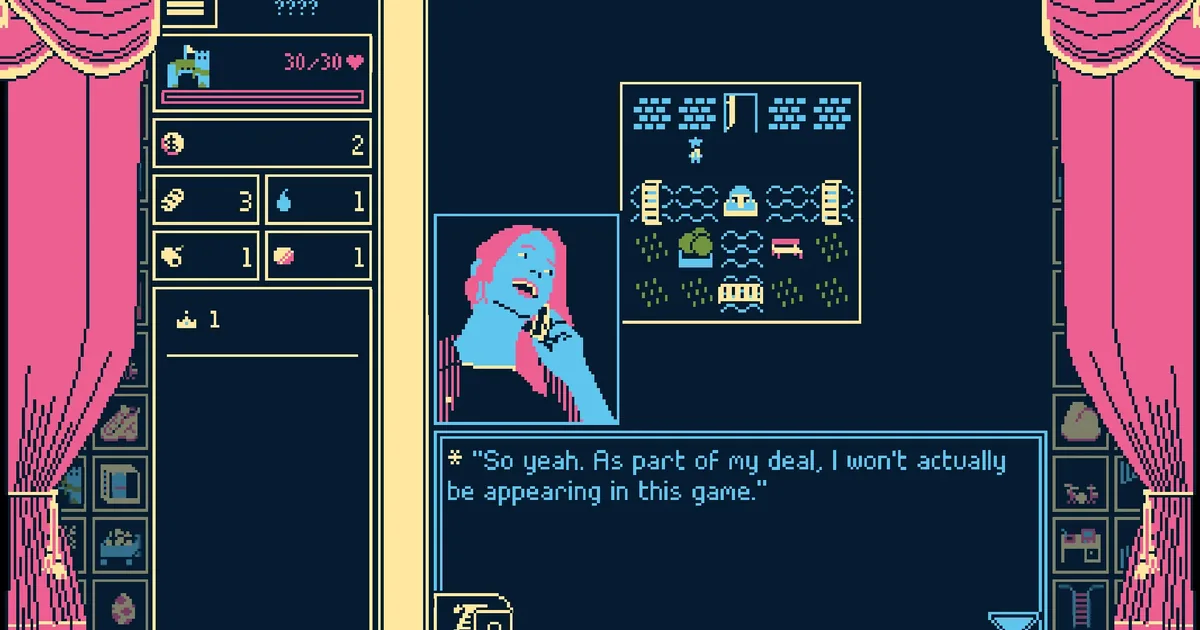
Titanium Court won the Seumas McNally Grand Prize at the 2026 Independent Games Festival, launching on Steam April 23, 2026. Designer AP Thomson has now won, or contributed to winning, the IGF's top prize in consecutive years. The more interesting question is not what that says about Thomson, but what it says about the criteria the IGF is currently using to define excellence.
TL;DR: Titanium Court is a genre-bending strategy game from AP Thomson that won the Seumas McNally Grand Prize plus Excellence in Design at IGF 2026, and launched on Steam April 23, 2026 with a free demo. The IGF jury called it "a flamboyant demonstration of genre abuse dense with the unexpected." This analysis digs into what the win signals about how the IGF currently defines excellence, not just that Thomson is good at making games.
The obvious interpretation is: AP Thomson is extremely good at making games. The less obvious interpretation is worth sitting with.
Titanium Court: Key Takeaways
- Titanium Court: on Steam since April 23, 2026 | Free demo available
- Developer: AP Thomson | Publisher: Fellow Traveller
- Awards: IGF 2026 Seumas McNally Grand Prize + Excellence in Design
- Genre: Strategy: spanning match-3, tower defense, turn-based tactics, roguelite, narrative
- AP Thomson previously co-developed Consume Me (IGF 2025 Grand Prize winner, with Jenny Jiao Hsia)
- IGF jury description: "a flamboyant demonstration of genre abuse dense with the unexpected"
Titanium Court: Overview
The Independent Games Festival has been running since 1999. The Seumas McNally Grand Prize is its most significant award, named after a young developer who died of Hodgkin's disease before seeing his work recognized. The games that win it tend to resist clean summaries: Disco Elysium (2020), Hades (2021), Tunic (2022): games with clear formal ambitions that happen to be playable. Not experimental in the sense of being obscure, but experimental in the sense of not following a template.
Titanium Court fits that pattern and then some. The mechanic the developer uses to describe it, "commanding the terrain itself to fall in your favor", is promotional language, but it's not inaccurate. The battlefield is made of tiles. Matching tiles rearranges terrain. Rearranging terrain changes which troops can move where and what resources generate. This is simultaneously a match-3 puzzle, a tower-defense configuration tool, and a turn-based tactics layer. The narrative component adds career paths, warlord, arsonist, celebrity, insurance fraudster, that route through the same mechanical backbone with different objectives and tonal registers.
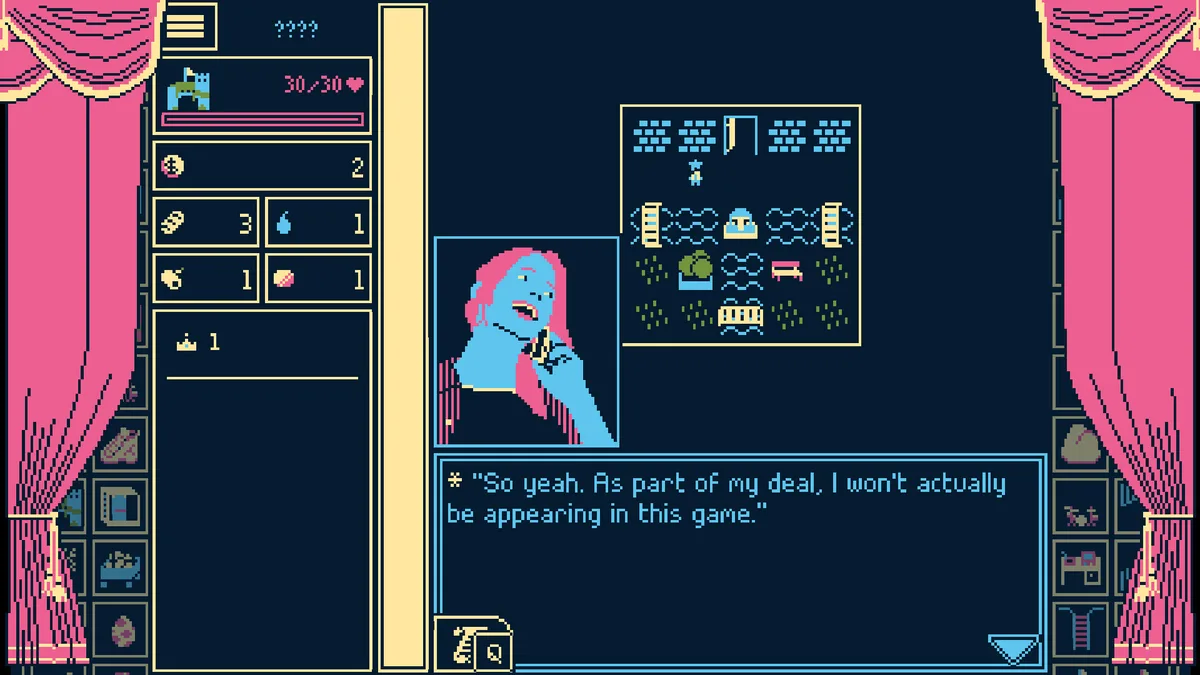 Titanium Court: IGF 2026 Grand Prize winner. Rearranging tiles reshapes the battlefield rather than moving the troops on it.
AP Thomson's previous co-project, Consume Me, was made alongside Jenny Jiao Hsia and took the 2025 Grand Prize. A game about compulsive consumption, self-image, and the psychology of diet culture expressed through a puzzle mechanic. Two consecutive years, two very different subjects, both using mechanical design to say something the subject couldn't say in a different medium. That is a pattern.
GODEEPER: All Hail the Orb won the same IGF and has a similar short-form depth worth trying back to back. All Hail the Orb Review →
Analysis
The IGF has been consistent about one thing across its recent Grand Prize selections: rewarding games where the mechanics are the meaning, not the delivery system for it.
Hades used procedural repetition to literalize the myth of Sisyphus: the escape attempts were the story, and the story was the escape attempts. Tunic used documentation gaps and visual language deliberately borrowed from NES-era manuals to recreate the experience of being a child in front of a game you couldn't fully understand. Both games are "fun" in the conventional sense, but their awards weren't primarily for being fun.
Titanium Court is doing something structurally similar. The genre labels (match-3, tower defense, tactics) are accurate but not the point. The design decision to make the battlefield itself the thing being manipulated, rather than the units on it, inverts the expected relationship between player and game space. You are not moving pieces on a board. You are reshaping the board so the pieces move in your favor. That is a meaningful distinction, not a marketing one.
The developer's own note (that the game contains "a Hefty Amount of Reading") is worth taking seriously. Fellow Traveller, the publisher, specializes in narrative games: Citizen Sleeper, Roadwarden, Suzerain. The combination of a mechanic-first developer with a narrative-specialist publisher produces something that is legible as strategy and legible as fiction simultaneously. That's not an accident.
The consecutive-year involvement of AP Thomson at the Grand Prize level is genuinely unusual. The IGF does not weight prior wins in its selection process, each jury reads each game without that context. This means Thomson submitted two very different games in two years and both were independently judged to be the best in their competition. The sample size is two, which is too small to call a trend. But the pattern, games that refuse to be described accurately by their genre tags, holds across both projects.
The comparison that's worth making is to studio-level reputation in film criticism: certain directors' names become shorthand for a set of formal commitments. Thomson is at the beginning of that process. Whether Titanium Court consolidates that or complicates it depends on whether the game delivers on its mechanical premise. The demo, available now on Steam, provides a basis for judgment before the April 23 launch.
For reference on what "strong design identity" looks like in other recent indie releases, the REPLACED review and Saint Slayer review on this site cover games with distinctive visual and mechanical languages: useful comparators for thinking about what makes indie games legible across different formal choices.
What This Means for Players
The practical answer is straightforward. Titanium Court launches with a free demo and a standard price point. The barrier to trying it is zero. If the demo lands, there is a full game on April 23. If it doesn't, nothing was lost.
The slightly less practical answer is that the IGF Grand Prize carries a meaningful signal. It is not a commercial indicator: Grand Prize winners do not reliably become commercial successes. Disco Elysium is an outlier; most winners find audiences slowly. But it is a quality indicator from a jury that reads games as designed objects rather than entertainment products. Fellow Traveller has a catalog of games that perform similarly: respected, played by a specific audience that seeks that kind of thing out, not necessarily trending on Steam on launch day.
For players who finished the Bylina review here and are tracking games with clear artistic intentions, Titanium Court is on the calendar for tomorrow. The career-path system (choosing between warlord, arsonist, celebrity, or insurance fraudster as your route through the game's tactical scenarios) signals the tonal range the game operates in. Dark comedy and strategy are not an unusual pairing in film; they're underrepresented in games.
The system requirements are low: 2GB RAM, 600MB storage, OpenGL/DirectX 9 compatible graphics. This is accessible hardware. The demo installs small and runs on older machines, which is consistent with Fellow Traveller's general publishing philosophy.
Frequently Asked Questions
When does Titanium Court release? Titanium Court launches on Steam on April 23, 2026. A free demo is available before and after launch.
What is the Seumas McNally Grand Prize? The Seumas McNally Grand Prize is the top award at the Independent Games Festival, given annually at GDC to the most outstanding independent game. It is named after Seumas McNally, the developer of Tread Marks who died of Hodgkin's disease in 2000. The award carries significant weight in the indie development community.
What genre is Titanium Court? The developer describes it as a strategy game, but the mechanics span match-3, tower defense, turn-based tactics, roguelite progression, and narrative adventure. No single genre label captures it accurately, which is partly what makes it an IGF winner.
Who made Titanium Court? Titanium Court was developed by AP Thomson and published by Fellow Traveller. Thomson previously co-developed Consume Me with Jenny Jiao Hsia, which won the Seumas McNally Grand Prize at IGF 2025.
Is there a free demo for Titanium Court? Yes. A free demo is available on Steam before and after the April 23 launch date.
What did the IGF jury say about Titanium Court? One IGF jury review called it "a flamboyant demonstration of genre abuse dense with the unexpected." The game also won the Excellence in Design award alongside the Grand Prize.
GODEEPER: Gambonanza is another IGF 2026 contender with a different genre but the same design philosophy. Gambonanza Review →
References
- Titanium Court on Steam
- Titanium Court wins Seumas McNally Grand Prize: Game Developer
- Official IGF 2026 announcement: Business Wire
- Fellow Traveller: publisher of Titanium Court
Related Reading
- Best Early Access Games Worth Buying: May 2026: more indie standouts to watch alongside award-season winners.
- Gambonanza Tier List: another genre-bending strategy roguelike for players drawn to unconventional systems.
- Scoundrel Card Game: a minimalist, design-forward indie in the same experimental spirit.
About the author

Critical game theorist with a background in film criticism. Writing for print and digital outlets since 2015. Specialises in genre analysis and design heritage.
- Background in film criticism
- 10 years games coverage
- Genre theory and design history specialist
Disclaimer
This article is published for informational and entertainment purposes. It does not constitute professional financial, legal, or technical advice. Game performance, online services, patch schedules, and store listings change. Verify critical details (pricing, system requirements, regional availability) with publishers and storefronts before you buy. Affiliate links, where present, help support our editorial work and are labelled in our affiliate disclosure.