
GameBrief · General
Murim Survival Complete Guide: Builds, Endgame, Tips
Murim Survival complete guide: three build archetypes, companion picks, Ascension prep steps, and our 7.0/10 review verdict, all linked in one hub.
Reviewing
Murim Survival
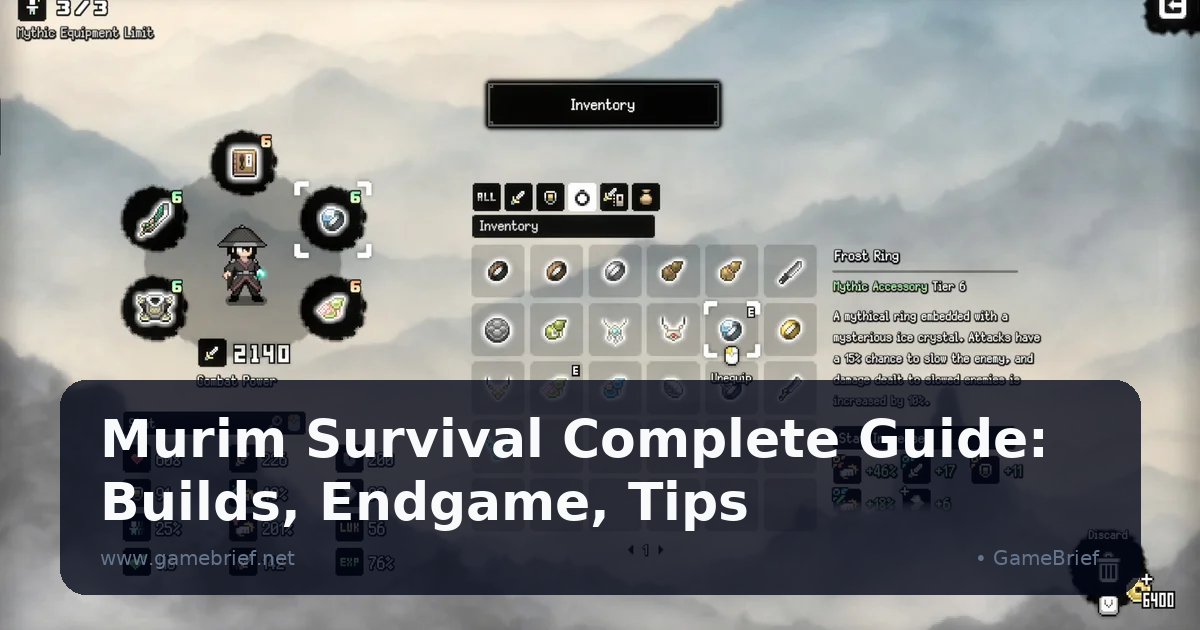
This Murim Survival complete guide gathers every build, companion, endgame, and beginner guide GameBrief has published on Sunwood Games' martial arts roguelite, plus our full launch review, in one place. Murim Survival runs on a familiar wave-survival loop, but its martial arts mastery system never resets between runs, so every expedition either builds toward a long-term fighter or wastes the time you spent in it. Whichever of the five guides you came looking for, this hub points you to it and lays out what the game actually confirms about itself along the way.
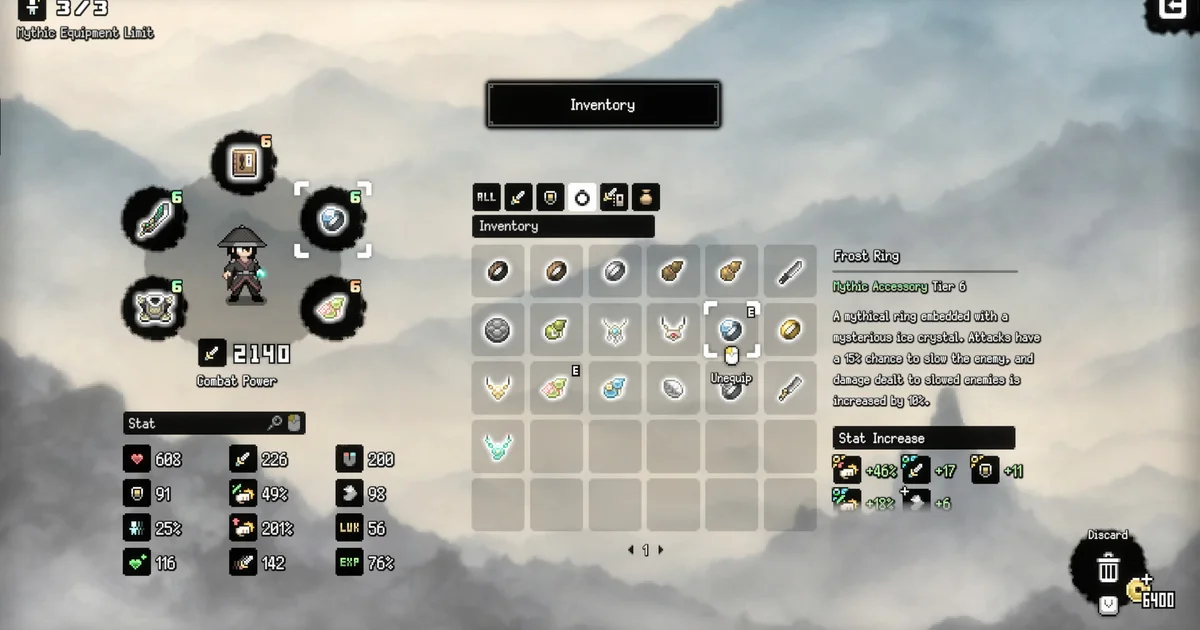
Murim Survival 1.0 launched on Steam May 4, 2026, after 14 months in Early Access, and currently sits at Mostly Positive with roughly 76% of 280 reviews in favor. It's $7.99, single-player only, and built around two progression tracks running in parallel: equipment you find mid-run, and mastery that carries across every run you'll ever play.
TL;DR: Murim Survival is a $7.99 martial arts roguelite where technique mastery never resets between runs. Three archetypes hold up into Ascension mode (shortsword chain, ranged kite, heavy weapon momentum), companions have fixed movesets you must match to your build, and our review scores the 1.0 launch 7.0/10 with a disclosed AI-art asterisk attached.
Key takeaways
- Developer and publisher: Sunwood Games. 1.0 launched May 4, 2026, after roughly 14 months in Early Access (started March 17, 2025)
- $7.99 on Steam, single-player only. No co-op or multiplayer mode is listed on the storefront, and none of our coverage describes one
- The martial arts mastery system never resets between runs: techniques you use in combat level up permanently and carry into every future expedition
- Three archetypes stay viable into Ascension difficulty: shortsword chain, ranged kite, and heavy weapon momentum. Heavy momentum has the highest skill floor
- Out of 60+ equipment items, only 12-15 create genuinely distinct play patterns; the rest are stat variants
- Companions recruit once per run near the mid-run difficulty spike with fixed movesets you can't change or swap out later
- Currently Mostly Positive on Steam (roughly 76% of 280 reviews); our full review rates the 1.0 launch 7.0/10
What is Murim Survival? (quick answer)
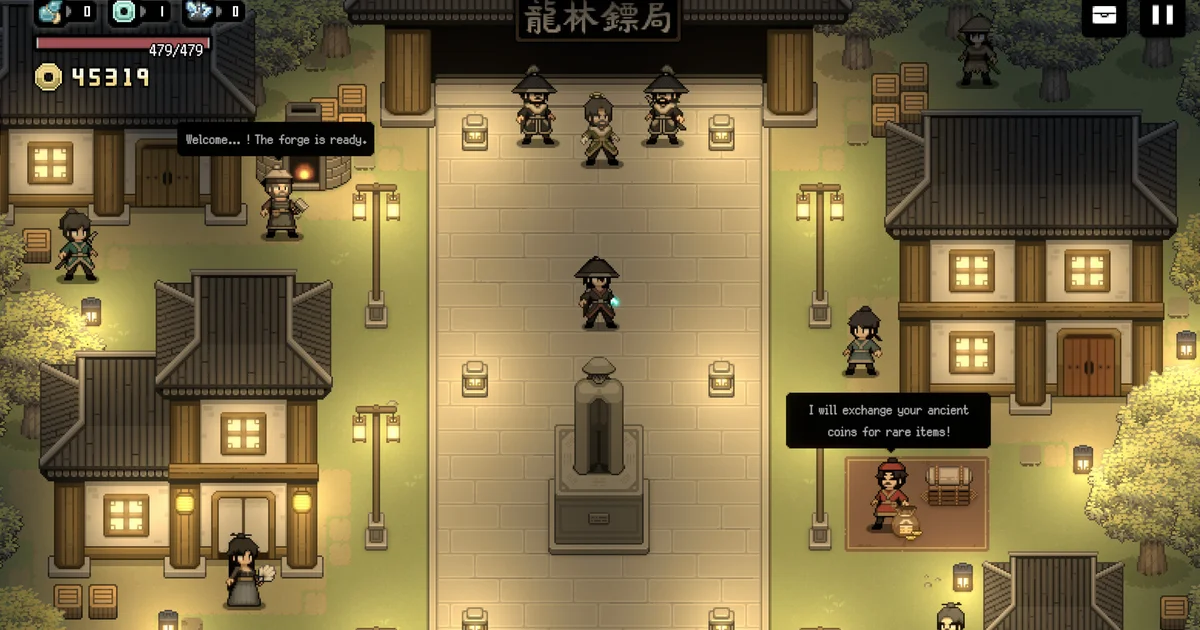
Murim Survival is a martial arts wave-survival roguelite: you drop into a ruined setting, enemies close in from every direction, and you fight until the timer runs out or you don't. Expeditions last 15-20 minutes. What separates it from the genre's obvious reference point, Vampire Survivors, is a mastery system that trains specific techniques permanently across every run you play, not just within one.
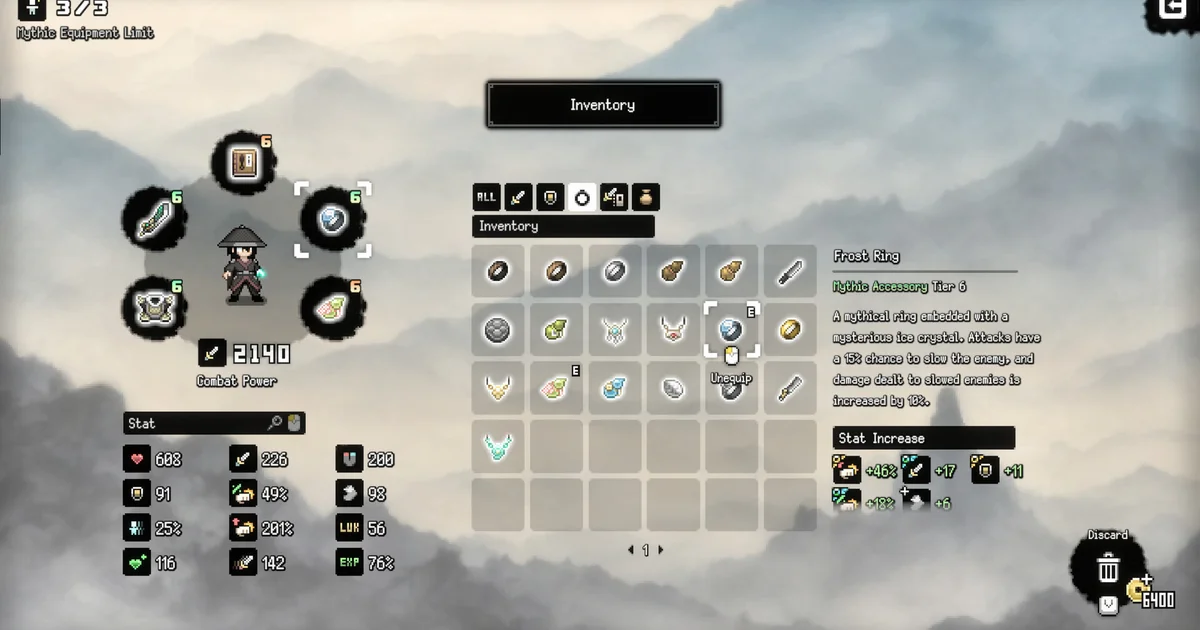
Sunwood Games doesn't hide the influence. Our review calls the Vampire Survivors DNA "undeniable" within the first two runs, and the wave-survival structure (screen-filling enemies, escalating passive power, short sessions) maps directly onto that template. What Sunwood built on top is a real equipment loot system with 60+ items that combine into distinct builds rather than just bigger numbers, and the mastery layer, which is the thing that makes individual runs feel connected instead of isolated resets.
The game shipped its 1.0 on May 4, 2026, closing out roughly 14 months of Early Access that started March 17, 2025. It's currently Mostly Positive on Steam. Sunwood Games also disclosed on the store page that AI was used in creating some of the art and background music, a partial-use disclosure rather than a blanket one, and it's a detail our review weighs directly rather than glossing over.
One structural detail worth knowing before your first run: the expedition selection screen gives you some control over zone type and enemy density before an expedition starts. It's a small choice, but it's one the mastery system rewards you for learning, since matching a zone's density to your current build is part of what separates a clean run from a wasted one.
Best builds
Three archetypes hold up once you push into Ascension difficulty, and our builds guide covers all three in depth.
Shortsword chain is the most approachable and the most documented: a shortsword paired with the right armor set unlocks a parry window on the third hit of a combo, which opens into a concentrated chain-attack sequence. It's the recommended starting archetype because the mastery investment compounds quickly, chain sequences see constant use in ordinary play.
Ranged kite rewards patience instead of burst damage. You invest mastery into distance-weapon skills and the footwork variants that let you hold range while the field fills up. It's slower to come online than shortsword chain, but scales better against the dense enemy groups Ascension throws at you later.
Heavy weapon momentum is the hardest of the three to execute. Heavy weapons hit slowly with a high stagger value, one clean swing on a grouped enemy staggers multiple targets at once, but the recovery animation leaves you exposed longer than a missed shortsword combo does. It's the strongest single-target clearer of the three when the mastery investment is concentrated and the right recovery-time gear shows up, and a liability when it isn't.
The guide's core rule across all three: mastery is permanent, so commit to one archetype's techniques early instead of spreading investment across several. Twelve to fifteen of the 60+ equipment items create genuinely distinct patterns; the rest are stat variants that don't change how a build actually plays.
The builds guide lays out a rough mastery timeline worth knowing before you start banking levels. Runs 1-5 are for using your intended archetype's techniques deliberately, even when it's inefficient in the moment, because you're banking mastery rather than optimizing a single expedition. Runs 6-15 are where that investment starts paying off as technique variants begin unlocking, provided you've stayed committed to one tree instead of dabbling in a second. By run 15 or so, your primary tree should be developed enough that Ascension becomes a realistic target, and at that point your build is defined more by mastery depth than by whatever equipment happened to drop that run.
Companion guide
Murim Survival gives you one companion recruitment event per expedition, usually near the run's midpoint, from a fixed NPC pool with no second chances. Our companion guide breaks down how to read the description text before committing, because once you recruit, that companion stays for the rest of the run with no dismissal or swap option.
Companions fall into three rough behavior types: melee aggressive (closes distance and holds it), melee support or interrupt (stagger and disruption moves that open windows for your own attacks), and ranged or evasive (fights from distance or retreats between attacks). Matching the type to your archetype matters a lot. A melee-aggressive companion pulling enemies to the center of the map actively works against a ranged kite build, while an interrupt companion that peels a second enemy off you is close to ideal for shortsword chain or heavy weapon momentum.
The guide's timing rule is the one detail most players miss: before the mid-run difficulty spike, take any companion over none, since raw presence reduces incoming pressure. After the spike, a badly mismatched companion becomes a real coverage gap rather than a minor inconvenience, so it's worth applying more scrutiny to what you recruit in the run's second half.
The description text uses fairly consistent language across the companion pool, and learning to read it saves you from judging a companion on its portrait alone. "Closes distance quickly" or "frontal pressure" flags melee aggressive. "Intercepts attacks" or "disrupts combos" flags the interrupt type that shortsword chain wants. "Retreats after striking" or "mobile pattern" flags the evasive companions that ranged kite needs. None of these behavior types are inherently good picks. They're only good or bad relative to what your current archetype actually needs from a fight.
Endgame guide
Ascension mode is Murim Survival's endgame, and it shows up in expedition selection without an announcement once you clear the main campaign's final contract. Our endgame guide covers what changes and how to prepare, because most players who reach the option aren't actually ready to use it yet.
Ascension raises enemy density and damage, and speeds up stagger recovery specifically, which matters because shortsword chain depends on stagger windows to finish its sequence. Without mastery variants that extend the chain window, the archetype can break in Ascension even though it worked fine at normal difficulty. Ranged kite has the highest ceiling here once its movement variant unlocks, since Ascension enemies tend to over-commit to closing range in ways a well-positioned kite build can exploit. Heavy weapon momentum is the least consistent of the three in the endgame, because its performance depends on a specific recovery-time equipment drop rather than a mastery unlock you can guarantee across runs.
Run count alone isn't the real gate. Run 15+ is a reasonable practical target, but what actually determines readiness is whether your primary technique tree has reached deep enough concentration to unlock its advanced variants. Players who spread mastery across three or four trees by run 15 typically have none of the advanced variants any single archetype needs, which is the single most common reason a first Ascension attempt stalls out.
The mastery structure that actually works going into Ascension is narrower than it sounds: one primary tree at deep concentration, one secondary technique (not a secondary tree) chosen to cover a specific gap in your archetype, and nothing else. Heavy momentum builds tend to use that secondary slot on a stagger-radius or distraction technique; shortsword chain often uses it for an extra interrupt. Companion selection also gets less forgiving here. Pre-spike, any companion still helps. Post-spike, a melee-aggressive companion in a ranged kite build creates a positioning problem that Ascension's denser waves make far more costly than it would be at normal difficulty.
Tips for new players
The mastery system is the one thing the tutorial doesn't make obvious, and our tips guide is built around catching new players up on it before they've wasted ten runs figuring it out themselves.
The short version: mastery never resets, so treat your first several runs as training sessions, not just expeditions. Pick two or three techniques you want to build toward by run 2 or 3, and use them deliberately even when a different pickup looks stronger in the moment. Scattering technique use across many different trees in your early runs feels exploratory but leaves you without the deep concentration any archetype actually needs later.
On equipment, don't equip the first weapon that drops just because its stat line looks good. All three archetypes depend on specific weapon behaviors, not raw tier, so a shortsword is a genuine downgrade for a ranged kite build even if its numbers are higher. On companions, read the full description before recruiting: ten seconds of reading avoids a run-long mismatch you can't undo once you've committed.
The tips guide breaks the first five runs into a rough script if you want something concrete to follow. Run 1 is for learning expedition structure rather than optimizing: use whatever feels natural and check the mastery screen afterward to see what leveled. Run 2, pick the two or three techniques you used most and lean into them deliberately. Run 3, commit to a direction, chain, ranged, or heavy, since the game rewards a made decision more than continued exploration. Runs 4 and 5 are where the mastery gap starts showing, and where equipment choices should start following your leveled techniques rather than the other way around.
Is Murim Survival worth playing?
Our full review rates the 1.0 launch 7.0/10, and the verdict is straightforward: Murim Survival earns its launch. The mastery system is real design, not a coat of paint over a Vampire Survivors clone, and it creates a cross-run investment layer that holds up over a dozen-plus hours in a genre where individual runs usually feel disconnected from each other.
The review's pros list the mastery system's genuine depth, 15-20 minute runs that stay distinct across different builds, 60+ equipment types that create real variety, an Ascension mode that gives post-completion players somewhere to go, and unusually strong localization for an indie release (full audio in 11 languages). The cons are just as direct: the disclosed AI-generated art and music is a real quality question for a paid release, the core loop borrows heavily from Vampire Survivors without fully stepping outside its shadow, and a Mostly Positive standing after over a year in Early Access signals some rough edges never got fully smoothed out.
Sunwood Games disclosed the AI use plainly on the Steam store page rather than burying it: "AI was used in the creation of some of the arts and BGM." The review's read is that the mastery system and equipment interactions are clearly human-designed, the synergies are too deliberate and fourteen months of iteration shows in how encounters hold together, while some environmental textures carry the smoothed, slightly-off look that tends to mark AI-generated visual work. That distinction matters for how you weigh the disclosure: the parts doing the actual design work aren't the AI-assisted parts, but that doesn't make the AI-assisted parts a non-issue either.
If you already like Vampire Survivors-style roguelites and the martial arts theme appeals to you, the mastery system is reason enough to try it. If asset provenance in a paid release matters to you specifically, the disclosure is there before you buy, and the review walks through what it does and doesn't affect.
All Murim Survival guides
Every guide in this Murim Survival complete guide, gathered in one list:
- Murim Survival Review: A Martial Arts Roguelite 1.0: our full 7.0/10 verdict on the 1.0 launch, covering the mastery system, the AI art disclosure, and how it stacks up against Vampire Survivors.
- Murim Survival Builds Guide: Best Archetypes (2026): the three archetypes that hold up into Ascension, which of the 60+ equipment items actually matter, and how to direct mastery investment early.
- Murim Survival Companion Guide: Recruitment and Synergies: how to match a companion's fixed moveset to your build archetype, and when to recruit despite an imperfect fit.
- Murim Survival Endgame Guide: Surviving Ascension Mode: what changes in Ascension for each archetype, how much mastery concentration you actually need, and why run count isn't the real readiness gate.
- Murim Survival Tips: Mastery, Builds, and Early Survival: a beginner-focused walkthrough of the mastery system, equipment synergies, and companion selection for players in their first ten runs.
Frequently Asked Questions
What is Murim Survival? Murim Survival is a wave-survival roguelite from Sunwood Games with a martial arts theme, built on a Vampire Survivors-style loop. Its hook is a mastery system that permanently levels the techniques you use, so every 15-20 minute run feeds a long-term fighter instead of starting over.
Is Murim Survival worth playing in 2026? Our full review rates it 7.0/10. The mastery system is a genuine second progression layer, not decoration, and the equipment variety holds up. The disclosed AI-generated art and music is the real asterisk, worth weighing before you buy, especially at full price.
What's the best build to start with in Murim Survival? Shortsword chain. It has the clearest documented synergy (shortsword plus a parry-trigger armor set), gives a defined skill moment instead of constant repositioning, and its mastery compounds quickly because chain sequences see heavy use in normal play.
Does Murim Survival have multiplayer or co-op? No. Murim Survival's Steam listing confirms single-player only, with no co-op or multiplayer category. None of our build, companion, endgame, or tips coverage describes a shared-session mode, which matches the storefront listing.
How do you unlock Ascension mode in Murim Survival? Ascension appears in expedition selection after you clear the main campaign's final contract, with no in-game announcement. Run count isn't the real gate: mastery concentration in one technique tree is. Most players reach it around run 8-12 but aren't actually ready until run 15+.
How much does Murim Survival cost on Steam? $7.99 at the time of writing, with no active discount. Sunwood Games hasn't published a physical release or separate demo alongside the Steam version.
Does mastery reset when you start a new Murim Survival run? No, and that's the entire point of the system. Techniques you train by using them in combat keep their levels forever. A chain-attack technique you build up in run 3 is still that strong in run 30, which is why scattering technique use early costs you later.
References
- Murim Survival on Steam: official store page, current price, review score, and system requirements
- Sunwood Games developer page: developer profile and other titles from the studio
- Vampire Survivors on Steam: the genre reference point our review and tips guide both compare Murim Survival against
About the author

Games Critic
Games writer and reluctant optimist who has reviewed over 400 titles across 9 years. Irish, currently in Berlin. Has strong opinions about tutorial design.
- 400+ games reviewed across 9 years
- Platformer and horror specialist
- Narrative design focus
Keep reading

Disclaimer
This article is published for informational and entertainment purposes. It does not constitute professional financial, legal, or technical advice. Game performance, online services, patch schedules, and store listings change. Verify critical details (pricing, system requirements, regional availability) with publishers and storefronts before you buy. Affiliate links, where present, help support our editorial work and are labelled in our affiliate disclosure.
Comments
Loading comments…