
GameBrief · General
Nightwater Preview: Automation, Biomes, and 4 Endings
Nightwater preview guide: gather, craft, automate, expand floating biomes, play five minigames, and uncover the Lighthouse's four endings today.
Reviewing
Nightwater
Studio Ashty · Studio Ashty, Irox Games
Nightwater preview coverage starts with its strongest contrast: this is a factory game set on a solitary island floating in liquid void and starlight. The fantasy is not just to make a larger machine. It is to expand the island, reveal new biomes, move from sticks and stones toward an industrial future, and decide how much of the Lighthouse mystery you want to uncover.
TL;DR: Nightwater is a single-player gathering, crafting, and automation game from Studio Ashty. The Steam page promises more than 20 resources, more than 100 buildings, crafts, and buffs, more than 60 automation buildings, five optional minigames, and four story endings. It listed September 18, 2026 as the planned release date, but the September 17 snapshot still showed no price, no user reviews, and a demo. Treat this as a systems preview until the launch build is live.
Nightwater preview: quick answer
- Nightwater takes place on an isolated floating island surrounded by liquid void and starlight.
- Progression moves from simple sticks and stones through the Bronze Age and Industrial Era toward a future age.
- New biomes are manifested as the island expands, with each biome offering resources and secrets.
- Machines can automate gathering, farming, assembly, storage, and resource production.
- Five optional minigames have their own items, upgrades, and progression, with rewards that improve the factory.
- The story is optional, but investigating the Lighthouse can reveal four endings and secret areas.
- Steam lists Nightwater as single-player. No co-op promise, launch price, or user review score was visible in the checked pre-release snapshot.
Current status: September 17, 2026
The official Steam listing identified Studio Ashty as developer and Studio Ashty with Irox Games as publishers. It listed September 18, 2026 as the planned release date, offered a demo, and still showed Nightwater as not yet available when checked. The page showed no user reviews and no posted price in that snapshot.
That status is important for a preview aimed at a scheduled date. The store can change after unlock, and any price or review count copied into a pre-release article would become stale quickly. Use the live page at publication for the final purchase line.
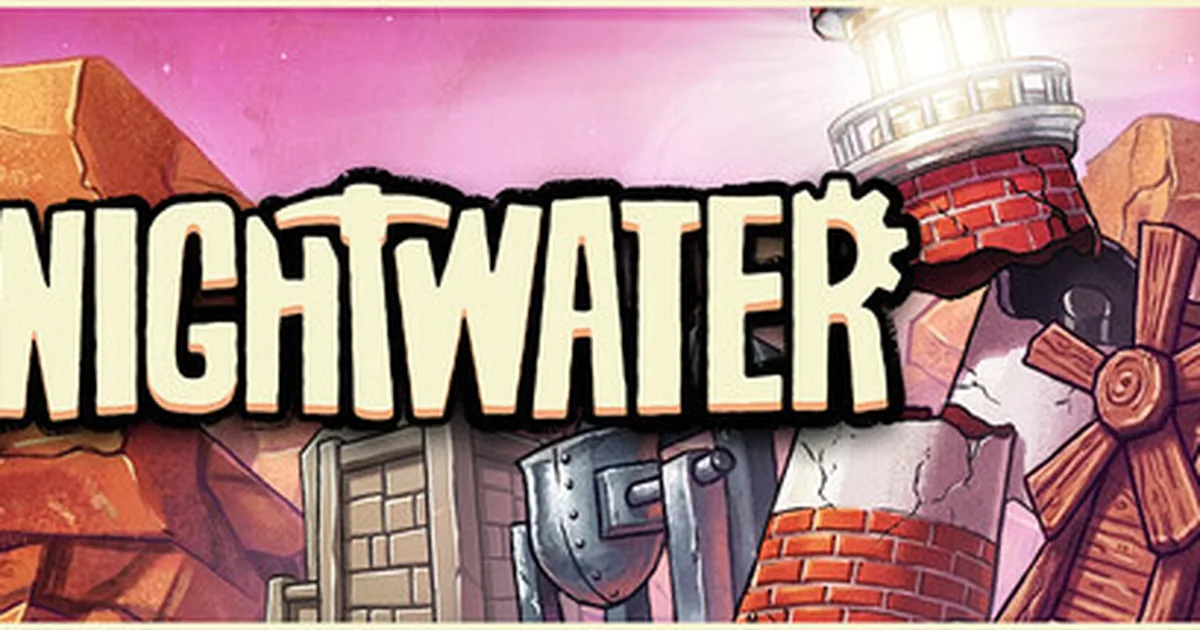
 The official feature art calls out minigames as one of the systems that sits beside the factory loop.
A factory built on a growing island
Nightwater's first layer is the familiar satisfaction of converting raw materials into better tools and structures. The unusual part is that the map itself is part of the progression. The Steam description says players expand the island by manifesting new biomes, then harvest each biome's unique resources.
That gives the automation loop a geographic purpose. A new machine is not only a faster version of an old one. It can make a newly revealed area useful, bridge a resource bottleneck, or open a route to a secret. The island starts as a small set of simple materials and grows into a production space with more than 20 advertised resources and more than 100 buildings, crafts, and buffs.
Players who enjoy Shapez 2 automation will recognize the appeal of a factory that rewards clean routing. Nightwater appears less focused on endless belt optimization and more interested in linking resource milestones to exploration and story. That distinction will matter once the live build shows how much rebuilding the island asks for.
Automation: when to stop gathering by hand
The official page advertises more than 60 buildings for farmers, assemblers, and storage, with pipes that connect production. Machines can be moved or deconstructed without losing items according to the store description. That last promise is especially important for experimentation: a player can test a layout without turning one bad placement into a permanent resource loss.
A sensible automation order should follow bottlenecks rather than the largest building count:
Automate the resource you touch most: If one material appears in every early craft, remove it from the manual loop first.
Add storage before adding speed: A faster producer is wasted if output has nowhere to go or if a full container blocks the chain.
Connect one production chain: Make the input, machine, pipe, and output visible before duplicating it across the island.
Keep space for the next biome: The factory is not the entire map. Leave a readable route for expansion and exploration.
Rebuild when the milestone changes: If a resource goal unlocks a new building or buff, the best layout can change. Because the store page says machines can be moved or deconstructed without losing items, the intended experience appears to allow that iteration.
Five minigames that feed the factory
Nightwater includes five optional minigames. The Steam description says each has its own gameplay loop, items, upgrades, and progression, and that their rewards unlock buildings, crafts, and buffs outside the minigame.
That makes them more than distractions. They are alternate routes to factory power. A player who dislikes one minigame can still focus on gathering and automation, while a player who enjoys the side loop can use it to accelerate the main island.
The key design question is opportunity cost. A minigame may be optional in the sense that the story does not force it, but its reward can still change how quickly a factory grows. Treat each one as a separate production line: learn the input, understand what it returns, and decide whether its reward solves the current bottleneck.
Do not call the five modes classes or assume their names from the promotional banner. The current public Steam description confirms the number and the reward relationship, but not a complete rulebook for each minigame.
 The optional story is tied to the Lighthouse and the hidden meaning of the world around it.
The Lighthouse and four endings
Nightwater's story is deliberately optional. The Steam page says anyone can reach the end without engaging with the mystery, while players who search for the truth behind Nightwater and the Lighthouse can uncover four endings and secret areas.
That split is a good reason not to rush the factory. Automation handles the visible work, leaving time to explore strange edges of the island, read clues, and decide whether a structure is valuable because it improves production or because it reveals something about the setting.
The safe expectation is four possible outcomes, not four simple dialogue buttons. The store page does not explain the requirements for each ending, so an article should not invent a checklist. Record unusual objects, revisit areas after a biome expands, and keep the story path separate from the resource path until the live game explains the connection.
Ages and progression
The advertised progression runs from sticks and stones to the Bronze Age, the Industrial Era, and into the future. That language describes a long technology arc, but it does not guarantee a specific number of tiers or a fixed unlock order beyond the examples named on Steam.
The cleanest way to approach each age is to identify what it changes:
- Material access: which resource becomes available and where it is found.
- Production speed: which manual task can become an automated chain.
- Building footprint: whether the island needs a compact workshop or a larger factory.
- Exploration reach: whether the new tools reveal a biome or secret previously out of reach.
- Story opportunity: whether the Lighthouse or a hidden area becomes accessible.
The Tales of Seikyu crafting guide is a useful comparison for tracking resource progression, but Nightwater's automation and biome manifestation are its own systems.
Step-by-step: plan a first Nightwater session
1. Gather enough for one clear tool upgrade: Learn the first resource loop before spending everything on decoration.
2. Mark the island's edges: Expansion and new biomes are central, so keep track of what is currently inaccessible.
3. Build storage before a large machine: A clean buffer prevents the first automated chain from jamming.
4. Automate one common resource: Prove the chain works before copying it.
5. Try one minigame: Learn what it returns and whether the reward addresses your next factory bottleneck.
6. Explore when machines are working: Use the idle time to search for secrets, story clues, and routes to the Lighthouse.
7. Revisit old areas after each biome expansion: The game promises secrets as well as resources, so a location that looked empty at the start may not stay that way.
What to check at launch
- Whether the displayed price matches the regional store you use.
- How many resources, buildings, and buffs are in the first public build rather than the advertised roadmap.
- How freely the island can expand and whether there are hard boundaries.
- Whether automation can be paused, moved, or rebuilt exactly as the store description promises.
- How distinct the five minigames feel from the factory loop.
- Whether the four endings have clear clues or require blind experimentation.
Players looking for another low-pressure production comparison can also read the best base-building colony sims list and the Romestead buildings guide, but neither article is evidence of Nightwater's final economy. The Subnautica 2 tips guide and Romestead survival tips are useful only as genre comparisons for pacing and resource pressure.
Related Reading
- Shapez 2 Automation Guide: production-chain thinking.
- Tales of Seikyu Crafting Guide: resource progression comparison.
- Romestead Buildings Guide: build-order comparison.
- Best Base-Building Colony Sims: wider genre context.
- Nightwater Steam page: live release information.
References
- Nightwater on Steam: official release status, single-player feature list, automation systems, minigames, story, and current price/review snapshot checked September 17, 2026.
- Nightwater Steam app details: app ID and developer/publisher metadata.
- Studio Ashty: developer source for launch context when available.
- Nightwater Steam news: official update channel.
Frequently Asked Questions
Is Nightwater a multiplayer game?
Steam lists it as single-player. The current official page does not advertise online co-op or multiplayer support.
What is the main goal in Nightwater?
The visible goal is to grow a factory and reach the Lighthouse. The story layer asks you to uncover what Nightwater is, with four endings and secret areas for players who investigate.
Are the minigames required?
They are described as optional. Their rewards can still improve buildings, crafts, and buffs, so optional does not mean irrelevant to factory progression.
How many automation buildings are there?
The Steam page advertises more than 60 buildings for farmers, assemblers, and storage. It separately advertises more than 100 buildings, crafts, and buffs overall.
Does Nightwater have a demo?
The Steam page showed a downloadable demo in the pre-release snapshot. Check the live listing for its current availability after launch.
What is the price of Nightwater?
No price was displayed in the September 17 pre-release snapshot. Check the live Steam store for the current regional price rather than relying on a placeholder.
About the author

Indie & JRPG Critic
Indie game evangelist and lifelong JRPG fan covering small studios since 2017. Mumbai-born, London-based. Writes the way she talks.
- 7 years indie games coverage
- JRPG and visual novel specialist
- Narrative design focus
Keep reading


Disclaimer
This article is published for informational and entertainment purposes. It does not constitute professional financial, legal, or technical advice. Game performance, online services, patch schedules, and store listings change. Verify critical details (pricing, system requirements, regional availability) with publishers and storefronts before you buy. Affiliate links, where present, help support our editorial work and are labelled in our affiliate disclosure.
Comments
Loading comments…