
GameBrief · General
Kernel Hearts Preview Guide: Four-Player Co-op Basics
Kernel Hearts preview guide covering the four-player roguelike loop, M.A.H.O.U. units, chip builds, magical-girl transformations, bosses, and launch status.

Reviewing
Kernel Hearts
Ephemera Games · Whitethorn Games
Kernel Hearts preview coverage is best framed as a launch guide, not a review. The game released on September 17, 2026, and its official Steam page describes a four-player roguelike action RPG about magical girls, angelic enemies, and a climb through the Tower of Babel.
TL;DR: Kernel Hearts puts the M.A.H.O.U. Unit in a tower full of angelic enemies and domain guardians. You combine attacks, spells, movement, and unique powers during a run, then return to a laboratory to customize a unit with up to 256KB of chips. The game supports single-player and up to four-player online co-op. The US Steam snapshot on September 18 showed $17.99 ($19.99 base) and only three user reviews, so the launch sample is too small for a meaningful score.
Kernel Hearts preview: quick answer
- Kernel Hearts is developed by Ephemera Games and published by Whitethorn Games.
- Steam lists Kernel Hearts as released on September 17, 2026.
- The core loop combines action combat, roguelike expeditions, character customization, and a return to a laboratory between runs.
- The official description says each level ends with a boss fight against a domain guardian.
- Up to four players can cooperate online. Single-player is also listed.
- The unit system uses chips, with up to 256KB of chips equipable to a M.A.H.O.U. unit.
- A temporary magical-girl transformation can release a powerful attack and reveal the character's true form for a short period.
Current status: September 18, 2026
The official Steam listing now shows Ephemera Games as developer and Whitethorn Games as publisher, with the September 17, 2026 release live. The US price was $17.99 on September 18, discounted from a $19.99 base price. The official app-review endpoint returned three user reviews, all positive, which is not enough to call a stable score.
That means this article can explain the launch structure and give the current price snapshot, but it should not pretend to have a mature review score. A launch listing is evidence of the current store state, not proof that every balance detail is final.
 The M.A.H.O.U. Unit is presented as a team, even though Steam also lists single-player support.
The expedition loop
The official description gives Kernel Hearts a clear two-part rhythm. First, enter the tower and combine attacks, spells, movement, and unique powers while fighting through a domain. Each level culminates in a boss fight. After the expedition, return to a laboratory on the edge of humanity's last holdout and spend the rewards on unit customization.
That structure should feel familiar to players who like roguelike co-op games, but the identity comes from how the combat tools combine. The page does not present a fixed class chart or a final list of four named heroes. It presents units, powers, chips, and a magical-girl transformation as the pieces that define a run.
The best first-session habit is therefore to learn one movement option and one attack or spell pairing before searching for a perfect build. In an action roguelike, a strong effect is only valuable if the player can reach the target, avoid the response, and repeat the sequence under pressure.
M.A.H.O.U. units and chip customization
After each expedition, the team returns to the laboratory. Steam says players can spend rewards to unlock and equip up to 256KB of chips onto a M.A.H.O.U. unit. The wording makes chips the stated between-run progression system, but it does not publish a final chip catalogue or exact capacity math beyond that headline.
Treat the chip system as a build budget. A useful first loadout should answer three questions:
- Does it improve the action you already use reliably?
- Does it cover the damage, defense, or movement problem that ended the last run?
- Can the team understand the effect quickly enough to use it during a boss fight?
Avoid stacking every chip toward damage before the live game shows how much defensive or movement coverage a domain expects. The Dark Scrolls builds guide is a good comparison for planning a roguelike build around a small number of reliable interactions, but its mechanics do not transfer to Kernel Hearts.
 The official character art emphasizes the squad and its relationships rather than publishing a rigid class chart.
Combat: powers, spells, and transformation
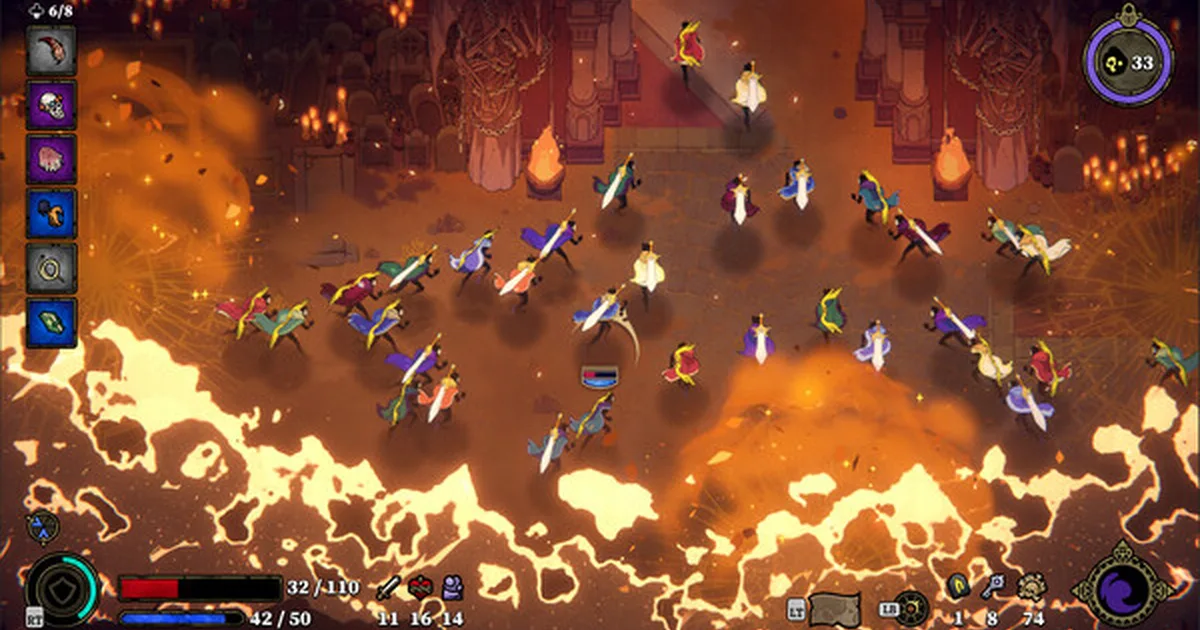
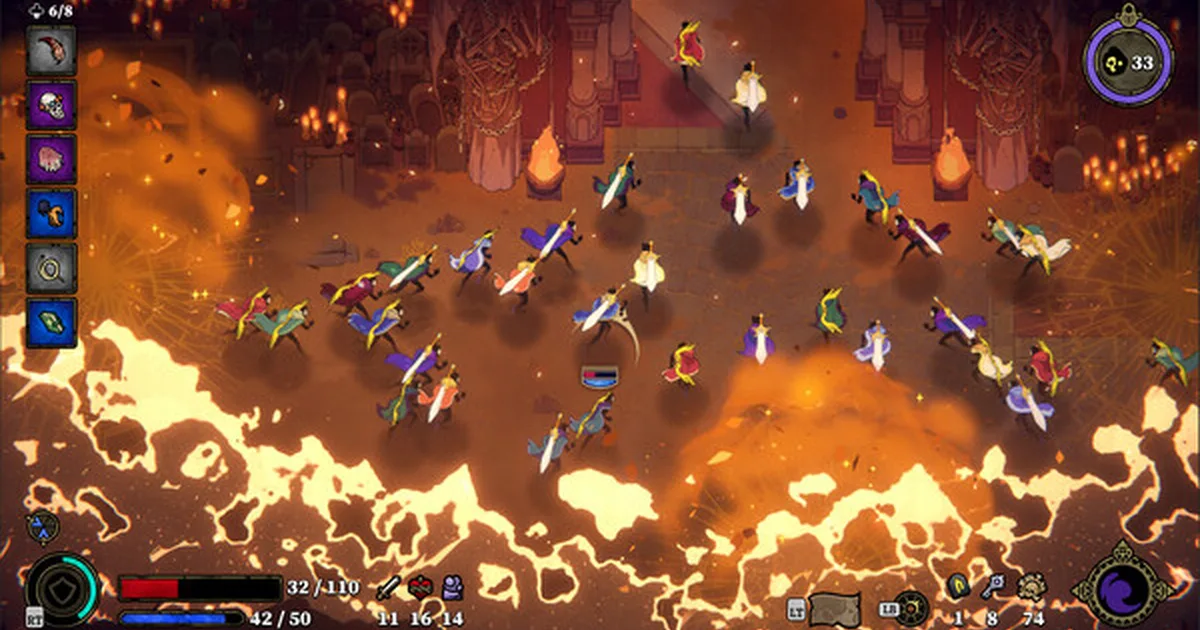
The Steam page describes a combat system where players mix attacks, spells, movement, and unique powers during each run. That wording suggests the important choice is not only what ability is strongest, but how the ability changes the next position. A spell that pushes or creates space can be more useful than a larger hit when an angelic enemy is closing the route.
The magical-girl transformation is a temporary power spike. The official description says it dispels the Heavenly Curse, releases a devastating attack on nearby foes, and grants the true form for a short period. Because it is described as a short transformation rather than a permanent class switch, save it for a wave or boss moment that lets the attack connect.
The practical combat sequence for a new player is simple:
Create space: use movement and positioning before spending the most valuable power.
Confirm the target: keep the boss or dangerous angel in view before committing to a long animation.
Use the transformation with a purpose: clear a nearby threat, break a boss phase, or rescue the team from a bad position.
Return to the normal loop: the transformation is temporary, so the base movement and attack plan still have to work afterward.
This is a guide to the announced interaction, not a claim about exact damage, cooldowns, or invulnerability frames. Those details need a live build check.
Co-op roles without inventing classes
Kernel Hearts supports up to four players, but the Steam page does not define formal jobs. A party can still create useful responsibilities:
- Path reader: calls dangerous terrain, enemy clusters, and the next safe direction.
- Pressure player: focuses the priority target or boss while the group avoids spreading damage.
- Control player: watches space-making powers, movement tools, or effects that keep enemies away.
- Recovery caller: watches the team's health, transformation timing, and when to stop chasing a kill.
These are communication labels, not character classes. Rotate them when a player is better at a particular power or when the build changes. The Slay the Spire 2 co-op guide is a useful reminder that multiplayer-specific decisions need a shared plan, even in a different genre.
Step-by-step: a safe first expedition
1. Read the unit screen: Identify what chips or powers are already available before entering the tower. Do not assume the demo or promotional art reveals the final starting kit.
2. Choose one combat purpose: Decide whether the first run is testing damage, movement, crowd control, or survival. A clear question makes a failed run useful.
3. Stay within rescue distance: Four players do not need to stand on top of each other, but they should be close enough that a transformation or movement skill can save a teammate.
4. Save the transformation for the first serious wall: Use it to answer an actual threat, not to clear a harmless opener.
5. Review the chips in the lab: Keep a short note of which effect solved a problem and which one looked good but never activated in time.
6. Change one variable: Replace one chip or power on the next expedition. Changing the entire loadout hides what actually improved the run.
What to verify in the launch build
The first live-build checks should be practical rather than speculative:
- How many units are available and how distinct their starting tools feel.
- Whether the 256KB chip capacity is a literal budget, a progression gate, or a UI abstraction.
- How much a single-player run changes when no teammate can cover movement or revive pressure.
- Whether each domain guardian has a readable phase structure.
- How much of the story and relationship system sits between expeditions.
- Whether the demo's control feel and performance carry into the full build.
Players who want a polished launch review should wait for a larger review sample. The Kernel Hearts Steam news feed is the right place to check for launch fixes. For a different approach to small-team pressure, compare the Deep Rock Galactic Rogue Core co-op guide and the Farever co-op guide after you have tested the tower's communication demands.
Related Reading
- Slay the Spire 2 Co-op Guide: team planning in another roguelike.
- Dark Scrolls Best Builds Guide: build-path comparison.
- Dark Scrolls Co-op Guide: communicating roles without formal classes.
- Riftstorm Co-op Guide: action co-op positioning and ability timing.
- Best Indie Co-op Games: broader genre context.
References
- Kernel Hearts on Steam: official release status, player count, chip system, transformation, and current price snapshot checked September 18, 2026.
- Kernel Hearts Steam app reviews: live review count cross-check checked September 18, 2026.
- Kernel Hearts Steam news: official launch and update channel.
- Kernel Hearts app details: app ID and developer/publisher cross-check.
- Whitethorn Games: publisher home for launch context.
Frequently Asked Questions
Is Kernel Hearts a four-player-only game?
No. Steam lists single-player as well as online co-op for up to four players. The four-player description explains the intended social scale, not a requirement.
Are the four magical girls four fixed classes?
The Steam page describes four magical girls but does not publish a complete class or roster table in the checked snapshot. Do not assume names, roles, or unlock order until the live build confirms them.
What are chips used for?
Chips are equipped to a M.A.H.O.U. unit after an expedition. The Steam page says players can unlock and equip up to 256KB of chips, making them the announced between-run customization layer.
Should I use the transformation at the start of every level?
Not by default. It is described as a short temporary true-form power with a devastating nearby attack. Save it for a dangerous wave, a boss window, or a rescue situation until the live cooldown and charge rules are clear.
Does Kernel Hearts have a price yet?
The US Steam listing showed $17.99 on September 18, 2026, discounted from a $19.99 base price. Regional prices and discounts can differ, so check the live store before buying.
Is there enough information for a review?
The game is live, but the initial app-review endpoint has only three positive reviews. This article remains a launch guide based on official feature information rather than a mature review.
About the author

Critical game theorist with a background in film criticism. Writing for print and digital outlets since 2015. Specialises in genre analysis and design heritage.
- Background in film criticism
- 10 years games coverage
- Genre theory and design history specialist
Keep reading



Disclaimer
This article is published for informational and entertainment purposes. It does not constitute professional financial, legal, or technical advice. Game performance, online services, patch schedules, and store listings change. Verify critical details (pricing, system requirements, regional availability) with publishers and storefronts before you buy. Affiliate links, where present, help support our editorial work and are labelled in our affiliate disclosure.
Comments
Loading comments…