
GuideWitchspire
Witchspire Seed Farming Guide: All 4 Seed Types (2026)
About the game
Witchspire
Witchspire seed farming has nothing to do with familiars, incense, or spirit balls, and that trips up a lot of new players who assume it's the same recruiting loop with a different coat of paint. The site's existing Witchspire coverage walks through Coven choice and the incense-based familiar system in detail, but neither mentions crops, seeds, or Gardening Plots once. That's not an oversight. It's a completely separate system, gated behind its own Luminary branch, and it's real: three tiers of Gardening Plots, four seed types, and a full crop-to-cooked-food pipeline that most players stumble into by accident rather than by reading a guide.
TL;DR: Witchspire seed farming runs through Gardening Plots (Small, Medium, Large), not the incense/familiar system covered elsewhere on this site. There are exactly 4 seed types: Carrot (125 coins), Chili (150), Sweetfruit (200), and Wheat (100), all sold at Mirella's Shop or found as world loot. Plot upgrades are gated by a Farming skill level tied to your Hearth tier. Crops aren't just decoration: Wheat becomes Flour at a Windmill, then Bread at a Stove, for a 200 Overhealth buff.
How does seed farming work in Witchspire? (quick answer)
You craft a Gardening Plot (Small, Medium, or Large), plant one of four seed types bought from Mirella's Shop or picked up as loot, and wait for it to grow into a harvestable crop. Some crops are eaten directly for a small buff; others feed into a longer crafting chain at a Windmill and Stove for a bigger one. It's an entirely separate progression loop from the incense-and-spirit-ball system used to recruit familiars.
Witchspire seed farming: key takeaways
- Three Gardening Plot tiers exist: Small, Medium, and Large, each requiring more Wood and Stone than the last.
- Exactly 4 seed types are in the game right now: Carrot, Chili, Sweetfruit, and Wheat.
- Seeds cost between 100 and 200 coins at Mirella's Shop, or drop as world loot for free.
- Plot upgrades are locked behind a "Farming" skill level, separate from combat or crafting Luminaries.
- Wheat is the only crop with a documented multi-step use: Wheat to Flour to Bread, for a 15-minute Overhealth buff.
Overview: how seed farming differs from the familiar system
If you've read Witchspire's beginner guide on this site, you already know the game's headline creature-collecting hook: kill an enemy, hope for a spirit ball, use incense to keep it from despawning, then recruit it with F. That system runs on combat and incense drops. Seed farming runs on none of that. It's a build-and-wait loop tied to your base, not your weapon.
The two systems do share one thing: both are gated by the Luminary skill tree, which unlocks in stages as your Hearth levels up. Beyond that structural similarity, they don't overlap. You won't find seeds by fighting, and incense won't help a crop grow faster. One early Reddit review of the Early Access build put it plainly, describing "certain crafting stations, farming stations, and building sets" as separate categories locked behind different Luminary branches. That's a player independently confirming what the wiki's item and building categories already show: farming stations are their own thing, not a reskin of anything else in the game.
This guide covers what's documented on the Witchspire Wiki as of August 2026: plot costs, seed prices, what each seed grows into, and the one crafting chain (Wheat to Bread) with a confirmed end use. What it doesn't cover, because no source documents it yet, is exact growth time in real minutes or harvest yield per plot. If you've timed a crop cycle yourself, that number isn't fabricated here; it's flagged as unconfirmed instead.
Gardening Plots: the three tiers and what they cost
Three Gardening Plot sizes exist, and each is a distinct workstation you place in your base, not an upgrade that transforms in place.
Small Gardening Plot costs 3 Wood and 1 Stone to craft. It's the entry point, available as soon as you've put a couple of points into the Farming skill.
Medium Gardening Plot costs 5 Wood and 2 Stone. It requires the Small Gardening Plot already unlocked, plus Farming skill level 5, and it sits on the Luminary tree at Hearth level 2.
Large Gardening Plot costs 10 Wood and 5 Stone, the steepest jump of the three. It requires Farming skill level 15 and a Hearth at level 5, putting it firmly in mid-game territory rather than something you'll have in your first hour.
None of the three plot pages document exact plant-slot counts or grow-timer numbers, which is a real gap in the wiki's current coverage. What is confirmed: all three are classified as Basic-subtype Workstations tied to the same Farming Luminary line, so investing in one tier's unlock progresses you toward the next rather than being a separate resource sink.
If any of that Hearth or Luminary terminology is new to you, the site's Witchspire beginner guide covers how Hearth levels gate the tree and why Coven choice doesn't touch any of it.
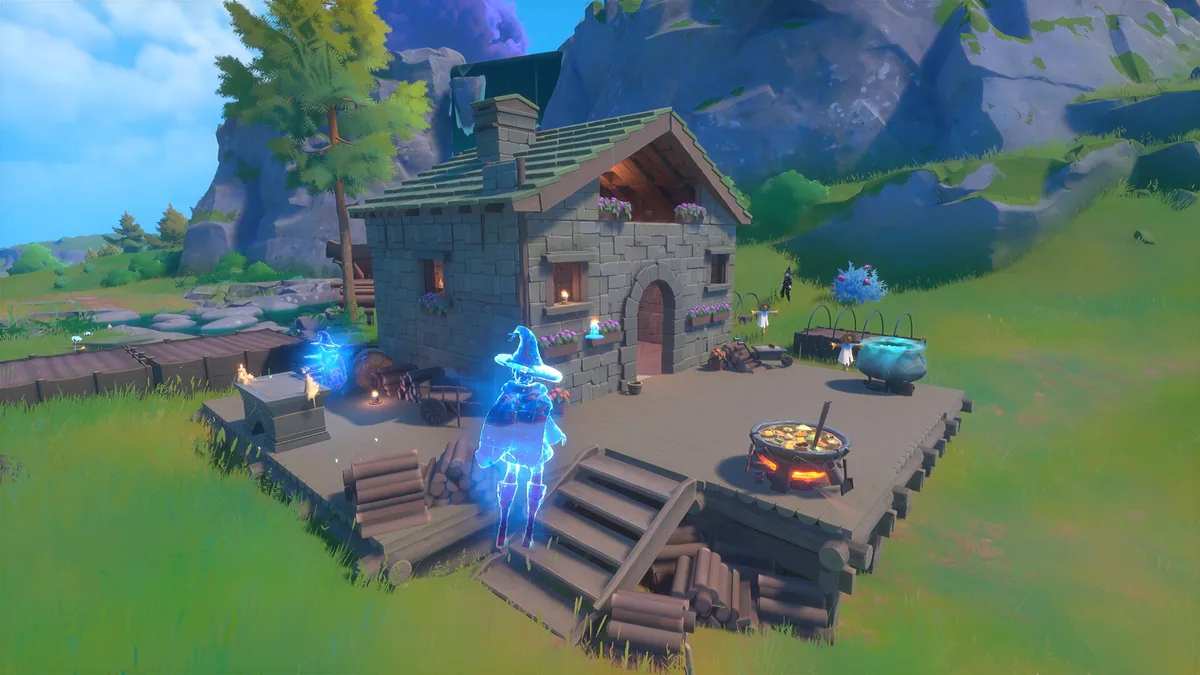 Caption: A Gardening Plot's hooped trellis frame (right) sits apart from the main crafting deck. Plan the extra footprint before you commit to a base layout.
All 4 Witchspire seed types and where to buy them
There are exactly four seed types in the current build. Here's what each one costs and what it grows into, all sourced from Mirella's Shop listings on the wiki:
| Seed | Price at Mirella's Shop | Grows into |
|---|---|---|
| Wheat Seed | 100 coins | Wheat |
| Carrot Seed | 125 coins | Carrots |
| Chili Seed | 150 coins | Chilis |
| Sweetfruit Seed | 200 coins | Sweetberry |
Mirella isn't a single fixed shop. She operates as a traveling merchant with locations in Vyrs Landing, Mira Isles, and Shuddersands, so you don't have to backtrack to one specific corner of the map once you're ready to buy. Every seed is also flagged "Found" on the wiki alongside "Shop," meaning they show up as regular world loot too. If you'd rather explore than spend coins, that's a legitimate path in, not a fallback.
The price scaling isn't uniform, either. Wheat is cheapest at 100 coins despite feeding into the game's only documented multi-step crafting chain, while Sweetfruit costs double that at 200 for what's currently just a direct consumable. A plain store listing won't tell you that; it matters if you're deciding where to spend limited early coin.
GODEEPER: Witchspire isn't the only cozy survival game where crop timing and seed cost decide your early economy. Starsand Island Farming Guide: GMAX Crops, Seasons (2026) →
Step-by-Step: setting up your first Gardening Plot
- Level your Farming skill enough to unlock the Small Gardening Plot. This happens naturally through the same Luminary progression that gates every other early station, so you likely won't need to grind for it specifically.
- Gather 3 Wood and 1 Stone. Both are base-tier materials you'll already be collecting for your Hearth, so this rarely requires a dedicated trip.
- Place the Small Gardening Plot inside your base's build radius. It's a Workstation like a Stove or Windmill, so it needs to sit within your claimed building area.
- Buy or find a seed. Visit Mirella's Shop in Vyrs Landing, Mira Isles, or Shuddersands for a guaranteed purchase, or keep an eye out for seed drops while exploring if you'd rather not spend coin yet.
- Plant the seed in the plot and wait. Exact grow time isn't documented anywhere reliable as of this guide, so budget more time than you'd expect from a typical cozy-farming game and check back periodically rather than assuming a fixed timer.
- Harvest and decide: eat it raw, or process it further. Carrots, Chilis, and Sweetberries currently function as direct consumables. Wheat is the one crop with a confirmed second stage.
From seed to buff: what crops actually do
Growing a crop isn't the end of the loop; it's the middle. What happens after harvest is where the system actually pays off, and it's also where the wiki's data gets specific enough to be genuinely useful rather than just a shopping list.
Carrots are the clearest example of a direct-use crop. Eating one grants plus 5% healing per second for 2 seconds; a short, situational buff you'd pop mid-fight or after a rough pull rather than stock up on for a long expedition.
Wheat works differently, and it's the one chain fully documented end to end. Take 1 Wheat to a Windmill, and it converts into Flour. Take 3 Flour and 1 Wood to a Stove, and that becomes Bread, a consumable that grants plus 200 Overhealth for a full 15 minutes. That's a meaningfully longer and larger buff than anything Carrots offer directly, and it's the strongest argument for building past the Small Gardening Plot: Wheat at 100 coins is the cheapest seed in the game, and it's the one that scales into the best confirmed payoff.
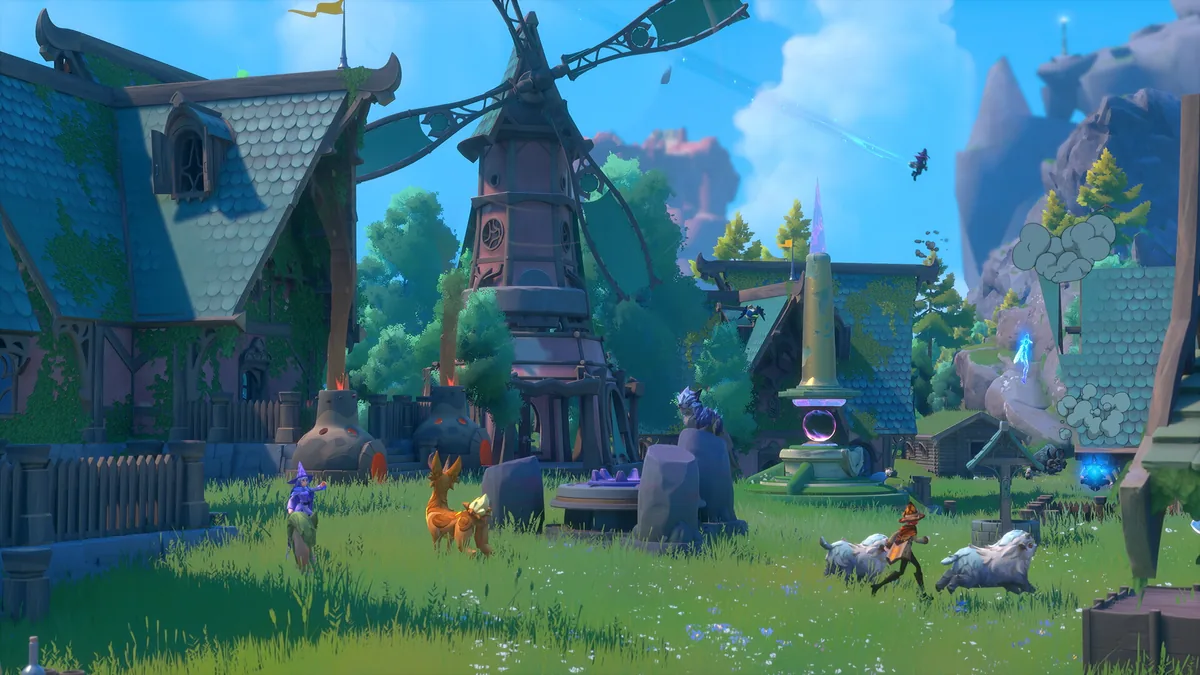 The Windmill workstation, where 1 Wheat converts into Flour before a Stove turns it into Bread.
Chilis and Sweetberries (grown from Sweetfruit Seed) are documented as crops with confirmed harvest results, but neither has a published recipe chain the way Wheat does. That doesn't mean one doesn't exist; it means it isn't in the current wiki data, so this guide isn't going to invent a Chili recipe to fill the gap. If Envar Games documents one in a future patch, or a community source confirms it independently, that's worth a follow-up, not a guess now.
GODEEPER: If you're weighing whether a crafting-chain payoff like Wheat-to-Bread is worth the setup time compared to other survival games' farming loops, Valheim Iron Farming Guide: Crypts, Keys & Portals (2026) → breaks down a similarly gated resource loop in a very different genre.
Tips for efficient seed farming
Start with Wheat, not Carrots. Wheat is the cheapest seed at 100 coins and the only one with a confirmed downstream recipe. Carrots are fine once you have spare coin, but Wheat gives you a reason to also build a Windmill and Stove early, which pay off across the rest of your kitchen, not just farming.
Don't skip the "Found" option if you're coin-poor. All four seeds can drop as world loot. Early game, when 100 to 200 coins is a real chunk of your economy, exploring for a free seed is often the better trade than buying one outright.
Treat the Medium and Large plots as Hearth-tier gates, not just Farming-level gates. Medium needs Hearth level 2 in addition to Farming 5. If you're pushing Farming skill without also leveling your Hearth, you'll hit a wall the skill tree alone won't explain.
Don't expect farming to replace the incense loop. If you came to this guide hoping seed farming gives you an alternative way to recruit familiars, it doesn't. The two systems are unrelated; farming is purely a food and buff economy.
Common mistakes
Assuming all four crops work like Wheat. Only Wheat has a documented processing chain right now. Buying Chili or Sweetfruit Seed expecting a parallel recipe tree is going to leave you with an unused ingredient sitting in storage.
Building a Large Gardening Plot before checking your Hearth level. The material cost (10 Wood, 5 Stone) is easy to hit early, but the Farming 15 and Hearth 5 requirements aren't, so players sometimes stockpile materials for a plot they can't place yet.
Ignoring Mirella because she's not in your current region. She sells the exact same seed lineup in Vyrs Landing, Mira Isles, and Shuddersands. There's no reason to wait for a specific location if you're already passing through one of the three.
Frequently Asked Questions
How does seed farming work in Witchspire? Build a Gardening Plot, then plant a seed bought from Mirella's Shop or found in the world. Each seed grows into one crop you eat raw or cook into stronger food at a Windmill and Stove.
How many seed types are in Witchspire? Four: Carrot Seed (125 coins), Chili Seed (150 coins), Sweetfruit Seed (200 coins), and Wheat Seed (100 coins). All four sell at Mirella's Shop and can also drop as world loot.
Where do you buy seeds in Witchspire? Mirella's Shop, run by the traveling merchant Mirella in Vyrs Landing, Mira Isles, and Shuddersands. Seeds also appear as random world drops, so you don't strictly need coin to start.
What is the Farming Luminary in Witchspire? The skill branch that gates Gardening Plot upgrades. The Medium plot needs Farming level 5 plus Hearth level 2; the Large plot needs Farming level 15 plus Hearth level 5.
Is Witchspire's farming system the same as the familiar recruiting system? No, they're unrelated. Familiar recruiting uses incense and spirit balls after combat kills. Seed farming uses Gardening Plots and a separate Luminary branch, with no combat required.
What do Witchspire crops actually do? Each crop is its own consumable. Carrots grant plus 5% healing per second for 2 seconds. Wheat has no direct buff, but milling it into Flour and baking Bread grants plus 200 Overhealth for 15 minutes.
References
- Witchspire on Steam: developer Envar Games, publisher Envar Games and Envar Publishing; Early Access launched June 10, 2026; "Very Positive" rating from 1,720 reviews as of August 2026
- Building category, Witchspire Wiki: official listing confirming Small, Medium, and Large Gardening Plot as distinct workstations with their crafting costs
- Seeds category, Witchspire Wiki: official item-category page listing all 4 confirmed seed types
- Witchspire Early-Access Review, r/Witchspire: player account distinguishing farming stations from crafting stations as separate Luminary-gated categories
- Envar Games official site: developer's official Witchspire page
Related Reading
- Witchspire Beginner Guide: All 6 Covens Explained 2026: Coven choice and the incense-based familiar system, the other half of Witchspire's early progression.
- Starsand Island Farming Guide: GMAX Crops, Seasons (2026): How a different cozy survival game handles crop seasons and yield, useful context for comparing loops.
- Valheim Iron Farming Guide: Crypts, Keys & Portals (2026): A resource-farming loop from a very different genre, for readers weighing setup cost against payoff.
- Abiotic Factor Chemistry Guide: Tinctures, Flasks 2026: Another survival co-op game's crafting-chain system, similar in shape to Wheat to Flour to Bread.
- Witchspire Familiar Locations: All 31 Familiars: the other half of Witchspire's progression loop, covering where to find and catch familiars across all 5 islands.
- Fields of Mistria Beginner Guide: a farming sim without the survival-game combat layer, useful genre comparison.
- Winter Burrow Beginner Guide: another cozy game with its own resource-gathering loop, worth a look for comparison.
- Palworld Breeding and Cake Farming Guide: a differently-structured resource-farming loop in a much bigger survival game.
- Paralives Complete Guide Hub: for readers rotating between a few Early Access life and cozy sims this year.
- Starsand Island Beginner Guide: first-week tips for a similar cozy island sim, useful comparison point.
- Beastro Deck Building Guide: a cooking-focused deckbuilder with its own resource-gathering rhythm.
Was this guide helpful?
About the author

Senior Critic & Analyst
Former game data analyst turned critic with 11 years covering indie and mid-tier games. Based in Austin. Runs spreadsheets on games most people just play.
- 11 years games criticism
- Former game economy analyst
- Roguelike and strategy specialist
Keep reading
Witchspire Familiar Locations: All 31 Familiars (2026)
General · 13 min

Witchspire Beginner Guide: All 6 Covens Explained 2026
General · 9 min

Subnautica 2 Angel Comb Locations: All 4 Adaptations Found
Guides · 12 min

Subnautica 2 Gold Farming: 4 Locations That Work (2026)
Guides · 13 min

StarRupture Review: Very Positive, But Bases Still Freeze
General · 11 min
Rift Wizard 3 Crafting Guide: All 16 Equipment Sets (2026)
General · 23 min
Game deals · affiliate links

Disclaimer
This article is published for informational and entertainment purposes. It does not constitute professional financial, legal, or technical advice. Game performance, online services, patch schedules, and store listings change. Verify critical details (pricing, system requirements, regional availability) with publishers and storefronts before you buy. Affiliate links, where present, help support our editorial work and are labelled in our affiliate disclosure.
Comments
Loading comments…