
FeatureArchon Soul
Archon Soul Release: Full-Game Review and Current Price
Archon Soul release: the full 2D dice-builder is live at $13.99, with an 88% English Steam score, a free demo, and a current September patch.
The Archon Soul release is now live, and the two-year public track record is no longer the only signal: PolyGryph's current game has an 88% English Steam score across 170 reviews, with 96% positive in the latest 29-review sample.
Sponsored

About the game
Archon Soul
PolyGryph · Goblinz Publishing, Maple Whispering Limited
Version covered: 1.0.04 (September 2026)
TL;DR: Archon Soul, a 2D roguelike dice-builder from debut studio PolyGryph, released July 29, 2026, published by Goblinz Publishing and Maple Whispering Limited. Instead of a card-based deck, players assemble custom dice from swappable faces, runes, and bodies. It is single-player, costs $13.99, lists 40 achievements, and has a free demo. The full game is currently 88% positive across 170 English Steam reviews, with the recent 29-review sample at 96%.
Sponsored

Archon Soul release? (quick answer)
Archon Soul released on Steam on July 29, 2026. The full game costs $13.99, includes 40 achievements, and is currently 88% positive across 170 English reviews, with a free Prologue demo still available.
Current status: September 2026
Archon Soul is a full release, not a pre-launch page waiting for reviews. Steam lists the game at $13.99 for Windows, macOS, and Linux, with 40 achievements and a free demo. The current English review snapshot is 170 reviews at 88% positive; the recent 29-review sample is 96% positive. The official news feed's September 15 v1.0.04 patch fixed a Grounded Rune softlock and a Volatile Being softlock. The planned Challenge Modes remain a future-facing note rather than a dated feature.
What is Archon Soul? (quick answer)
A 2D roguelike where the core build system is dice, not cards: players swap faces, runes, and bodies to customize each die's behavior. It released July 29, 2026 from debut studio PolyGryph.
Key takeaways
- Archon Soul released July 29, 2026 on Steam, developed by PolyGryph and published by Goblinz Publishing and Maple Whispering Limited.
- The build system revolves around assembling custom dice from three separate swappable components: faces, runes, and bodies.
- Single-player only, with Steam Achievements support.
- This is PolyGryph's first major release, led by founder Thomas Griffin.
- The full game is currently 88% positive across 170 English Steam reviews, with a 96% recent sample across 29 reviews; the Prologue demo remains available.
The dice-builder pitch, and why it's not just another deckbuilder
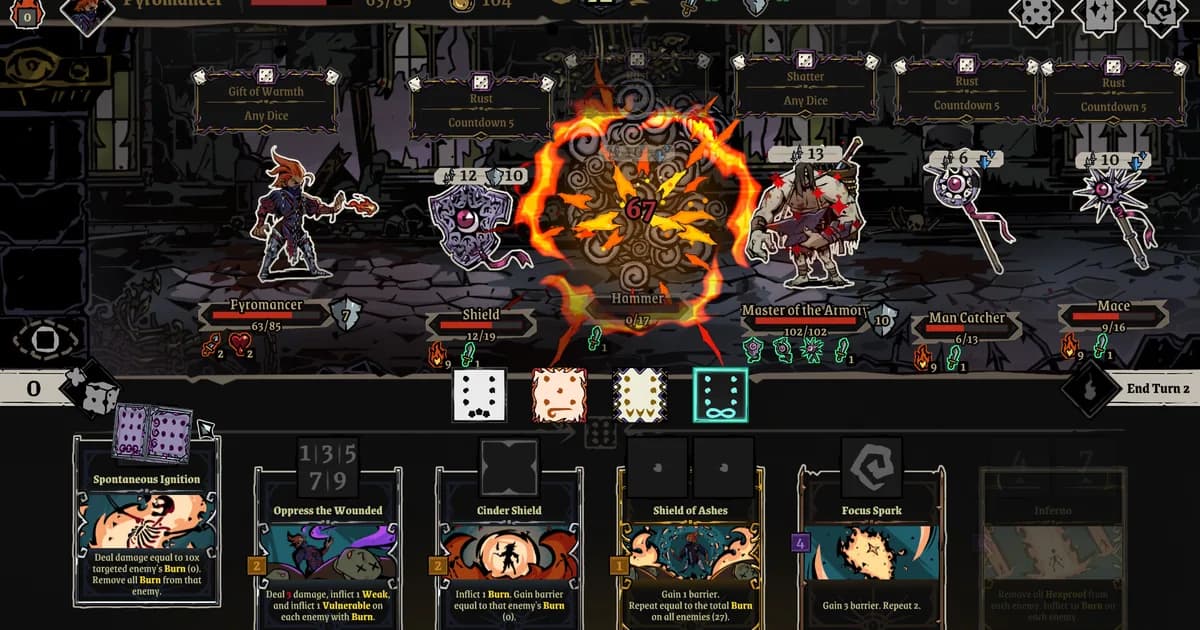
Archon Soul's core hook is granularity. Where most roguelike deckbuilders ask you to pick which cards go in your deck, Archon Soul asks you to build the pieces that make up each individual die: the face (what it does), the rune (a modifier layered on top), and the body (a further behavioral change). Swapping any one of the three changes how that die functions, which means the build space isn't just "which dice do I have" but "what is each die actually made of." That's a more granular customization layer than a typical card-based system offers, and it's the angle worth understanding before deciding whether the genre comparison to card roguelikes undersells what's actually different here.
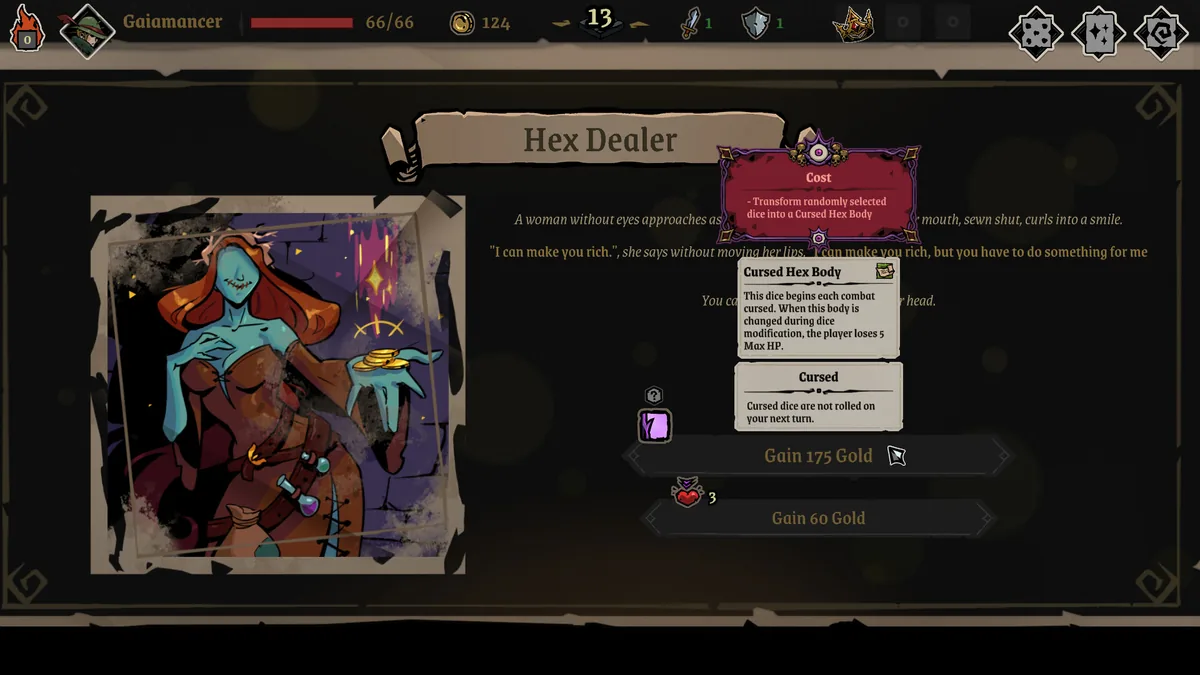 A narrative event offering a Cursed Hex Body, one of the "body" components that changes how a die behaves, illustrating how the run-to-run risk/reward choices tie directly into the dice-building system.
Cards themselves still exist in Archon Soul, but they function alongside the dice rather than replacing them: playing a card can consume specific die faces, apply status effects like Burn or Vulnerable, or trigger off how many dice currently carry a given condition. The result is a combat loop where reading the board means tracking both your hand of cards and the current state of every die on the table, not just one or the other.
A debut studio with an unusually long public track record
PolyGryph doesn't have a prior published game to point to. Founder Thomas Griffin, a former chef who moved into game development, has spent roughly two years building Archon Soul, according to the studio's own Reddit post announcing the release date. What substitutes for a traditional pedigree check here is the Prologue demo's own review history: Positive at 40 of 44 reviews, a small sample, but a real one, built from actual players who tried the game during its extended pre-launch window rather than a marketing pitch alone.
That two-year public development window is worth noting on its own. A debut studio choosing to run a long, visible demo period before a full release gave buyers more to go on than a typical first-time launch, but the current full-game review score is now the better measure of how the complete package landed.
What to know before buying after launch
Archon Soul is single-player only: there's no co-op or PvP mode to factor into a purchase decision. Steam lists 40 achievements, and the current price is $13.99. The free Prologue demo remains a low-risk way to test the dice-and-card loop before buying.
The most useful signal now is the full release's 88% English Steam score across 170 reviews, with 96% positive in the latest 29-review sample. The Prologue demo's extended Positive history is useful context, but new content and systems beyond the demo scope mean the full-game score deserves priority.
Why the long demo period matters more than a normal trailer
Most debut-studio launches give players exactly one thing to evaluate before buying: a trailer, plus whatever score aggregators eventually assign after launch. Archon Soul's two-year public Prologue changed that calculus. Instead of asking players to trust marketing copy about the dice-building system, PolyGryph let people actually play an early version of it, long enough to accumulate 44 real reviews before the full release existed. The full game's 170-review English sample now provides the stronger post-launch check.
What genre fans should actually expect
Players coming from card-based roguelikes shouldn't expect a straight reskin with dice swapped in for cards. The dual-track system, tracking card effects alongside individual die states, means encounters can turn on decisions that wouldn't exist in a pure card game: which specific die to modify with a rune, whether a body swap is worth the tradeoff a narrative event like Hex Dealer describes, or how many dice currently carry a status effect before a card's trigger condition activates. That layered decision space is the actual selling point, more than the surface-level novelty of "dice instead of cards."
Frequently Asked Questions
When did Archon Soul release? Archon Soul released on Steam on July 29, 2026. It's a 2D roguelike dice-builder where players create custom dice from swappable faces, runes, and bodies rather than building a traditional card deck.
Who developed Archon Soul? PolyGryph, led by founder Thomas Griffin, a former chef turned game developer. This is the studio's first major release, published by Goblinz Publishing and Maple Whispering Limited.
Is Archon Soul multiplayer? No. Archon Soul is single-player only, with Steam Achievements support but no co-op or PvP modes listed on its store page.
Is Archon Soul any good? The full game is currently 88% positive across 170 English Steam reviews, with 96% positive in the recent 29-review sample. A free Prologue demo is also available, but the full-game score is the more useful signal now.
What makes Archon Soul's dice system different? Instead of building a card deck, players assemble custom dice from three separate components: faces, runes, and bodies. Swapping any one component changes how that die behaves, giving the build system more granular customization than a typical roguelike deckbuilder.
Related Reading
- Rune Dice Tier List: All 8 Classes Ranked: another dice-driven roguelike, useful context for readers comparing build systems across the genre.
- Tears of Metal Early Access: Xbox Game Pass Day One: another recent debut-adjacent launch covered the same way, confirmed facts over a fabricated score.
- Die in the Dungeon Relic Tier List: build-piece evaluation in a different roguelite, for readers who like Archon Soul's component-swapping approach.
- All Hail the Orb Complete Guide: a shorter alchemy roguelite for readers comparing compact build loops.
- LegionBound Complete Guide 2026: a broader class-synergy roguelite with a different run structure.
- Best Indie Games Under $15: a current budget list that includes several other build-focused indies.
- Black Jacket Review 2026: another compact roguelite built around layered decisions rather than a traditional campaign.
- Rune Dice Complete Guide 2026: another dice-centered system with a different class structure.
References
About the author

GameBrief's byline for metroidvanias, RPGs, comparisons and design history. Places each game in its genre and argues both sides before picking one.
- Metroidvanias and RPGs
- Comparisons and design history
- Sources listed per article
Keep reading
WATERPUNK Release: Price, Reviews, Day-Night System
General · 6 min
Tabletop Tavern Review: Roguelike RTS Gets It Right
General · 9 min
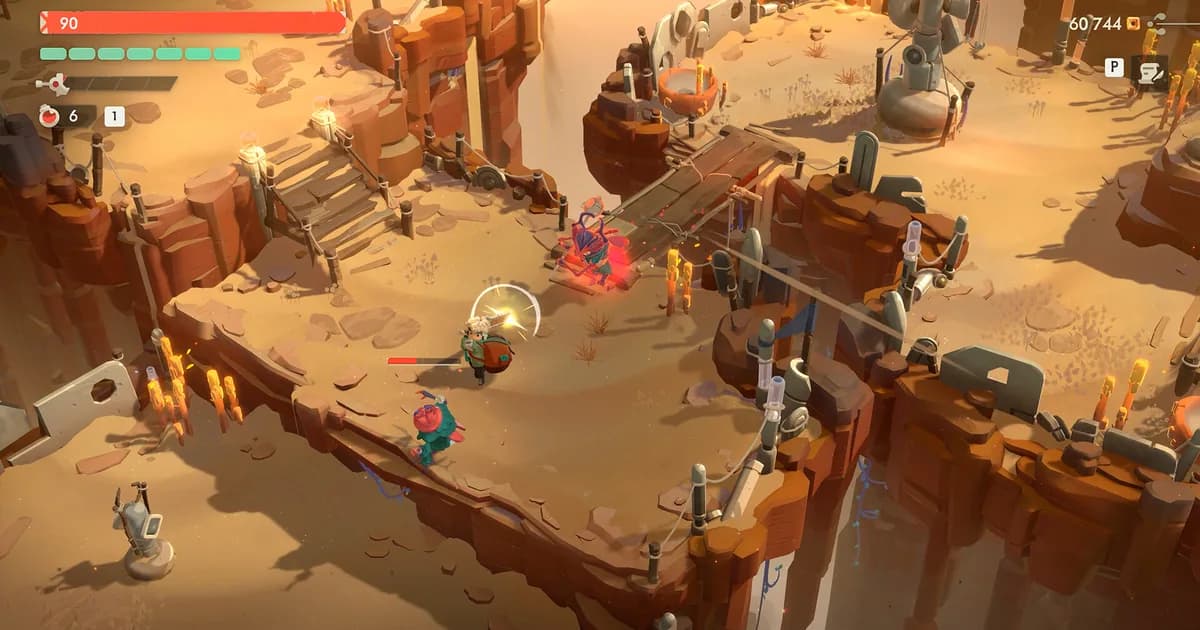
Moonlighter 2 Review: Why the 3D Leap Actually Works
Reviews · 8 min
Best Roguelike Games 2026: 7 Picks for Every Budget
General · 9 min
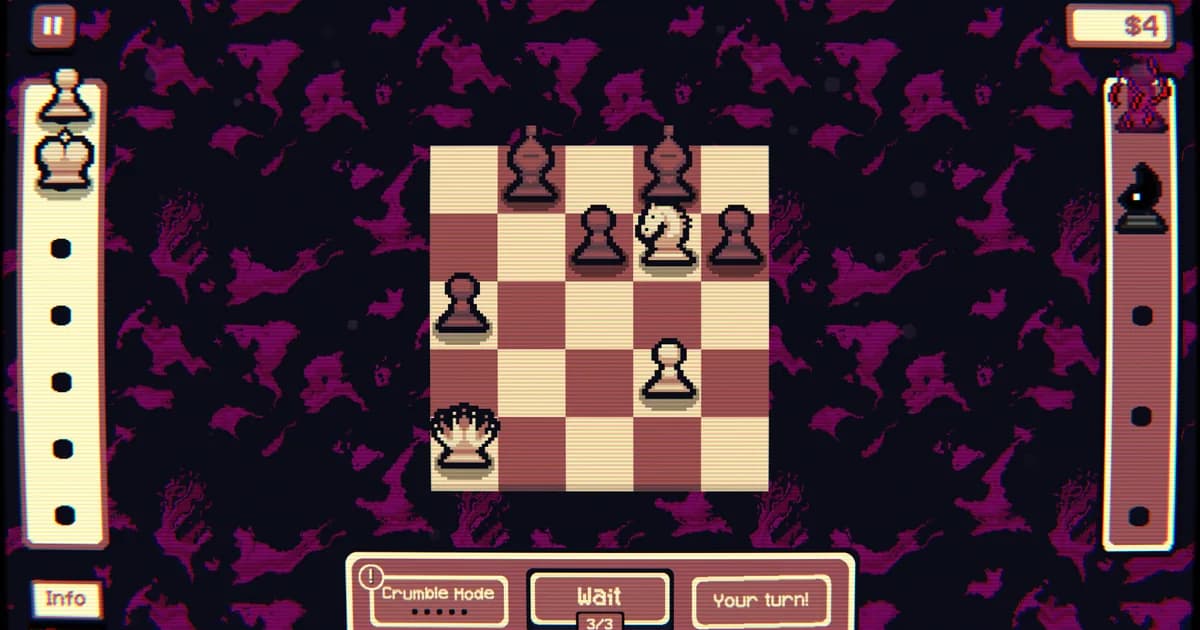
Gambonanza Review: Chess Balatro or Something Better?
General · 8 min

Skull Horde Review: Fast Dungeon Auto-Battler Worth Buying
General · 7 min
Sponsored
Disclaimer
This article is published for informational and entertainment purposes. It does not constitute professional financial, legal, or technical advice. Game performance, online services, patch schedules, and store listings change. Verify critical details (pricing, system requirements, regional availability) with publishers and storefronts before you buy. Affiliate links, where present, help support our editorial work and are labelled in our affiliate disclosure.
Comments
Loading comments…