
ARC Raiders · Guides
ARC Raiders Beginner Guide: Loadouts, Maps and Extraction
ARC Raiders beginner guide: Free Loadout vs your own kit, when each map unlocks, how extraction and Raider Hatches work, and what to sell in Speranza.
Sponsored

About the game
ARC Raiders
Embark Studios
The short version of this ARC Raiders beginner guide: take the free kit until you can afford to lose your own, stay on Dam Battlegrounds while the other maps unlock, sell almost everything you bring home, and call an elevator long before the round runs out. The two mistakes we'd guard against hardest are staying too long and carrying gear you can't replace.
Updated 2026-10-14: rewritten against the ARC Raiders Wiki and Embark's own patch notes and news posts. The old version invented White, Orange and Red loot zones, called the free kit a "Standard loadout" with a Safe Pocket, had traders unlocking crafting recipes and listed six maps at launch. In the real game the Free Loadout has no Safe Pocket, five traders sell gear but craft nothing, and there are seven maps, all but the Dam locked behind rounds played.
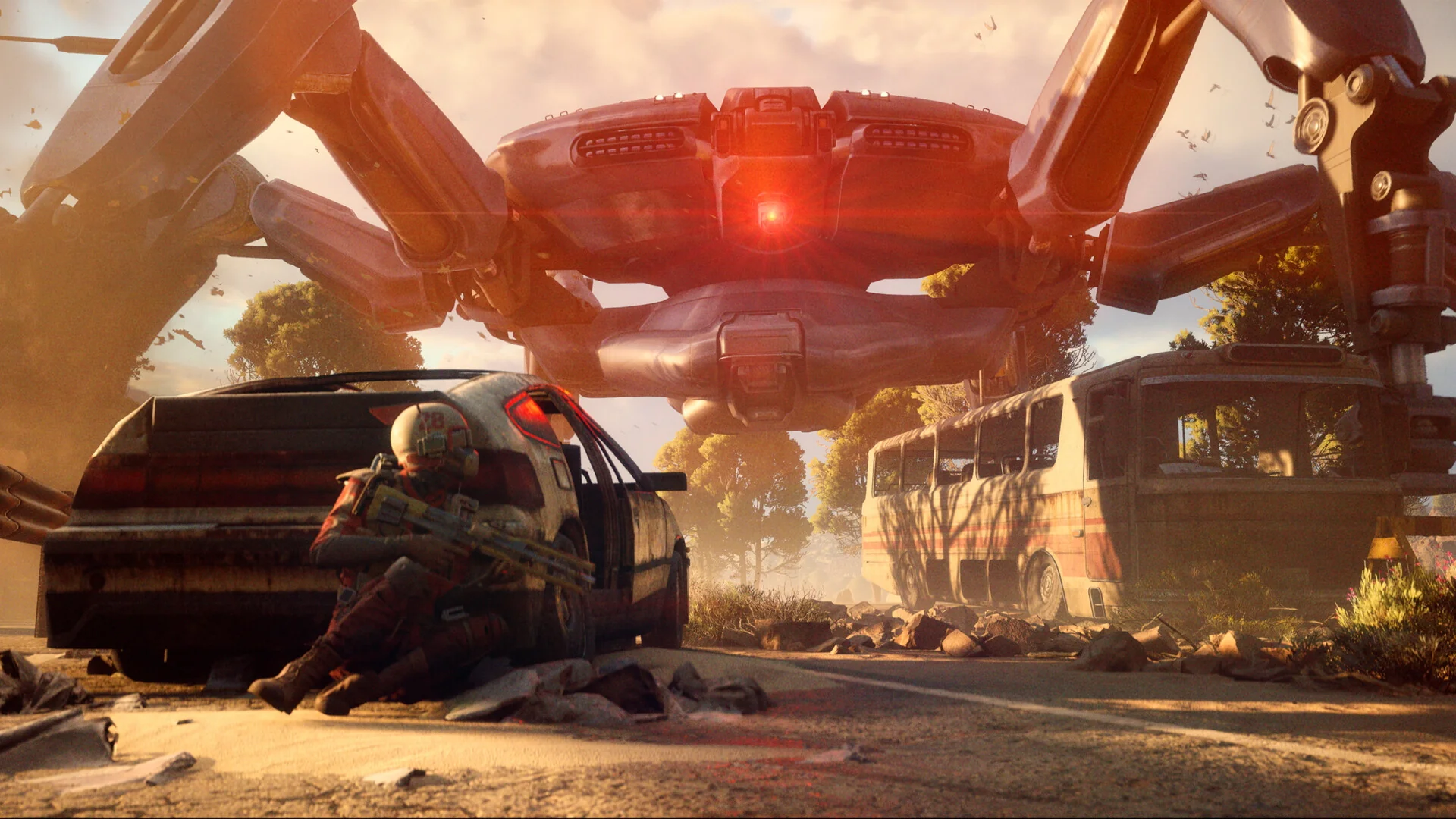 Image: Speranza, ARC Raiders Wiki (arcraiders.wiki), uploaded by VertopolkaLF. Game art is the property of Embark Studios.
What you're signing up for
ARC Raiders is Embark Studios' PvPvE extraction game. You drop Topside from the underground city of Speranza, loot, dodge or destroy ARC machines, and get out through an extraction point before the round ends. A round lasts 30 minutes at most. You can go solo or in a group of up to three, and if you die you lose everything you carried except what sits in your Safe Pocket. You still get the round's experience points.
It's a paid game: $39.99 on Steam, with a $59.99 Deluxe Edition, before any sale. The free play weekend (October 8 to 12, 2026) is over.
BESTPRICE: Want ARC Raiders? These stores list it: Buy on Eneba → Buy on Green Man Gaming → Buy on Humble Bundle →
Free Loadout or your own kit
Every time you pick a map, you choose a Free Loadout or a custom one. This is the decision that keeps your stash alive in week one.
| Free Loadout | Custom loadout | No loadout at all | |
|---|---|---|---|
| Backpack slots | 14 | 16 to 24, set by the augment | 10 |
| Safe Pocket | None | 1 to 3 slots | 1 slot |
| Max weight | 35.0 | 40 to 80 | Not listed |
| Shield | Light only | Depends on augment | None |
| What you risk | Nothing you own | Everything you brought | Only what you find |
The free kit is random but always gives you a weapon (a Kettle, Stitcher, Rattler or Ferro), a light shield, ammo for that gun, two bandages, a shield recharger, plus grenades or gadgets. There's no cooldown, so you can run it as often as you like. Two catches: when you pick it, your custom loadout goes back to your stash, and if the stash is full you can't deploy with it. Some map conditions also switch the free option off.
Since patch 1.22.0, Embark biases matchmaking so players with a custom loadout are more likely to start in a fresh server. Free kits more often land you in a round that's already running, which means less time on the clock.
When you do build your own kit, the starting choice is the Looting or Combat augment. We'd take Looting: slightly more weight and two extra backpack slots, at the cost of being limited to a light shield. Combat takes a medium shield but slows you down. The Ferro is the wiki's pick for a first gun: Heavy Ammo that pierces ARC armor, one shot at a time, slow reload.
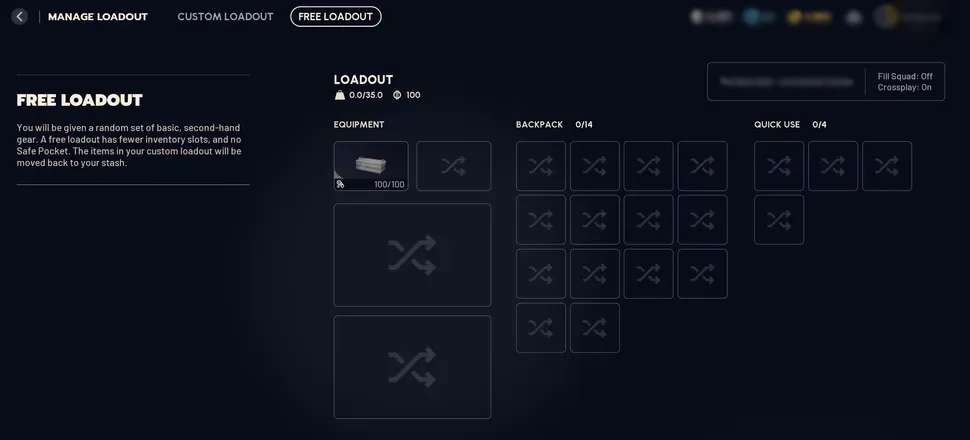 Image: Free Loadout ready-up screen, ARC Raiders Wiki (arcraiders.wiki), uploaded by Dread. Game art is the property of Embark Studios.
Which map, and when the others open
Your first rounds are on Dam Battlegrounds whether you like it or not. The rest unlock by rounds played:
| Map | Unlocks after | Round length |
|---|---|---|
| Dam Battlegrounds | No requirement | 30 minutes |
| Practice Range | 4 rounds | 2 hours |
| Buried City | 8 rounds | 30 minutes |
| Spaceport | 12 rounds | 30 minutes (40 during Hidden Bunker) |
| The Blue Gate | 18 rounds | 30 minutes (40 during Locked Gate) |
| Riven Tides | 20 rounds | 30 minutes |
| Stella Montis | 24 rounds | 30 minutes |
| Pendola Pass | 25 rounds (wiki) | 30 minutes |
Use the Practice Range as soon as it opens. Ammo and durability you spend there don't carry over, so it's the one place to try a gun or gadget from your stash for free. Anything you pick up there is removed when you leave.
Embark's official "The maps of ARC Raiders" video is a quick way to recognise landmarks before you load in: the Dam's Control Tower shows at 0:21 and The Breach at 0:27, Buried City's Church Ruins at 0:39, and the Blue Gate's Barren Clearing at 1:03. Our ARC Raiders maps guide and the Dam guide take it from there.
Video: "The maps of ARC Raiders", official ARC Raiders YouTube channel.
How getting out actually works
There are four kinds of extraction point: cargo elevators, metro stations, airshafts and Raider Hatches. A public exit shows at the top of your HUD once you're within about 400m. As the round goes on, exits shut one by one, and the map shows how long each has left. You won't always spawn at the start of a round, either: sometimes you'll have as little as 15 minutes to get home.
An elevator takes about 45 seconds to arrive after you call it, and the noise pulls in ARC and raiders alike. We'd call it from cover and spend that wait watching the approaches. If the light above the button is off, that lift has already shut down.
Raider Hatches are the quiet option. They stay locked until you use a Raider Hatch Key, stay open for about 10 to 15 seconds, take one raider at a time and never shut down, which makes them the late-round escape. Shani sells two keys a day, and the crafting guide covers the recipe.
Two rules that save runs: a downed raider can still use an extraction terminal, and an exit doesn't shut down if you interact with its terminal right before it closes.
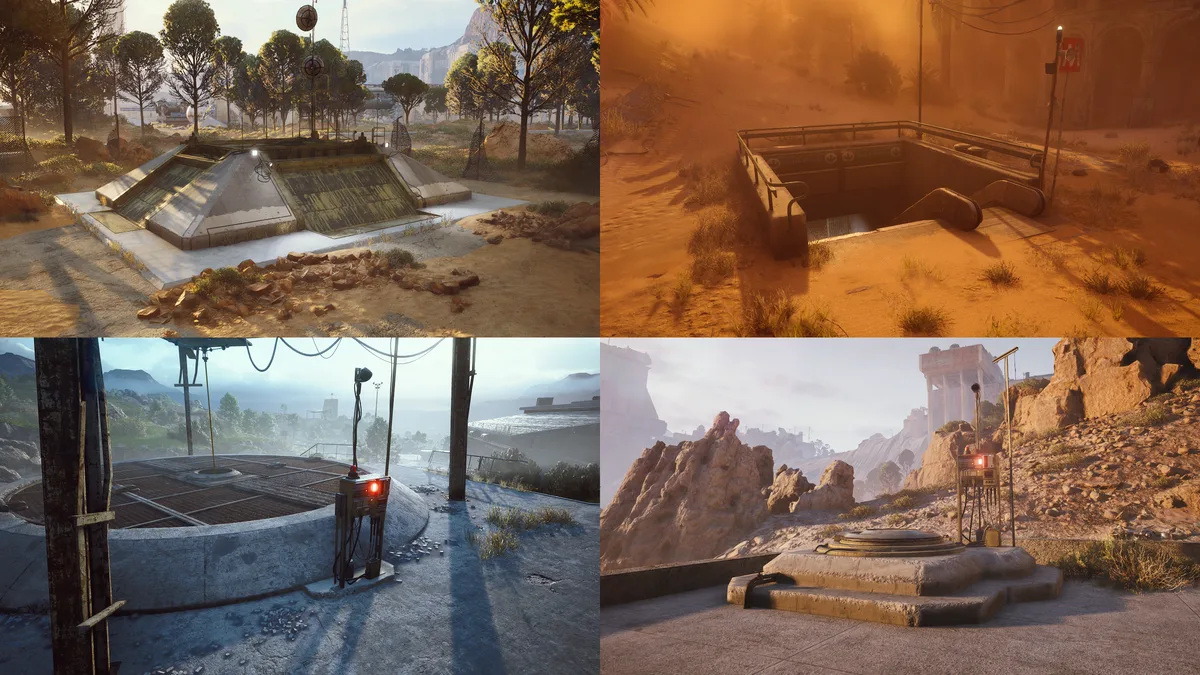 Image: Extraction Points, ARC Raiders Wiki (arcraiders.wiki), uploaded by Dread. Game art is the property of Embark Studios.
GODEEPER: Timers, the overtime trick and when a Hatch Key is worth burning. ARC Raiders Extraction Guide →
Dying, and how not to
When your health hits a critical level you collapse and can only crawl, for about a minute. ARC stop attacking a downed raider, so a bot that dropped you won't finish the job. Another raider might. Shields reduce damage rather than acting as a second health bar, so heal with bandages first: you can die with a full shield.
Your first ARC will almost certainly be Wasps and Hornets. You'll hear the buzz of their thrusters first. They patrol set routes, so crouching in cover often lets them pass. If one spots you, it whistles and its scanner beams turn red. Break line of sight inside a building and it'll lose interest, but they can shoot through windows and open doorways. If you fight, aim for the thrusters to bring them down, and never take on two at once. Heavy and medium ammo get through ARC armor more easily than light ammo.
Our enemy types guide covers what comes after the drones.
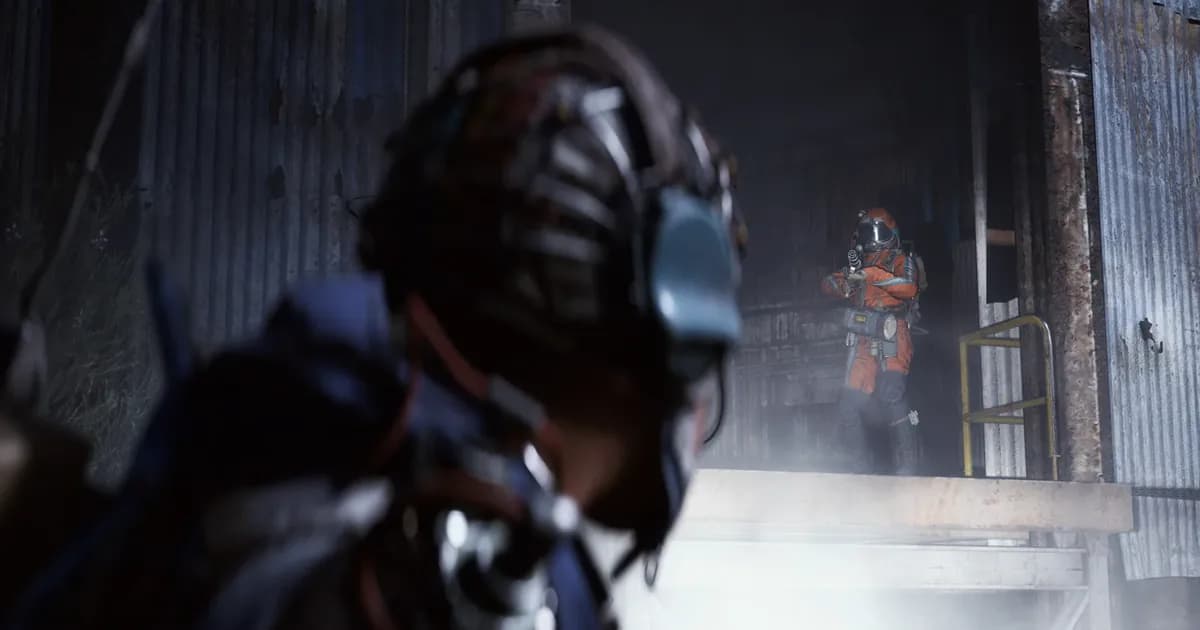
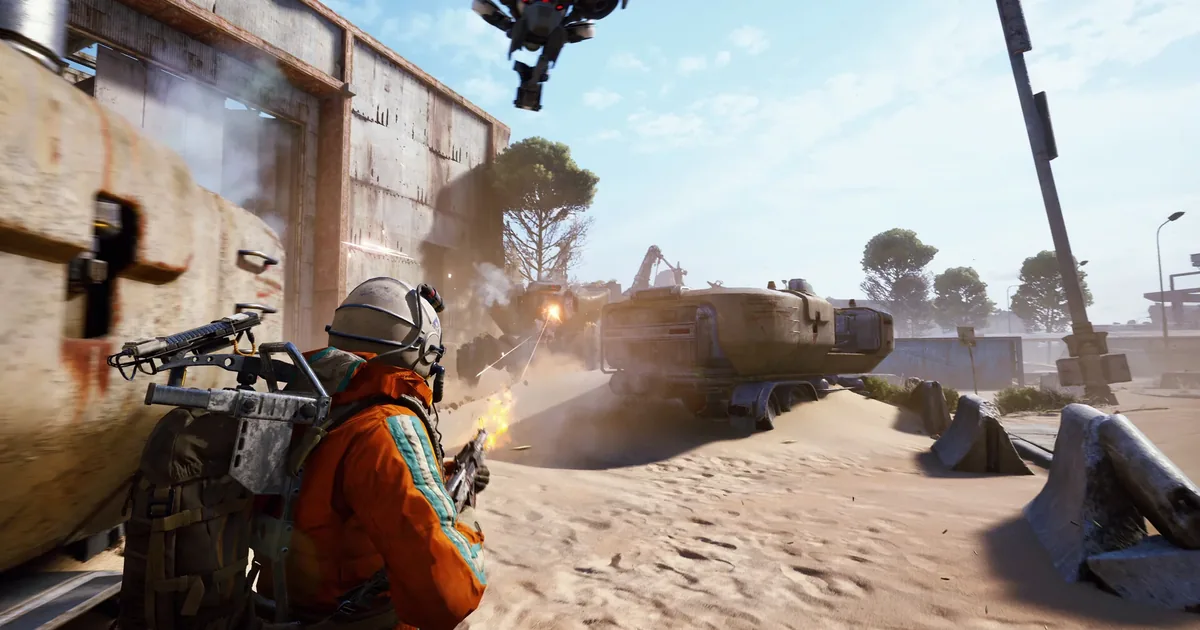 Screenshot: ARC Raiders Steam store page. Game art is the property of Embark Studios.
Other raiders and matchmaking
Embark's matchmaking post from May 20, 2026 explains how it reads you. Your playstyle sits on a scale rather than in a "friendly" or "aggressive" bucket, and you're more likely, not guaranteed, to meet raiders with a similar history. One shot doesn't flip you into PvP lobbies, your loadout's value doesn't change who you meet, and defending yourself no longer counts the same as starting a fight. There are no PvE-only servers in the normal game.
When a new player asked r/ArcRaiders during the free weekend why they kept getting attacked, u/Durzel's reply put it in plain terms: "If you are passive you will end up with people more like you. This can take several rounds to take effect."
The exception is running right now. Embark is testing a PvE matchmaking toggle from October 13 to 20, 2026: zero player-to-player damage, lower overall loot value, and some major conditions left out. When the test ends the toggle goes away. Our PvE mode explainer tracks it.
For your first few games, the wiki's advice is to go solo and be friendly. Most players ignore new raiders, and a few will drop items or revive you.
Speranza: sell first, then build
Sell almost everything early. Your stash starts at 64 slots, each upgrade adds 24, and the first one costs 5,000 coins. Trinkets sell well and exist for nothing else. Don't waste slots on things the Workshop makes cheaply, like bandages, light shields, shield rechargers, basic weapons and ammo. Always grab ARC Alloy and ARC Powercells: they only come from downed ARC, and wreckage counts. Keep seeds too, because Celeste takes them as currency.
| Trader | What they sell |
|---|---|
| Celeste | Basic and Topside materials, paid for in seeds |
| Shani | Binoculars, cameras, light sticks and other social items, plus Raider Hatch Keys |
| Tian Wen | Ammo, basic weapons (the Ferro, Kettle and Stitcher among them), weapon mods |
| Lance | Augments, shields, bandages, shield rechargers, defibrillators |
| Apollo | Grenades, mines, ziplines and other gadgets |
| Nomadic Envoys | Extra stash space, cosmetics, resources, blueprints |
Every trader except Celeste takes coins; Shani switched over from cred in Frozen Trail 2.0. Traders sell and hand out quests. They don't craft: every recipe lives in your Workshop. Our stash size guide has the full upgrade costs, and the loot guide covers what to keep.
GODEEPER: Where every recipe lives and what to build first with your Workshop. ARC Raiders Crafting Guide →
Each level gives you one skill point, 76 in total from leveling. The tree splits into Conditioning, Mobility and Survival, and you can spend across all three. A full reset costs 2,000 coins per point spent, so plan a little. We'd open Survival first: its first node, In-round Crafting, lets you make bandages and shield rechargers Topside, and the looting skills right after it speed up every container you open. The skill tree tier list ranks the rest.
Our take
Treat your first stretch of rounds as paid map study. Free kits cost nothing and have no cooldown, so a bad run costs you time rather than gear. Sell to buy stash space, learn two or three Dam extraction points by sight, and move to Buried City once it opens. Bring your own kit when you know where you're going and can name the exit you'll use. If you can't, take the free one.
How we checked this
We rebuilt this guide on October 14, 2026 from the ARC Raiders Wiki pages for Getting Started, Loadout, Maps, Practice Range, Extraction Points, Raider Hatch, Speranza, Traders and Skills, plus Embark's patch notes 1.22.0, its matchmaking post and its PvE toggle and free weekend announcements. We watched Embark's maps video and noted the timestamps above. We haven't played these rounds ourselves, and the wiki says its Getting Started page partly rests on its editors' own play. The full source list is in our notes for this article.
Related Reading
- ARC Raiders Extraction Guide: every exit type, timers and Hatch Keys.
- ARC Raiders Best Solo Loadouts: kits worth risking once you leave the free ones behind.
- ARC Raiders Blue Gate Guide: the 18-round map and its Locked Gate condition.
- ARC Raiders Stella Montis Guide: what changes on the 24-round map.
References
- Getting Started, ARC Raiders Wiki: first loadout, extraction, death and new player tips
- Loadout, ARC Raiders Wiki: Free Loadout Augment and kit combinations
- Maps, ARC Raiders Wiki: unlock requirements and round lengths
- Notes on the matchmaking system, Embark Studios
- PvE toggle beta test, Embark Studios
- Patch notes 1.22.0, Embark Studios
- ARC Raiders on Steam
Was this guide helpful?
Keep reading
Sponsored

Disclaimer
This article is published for informational and entertainment purposes. It does not constitute professional financial, legal, or technical advice. Game performance, online services, patch schedules, and store listings change. Verify critical details (pricing, system requirements, regional availability) with publishers and storefronts before you buy. Affiliate links, where present, help support our editorial work and are labelled in our affiliate disclosure.
About the author

Systems & Economy Desk
GameBrief's byline for roguelikes, strategy and simulation. Reads patch notes, wiki tables and Steam stats and puts the numbers on the page.
- Roguelikes, strategy and simulation
- Builds, progression and economy
- Sources listed per article