
ARC Raiders · Guides
ARC Raiders Skill Tree 2.0: All 48 Skills Explained
ARC Raiders skill tree after Frozen Trail 2.0: all 48 skills by branch, how the new choice nodes work, and what the reset really costs. Updated October 9.

Sponsored

The ARC Raiders skill tree was rebuilt in the Frozen Trail 2.0 update on October 8, 2026, and most older guides now describe skills that no longer exist.
This page lists all 48 skills by branch, explains the new choice nodes and the reset, and says plainly which numbers nobody has confirmed yet.
TL;DR: Frozen Trail 2.0 replaced the old tree with 48 skills across Conditioning, Mobility and Survival. The middle of each branch is a one-of-two choice, and each branch ends with two picks from three. You can reset and choose again, but there is no verified per-level data yet, so choose by playstyle, not by a tier list.
BESTPRICE: Want ARC Raiders? These stores list it: Buy on Eneba → Buy on Green Man Gaming → Buy on Humble Bundle →
What changed in the ARC Raiders skill tree in 2.0? (quick answer)
Embark rebuilt it. The official notes say the revamp modifies or replaces under-performing skills and adds new ones, with a reshuffled layout.
The two big structural changes are choice nodes. The middle node of each branch is now one path where you pick one of two skills. At the end of each branch there are two nodes where you pick up to two of three skills.
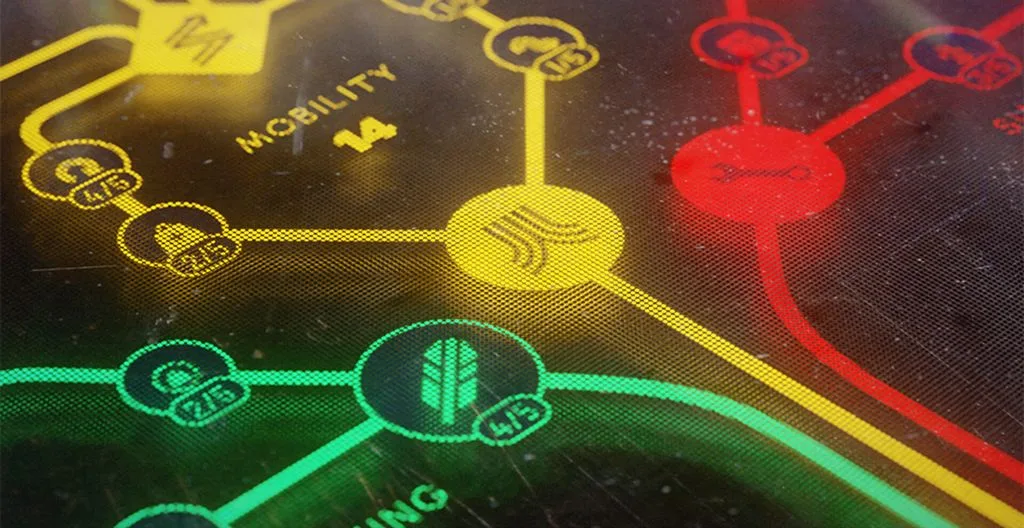 Press kit: Embark Studios, Frozen Trail 2.0 update post. The tree screen shows each node with its points spent out of its maximum.
Embark also says more tweaks are likely soon, so expect this list to shift. This guide was checked against the sources below on October 9, 2026.
How points, choice nodes and resets work
The community wiki says you earn one Skill Point per level for a total of 76, plus up to five more for each completed Expedition. Embark has not published a total in the update notes, so this one is community-documented.
Nobody can fill everything. 48 skills are not all buildable at once, because each branch asks for a large share of the points. That is why the choice nodes matter more than any single skill.
Choice nodes unlock by branch investment. The wiki says the end-of-branch picks come at 30 and 40 points in that branch. For the middle node it contradicts itself, giving 10 points in the skill list and 15 in the node table, so we do not state one number.
On resets, Embark's wording is that you can make the choice again when you reset your skill tree. The price is reported at 2,000 Coins per refunded point, which both the wiki and a second guide attribute to patch 1.7.0. The 2.0 notes did not restate it, so check the in-game price before you refund a whole branch. Where Coins come from is covered in the credits and currency guide.
Conditioning: all 16 skills
Conditioning is the carry and body branch. These descriptions follow the wiki's wording.
| Skill | What it does |
|---|---|
| Used To The Weight | Wearing a shield slows you down less (starting node) |
| Stubborn Mule | Stamina regeneration is less affected by being over-encumbered |
| Three Deep Breaths | Faster recovery after an ability drains your stamina |
| Vigorous Vaulter | Vaulting is not slowed while exhausted |
| Vault 'N' Carry | Lets you vault while holding a carryable |
| Mule's Gallop | Sprint while over-encumbered (middle choice) |
| Back On Your Feet | Health regenerates up to a limit when critically hurt (middle choice) |
| Loaded Arms | Your equipped weapon counts less toward encumbrance |
| Broad Shoulders | Raises the maximum weight you can carry |
| Downed But Determined | Longer before you collapse when downed |
| Crawl Before You Walk | Faster crawling when downed |
| Speedy Mule | Smaller speed penalty when severely over-encumbered |
| Proficient Pryer | Breaching doors and containers takes less time |
| Security Breach | Lets you breach Security Lockers (end-of-branch choice) |
| Weapon Bash | Melee attack with your equipped weapon (end-of-branch choice) |
| Bull Rush | Knocks back players and ARC while sprinting with your weapon stowed (end-of-branch choice) |
Used To The Weight pairs with the Heavy Shield tweak in the same update, covered in the augments guide.
Mobility: all 16 skills
Mobility is movement and stamina.
| Skill | What it does |
|---|---|
| Youthful Lungs | Raises max stamina (starting node) |
| Sure-Footed Scrambler | Longer scramble up steep slopes while sprinting |
| Nimble Climber | Climb and vault faster |
| Ready To Roll | Bigger timing window for the Recovery Roll |
| Fight Or Flight | Regain a fixed amount of stamina when hurt, with a cooldown |
| Vault Spring | Jump at the end of a vault (middle choice) |
| Vaults On Vaults On Vaults | Vaulting costs no stamina (middle choice) |
| Effortless Roll | Dodge Rolls cost less stamina |
| Right Back At It | Less time to get up after a heavy landing |
| Marathon Runner | Moving costs less stamina |
| Slip And Slide | Slide further and faster |
| Off The Wall | Wall Leap goes further |
| Swift Start | Longer high-speed burst at the start of a sprint |
| Sprinting On Fumes | Stamina never fully drains while sprinting; any action or damage cancels it (end-of-branch choice) |
| Wall Run | Run up a wall for a few steps (end-of-branch choice) |
| In The Flow | Chaining mobility moves while sprinting adds speed and cuts stamina cost (end-of-branch choice) |
Survival: all 16 skills
Survival covers looting, crafting and quiet movement.
| Skill | What it does |
|---|---|
| In-round Crafting | Field-craft items while topside (starting node) |
| Looter's Instinct | Loot is revealed faster when searching |
| Sturdy Ankles | Less fall damage from non-lethal heights |
| Silent Scavenger | Less noise when looting |
| Agile Croucher | Faster movement while crouched |
| Quick Roll | Faster, shorter Dodge Roll at reduced stamina cost (middle choice) |
| Minesweeper | Defuse mines and explosive deployables up close (middle choice) |
| Gentle Pressure | Less noise when breaching |
| Traveling Tinkerer | Unlocks more field-craftable items |
| Stylish Landing | Use the Recovery Roll from higher up |
| A Little Extra | Breaching an object generates crafting materials |
| Looter's Luck | Chance to reveal two items at once while looting |
| Turtle Crawl | Take less damage while downed |
| Road Warrior | More ammo and ARC Powercells from ARC, and full-efficiency recycling in a round (end-of-branch choice) |
| Nomadic Crafting | Field-craft a much wider range of items (end-of-branch choice) |
| Field Repair | Repair weapons, shields and gadgets up to a durability cap in a round (end-of-branch choice) |
 Press kit: Embark Studios, Frozen Trail 2.0 update post. Official Frigate screenshot: a raider crouches in the foreground as the ship hangs over the ruins.
Players are already arguing that in-raid crafting is becoming a must, in a r/ArcRaiders thread titled "The Frigate Will Make In-Raid Crafting A Must" from October 8. We have not tested that claim, so read it as opinion. If you do go that way, the loot guide covers what is worth carrying out.
GODEEPER: Skills only matter once you know what to carry into a raid. See how augments and shields interact with a carry-heavy build. ARC Raiders augments guide →
Which choice nodes are the real decisions?
The middle picks are exclusive pairs, and you only get to change them by resetting. Each pair is a different promise:
- Conditioning: Mule's Gallop (keep sprinting when overloaded) against Back On Your Feet (a safety net when critically hurt).
- Mobility: Vault Spring (jump out of a vault) against Vaults On Vaults On Vaults (vaulting costs no stamina).
- Survival: Quick Roll (a cheaper, shorter roll) against Minesweeper (defuse mines and explosive deployables).
The end-of-branch nodes let you take two of three. That is where the playstyle shows: Weapon Bash and Bull Rush are close-range options, Security Breach is a loot option, Sprinting On Fumes and Wall Run are movement tools, and Field Repair and Nomadic Crafting are for staying out longer.
 Press kit: Embark Studios, Frozen Trail 2.0 update post. The official screenshot labelled Bully, one of the new ARC enemies in the update.
Bull Rush's description mentions ARC in general, and we found no source stating how it behaves against any specific machine, including the Bully. For what each machine type does, use the ARC machine types guide.
Why we are not ranking skills S to C
The old version of this page ranked skills in tiers. Those skills no longer exist, and the numbers needed for a new ranking are not trustworthy yet.
A r/ArcRaiders post titled "Skill descriptions now include the amount of change/improvement" was posted on October 8. Its author later added an edit: "WTF, why would Metaforge update to the new skill tree, put these numbers, and no notice that it's just old leaked data/not part of the rework?!" So per-level figures on at least one popular tracker were not the 2.0 values.
The wiki carries a similar warning: its tested values were found through player testing and may not be completely accurate. Until Embark or a careful tester publishes the real numbers, a tier list would just be a guess dressed up as data. For a worked example of picking by role, see the solo loadouts guide.
GODEEPER: Frozen Trail also changes the map you drop onto. See the new zone before you spend points on it. ARC Raiders Frozen Trail preview →
Frozen Trail launch trailer
The official trailer is on the ARC Raiders YouTube channel. It shows the update's setting, not the skill screen.
Our take
This is a research page, not a play report. We did not test the new tree ourselves, so every skill description above is the wiki's or Embark's wording, not our measurement.
What the sources do support is a structural reading. With 48 skills and a point total that cannot cover three branches, the choice nodes are where builds are decided, and they are cheap to undo only if the reset price in-game matches the older reported figure. If you carry heavy and extract on foot, Conditioning's carry skills plus Security Breach are the obvious fit. If you dodge fights, Mobility's stamina skills are. Treat that as a starting point and respec after a few raids.
Come back to this page after the next patch: Embark said more skill tweaks are likely soon.
Frequently Asked Questions
How many skills are in the ARC Raiders skill tree? Forty-eight, split evenly at 16 per branch (Conditioning, Mobility, Survival), according to the community wiki and a second community guide. Embark has not published a full list, so treat the count as community-documented.
How many skill points can you earn in ARC Raiders? The community wiki lists 76 from levelling, plus up to five per completed Expedition. That is not enough to fill all three branches, so every build is a trade-off. Embark has not published a total itself.
Can you reset the ARC Raiders skill tree? Yes. Embark says you can choose again when you reset your skill tree. Community sources put the price at 2,000 Coins per refunded point, a figure from patch 1.7.0 that the 2.0 notes did not restate.
What changed in the ARC Raiders skill tree in Frozen Trail 2.0? New skills, a reshuffled layout and new choice nodes. The middle of each branch is now a pick-one-of-two, and each branch ends in two picks from three.
Is there a best skill tree build in ARC Raiders? Not one verified number-backed build yet. Per-level values are unconfirmed, and one popular tracker published old leaked numbers. Pick by playstyle and respec cheaply once you see how the tree plays.
Which branch has Security Breach in the new skill tree? It sits in the Conditioning branch now, as one of three end-of-branch choices alongside Weapon Bash and Bull Rush. Check the branch before you spend points, because older guides describe the pre-2.0 layout.
Related Reading
- ARC Raiders Augments Guide: how augments and shields shape a carry-heavy build.
- ARC Raiders Beginner Guide: the first hours, before skill points start to matter.
- ARC Raiders Extractions Guide: where to leave a map once your build is set.
- ARC Raiders Maps Guide: which map suits which kind of skill build.
References
- Frozen Trail 2.0 update notes, ARC Raiders official site: Skill Tree Revamp section, accessed 2026-10-09.
- Skills, ARC Raiders Wiki: skill list, point totals and node rules, last edited 2026-10-08.
- ARC Raiders Skill Tree: All 48 Skills & Unlock Order, timesaver.gg: second community list, published 2026-10-08.
- ARC Raiders skill tree reset explainer, allthings.how: reset cost per point.
- ARC Raiders on Steam
- Frozen Trail Launch Trailer, official YouTube
- r/ArcRaiders: skill description numbers thread
Keep reading



Sponsored

Disclaimer
This article is published for informational and entertainment purposes. It does not constitute professional financial, legal, or technical advice. Game performance, online services, patch schedules, and store listings change. Verify critical details (pricing, system requirements, regional availability) with publishers and storefronts before you buy. Affiliate links, where present, help support our editorial work and are labelled in our affiliate disclosure.
About the author

Indie & JRPG Desk
GameBrief's byline for indie, JRPG, visual novel and cozy games. Warm, direct, and willing to say which one to buy.
- Indie, JRPG and visual novels
- Early access and survival
- Sources listed per article