GameBrief · General
Far Far West Endgame Guide: Challenge Contracts 2026

Reviewing
Far Far West
Evil Raptor
Far Far West endgame content starts after boss five: most guides stop there. This one doesn't.
The five main contract bosses are the gate, not the content ceiling. Past them, the game opens into rotating Challenge Contracts, a Joker card collection system that requires intentional pre-boss play, and a boss farming loop with specific legendary weapon targets. The level 35 spell unlock (Bandito, Thunderstrike, Finger Guns, Rain, Doll) changes what the best builds actually look like. And co-op endgame runs differently from co-op mid-game in ways the game doesn't signal clearly.
Evil Raptor launched Far Far West on Steam Early Access May 15, 2026, at $19.99. Eleven days in, the endgame content is real but finite: somewhere between 30 and 50 hours for completionists before you've seen the full loop. The roadmap adds a new biome, a sixth spell school, and at least three additional bosses before 1.0 in approximately April 2027.
TL;DR: Far Far West endgame consists of Challenge Contracts, boss farming for legendary drops, Joker card collection, and level 35 spell builds that outperform anything available mid-game. Best solo endgame build: Acid Rain + Portal + Firebeam. Best co-op endgame: four-school split with Bandito-buffed Cactus. Ghost Train drops the highest-rate lightning revolver legendaries. Future EA updates add biomes and bosses.
Far Far West endgame: key takeaways
- Challenge Contracts rotate and increase difficulty past the five main boss contracts
- Joker cards unlock Challenge Contract tiers: collect them before killing bosses or lose access that run
- Ghost Train has the highest legendary weapon drop rate (lightning revolver variants specifically)
- Level 35 spells (Rain, Bandito, Thunderstrike) are the endgame build anchors; most mid-game builds become suboptimal past level 30
- Co-op endgame favors a strict four-school role split; four players running the same school is the most common failure mode at high-difficulty tiers
- The infinite post-boss wave applies on every run, including farming runs: map completion before boss trigger is always required
What happens after the story: Challenge Contracts
Clearing the five main boss contracts doesn't end the session loop: it changes it. Challenge Contracts replace the standard mission sequence as the primary endgame activity. These are rotating, time-limited contract types with elevated enemy density, additional modifier stacks, and loot tables weighted toward legendary drops.
The modifiers are where the difficulty jump lives. Standard contracts don't stack more than one or two active modifiers. Challenge Contracts layer three to five simultaneously: faster enemy movement, increased projectile speed, reduced drop rates for healing items, and tighter time windows for optional side objectives. Individually, each modifier is manageable. Stacked at five, they punish builds that haven't committed fully to a cross-school reaction setup.
Challenge Contracts rotate every 48 hours. The rotation is global, all players see the same contract type on a given day. Evil Raptor hasn't published the rotation formula, but the community has tracked six distinct contract types in the first two weeks since launch. Three of the six favor AoE reaction setups (Acid Rain, tornado combos). Two favor sustained DPS with cooldown management. One, the bounty contract, specifically rewards single-target burst on boss-level targets inside a time limit.
Challenge Contract access is gated by Joker cards. Players who reached level 35 without a full Joker set can't unlock the highest difficulty tier. The card collection system is mid-game content technically, but its endgame relevance isn't obvious until the gate actually blocks you.
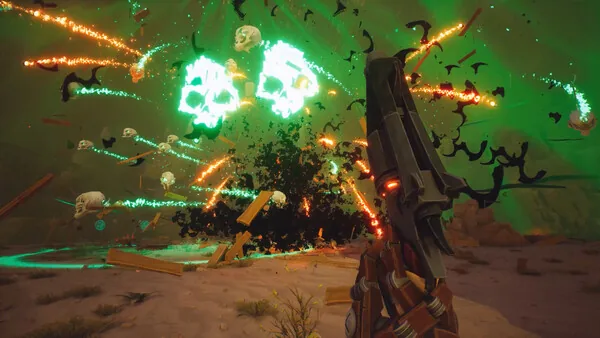 The endgame difficulty spike requires gear from specific late-faction quests: the open world hides the gating.
Joker cards: the collection meta
Joker cards are the game's collectible progression mechanic. Each card comes from a hidden secret objective in a specific region: completed before triggering the boss, or not at all for that run. The post-boss infinite wave eliminates access to uncollected Jokers in the zone permanently for that session.
At endgame, Joker cards do two things: they unlock Challenge Contract difficulty tiers (the top two tiers require 8 and 12 cards respectively), and they contribute to a passive bonus stack that scales specific upgrade node multipliers. A player with 12 Joker cards gets upgrade multipliers that change how quickly builds come online: roughly 20% faster synergy by contract four compared to a zero-card run.
The collection pattern matters more than the completion rate. Cards from the Canyon and Desert biomes are the least missable: their secret objectives are flagged by environmental signals a few players have documented in the community wiki. Woodlands cards require knowing the specific patrol route trigger. The Ghost Train region card is the most commonly missed because the relevant objective resets if you trigger the phase-two bandit swarm before completing it.
For the Far Far West boss guide readers who know the five encounters well: the Joker card for the Ghost Train region requires interacting with three named signal lanterns before phase two triggers. Miss the lanterns, miss the card for that run.
Boss farming: which bosses to repeat and why
Boss contracts can be replayed after initial completion. Legendary weapon drops repeat on re-clears, though not on every run. The drop rate variance is high enough that the community has spent two weeks mapping which bosses drop which legendary categories most frequently.
Current community consensus from the r/FarFarWest farming data:
Ghost Train: Highest confirmed drop rate for lightning revolver legendaries. The variant in question adds a secondary electric arc on hit that applies Elec damage independently of the weapon's base shot (effectively making the revolver a self-contained combo enabler without requiring a spell slot for Elec application. Getting this variant changes the loadout calculus for fire-focused builds) you free up the Elec spell slot for something else. The fight is also the hardest of the five to farm efficiently because the engine core window is the only real damage window. Players averaging under 90 seconds on the engine core exposure time see drop rates roughly 30% lower than those clearing the core in a single burst window.
Necromancer: Most consistent legendary revolver drops (non-lightning variants). The fight's simplicity (lateral movement trivializes the tracking projectiles) makes it the fastest farm cycle of the five bosses. Low fight length plus guaranteed complete map clears (the Necromancer region has fewer side objectives than Ghost Train) gives the cleanest legendary-per-hour ratio for players who want weapon upgrades without the Ghost Train difficulty overhead.
Undead Spellcaster: Best source for legendary Cactus synergy items. Not weapons: the Spellcaster drops contract economy items that extend Cactus summon duration and reduce Pistolero's cooldown from 40 seconds to approximately 28. These aren't in the weapon tier list but they're the endgame items that Cactus-heavy builds need.
Winged Skull and Undead Buzzard: Not worth farming at endgame. The Winged Skull's loot table is weighted toward early-game upgrade categories that are already maxed by the time you're farming. The Buzzard drops are inconsistent and don't have clear legendary categories the community has validated.
GODEEPER: Phase breakdowns and attack pattern maps for all five bosses, including the Ghost Train engine core timing. Far Far West Boss Guide: All Five Bosses and Strategies →
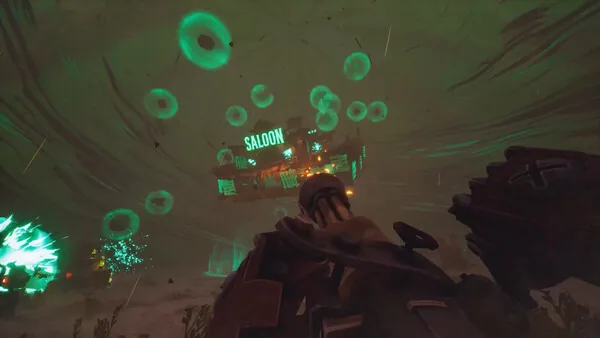 The final skill tree nodes interact with equipment in non-obvious ways: theory before you spend points.
Best Far Far West endgame builds
Level 35 unlocks the fifth spell in each school. Three of these change endgame builds meaningfully; two are situational. Rain (Acid), Bandito (Cactus), and Thunderstrike (Elec) are the anchors. Finger Guns (Fire) and Doll (Voodoo) are boss-specific tools.
Solo Endgame Build: Acid Rain + Portal + Firebeam
This is the strongest solo setup at max spell access. The logic: Rain corrodes the entire zone automatically on a 120-second cooldown. Portal (10-second cooldown) placed between you and the enemy cluster then doubles a Firebeam through the gate, producing two traveling tornadoes simultaneously from the Rain surface. Two tornadoes plus the Rain corrosion effect running continuously means most Challenge Contract wave compositions clear without requiring repositioning.
The upgrade node priority for this build: Fire damage depth first (three nodes in Fire before touching anything else), then Portal cooldown reduction items from drops if they appear. The multiplicative node stacking behavior (two Fire nodes stack at compound rates rather than additive) means three Fire nodes outperform an evenly-spread upgrade path by a measurable margin at contract four and above.
Support spell for solo: keep one Voodoo Drain. The build is strong but the cooldown gap between Rain cycles (120 seconds is a long time in a high-difficulty contract) leaves exposure windows. Drain on an enemy already inside the Rain corrosion zone heals reliably and doesn't cost a main spell slot if you're running the standard three-spell loadout.
Co-op Endgame Build: Four-School Role Split
The four-school co-op setup that the community has converged on for Challenge Contract high tiers:
Player 1: Acid (setup): Rain + Thrower + Bubble. Sets corrosive surfaces across the zone before any trigger school engages. Rain handles the whole zone; Thrower and Bubble provide targeted placement for specific boss phases. This player manages positioning to keep surfaces active and never goes into a burst spell before Rain lands first.
Player 2: Fire (trigger): Firebeam + Fireball + Surcharge. Triggers Rain surfaces into tornadoes, adds burning ground for a second elemental layer, and detonates Fireball-primed enemies with Surcharge. The Surcharge order matters: Fireball lands first, then Surcharge. Reversed, Surcharge deals roughly half its potential damage. This is the player whose timing affects the entire team's output.
Player 3 (Elec (Portal doubling): Portal + Strikes + Thunderstrike. Portal doubles Player 2's Firebeam on every cast through the gate) two tornadoes instead of one. Strikes clears add waves and converts Mino into a Tesla tower. Thunderstrike (120s cooldown) is a boss-phase ender: save it for the damage window. This player places Portal before the main engagement and repositions it as the team pushes through the zone.
Player 4: Voodoo + Cactus (sustain and add management): Bandito + Drain + Ritual. Bandito, hit with Strikes from Player 3 and Firebeam from Player 2 in the same encounter, enters a buffed melee state and clears adds independently. Drain heals the team from enemies already inside active elemental surfaces. Ritual on demand for the back half of Challenge Contracts when health packs have run out.
The consistent failure pattern in co-op endgame: Players 1 and 2 both running Fire because "Fire is the damage school." Four Fire players produce no reactions: they just have a lot of Fire. Spread schools before the run starts.
GODEEPER: Full spell-by-spell breakdown and cross-school reaction table for all 25 spells, including the level 35 unlocks. Far Far West Spells Guide: Schools, Combos, and Reactions →
Co-op endgame vs. solo endgame
The difficulty gap between solo and co-op at endgame is larger than at mid-game, and it's not because the game scales the difficulty up for solo. It doesn't. Challenge Contracts run the same modifiers regardless of player count.
The gap comes from the reaction system. At mid-game, a solo player running Acid + Fire covers both the setup and trigger. Challenge Contract enemies at high difficulty tiers have enough HP that the tornado reaction from a solo Bubble + Firebeam landing on a single surface is enough to clear wave enemies but not fast enough to outpace spawn rates on the highest contract tiers.
In four-player co-op, Player 3's Portal doubles Player 2's Firebeam: producing two tornadoes from Player 1's Rain surface every Portal cycle. The DPS difference between solo (one tornado) and four-player co-op (two tornadoes plus Bandito add management plus Strikes clearing adds plus Drain sustain) is the reason Challenge Contract leaderboard times are dominated by coordinated squads rather than solo players.
Solo endgame is playable and rewarding through the mid-tier Challenge Contracts. The top two tiers are achievable solo with the Acid Rain + Portal + Firebeam build but take 40-60% longer than the same contracts with a coordinated co-op team.
For co-op endgame specifically, the biggest practical bottleneck isn't the difficulty: it's finding teammates who understand school assignment before a run starts. The Far Far West complete guide covers the basics of co-op role setup, but at endgame the execution matters more than the framework. Thirty seconds of coordination in the pre-run lobby prevents the co-op failure mode that's responsible for most endgame squad wipes.
Step-by-step: setting up an endgame farming run
A clean legendary farming run requires pre-boss map completion on every pass. This never changes, regardless of how many times you've run the zone.
Step 1: Enter the contract zone with the farming boss as the final objective. Check the map for every chest marker, side objective flag, and bell icon before moving toward the boss.
Step 2: Complete all side objectives. Ghost Train region specifically: interact with the three signal lanterns before entering the locomotive encounter. Canyon region Joker card trigger requires completing the bounty board optional in the first outpost.
Step 3: Open every chest. The loot variance between partial and full clears is significant. A partial clear (60-70% of chests opened) yields roughly half the total legendary candidate drops of a full clear.
Step 4: Enter the boss fight only after the map is fully cleared. The infinite post-boss wave spawns the moment the boss health bar hits zero. There's no grace period.
Step 5: Execute the fight. For Ghost Train farming specifically (the target for lightning revolver legendaries) stack one cooldown reduction item before the run and save all burst spells for the engine core window. Players averaging two Hellfire casts in a single core exposure see the highest legendary drop correlation in community-tracked data.
Step 6: Post-fight: collect drops before the wave overwhelms. The wave spawns immediately, but the drop items persist for approximately 20 seconds. Experienced farming players collect drops in the boss arena before engaging the wave.
Tips for endgame players
Treat the 120-second Rain cooldown as the tempo of every fight. The Acid Rain + Portal + Firebeam combo works because Rain sets the zone once and the tornadoes handle continuous work while it's up. The 120-second gap is the only window where AoE output drops: use it to reposition, collect pickups, and place Portal before the next cycle.
Boss farming split: run the Necromancer for weapon upgrade volume, Ghost Train for lightning revolver variants specifically. Necromancer clears in roughly half the time of a Ghost Train run. If you need legendary upgrade frequency rather than a specific variant, Necromancer is more efficient per hour. Ghost Train is only the right farm for the secondary-arc lightning revolver.
Upgrade node priority at endgame is depth over breadth: same rule as mid-game, but it matters more. A player at level 35 with three Fire nodes is substantially stronger than one who spread upgrades evenly across four categories. The multiplicative stacking compounds harder at endgame enemy health values.
Pre-place Bandito and Portal before the contract's main encounter. Both need setup time. Bandito needs to be on the field before Strikes and Fire buffs go on it. Portal needs positioning before the engagement starts, not during it. Sixty seconds of setup at the encounter start is worth more than trying to place both while taking fire.
For a detailed look at how weapon selection changes at max level versus mid-game, the Far Far West best weapons guide covers the full tier list including how the lightning revolver legendary variant changes solo and co-op load priorities.
What's coming in future EA updates
Evil Raptor's roadmap for the Early Access period includes four confirmed additions that change the endgame picture:
New biome: At least one additional biome confirmed for the roadmap. No name or mechanic detail released. Given the current biome set (Far West, Far North, Canyon, Desert, Woodlands), community speculation points toward a swamp or underground zone based on the existing Undead Spellcaster and Necromancer lore. The new biome will almost certainly bring its own boss contract.
Sixth spell school: Evil Raptor confirmed this in the post-launch developer update but hasn't named the school or described its mechanic. A sixth school adds at least five new spells and presumably new cross-school reactions. For endgame builds, this will likely require reassessing which two or three schools to commit to in four-player co-op.
Three additional boss encounters: Confirmed on the roadmap. No release dates. Evil Raptor has been shipping patches every 10-14 days since May 15 launch: if that cadence holds, the first additional boss could appear within six to eight weeks of writing.
Persistent progression between runs: Currently, every run starts fresh (weapon and spell upgrades don't carry between sessions. Evil Raptor has confirmed a "permanent character progression" system for 1.0, though no details have been released on what persists. If it functions like a meta-progression layer (common in the roguelite genre), it changes the endgame farming calculus substantially) runs would build toward a permanent power state rather than resetting each session.
For players tracking the Far Far West character guide builds: the persistent progression system, if it applies to character-specific stats, would make character selection endgame-relevant in a way it currently isn't.
The 1.0 target is approximately April 2027. Evil Raptor's EA launch hit 250,000 copies in 48 hours and the studio has been public about expanding the team. Whether that pace holds through an 11-month EA period is the real question: but the patch cadence since May 15 (every 10-14 days) suggests it's not vaporware.
Frequently asked questions
What is the Far Far West endgame? After the five boss contracts, Far Far West endgame is rotating Challenge Contracts, Joker card collection (which gates the top difficulty tiers), boss farming loops for legendary weapon drops, and level 35 spell builds. There's no hard level cap above level 35, but that's where the spell unlock curve ends.
What is the best endgame build? Solo: Acid Rain + Portal + Firebeam. The Rain sets the zone, Portal doubles the Firebeam into two tornadoes, and the combo sustains wave clearing through the 120-second Rain cooldown gap. Co-op: four-school split: Acid setup, Fire trigger, Elec Portal doubling, Voodoo + Cactus sustain.
Which boss drops the best legendaries? Ghost Train drops the highest-rate lightning revolver legendaries in the current build. Necromancer drops the most consistent non-lightning legendary revolvers. Undead Spellcaster drops Cactus summon duration items, which are the endgame unlocks for Cactus-heavy co-op builds.
Can you play Far Far West endgame solo? Yes. Challenge Contracts through the mid-tier difficulties are designed for solo play. The top two tiers are achievable but 40-60% slower than with a coordinated four-player team. The Acid Rain + Portal + Firebeam build is the correct solo answer for high-tier contracts.
When is the next Far Far West update? Evil Raptor has been patching every 10-14 days since May 15 EA launch. The roadmap commits to a new biome, sixth spell school, three additional bosses, and a persistent progression system before 1.0 in approximately April 2027.
How do Joker cards affect endgame? Joker cards unlock Challenge Contract difficulty tiers. Eight cards unlock tier three; twelve cards unlock tier four. They also contribute a passive upgrade multiplier stack that accelerates build synergy by roughly 20% per run. Missing Joker cards during mid-game runs permanently gates the top endgame content.
What's the fastest boss farming loop? Necromancer for general legendary volume. Full pre-boss map clear required every time. Ghost Train specifically for lightning revolver variants: slower run but targeted drops justify it for fire-build players.
Related Reading
- Far Far West Tips: Gamba Machine, Jokers, and Early Runs: Far Far West tips for beginners: how the Gamba Machine actually works, when to collect Joker cards, and....
- Far Far West Strategy Guide: Spells, Loadouts & PvE: Far far west strategy guide for experienced players: Joker card builds, spell combos, loadout archetypes, gold routes, and....
References
- Far Far West on Steam: official Early Access page, patch notes, Evil Raptor developer roadmap updates
- r/FarFarWest community: boss farming data, Challenge Contract rotation tracking, legendary drop rate community data
- Far Far West complete guide: full hub for all Far Far West coverage on GameBrief
- Far Far West boss guide: phase breakdowns and attack patterns for all five bosses
- Far Far West best weapons guide: weapon tier list including legendary variants and upgrade priorities
- Far Far West spells guide: all 25 spells, cross-school reaction table, and level 35 unlock breakdown
Was this guide helpful?
About the author

Senior Critic & Analyst
Former game data analyst turned critic with 11 years covering indie and mid-tier games. Based in Austin. Runs spreadsheets on games most people just play.
- 11 years games criticism
- Former game economy analyst
- Roguelike and strategy specialist


Disclaimer
This article is published for informational and entertainment purposes. It does not constitute professional financial, legal, or technical advice. Game performance, online services, patch schedules, and store listings change. Verify critical details (pricing, system requirements, regional availability) with publishers and storefronts before you buy. Affiliate links, where present, help support our editorial work and are labelled in our affiliate disclosure.