
GuideRisk of Rain 2
Risk of Rain 2 Stages Guide: Maps, Loops and Routes
About the game
Risk of Rain 2
Hopoo Games
This Risk of Rain 2 stages guide maps the current run structure, including the five-stage loop, the Commencement route, DLC environments, hidden realms, and the newer paths added after launch. The useful distinction is not a single “all maps” number. It is knowing which environments can appear in an ordinary run, which only appear after looping, and which require a portal or a specific ending route. It extends the complete Risk of Rain 2 guide hub with the route detail the pillar can only summarize.
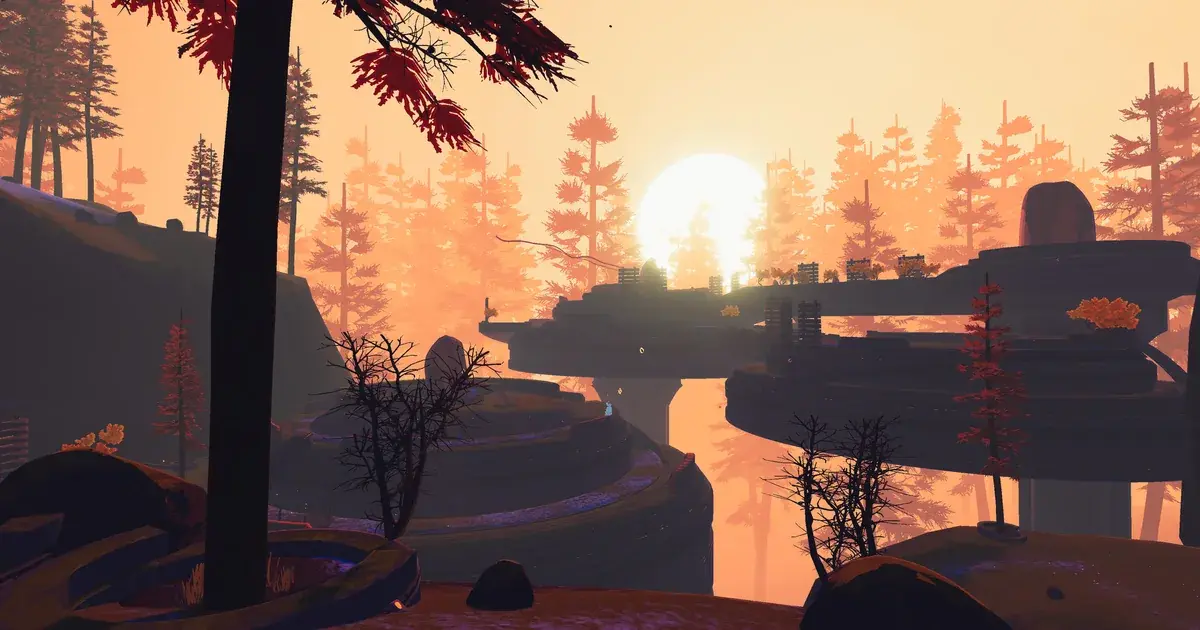
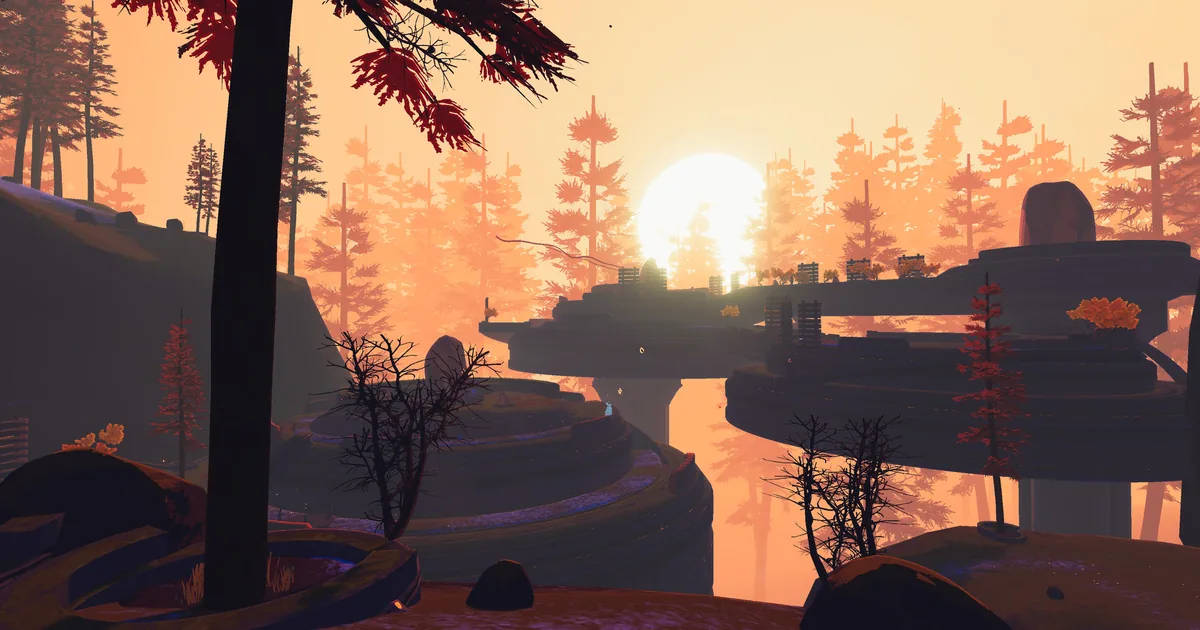 A late-run environment shows why stage knowledge matters: vertical routes and long sightlines change how quickly you can find the Teleporter and leave with enough time for the next stage.
TL;DR: A standard run uses Stage 1 through Stage 5, then sends you either to Commencement and Mithrix or back to Stage 1 if you align the Teleporter to loop. DLC adds alternate environments at several stage numbers, while hidden realms and ending routes sit outside the ordinary rotation. The safest route is to learn the stage number first, then decide whether the run needs loot, a loop, or a specific portal.
What are the Risk of Rain 2 stages? (quick answer)
Risk of Rain 2 stages are grouped into five numbered parts of a run. You move from Stage 1 through Stage 5, then either take the final route to Commencement, align the Teleporter to loop, or use a special portal route. DLC environments join those stage groups instead of creating a separate linear campaign.
Key Takeaways
- The regular route has five numbered stages before its final-stage choice.
- Each environment has multiple variations, so the same map name does not always mean identical geometry.
- Stage 5 is the important fork: go to Commencement, or align the Teleporter and loop.
- Survivors of the Void, Seekers of the Storm, and Alloyed Collective add environments that can appear in the stage rotation or in special routes.
- Hidden realms are separate from normal map selection and usually require a portal, a Lunar Seer, an Artifact, or a route condition.
- A single run cannot visit every map. Optimize for your destination instead of clearing the catalog.
Overview: how Risk of Rain 2 stages work
The official wiki defines environments as the playable stages and notes that movement between main environments happens through the Teleporter. It also says that environments have three or more variations, often changing access to a side area or opening a different path through the same broad map. That is why a memorized chest location is less reliable than a memorized route landmark. The Risk of Rain 2 items guide makes the same distinction for loot: know the category and decision, not just one remembered example.
The timer and stage count matter as much as the scenery. Enemies scale as a run continues, and the next environment is not a quiet reset. Every stage asks you to balance exploration against the cost of spending more time on the current map. The Teleporter is therefore both the navigation gate and the run's main tempo check.
The game uses stage numbers rather than one fixed linear list. Stage 1 has one group of environments, Stage 2 another, and so on. Random selection chooses within the enabled pool. DLC does not simply append a sixth stage to the end of a run. It adds alternatives to existing stage numbers, loop-only variants, and route-specific environments.
 Distant Roost is one of the Stage 1 environments. Its large vertical gaps make mobility and a quick scan for the Teleporter more valuable than opening every chest.
Step-by-Step: the normal stage route
- Stage 1: find an efficient path to the Teleporter and take enough nearby loot to make the first fight safe.
- Stage 2: stabilize the build with movement, attack speed, cooldown, or a dependable damage trigger.
- Stage 3: check route conditions and make sure the survivor can cross vertical terrain without wasting the whole timer.
- Stage 4: prepare for a harder Teleporter fight and use the environment's cover instead of trading damage in the open.
- Stage 5: choose Commencement, a loop, or a portal route before starting the Teleporter event.
Step 1: clear Stage 1 without treating it like a final loot room
The first stage can be Distant Roost, Titanic Plains, or Verdant Falls in the base pool. With DLC enabled, Siphoned Forest and Shattered Abodes can also enter the early-stage mix. They differ in elevation and sightlines, but the decision is the same: find enough money and a route to the Teleporter, then leave before the difficulty curve turns a small loot advantage into a lost minute. The Risk of Rain 2 survivors guide is useful here because mobility changes how much of a large Stage 1 map you can safely cover.
Do not read “leave quickly” as “skip every item.” Open cheap nearby chests and use visible printers, shrines, or drones when they are on the route. The mistake is crossing the entire map for a low-value interaction after you already have a functional first item set.
Step 2: use Stage 2 to stabilize the build
Abandoned Aqueduct and Wetland Aspect are the familiar base-game Stage 2 choices. Aphelian Sanctuary and Pretender's Precipice expand that pool when their DLCs are active. Stage 2 is usually where a run's survivor identity becomes clear: movement, attack speed, cooldown, and a dependable damage trigger are more useful than holding out for one perfect item. Use the items and artifacts guide as a tier reference, not as a reason to walk across the whole map for a single chest.
Pretender's Precipice is especially important for returning players because its snowy Solus wreckage can look like a new final area if you have not seen Alloyed Collective content. It is still a Stage 2 destination. The stage number, not the visual theme, tells you how far the run has progressed.
Step 3: reach Stage 3 with a way to handle mixed threats
Rallypoint Delta and Scorched Acres are the base choices here. Sulfur Pools and Iron Alluvium extend the pool, and Iron Auroras is a loop-only night variant of Iron Alluvium. Stage 3 is where the value of movement becomes obvious. Flat damage alone does not solve a run if you cannot cross the map, keep line of sight, or escape an elite while the Teleporter charges.
If you are pursuing a particular challenge, this is also the point to check whether the required environment or interactable is route-dependent. Do not assume that a familiar stage number guarantees a familiar stage. The environment selection is random within the enabled pool.
Step 4: plan for a teleporter fight, not only the map
Abyssal Depths, Siren's Call, and Sundered Grove make up the classic Stage 4 group. Repurposed Crater and Conduit Canyon are Alloyed Collective alternatives. The stage is late enough that a weak defensive plan becomes expensive: one bad fall, elite attack, or crowd-control chain can end a run that looked strong on Stage 2. The Risk of Rain 2 bosses guide fills in which Teleporter encounters can appear while you are learning these areas.
Conduit Canyon deserves a special note. The official wiki identifies it as an Alloyed Collective Stage 4 environment with a route involving the Access Node and the Alloy Hunter encounter. If you are exploring the DLC's new content, treat it as a destination with its own sequence rather than assuming it is just a visual reskin of a base Stage 4.
Step 5: decide what Stage 5 is for
Sky Meadow is the classic Stage 5 environment, while Helminth Hatchery is a Seekers of the Storm alternative. At this point, choose the run's purpose before touching the Teleporter.
- Choose the normal final route when the build is ready for Commencement and you want to fight Mithrix.
- Choose a loop when the build needs more items, a challenge requires later-stage progress, or you want an endless run.
- Choose a special portal route when you are targeting the Planetarium, a DLC ending, or a hidden realm.
At Stage 5, the Teleporter's outer ring is the important interaction. Aligning it changes the destination to a loop instead of the Moon route. The Risk of Rain 2 complete guide hub is the best cluster-level reference if you need to compare that choice with the survivor, artifact, and DLC systems. The exact choice belongs to the run, but make it deliberately. Accidentally starting the wrong destination is one of the most frustrating ways to lose a challenge attempt.
 Pretender's Precipice is an Alloyed Collective Stage 2 environment. DLC stages join the numbered pool instead of creating a separate campaign chapter.
The DLC stages and route-only environments
The cleanest way to understand DLC content is by access type.
Survivors of the Void adds Siphoned Forest, Aphelian Sanctuary, and Sulfur Pools to the numbered rotation. It also adds Void-related hidden realms and the route toward the Planetarium. If a guide says “base-game stages,” it may be leaving out a large part of the current map pool.
Seekers of the Storm adds Shattered Abodes and Helminth Hatchery to the ordinary stage pool. Its Path of the Colossus is separate: Reformed Altar begins that route, followed by Treeborn Colony and a later stage, with Golden Dieback as a loop-only variant. The official wiki describes that route as three unique stages plus one loop-exclusive variant.
Alloyed Collective adds seven stages plus one loop variant according to the official launch notes. The current environment list includes Pretender's Precipice, Iron Alluvium, Repurposed Crater, and Conduit Canyon, with Iron Auroras as the loop-only Iron Alluvium variant. Other new stages are tied to the expansion's special progression and should be treated as route content, not assumed to appear in every ordinary run.
The important reader-facing rule is simple: enable a DLC and the random pool changes. A stage guide written before Alloyed Collective can still describe the base order correctly while giving an incomplete picture of what a current run can actually show. For the announced but unreleased Hallowed Concepts expansion, keep the current survivor reveal separate from the live stage pool.
Hidden realms, portals, and endings
Hidden realms are not normal numbered stages. The Bazaar Between Time is a Lunar intermission reached through a Newt Altar and a Blue Portal. Void Fields is accessed through the Bazaar route and is associated with the Void progression. Gilded Coast requires its own Gold Portal sequence, while Bulwark's Ambry is the Artifact Reliquary realm reached through an Artifact Portal.
A Moment, Fractured is the usual destination for the Obelisk and the obliteration route. A Moment, Whole is tied to a different portal condition and the Beads of Fealty sequence. The Planetarium is the major Void ending destination, and DLC routes add further named destinations such as the Path of the Colossus and the Decompile route. These are not interchangeable endings, so decide which one you want before spending Lunar Coins or entering a portal.
The route guide's practical lesson is to separate “where can I go next?” from “what ending do I want?” A Teleporter controls the regular stage sequence. A portal, lunar choice, artifact, or special object changes the rules around it. If a challenge or unlock names a realm, follow that access condition rather than hoping the environment appears randomly. The item and artifact reference explains which run modifiers can change that decision.
Tips for reading maps faster
- Learn landmarks, not screenshots. Identify the Teleporter by its sound, red particle effect, and nearby geometry. Variants change the layout, so a memorized screenshot can mislead you.
- Use vertical mobility as a map tool. Hopoo Feather, Paul's Goat Hoof, movement skills, and a dependable escape ability shorten searches as much as they improve combat.
- Leave when the value curve turns. A distant chest is not automatically worth the time it costs. The stage timer continues to make later fights harder.
- Mark route commitments mentally. A Blue Portal, Gold Portal, Artifact Portal, Lunar Seer, and Teleporter do different jobs. Do not enter one because it is nearby without checking what it can remove from the rest of the run.
- Expect DLC variants. Stage 2, Stage 3, and Stage 4 can look unfamiliar without being a bug or a secret map. Check the name and stage number before changing your plan.
- Loop for power, not habit. A loop gives more item opportunities, but it also advances the stage count and enemy scaling. Loop when the build benefits from another circuit or when the challenge requires it. The current Risk of Rain 2 mods guide covers route-friendly co-op and quality-of-life tools if you want to change how a map is read.
GODEEPER: The Risk of Rain 2 bosses and Alloyed Collective guide covers the encounter roster attached to these stages, including the two Alloyed Teleporter Bosses.
Frequently Asked Questions
How many stages are in Risk of Rain 2?
The game's wiki describes sixteen main environments, but that headline count does not include every loop variant, route-only stage, or hidden realm. The practical current pool is larger because the three expansions add environments and alternate routes.
What is the Risk of Rain 2 stage order?
A normal run moves through Stage 1, Stage 2, Stage 3, Stage 4, and Stage 5 before the final-stage decision. The Teleporter takes you to Commencement for Mithrix, or you can align the Stage 5 Teleporter to loop back to Stage 1.
How do you loop in Risk of Rain 2?
At Sky Meadow or another Stage 5 environment, interact with the Teleporter's outer ring before starting the event. Aligning it for a loop makes the next destination Stage 1 instead of Commencement.
Which DLC adds the most Risk of Rain 2 stages?
Alloyed Collective added seven stages plus one loop variant in its official launch notes. The other expansions also add environments and special routes, so the full pool depends on which DLCs are enabled.
What are the hidden realms in Risk of Rain 2?
They include the Bazaar Between Time, Void Fields, Gilded Coast, Bulwark's Ambry, A Moment, Fractured, A Moment, Whole, and route-specific destinations such as the Planetarium. They require portals, artifacts, lunar choices, or other conditions instead of ordinary stage selection.
Can you visit every Risk of Rain 2 map in one run?
No. A loop cannot contain multiple environments from the same stage number, and random selection plus route conditions prevent one run from visiting the whole catalog.
Related Reading
- Risk of Rain 2 Complete Guide: the cluster hub for survivors, items, bosses, DLC, and current news.
- Risk of Rain 2 Survivors Guide: All 18 Characters Ranked: match a survivor's mobility and role to difficult stage layouts.
- Risk of Rain 2 Items and Artifacts Guide: understand the items, artifacts, and DLC systems that change a route.
- Risk of Rain 2 Best Mods Guide: current Thunderstore tools for co-op, content, and quality of life.
References
- Risk of Rain 2 official wiki: Environments: stage groups, variations, loops, route stages, and hidden realms.
- Risk of Rain 2 on Steam: official game description, DLC context, and supported co-op modes.
- Alloyed Collective official launch notes: seven new stages, the loop variant, and the expansion's current systems.
- Seekers of the Storm official developer diary: Path of the Colossus and the post-launch stage roadmap.
- Risk of Rain 2: Alloyed Collective Launch Trailer: official visual reference for the current expansion.
Was this guide helpful?
About the author

Critical game theorist with a background in film criticism. Writing for print and digital outlets since 2015. Specialises in genre analysis and design heritage.
- Background in film criticism
- 10 years games coverage
- Genre theory and design history specialist
Keep reading
11 Best Risk of Rain 2 Mods: 2026 Thunderstore Picks
General · 20 min
Risk of Rain 2 Hallowed Concepts Reveals Acolyte, Enforcer
General · 3 min
Risk of Rain 2 Complete Guide: Survivors, Items, Bosses
General · 8 min

Risk of Rain 2 Bosses and the Alloyed Collective DLC
General · 10 min

Risk of Rain 2 Items and Artifacts Guide: All 20 Artifacts
General · 9 min

Risk of Rain 2 Survivors Guide: All 18 Characters Ranked
General · 10 min
Game deals · affiliate links

Disclaimer
This article is published for informational and entertainment purposes. It does not constitute professional financial, legal, or technical advice. Game performance, online services, patch schedules, and store listings change. Verify critical details (pricing, system requirements, regional availability) with publishers and storefronts before you buy. Affiliate links, where present, help support our editorial work and are labelled in our affiliate disclosure.
Comments
Loading comments…